

Rascals case in brief
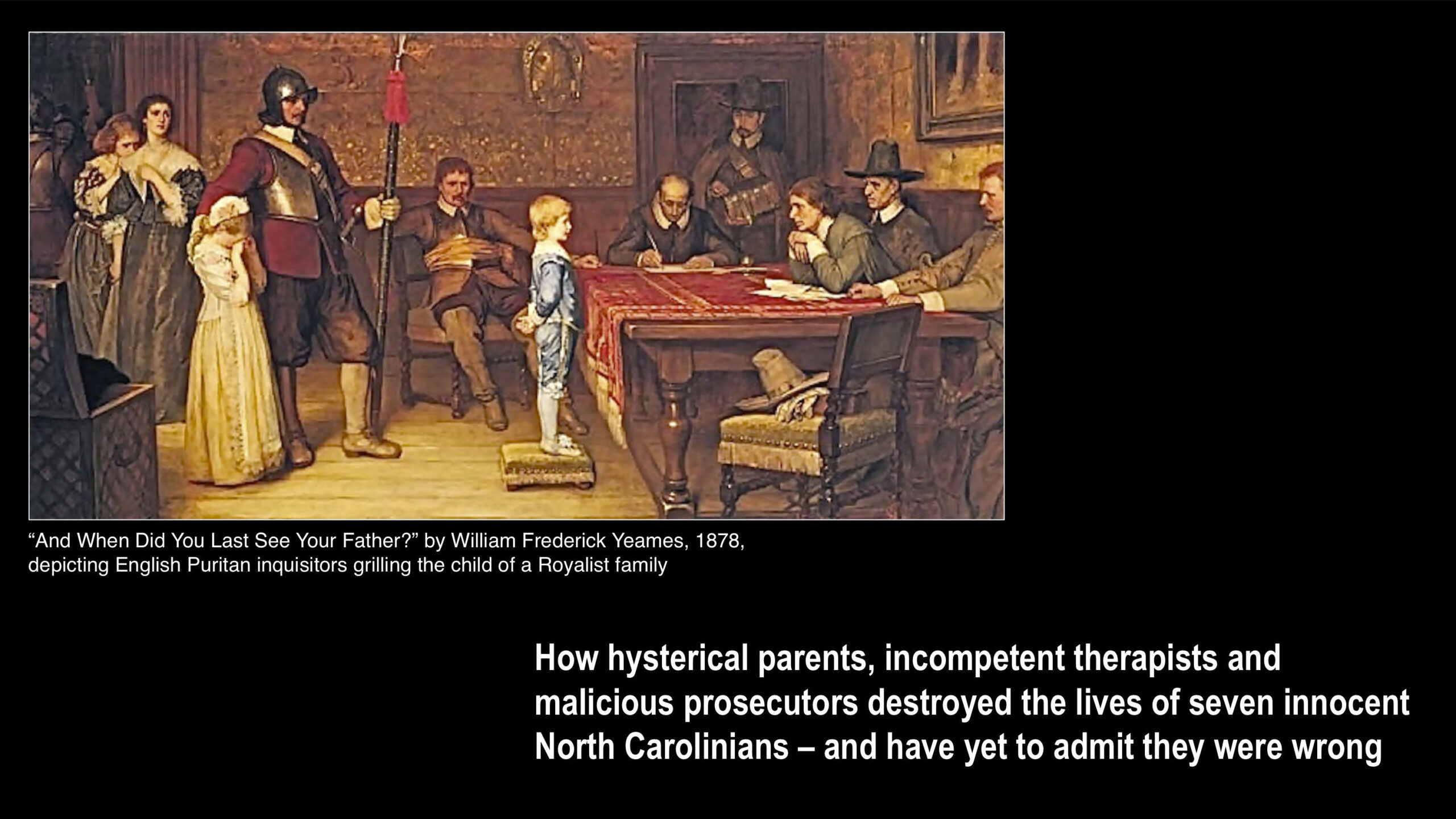
In the beginning, in 1989, more than 90 children at the Little Rascals Day Care Center in Edenton, North Carolina, accused a total of 20 adults with 429 instances of sexual abuse over a three-year period. It may have all begun with one parent’s complaint about punishment given her child.
Among the alleged perpetrators: the sheriff and mayor. But prosecutors would charge only Robin Byrum, Darlene Harris, Elizabeth “Betsy” Kelly, Robert “Bob” Kelly, Willard Scott Privott, Shelley Stone and Dawn Wilson – the Edenton 7.
Along with sodomy and beatings, allegations included a baby killed with a handgun, a child being hung upside down from a tree and being set on fire and countless other fantastic incidents involving spaceships, hot air balloons, pirate ships and trained sharks.
By the time prosecutors dropped the last charges in 1997, Little Rascals had become North Carolina’s longest and most costly criminal trial. Prosecutors kept defendants jailed in hopes at least one would turn against their supposed co-conspirators. Remarkably, none did. Another shameful record: Five defendants had to wait longer to face their accusers in court than anyone else in North Carolina history.
Between 1991 and 1997, Ofra Bikel produced three extraordinary episodes on the Little Rascals case for the PBS series “Frontline.” Although “Innocence Lost” did not deter prosecutors, it exposed their tactics and fostered nationwide skepticism and dismay.
With each passing year, the absurdity of the Little Rascals charges has become more obvious. But no admission of error has ever come from prosecutors, police, interviewers or parents. This site is devoted to the issues raised by this case.
On Facebook


Little Rascals Day Care Case
This Facebook page is an offshoot of littlerascalsdaycarecase.org, which addresses the wrongful prosecution of the Edenton Seven and other such victims.

Meanwhile in Edenton....
This content isn't available right now
When this happens, it's usually because the owner only shared it with a small group of people, changed who can see it or it's been deleted.0 CommentsComment on Facebook
Allies for our cause!
This content isn't available right now
When this happens, it's usually because the owner only shared it with a small group of people, changed who can see it or it's been deleted.0 CommentsComment on Facebook
The courts have a long history of capriciously pulling the rug out from under Junior's appeals, but maybe this time....
This content isn't available right now
When this happens, it's usually because the owner only shared it with a small group of people, changed who can see it or it's been deleted.0 CommentsComment on Facebook
Click for earlier Facebook posts archived on this site
Click to go to

Today’s random selection from the Little Rascals Day Care archives….
‘Though others’ perceptions have changed….’
 May 14, 2012
Mary De Young’s engrossing bibliography “The Ritual Abuse Controversy” lists page after page of books and journal articles that accept wholeheartedly the existence of an epidemic of ritual abuse in day cares during the ’80s and early ’90s.
Roland Summit, Ann Burgess, Susan Kelley, David Finkelhor, etc., all used their professional credentials to support and spread the panic. But who among them has since acknowledged that it was all baloney? And that it left behind hundreds of profoundly damaged child-witnesses, families and defendants?
When I asked Dr. Finkelhor about the now-discredited foundation of “Nursery Crimes,” he replied that “This was a while ago, and I have not revisited the case. Our research did not conduct any independent review of the evidence, but simply coded the conclusion of the investigator we interviewed. I was neither an authority about the validity of claims at the time or at the present.”
Am I wrong to expect a higher level of professional accountability?
Mostly, by the turn of the latest century the alarmists had simply withdrawn from the arena. Like Dr. Finkelhor, they had moved on to other topics and “not revisited the case.”
One exception is Kathleen Coulborn Faller, professor of children and families in the School of Social Work at the University of Michigan.
In “Understanding and Assessing Child Sexual Maltreatment” (second edition, 2003), Dr. Faller writes, “Though others’ perceptions of the problems of sexual abuse in day care have changed, mine essentially have not.” Minimizing the work of next-generation researchers such as Ceci and Bruck, she cites approvingly such works as Kelley’s “Parental Stress Response to Sexual Abuse and Ritualistic Abuse in Day-Care Centers.”
Might Dr. Faller have changed her mind over the past decade?
Last week I asked her. So far she hasn’t replied.
‘Mindhunter’ series misguided in choice of role model

Oct. 19, 2017
“Though ‘Mindhunter’ at times seems like a fictitious nightmare, the new Netflix series is very much rooted in reality. Holden Ford (Jonathan Groff) is based on real-life FBI agent John E. Douglas, and Dr. Wendy Carr (played by Anna Torv) is based on Dr. Ann Wolbert Burgess, a pioneer in the treatment of trauma and abuse victims….
“The character molded after Burgess helps Ford and his partner legitimize their research with her sociological and science-backed knowledge….”
– From “The Influential Trailblazer Who Inspired Mindhunter’s Dr. Wendy Carr” by Kelsey Garcia at Popsugar (Oct. 16)
Yes, it’s just a TV character. But the depiction of Ann Wolbert Burgess as a trustworthy source of “science-based knowledge” should appall anyone who recalls her national prominence in igniting the “satanic ritual abuse” day care panic.
Most grievous for the Little Rascals defendants, it was Burgess who led a three-day conference in Kill Devil Hills just months before Bob Kelly’s arrest. The agenda: learning how to spot child molesters operating day-care facilities.
She has never apologized.

What jurors learned from ‘Every Mother’s Worst Fear’
April 2, 2012
Among the contaminants reported in the deliberations of the first Little Rascals jury was a Redbook article used to profile Bob Kelly as a child molester. Its content never was detailed, so I looked it up (thanks yet again, Charlotte Mecklenburg Library).
Beneath the panic-inducing headline – “Why I’m Every Mother’s Worst Fear” – I was surprised to find virtually nothing relevant to day cares. Instead, the author offered insights such as:
“There are far more child molesters who operate like me than there are those who forcibly kidnap children. What the abductors do makes the headlines. What I do is more common and less noticeable. Most child molesters are established in our communities, known to others as just another good neighbor. We may even be married with kids of our own.”
An editor’s note drove home the point: “Finally, believe a child who reports a sexual overture or encounter, no matter how respectable or unlikely the accused person might seem.”
These descriptions, of course, fit the crazy-making template for ritual-abuse prosecutions:
If he seems like a child abuser, then he is.
If he doesn’t seem like a child abuser, then he is – “no matter how unlikely.”
Judith Abbott’s fantasies of Charles Manson
Sept. 9, 2013
“According to court records, one of the state-recommended therapists, Judith Abbott, showed a five-year-old girl drawings of satanic symbols (a horned mask, inverted crosses and a peace symbol described on the drawing as the ‘Cross of Nero’) in an effort to uncover instances of devil worship. ‘Mr. Bob’ was wearing one of those, the child said, according to a note Abbott wrote on the drawing of the mask.
“The same child had begun her therapy complaining that Mr. Bob gave hard spankings; after biweekly sessions for six months she was ‘remembering,’ according to Abbott’s typed therapy notes, ‘oral penetration by a penis, vaginal penetration by a brown felt-tipped pen and witnessing the murder of human babies.’
“Abbott explains the delay in eliciting this material by saying that the children had been terrified into silence. ‘When you break down the child, you own their spirit.’ she says. ‘It’s like Helter Skelter, Charles Manson.’ ”
– From “The Demons of Edenton” by Lisa Scheer and Edward Cone in Elle magazine (November 1993) Download article here
A proven effective way to “break down the child”: Subject her to six months of Abbott’s biweekly “therapy” sessions.