
Rascals case in brief
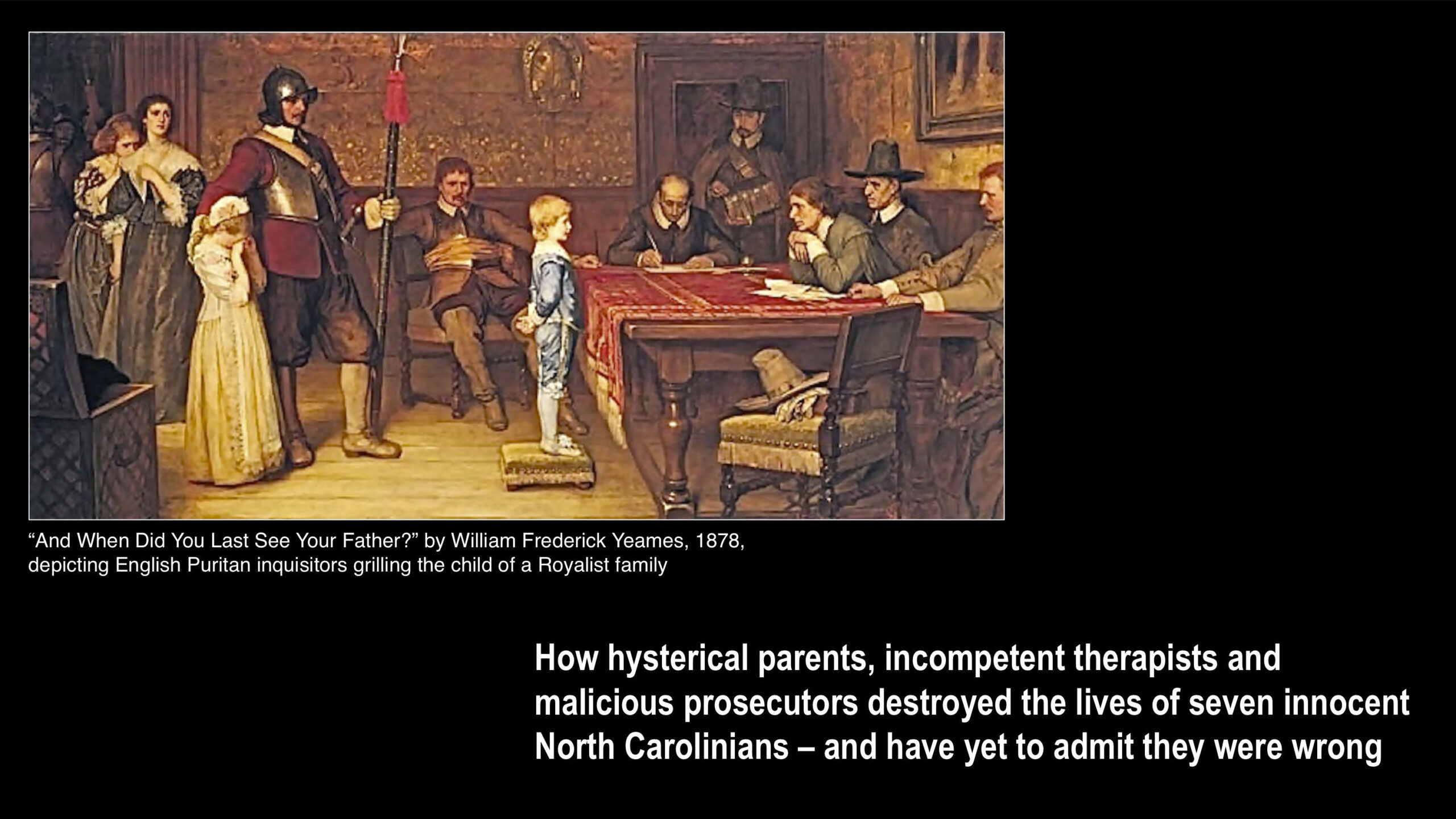
In the beginning, in 1989, more than 90 children at the Little Rascals Day Care Center in Edenton, North Carolina, accused a total of 20 adults with 429 instances of sexual abuse over a three-year period. It may have all begun with one parent’s complaint about punishment given her child.
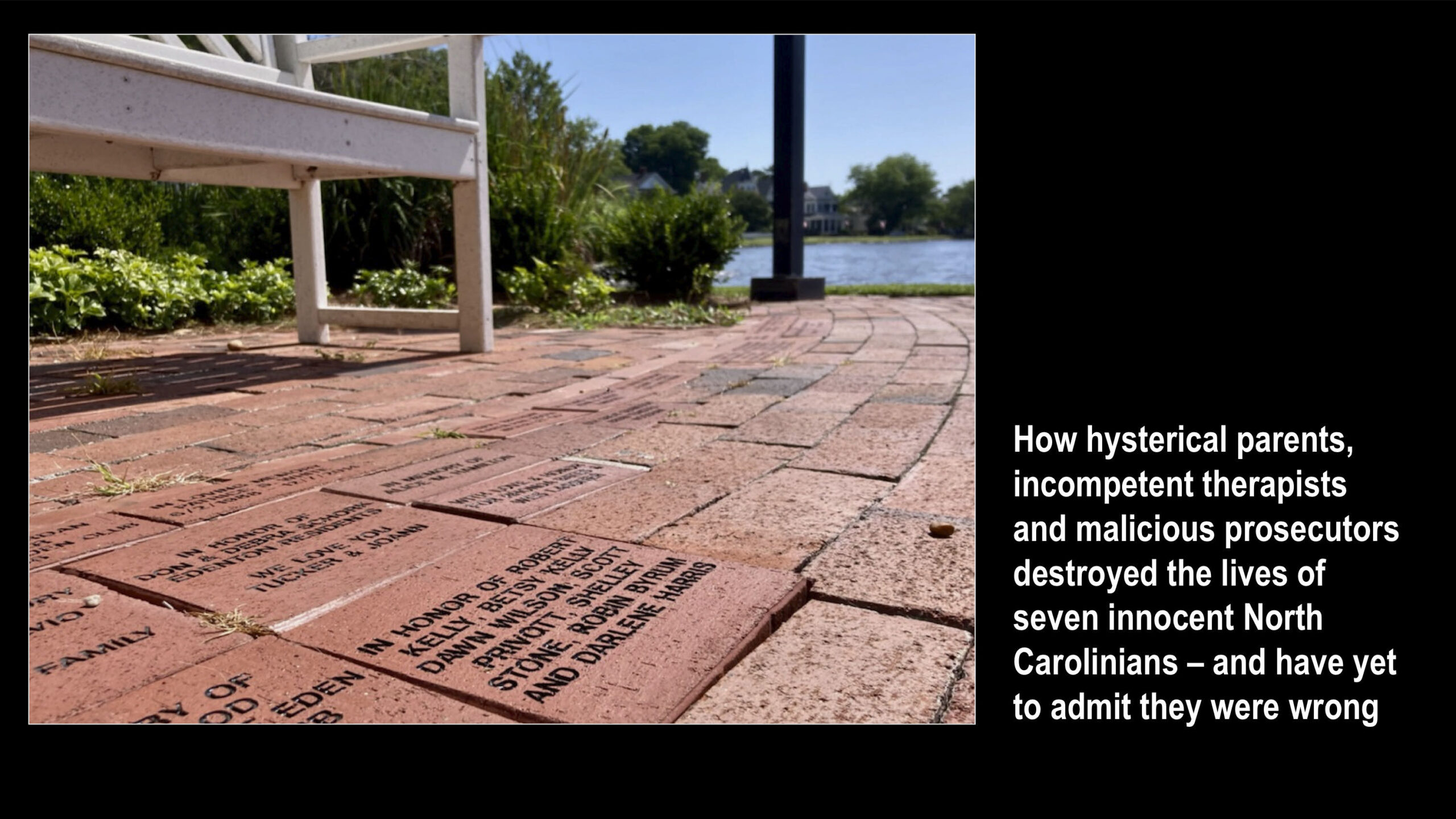
Among the alleged perpetrators: the sheriff and mayor. But prosecutors would charge only Robin Byrum, Darlene Harris, Elizabeth “Betsy” Kelly, Robert “Bob” Kelly, Willard Scott Privott, Shelley Stone and Dawn Wilson – the Edenton 7.
Along with sodomy and beatings, allegations included a baby killed with a handgun, a child being hung upside down from a tree and being set on fire and countless other fantastic incidents involving spaceships, hot air balloons, pirate ships and trained sharks.
By the time prosecutors dropped the last charges in 1997, Little Rascals had become North Carolina’s longest and most costly criminal trial. Prosecutors kept defendants jailed in hopes at least one would turn against their supposed co-conspirators. Remarkably, none did. Another shameful record: Five defendants had to wait longer to face their accusers in court than anyone else in North Carolina history.
Between 1991 and 1997, Ofra Bikel produced three extraordinary episodes on the Little Rascals case for the PBS series “Frontline.” Although “Innocence Lost” did not deter prosecutors, it exposed their tactics and fostered nationwide skepticism and dismay.
With each passing year, the absurdity of the Little Rascals charges has become more obvious. But no admission of error has ever come from prosecutors, police, interviewers or parents. This site is devoted to the issues raised by this case.
On Facebook


Little Rascals Day Care Case
This Facebook page is an offshoot of littlerascalsdaycarecase.org, which addresses the wrongful prosecution of the Edenton Seven and other such victims.

Meanwhile in Edenton....
This content isn't available right now
When this happens, it's usually because the owner only shared it with a small group of people, changed who can see it or it's been deleted.0 CommentsComment on Facebook
Allies for our cause!
This content isn't available right now
When this happens, it's usually because the owner only shared it with a small group of people, changed who can see it or it's been deleted.0 CommentsComment on Facebook
The courts have a long history of capriciously pulling the rug out from under Junior's appeals, but maybe this time....
This content isn't available right now
When this happens, it's usually because the owner only shared it with a small group of people, changed who can see it or it's been deleted.0 CommentsComment on Facebook
Click for earlier Facebook posts archived on this site
Click to go to

Today’s random selection from the Little Rascals Day Care archives….
For Junior Chandler, yet another long shot
 Jan. 14, 2013
Junior Chandler’s prospects for at last walking out of Avery-Mitchell Correctional Institution a free man remain bleak. After more than 25 years, he is probably the last still-imprisoned victim of the multiple-victim, multiple-offender ritual-abuse day-care panic.
When the North Carolina Supreme Court arbitrarily and tortuously rejected Junior’s appeal, it wrote finis to his options within the system.
Now, however, appellate lawyer Mark Montgomery has referred the case to North Carolina Prisoner Legal Services, a nonprofit law firm that represents inmates whose convictions exhibit significant flaws – a category that clearly includes Junior’s.
Mary Pollard, NCPLS executive director, has only begun to examine the file. “The problem with Mr. Chandler’s case,” she says, “is that he has already had a post-conviction review, which could severely constrain what we can do.”
After Junior submits a formal request for consideration, she expects to make a decision within 90 days on whether to pursue the case.
Why have historians overlooked day-care mania?
 July 27, 2012
“It has always intrigued me that, in a culture that is relentlessly self-critical… the pre-school hysteria and witch-hunts of the 1980s and ’90s (have) attracted little, if any, notice among historians and social analysts.
“Which is odd: We moderns like to think that we are exempt from some of the baser instincts of human nature, but hysteria, mob rule, and spectral fears are still very much with us.
“Moreover, in this instance, the American judicial system failed systematically, blighting hundreds of lives: Many more genuinely innocent people went to prison, and for longer terms, than any Communist during the McCarthy era.”
– From “Remember McMartin” by Philip Terzian in the Weekly Standard (Nov. 11, 2011)
Did jurors really believe ‘poop in the spaghetti’?
Jan. 25, 2015
Q: You said that Mr. Bob made spaghetti at the day care…. Now, when did Mr. Bob say that there was poop in the spaghetti?
A: After we, um, ate it.
Q: All right. Did – did you ever have to eat poop at the day care?
A: No.
Q: Okay. Did anybody try and make you eat poop at the day care?
A: Yes.
Q: Who?
A: Mr. Bob.
Q: Tell me about it.
A: I don’t remember it.
Q: You don’t remember it?
A: No.
Q: Well, how do you know Mr. Bob tried to do it?
A: What?
Q: Did somebody tell you about it?
A: No.
Q: Okay. Well, then tell me how Mr. Bob tried to make you eat poop.
A: Um, he told me, um, to eat it.
Q: Okay. Where was it?
A: I forgot.
Q: You forgot. Well, was it in Ms. Shelly’s room?
A: No.
Q: Was it in the kitchen?
A: Yes.
Q: Okay. Well, did he make other kids eat poop while you were there?
A: Yes.
Q: Okay. Well, um, what happened when they ate it?
A: I don’t know.
– From defense attorney Jeffrey Miller’s cross-examination of a child witness in the trial of Bob Kelly
This exchange represents only a tiny fraction of the 7-year-old girl’s testimony, which stretched over two days and included similarly incoherent references to Kelly and other defendants having raped her, urinated in her mouth, threatened to kill her parents, sodomized her with pencils and sewing needles, taken her on boat and truck rides, forced her to witness the killing and burial of babies and small animals…..
How funny and trivial such childish imaginings would seem, if only the jury’s gullibility hadn’t sent Kelly to prison for six years. “The children were convincing,” insisted rogue juror Dennis T. Ray.
25 years of wrongful imprisonment – and counting
Jan. 23, 2012
Last week I visited Avery-Mitchell Correctional Institution in Spruce Pine to talk to Junior Chandler, who soon will have served 25 years on charges strikingly similar to those in the Little Rascals case.
Junior, now 54, may well be the last still-imprisoned victim of the ritual-abuse contagion that swept the nation’s day cares in the ’80s and early ’90s.
I’ll be updating his case soon.
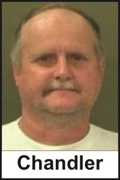 In Junior’s former life in the mountain town of Revere, he told me, he was close to his parents, his wife and two boys, his two brothers.
Early on, he and his brothers helped their uncle grow tobacco and corn. Before driving a van for the Madison County Day Care Center, he had worked for the Forest Service, the Department of Transportation and Southern Railroad. At least one job he gave up because it interfered with his softball tournaments and night fishing.
In prison, visits from his family became less frequent, and eventually his wife filed for divorce. “Two life sentences,” Junior says. “She couldn’t wait, you know.” And his sons couldn’t keep watching him aging away in his prison grays.
When his father died in 1997, he attended the funeral in handcuffs. He worries about his mother, who recently suffered a stroke.
He sleeps in a bunk bed in a dorm with 33 other inmates. His assigned janitorial job is cleaning meal trays. For relaxation he plays volleyball and horseshoes, watches Westerns on TV, reads a little. His only write-up was a scuffle not long after he arrived. “It’s learning to walk away and how to carry yourself,” he says.
Of course I was touched by Junior’s deep sadness and resignation. Sometimes I find it too easy to minimize the emotional havoc wrought by incarceration of the guilty – just imagine what it must be like for the innocent.