Rascals case in brief
In the beginning, in 1989, more than 90 children at the Little Rascals Day Care Center in Edenton, North Carolina, accused a total of 20 adults with 429 instances of sexual abuse over a three-year period. It may have all begun with one parent’s complaint about punishment given her child.
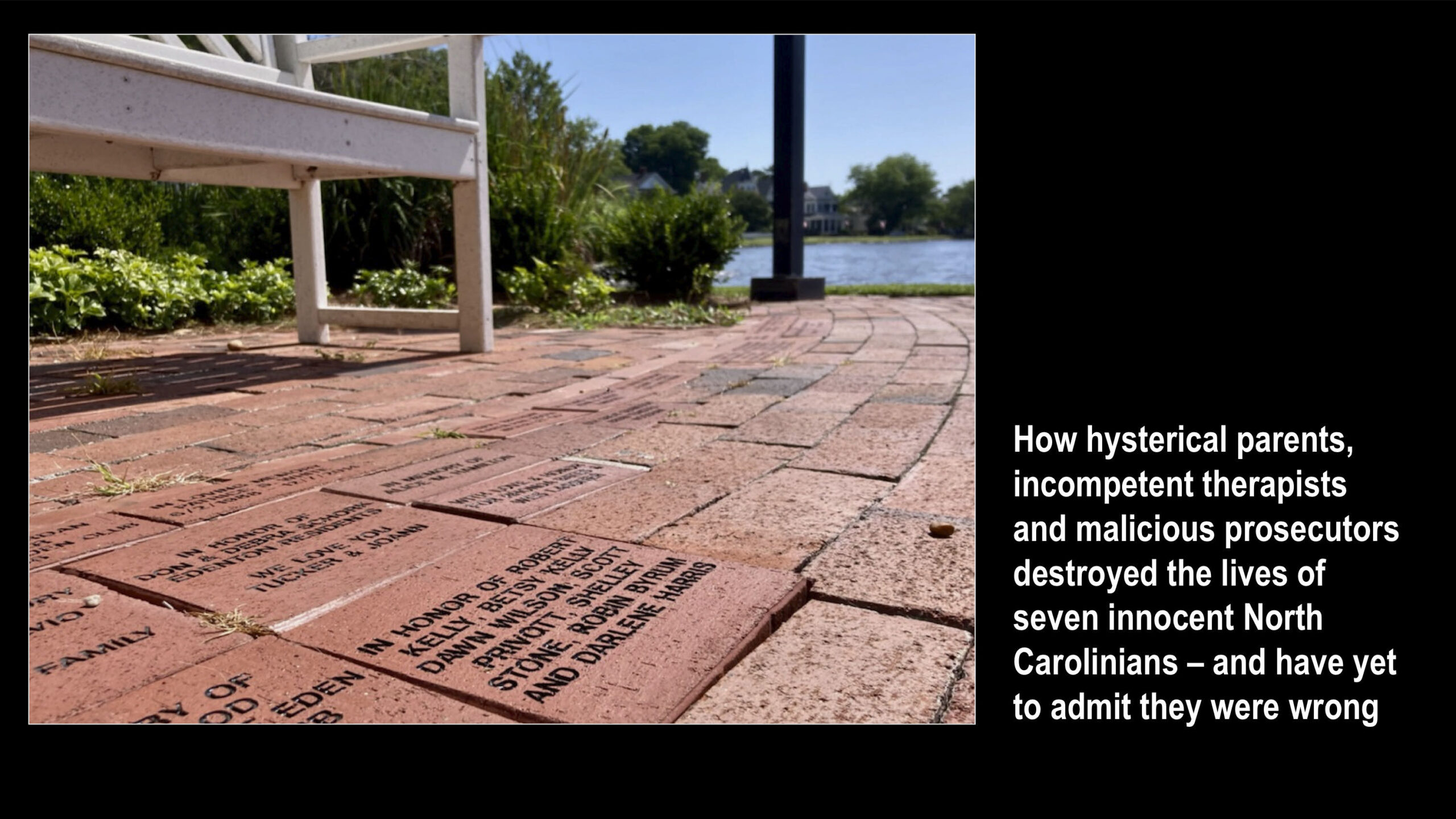
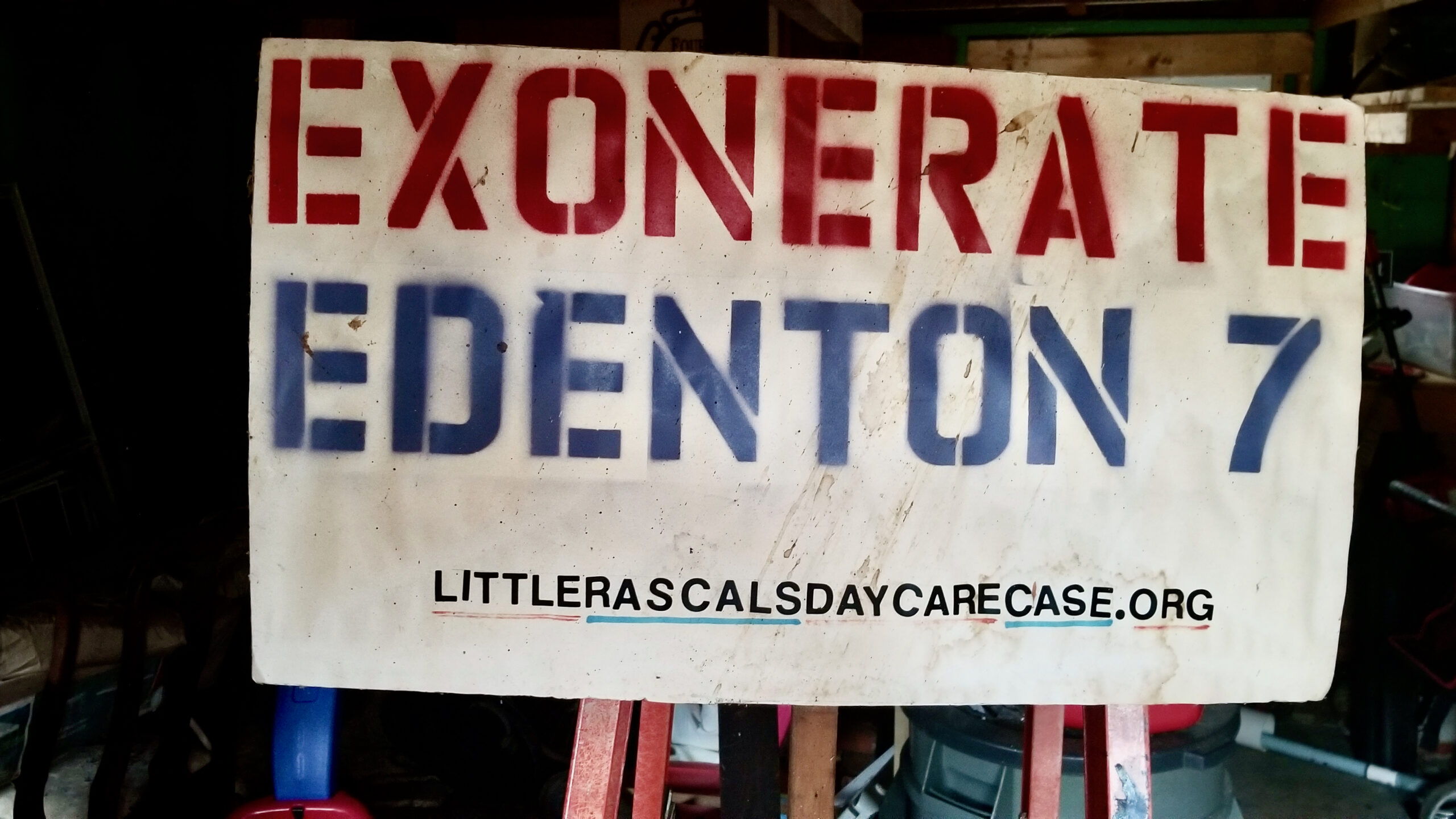
Among the alleged perpetrators: the sheriff and mayor. But prosecutors would charge only Robin Byrum, Darlene Harris, Elizabeth “Betsy” Kelly, Robert “Bob” Kelly, Willard Scott Privott, Shelley Stone and Dawn Wilson – the Edenton 7.
Along with sodomy and beatings, allegations included a baby killed with a handgun, a child being hung upside down from a tree and being set on fire and countless other fantastic incidents involving spaceships, hot air balloons, pirate ships and trained sharks.
By the time prosecutors dropped the last charges in 1997, Little Rascals had become North Carolina’s longest and most costly criminal trial. Prosecutors kept defendants jailed in hopes at least one would turn against their supposed co-conspirators. Remarkably, none did. Another shameful record: Five defendants had to wait longer to face their accusers in court than anyone else in North Carolina history.
Between 1991 and 1997, Ofra Bikel produced three extraordinary episodes on the Little Rascals case for the PBS series “Frontline.” Although “Innocence Lost” did not deter prosecutors, it exposed their tactics and fostered nationwide skepticism and dismay.
With each passing year, the absurdity of the Little Rascals charges has become more obvious. But no admission of error has ever come from prosecutors, police, interviewers or parents. This site is devoted to the issues raised by this case.
On Facebook


Little Rascals Day Care Case
This Facebook page is an offshoot of littlerascalsdaycarecase.org, which addresses the wrongful prosecution of the Edenton Seven and other such victims.

Meanwhile in Edenton....
This content isn't available right now
When this happens, it's usually because the owner only shared it with a small group of people, changed who can see it or it's been deleted.0 CommentsComment on Facebook
Allies for our cause!
This content isn't available right now
When this happens, it's usually because the owner only shared it with a small group of people, changed who can see it or it's been deleted.0 CommentsComment on Facebook
The courts have a long history of capriciously pulling the rug out from under Junior's appeals, but maybe this time....
This content isn't available right now
When this happens, it's usually because the owner only shared it with a small group of people, changed who can see it or it's been deleted.0 CommentsComment on Facebook
Click for earlier Facebook posts archived on this site
Click to go to

Today’s random selection from the Little Rascals Day Care archives….
What movie may doubt, book surely doesn’t
 June 11, 2015
“In (the upcoming movie) Regression, Ethan Hawke plays a detective investigating accusations by a woman against her father. There’s a twist: The father has admitted wrongdoing, though he has no recollection of what happened – and a psychologist is summoned to help him recover his memories….
“The trailer is opaque in its rendering of what crime the father may have committed, but it’s probably meant to echo the Satanic witch hunts that gripped parts of America in the 1980s and early ’90s…. The daughter’s haunting memories include ‘chanting,’ ‘robes’ and a ‘black mask’….
“So it’ll be interesting to see (director Alejandro) Amenábar’s take in Regression: Does he present the case as a real, Satanic experience that actually occurs within the world of the story, or will the film be a larger commentary on the horrific fallout of unfounded hysteria?
“Here’s hoping it’s the latter…. We’ll find out when Regression opens in August.”
– From “Ethan Hawke and Emma Watson Battle Satan (Maybe) in the Trailer for Regression”
by Aisha Harris at Slate (June 10)
Also arriving in August – but much less ambiguously: “We Believe The Children: A Moral Panic in the 1980s” by Richard Beck. According to a starred review in Publishers Weekly, “Beck marshals extensive research into an absorbing dissection of a panic whose tremors still affect us today.”
For Little Rascals DA, mum was always the word
March 29, 2013
“ELIZABETH CITY – Attorneys for the seven defendants in the Edenton child abuse case want to know what techniques were used to elicit accusations from the children…. Prosecutors don’t want to tell them….
“(District Attorney H.P.) Williams would not address a reporter’s questions about how the Edenton investigation was conducted….
“Mr. Williams declined to say how the Edenton investigation grew from complaints by three families to its current size. He declined to say how they communicated with parents or whether a letter was sent out.
“He would not discuss who had interviewed the children or what interview techniques had been used….”
– From “Prosecutors won’t discuss techniques” in the Raleigh News & Observer (Feb. 25, 1990)
Two decades later Williams, though no longer district attorney, was still “not in a position to talk about it.”
Coincidentally – or not – the Little Rascals story shared Page 2C with one noting that “Social workers are trying to determine why reported cases of child abuse and neglect in North Carolina jumped 27 percent in 1989, while cases nationally are expected to rise only 3 percent or 4 percent….”
A consultant with the state Division of Social Services observed that “Any time you get a radical increase in the number of complaints, you’re probably getting a number of complaints of questionable validity…..Folks who make those reports need to use some common sense.”
All molesters, please gather now on E. Eden Street
June 15, 2012
“How did such a large group of child molesters assemble? This is not New York, this is Edenton, North Carolina.”
– Edward B. Simmons, making his closing argument on behalf of Dawn Wilson (Jan. 14, 1993)
Chandler’s hopes rest with innocence project
May 6, 2013
When last we left Junior Chandler, his former appellate defender, Mark Montgomery, had asked North Carolina Prisoner Legal Services to look into the case.
But NCPLS requires the prisoner himself to request help, and that hasn’t happened. “Like a lot of the old-timers, Junior does not think they (NCPLS) are worth much,” Montgomery says. “There was a big shake up there a few years ago, and they are now very aggressive and as effective as anybody in post-conviction cases. I am going to encourage Junior (again) to ask for their help….”
Meanwhile, he has pitched Junior’s case to Christine Mumma at the N.C. Center on Actual Innocence.
Here’s the essential “evidence of actual innocence” that Montgomery offered Mumma:
“Lathern Hensley (a.k.a. Buddy Norton) was one of the adult mentally retarded riders on Junior’s bus. He and another woman testified that Junior did stuff, and they helped. They each got probation-only plea deals. I found Hensley, but his guardian wouldn’t let me talk with him. The Actual Innocence folks (with powers granted by the state) could insist on talking with Hensley. I think he would say that he was pressured into lying on the stand.”
This is just the latest long shot in overturning Junior’s wrongful conviction, and even if the Center on Actual Innocence agrees to take the case, the process is anything but swift. As the Center’s website cautions, “We counsel patience to inmates and their families during the investigative phase as the process of gathering additional documentation; identifying, locating and interviewing witnesses; and completing many other investigative tasks can take several years.”