Rascals case in brief
In the beginning, in 1989, more than 90 children at the Little Rascals Day Care Center in Edenton, North Carolina, accused a total of 20 adults with 429 instances of sexual abuse over a three-year period. It may have all begun with one parent’s complaint about punishment given her child.
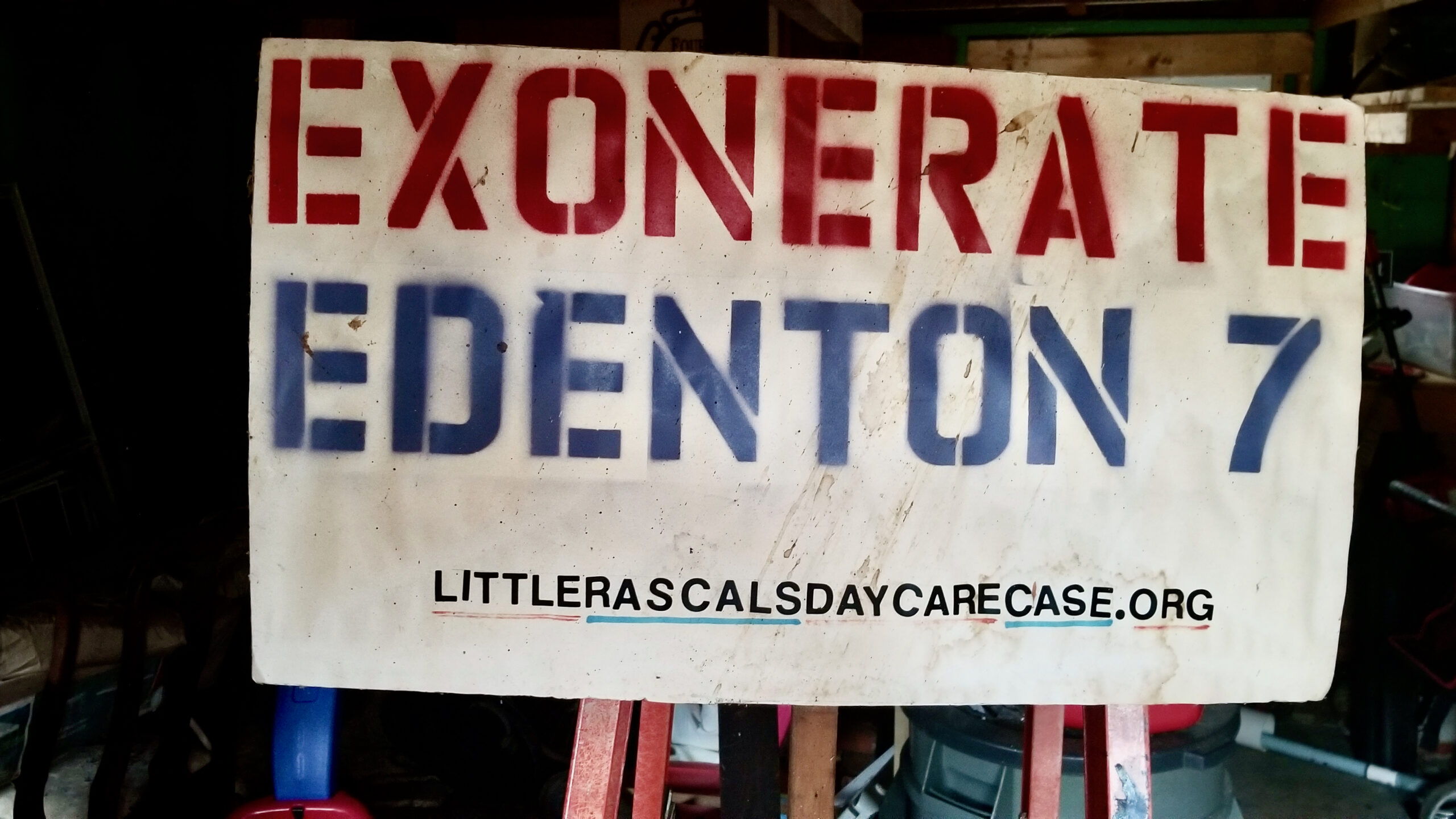
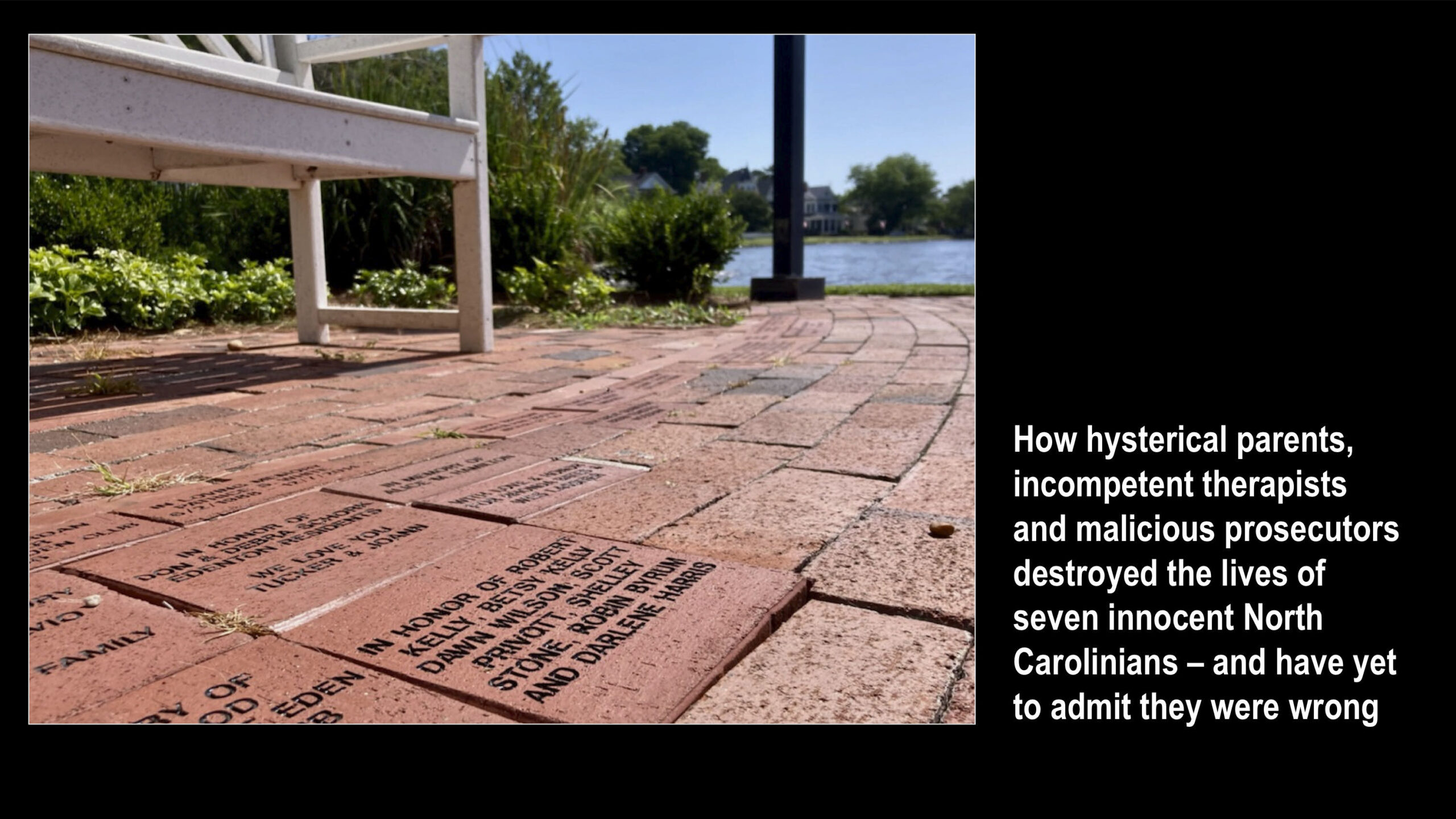
Among the alleged perpetrators: the sheriff and mayor. But prosecutors would charge only Robin Byrum, Darlene Harris, Elizabeth “Betsy” Kelly, Robert “Bob” Kelly, Willard Scott Privott, Shelley Stone and Dawn Wilson – the Edenton 7.
Along with sodomy and beatings, allegations included a baby killed with a handgun, a child being hung upside down from a tree and being set on fire and countless other fantastic incidents involving spaceships, hot air balloons, pirate ships and trained sharks.
By the time prosecutors dropped the last charges in 1997, Little Rascals had become North Carolina’s longest and most costly criminal trial. Prosecutors kept defendants jailed in hopes at least one would turn against their supposed co-conspirators. Remarkably, none did. Another shameful record: Five defendants had to wait longer to face their accusers in court than anyone else in North Carolina history.
Between 1991 and 1997, Ofra Bikel produced three extraordinary episodes on the Little Rascals case for the PBS series “Frontline.” Although “Innocence Lost” did not deter prosecutors, it exposed their tactics and fostered nationwide skepticism and dismay.
With each passing year, the absurdity of the Little Rascals charges has become more obvious. But no admission of error has ever come from prosecutors, police, interviewers or parents. This site is devoted to the issues raised by this case.
On Facebook


Little Rascals Day Care Case
This Facebook page is an offshoot of littlerascalsdaycarecase.org, which addresses the wrongful prosecution of the Edenton Seven and other such victims.

Meanwhile in Edenton....
This content isn't available right now
When this happens, it's usually because the owner only shared it with a small group of people, changed who can see it or it's been deleted.0 CommentsComment on Facebook
Allies for our cause!
This content isn't available right now
When this happens, it's usually because the owner only shared it with a small group of people, changed who can see it or it's been deleted.0 CommentsComment on Facebook
The courts have a long history of capriciously pulling the rug out from under Junior's appeals, but maybe this time....
This content isn't available right now
When this happens, it's usually because the owner only shared it with a small group of people, changed who can see it or it's been deleted.0 CommentsComment on Facebook
Click for earlier Facebook posts archived on this site
Click to go to

Today’s random selection from the Little Rascals Day Care archives….
Junior Chandler wasn’t asking for much, but got nothing
 Feb. 4, 2013
Junior Chandler, writing from Avery-Mitchell Correctional Center, January 23, 2013:
“All of the high profile and high publicity cases in the last 20 years – nearly every one of those people are home…. Except for me and I am still in prison…. April 15, 2013, will be 26 years.
“I know it’s extremely hard to get help to prove my innocence when there isn’t a crime committed to begin with.
“It doesn’t look like I got any help from Gov. Perdue when she left office, as I haven’t heard from anyone, nor has my time (sentence) changed any. All I was asking was time served or my time to be run concurrent instead of back to back, as my record on the street before and my record in here should mean something….
“But I guess it don’t matter – as I’ve seen people continually be in trouble (but) make honor grade and get out and then come right back in prison!
“Well, I’ll close for now. Maybe someone will be able to help get the truth out!”
Junior’s hopes for release now lie with North Carolina Prisoner Legal Services, which is deciding whether to take on his case.
Authorities misled parents by cherry-picking evidence
 March 27, 2013
“Authorities fed… parents and public (in Edenton) a biased reading of the evidence, but few realized it was biased.
“Consider the following: John and David, two friends in the day care, are both questioned. John says he and David were both molested, but David says it didn’t happen. Thus the evidence is 50/50 on John and 50/50 on David. They can’t be both right.
“What now? If David keeps denying, he is dropped from the investigation, and the negative evidence on John exits with David. Meanwhile, John’s parents are not told that David denies, and John’s case goes ahead. From 50/50, the allegation has become 100 percent true.
“For this investigation to inevitably produce more victims of abuse, three things are necessary:
“1. Parents are told that their child was named by others as abused, but not told that their child was not abused according to still other children.
“2. Parents are told that denial by their child is a sign of abuse and that therefore the child should be questioned by therapists until he admits.
“3. In some therapy sessions, the children do disclose even if they were not abused.
“Did the prosecution in the Little Rascals investigate in such a manner? The (North Carolina) Appeals Court certainly was of that opinion. It was the principal reason the convictions of Robert Kelly and Dawn Wilson were overturned.”
– From “Why False Beliefs Prevail: the Little Rascals Child Sex Abuse Prosecutions” by Anthony Oberschall in “Essays in Honor of Raymond Boudon” (2000)
Oberschall doesn’t use the term, but I’m reminded of the widespread and pernicious “file drawer effect” – that is, “the practice of scientific researchers to file away studies with negative outcomes.”
Kids say the darndest things… eventually
 April 24, 2015
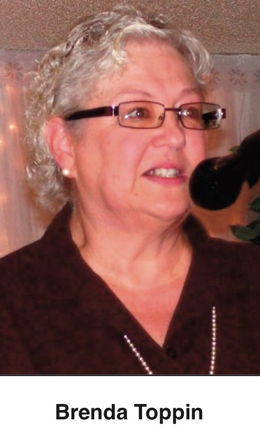
“As was made clear repeatedly upon testimony by experts, the very first reports of the children were the ones that would be most critical in determining whether sexual abuse had indeed occurred. Yet in the first interviews, the children said almost nothing of any interest with regard to sexual abuse, and the police officer who conducted these hearings destroyed all of her notes and all of her tapes of what happened before the case went to court. She was approached by several of the mothers initially because she had taken a short course in investigating cases of child abuse.
“Officer (Brenda) Toppin was crucial to the whole process because she was the one who escalated the case from a minor complaint by one parent into a case of massive sexual abuse of dozens of children by scores of day-care workers.”
– From “Understanding The Crucible: A Student Casebook to Issues, Sources, and Historical Documents” by Claudia Durst Johnson and Vernon Johnson (1998)
The unbearable emptiness of ‘n=’
May 24, 2013
“The research described is a study of a clinical sample of 72 women who allegedly sexually abused 332 children. The Sample is examined from a variety of perspectives, including whether the abuse was intrafamilial (n = 33), extrafamilial (n = 18), or both (n = 21); and whether the abuse involved multiple intrafamilial offenders (n = 33), a solo intrafamilial offender (n = 17), multiple extrafamilial offenders (n = 16), or solo extrafamilial offenders (n = 6). Social situational factors and individual deficits – mental illness (n = 23), mental retardation (n = 16), substance abuse (n = 37), and other maltreatment of their children (n = 61) that might lead women to sexually abuse children – are examined. Case outcomes, including the number of confessions (n = 49), criminal prosecution (n = 3), and protection of victims (n = 44) are described.”
– From “A Clinical Sample of Women Who Have Sexually Abused Children” (abstract) by Kathleen Coulborn Faller in the Journal of Child Sexual Abuse (Vol. 4, Issue 3, 1996)
Yes, I am endlessly appalled by the ornateness of the statistical sham woven by the likes of Kathleen Faller, Susan J. Kelley and David Finkelhor.
What ever could Faller have been thinking as she wrote the words “72 women who allegedly sexually abused 332 children”? Surely she knew the historical absurdity of those numbers.
Did she simply choose to be oblivious? Or was she swallowed up by something more powerful than rationality?