Rascals case in brief
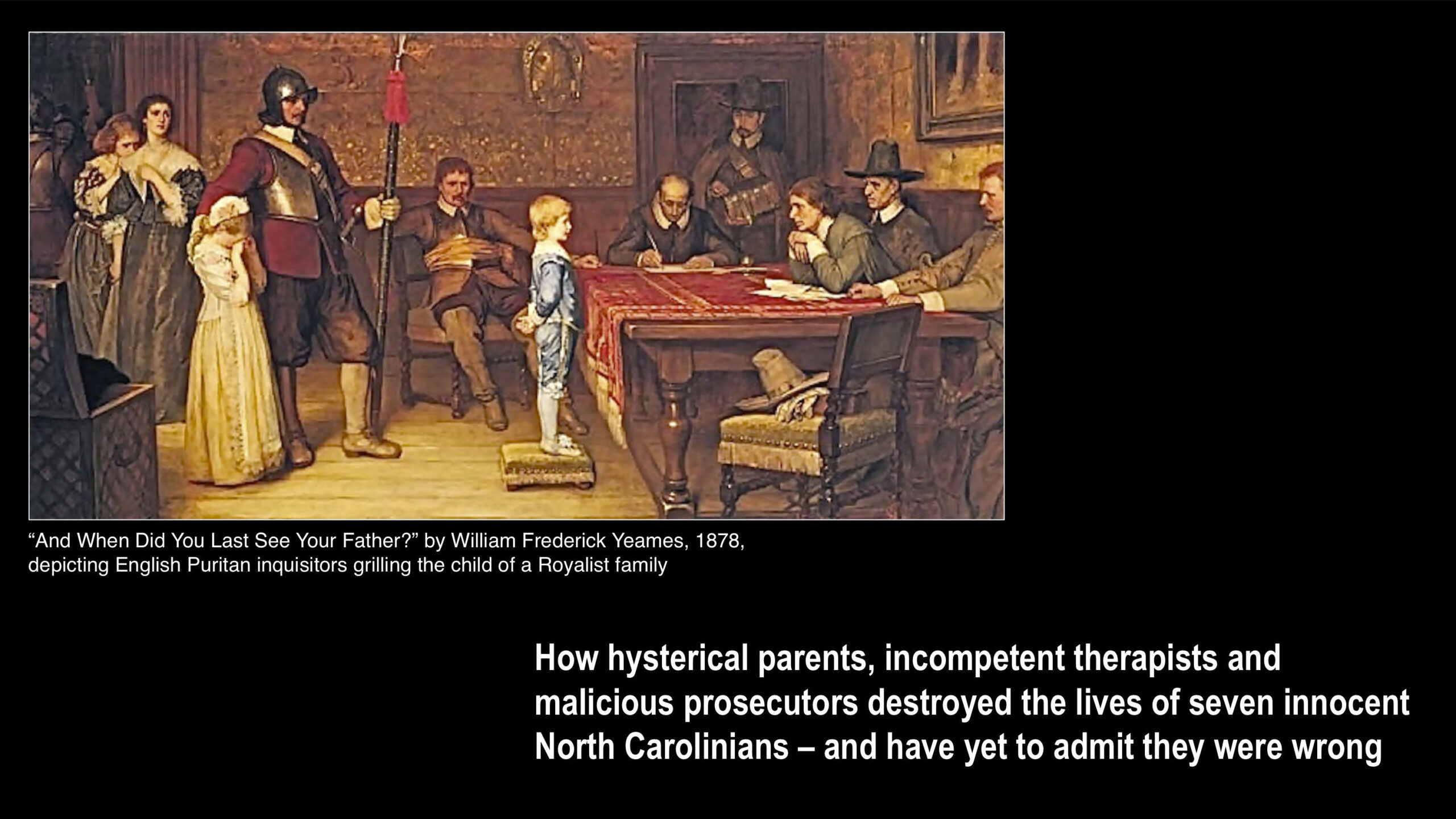
In the beginning, in 1989, more than 90 children at the Little Rascals Day Care Center in Edenton, North Carolina, accused a total of 20 adults with 429 instances of sexual abuse over a three-year period. It may have all begun with one parent’s complaint about punishment given her child.
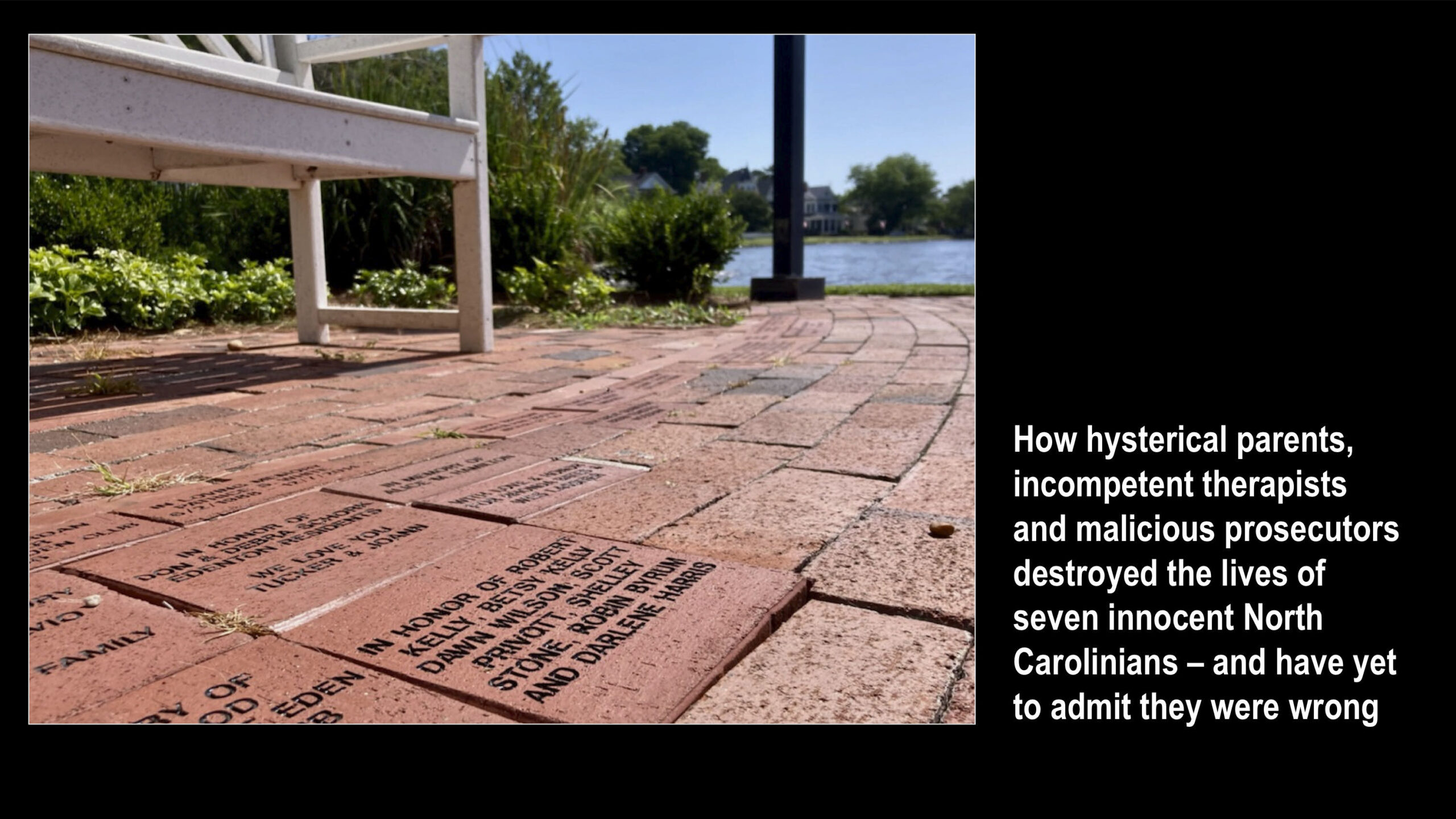
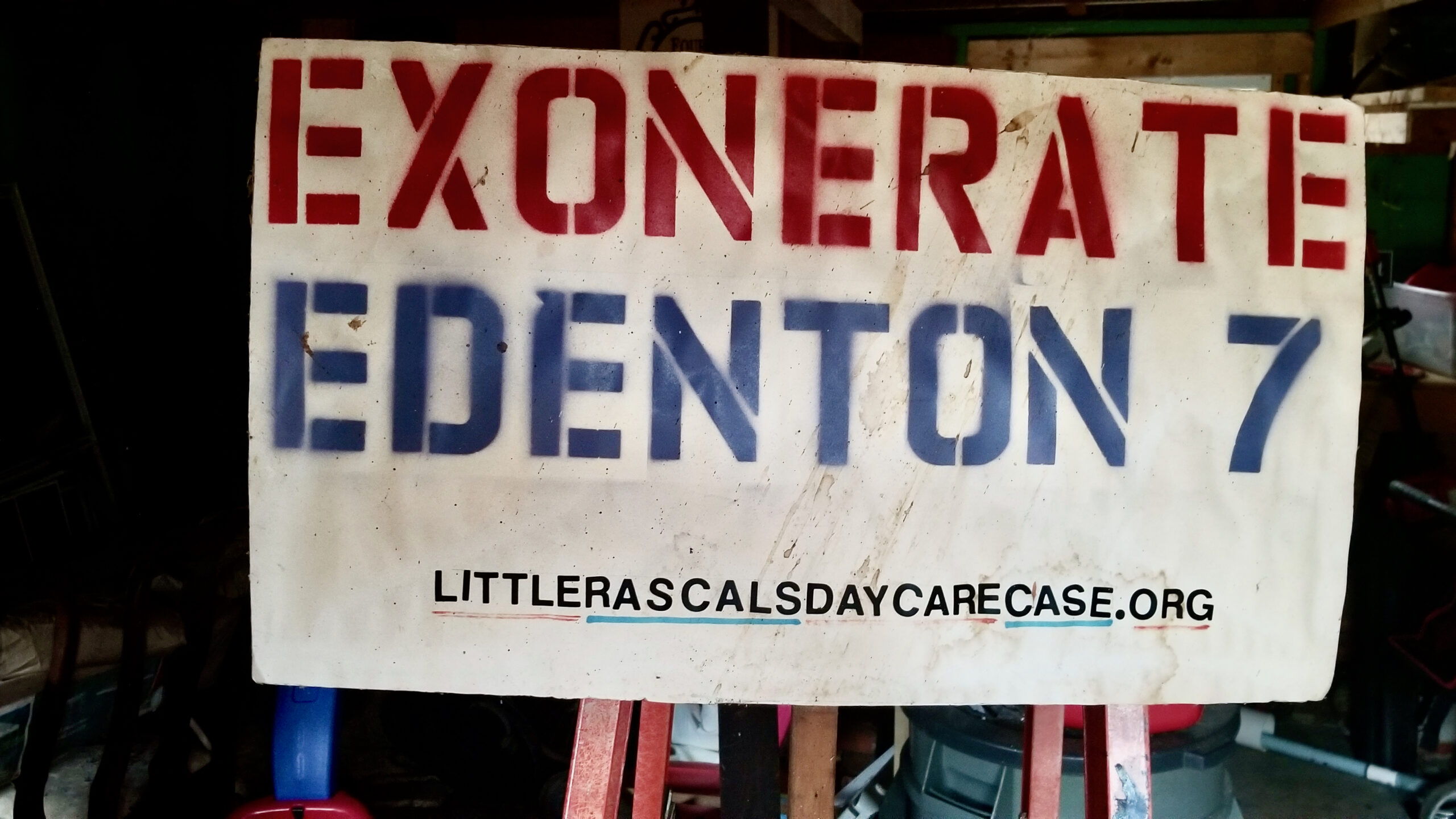
Among the alleged perpetrators: the sheriff and mayor. But prosecutors would charge only Robin Byrum, Darlene Harris, Elizabeth “Betsy” Kelly, Robert “Bob” Kelly, Willard Scott Privott, Shelley Stone and Dawn Wilson – the Edenton 7.
Along with sodomy and beatings, allegations included a baby killed with a handgun, a child being hung upside down from a tree and being set on fire and countless other fantastic incidents involving spaceships, hot air balloons, pirate ships and trained sharks.
By the time prosecutors dropped the last charges in 1997, Little Rascals had become North Carolina’s longest and most costly criminal trial. Prosecutors kept defendants jailed in hopes at least one would turn against their supposed co-conspirators. Remarkably, none did. Another shameful record: Five defendants had to wait longer to face their accusers in court than anyone else in North Carolina history.
Between 1991 and 1997, Ofra Bikel produced three extraordinary episodes on the Little Rascals case for the PBS series “Frontline.” Although “Innocence Lost” did not deter prosecutors, it exposed their tactics and fostered nationwide skepticism and dismay.
With each passing year, the absurdity of the Little Rascals charges has become more obvious. But no admission of error has ever come from prosecutors, police, interviewers or parents. This site is devoted to the issues raised by this case.
On Facebook


Little Rascals Day Care Case
This Facebook page is an offshoot of littlerascalsdaycarecase.org, which addresses the wrongful prosecution of the Edenton Seven and other such victims.

Meanwhile in Edenton....
This content isn't available right now
When this happens, it's usually because the owner only shared it with a small group of people, changed who can see it or it's been deleted.0 CommentsComment on Facebook
Allies for our cause!
This content isn't available right now
When this happens, it's usually because the owner only shared it with a small group of people, changed who can see it or it's been deleted.0 CommentsComment on Facebook
The courts have a long history of capriciously pulling the rug out from under Junior's appeals, but maybe this time....
This content isn't available right now
When this happens, it's usually because the owner only shared it with a small group of people, changed who can see it or it's been deleted.0 CommentsComment on Facebook
Click for earlier Facebook posts archived on this site
Click to go to

Today’s random selection from the Little Rascals Day Care archives….
What better credential than Little Rascals debacle?
Sept. 30, 2013
Death noted: District Attorney Frank Parrish, 64, who succeeded H. P. Williams Jr. in prosecuting the Edenton Seven.
By the time Parrish took office in 1994, Little Rascals had become almost entirely a Nancy Lamb production. Whatever Parrish actually believed, the prosecutors’ code demanded that he continue to insist that the case was concrete-solid.
But as a growing body of scientific evidence called into question the testimony of child witnesses in ritual-abuse cases, Parrish had to decide how to respond to the overturning of the convictions of Bob Kelly and Dawn Wilson. “I’ve gotten an awful lot of guidance, none of it solicited,” he told the Charlotte Observer. “(Research) does not play a part, nor should it. That’s as if because there’s research about the unreliability of eyewitnesses, I should dismiss or not retry an armed robber.”
By 1997 Parrish and Lamb could no longer delay dropping the last Little Rascals charges. And who now might succeed Parrish as district attorney? Unfortunately, you won’t be surprised.
What caused ‘inability to think straight’?
Aug. 29, 2012
“Los Angeles County’s Satanic Abuse Task Force, an official sub body of the Los Angeles County Women’s Commission, concluded (in 1992) that Satanists were trying to pump diazinon poison into their office and home air vents in order to silence them. Task force members became suspicious, according to president Myra Rydell, after experiencing bouts of profound exhaustion, headaches and, perhaps most significantly, ‘the inability to think straight.’
“McMartin parent Jackie McGauley, also a task force member, told a reporter that, according to her doctor, diazinon would be ‘virtually impossible to detect’ if given in small doses over a long time period. The County’s epidemic specialist said that diazinon was easy to detect and after his own investigation called the claims ‘outrageous.’”
– From “The Dark Truth About the ‘Dark Tunnels of McMartin’” by John Earl (IPT Journal, 1995)
No single reason accounts for the country’s belated skepticism about ritual abuse, but the poison-gas episode in Los Angeles surely qualified as a “jump the shark” moment.
‘Fear of closets’? Get that child to a therapist!
Oct. 22, 2012
In the Dark Ages of social science – the 1980s, give or take a few years — unfounded concepts were treated as received truth: satanic ritual abuse (later recast as sadistic ritual abuse), multiple personality disorder (later, dissociative identity disorder), repressed memory syndrome.
On what possible grounds did California clinical psychologist Catherine Gould determine that satanic ritual abuse was indicated by a child’s “Refusal to eat red or brown food” or “Fear of closets and small spaces” or “Preoccupation with cleanliness”? Did this crazy quilt of symptoms come to her in a hallucination.
Regardless, Gould’s list, widely photocopied, contributed to parental panics at day cares across the country. After all, she was “a licensed psychologist specializing in the diagnosis and treatment of adult and child victims of ritual abuse”!
So just how reliable an authority was Catherine Gould? Well, it was she who first claimed the Los Angeles County Ritual Abuse Task Force was being poisoned with diazinon.
Later, according to the Associated Press, “She said her blurred vision and failed memory weren’t psychosomatic, but she admitted she never visited a doctor to be tested for the pesticide.”
Refusal to eat red or brown food
Fear that food is poisoned
Bingeing, gorging, vomiting, anorexia
Problems Associated with Doctors
Fear of doctors
Fear of injections, blood tests
Fear of removing clothes
Toiletting/Bathroom Problems
Bathroom avoidance, toileting accidents
Preoccupation with cleanliness
Preoccupation with urine and feces
Ingestion of urine and feces
Family Problems
Fear of death of parents, siblings, pets
Separation anxiety
Avoidance of physical contact
Threatens or attacks parents, siblings
Sexual Problems
Age-inappropriate sexual knowledge
Fear of touch
Excessive masturbation
Sexually provocative behavior
Vaginal or anal pain
Relaxed anal sphincter,enlarged vaginal opening
Venereal disease
Emotional Problems
Rapid mood swings
Resistance to authority
Hyperactivity, poor attention span
Anxiety
Poor self-esteem
Withdrawal
Regression and babyish speech
Flat affect
Nightmares, night terrors
Learning disorders
Fear of closets and small spaces
Fear of being tied up, ties up others
Problems Associated with Colors
Fear of colors red and black
Preoccupation with color black
Problems Associated with Death
Fear of dying, preoccupation with death
Play and Peer Problems
Destroys toys
Death, mutilation, confinement themes in play
Inability to engage in fantasy play
Problems Associated with Supernatural
Fear of ghosts, monsters, witches, devils
Preoccupation with wands, spirits, magic potions, curses, crucifixes
Odd songs and chants
Preoccupation with occult symbols
Fear of attending church
Other Fears and Strange Beliefs
Imaginary friends
Fear of police, strangers, bad people
Fear of violent films
Fear of aggressive animals
Fear of cemeteries, mortuaries, churches
Fear of something foreign inside body, e.g. bomb, devil’s heart
Downloaded Oct. 22, 2012 from http://www.prism.gatech.edu/~kquach6/common.html
Santa, I know this is an unusual request, but….
 Dec. 14, 2012
“Lamb, Nancy and Bill Hart. ‘Pointers on multi-victim, multi-perpetrator cases.’ American Prosecutors Research Institute 1992. Attorneys who prosecuted Little Rascals case offer advice regarding mass molestation cases.”
– Description of an 18-page how-to booklet that surely should be filed under “fantasy” or “horror” – if copies existed at all.
Unfortunately, all seem to have vanished from libraries as well as from booksellers. When I requested a copy from the National District Attorneys Association, parent of the research institute, I was told, “We only serve prosecutors, not (even) other lawyers. But… we haven’t been able to find it. So at this point, we could not even provide it to a prosecutor.”