Rascals case in brief
In the beginning, in 1989, more than 90 children at the Little Rascals Day Care Center in Edenton, North Carolina, accused a total of 20 adults with 429 instances of sexual abuse over a three-year period. It may have all begun with one parent’s complaint about punishment given her child.
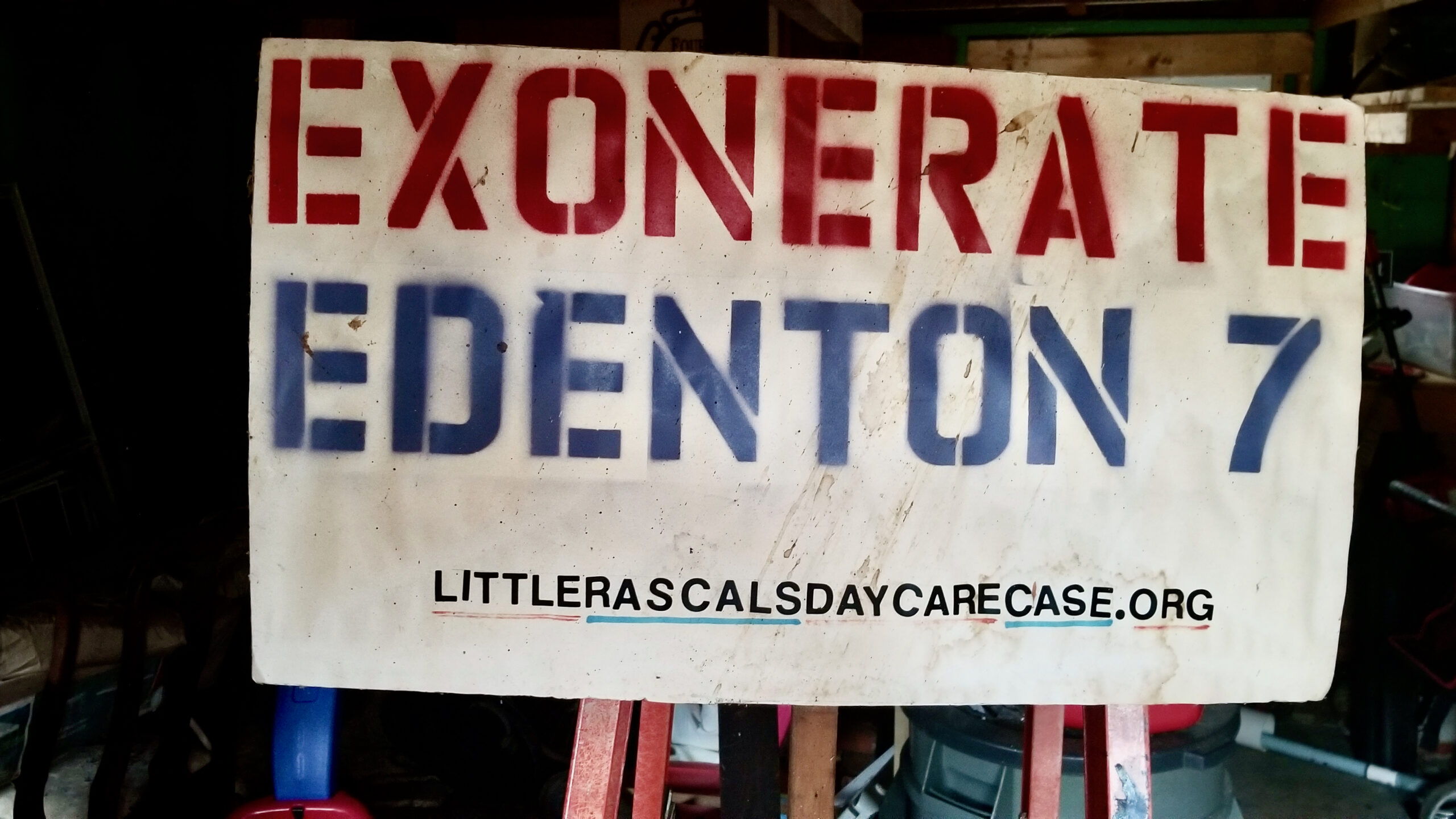
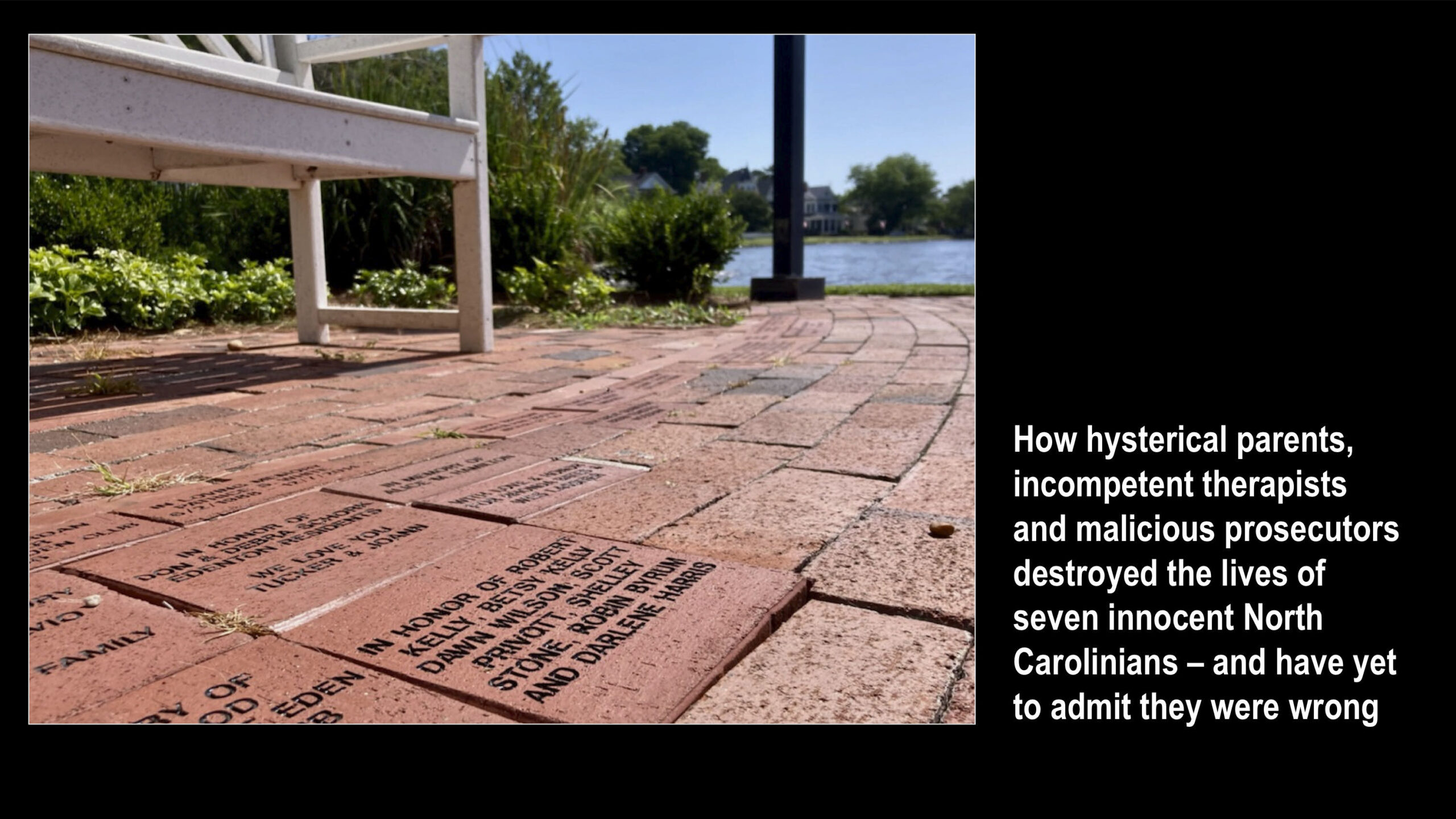
Among the alleged perpetrators: the sheriff and mayor. But prosecutors would charge only Robin Byrum, Darlene Harris, Elizabeth “Betsy” Kelly, Robert “Bob” Kelly, Willard Scott Privott, Shelley Stone and Dawn Wilson – the Edenton 7.
Along with sodomy and beatings, allegations included a baby killed with a handgun, a child being hung upside down from a tree and being set on fire and countless other fantastic incidents involving spaceships, hot air balloons, pirate ships and trained sharks.
By the time prosecutors dropped the last charges in 1997, Little Rascals had become North Carolina’s longest and most costly criminal trial. Prosecutors kept defendants jailed in hopes at least one would turn against their supposed co-conspirators. Remarkably, none did. Another shameful record: Five defendants had to wait longer to face their accusers in court than anyone else in North Carolina history.
Between 1991 and 1997, Ofra Bikel produced three extraordinary episodes on the Little Rascals case for the PBS series “Frontline.” Although “Innocence Lost” did not deter prosecutors, it exposed their tactics and fostered nationwide skepticism and dismay.
With each passing year, the absurdity of the Little Rascals charges has become more obvious. But no admission of error has ever come from prosecutors, police, interviewers or parents. This site is devoted to the issues raised by this case.
On Facebook


Little Rascals Day Care Case
This Facebook page is an offshoot of littlerascalsdaycarecase.org, which addresses the wrongful prosecution of the Edenton Seven and other such victims.

Meanwhile in Edenton....
This content isn't available right now
When this happens, it's usually because the owner only shared it with a small group of people, changed who can see it or it's been deleted.0 CommentsComment on Facebook
Allies for our cause!
This content isn't available right now
When this happens, it's usually because the owner only shared it with a small group of people, changed who can see it or it's been deleted.0 CommentsComment on Facebook
The courts have a long history of capriciously pulling the rug out from under Junior's appeals, but maybe this time....
This content isn't available right now
When this happens, it's usually because the owner only shared it with a small group of people, changed who can see it or it's been deleted.0 CommentsComment on Facebook
Click for earlier Facebook posts archived on this site
Click to go to

Today’s random selection from the Little Rascals Day Care archives….
Brent Adams & Associates, clean up your act
Oct. 31, 2011
“A highly publicized case occurred in coastal North Carolina almost 30 years ago. Making national headlines, the Little Rascals Day Care Center was run by a husband-and-wife team, Bob and Betsy Kelly…. The Little Rascals abuse case involved 90 children who all required extensive therapy sessions.”
Shouldn’t a prominent North Carolina firm of trial lawyers know better than to solicit clients with such a misleading characterization?
Do Brent Adams & Associates really believe all those children – or any of them – “required extensive therapy sessions”?
I have asked that this paragraph be removed from the firm’s website – no response yet.
‘Prosecutors’ Overreaching’? Edenton had it in spades
Aug. 27, 2012
“Prosecutors are the most powerful officials in the criminal justice system. They decide whether criminal charges should be brought and what those charges should be, and they exercise almost boundless discretion in making those decisions. Prosecutors alone decide whether to offer the defendant the option of pleading guilty to reduced charges….
“Equally problematic is that the charging and plea-bargaining decisions are made behind closed doors, and prosecutors are not required to justify or explain these decisions to anyone…. The lack of transparency also leads to misconduct, like the failure to turn over exculpatory evidence – a common occurrence made famous by the prosecutors in the Duke lacrosse and Senator Ted Stevens cases.”
– From “Prosecutors’ Overreaching Goes Unchecked” by Angela J. Davis in the New York Times (Aug. 19)
Prosecutors plea-bargained cruelly though futilely with the Edenton Seven. And while the evidence-withholding in the Duke and Stevens cases may have made bigger headlines, it was no more flagrant than in Little Rascals.
One example from the North Carolina Court of Appeals order overturning Bob Kelly’s conviction (May 2, 1995):
“Judge L. Bradford Tillery, a pretrial Judge, directed the State to file and present for in camera review identifying information, medical and psychotherapeutic files and DSS files with respect to the ‘indictment children’….
“In apparent compliance with Judge Tillery’s order… the State turned over a box of files to the trial court, Judge McLelland presiding. The box contained, inter alia, complete medical notes and therapy notes on the 29 indictment children, 12 of whom testified at defendant’s trial and 17 of whom did not….
“After trial, defendant’s appellate counsel went to the Office of the Clerk of Court for Pitt County to view the exhibits. He opened several boxes containing trial exhibits, none of which were sealed. One of the boxes contained 29 files labeled with the names of the indictment children. Appellate counsel reviewed some of the documents contained in the files before requesting the box to be sealed and transmitted to the Court of Appeals…. Defendant argues that the files contained undisclosed information that would have been material to the defense.”
In fact, the withheld files were bulging with exculpation – conflicting claims, evidence of hysteria, eyewitness testimony that nothing happened. Countless other examples are documented in Bob Kelly’s appeal brief.
Attorney General Mike Easley bridled at the appeals court’s concern over such “small areas… none of which are very significant.” And, after all, as prosecutor Bill Hart had asked smirkingly during the trial, “If you were playing poker, would you be playing with your full hand showing?”
Children ‘defend veracity of implanted memories’
Sept. 27, 2013
“The children are the big victims (in unfounded sex abuse cases) and are sacrificed…. Can you imagine being a child and being interrogated, being sent to the gynecologist, seeing your mother cry, seeing your father getting into fights, or a person you really like being sent to prison? You actually end up believing that this happened to you, that’s what we called ‘added memory.’
“Those children grow up with the same memories as those who actually experienced child abuse. I found it disturbing and I felt that it had to be told.”
– From an interview with Thomas Vinterberg, director of “The Hunt,” at filmophelia.com (July 11, 2013)
Vinterberg’s sympathy for the children in such cases is well placed – but do they in fact “grow up with the same memories as those who actually experienced child abuse”?
Although reliable follow-up is scarce, Debra Poole, professor of psychology at Central Michigan University, had this to say about the unfounded claims of child witnesses in the Fells Acres (Amirault) case:
“It has nothing to do with lying and everything to do with the implanting of false memories…. Studies have shown that children will vehemently defend the veracity of implanted memories. They recall reporting them, and those reports produce mental images of the events that these individuals cannot distinguish from their real experiences. But the kids are not responsible for that. The interviews are.”
The Little Rascals child witness I talked with insists she continues to “remember vividly what happened.”
Still waiting for that ‘huge mea culpa’
Sept. 6, 2013
“The day-care trials couldn’t have happened without the active participation of social workers and therapists. Police authorities relied on the therapists to interpret what the child witnesses were saying, to interview the children and to counsel them about their alleged experiences. One might suppose that the realization that:
- People have been sent to prison for years for crimes that never happened;
- Children had been abused, not by the accused, but by misguided therapists who implanted false memories;
would have created a huge mea culpa among the professionals involved. This hasn’t happened.
“Some have defended their actions, if not the results, on the basis that their hearts were in the right place. Some have excused themselves on the basis that nobody knew any better – that, by golly, nobody could have guessed that rewarding children for making accusations, and questioning them until they did make accusations, might just lead to false accusations.
“And they speak, in self-pitying tones, about the ‘backlash’ – the (presumably) undeserved and irrational criticism that is flung their way.”
– From “The ‘Ritual Abuse’ Panic” at Imaginary Crimes
Mum’s still the word from the prosecution therapists in the Little Rascals case, except for Judy Abbott’s resentful response to the “backlash.”