Rascals case in brief
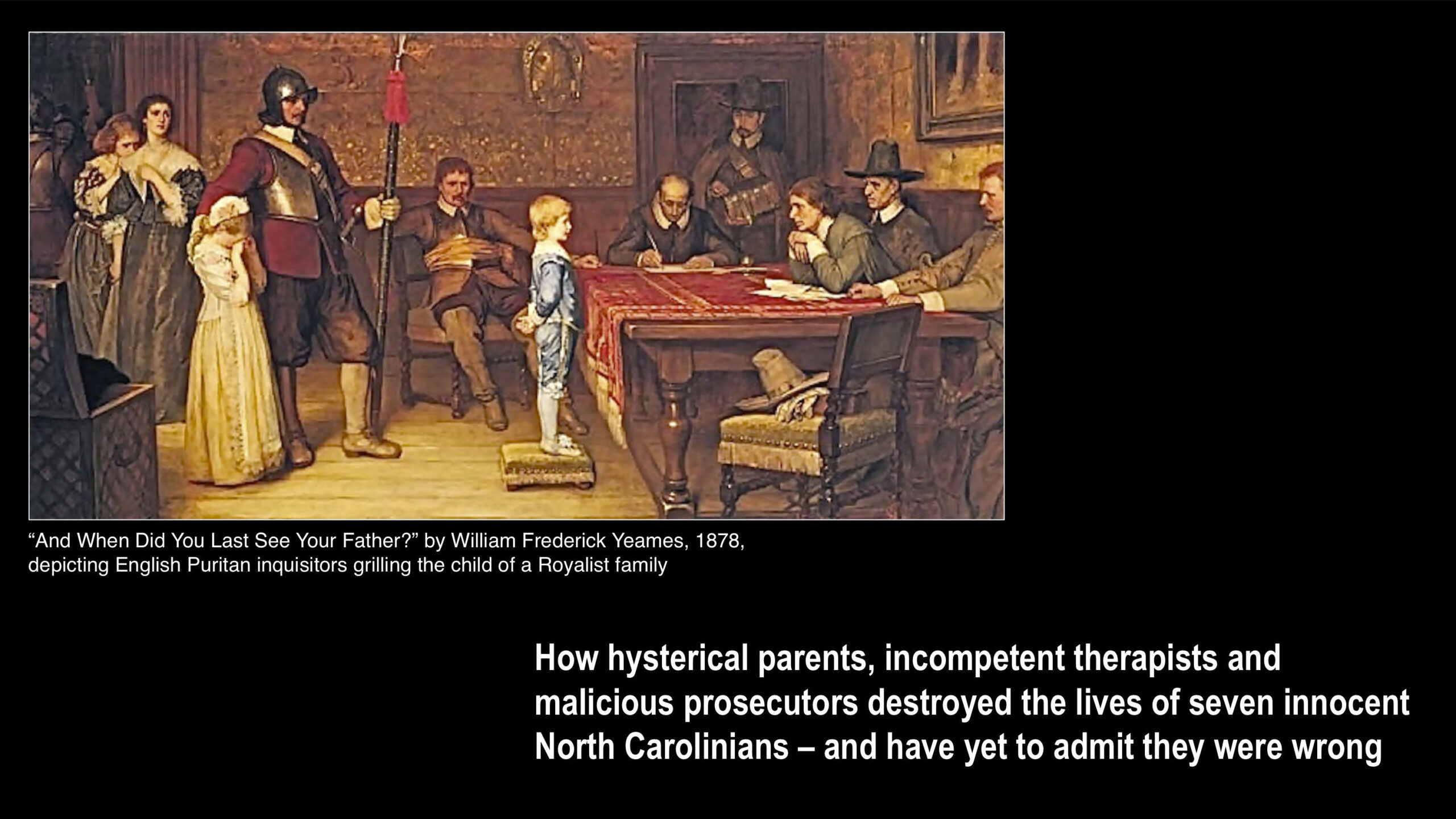
In the beginning, in 1989, more than 90 children at the Little Rascals Day Care Center in Edenton, North Carolina, accused a total of 20 adults with 429 instances of sexual abuse over a three-year period. It may have all begun with one parent’s complaint about punishment given her child.
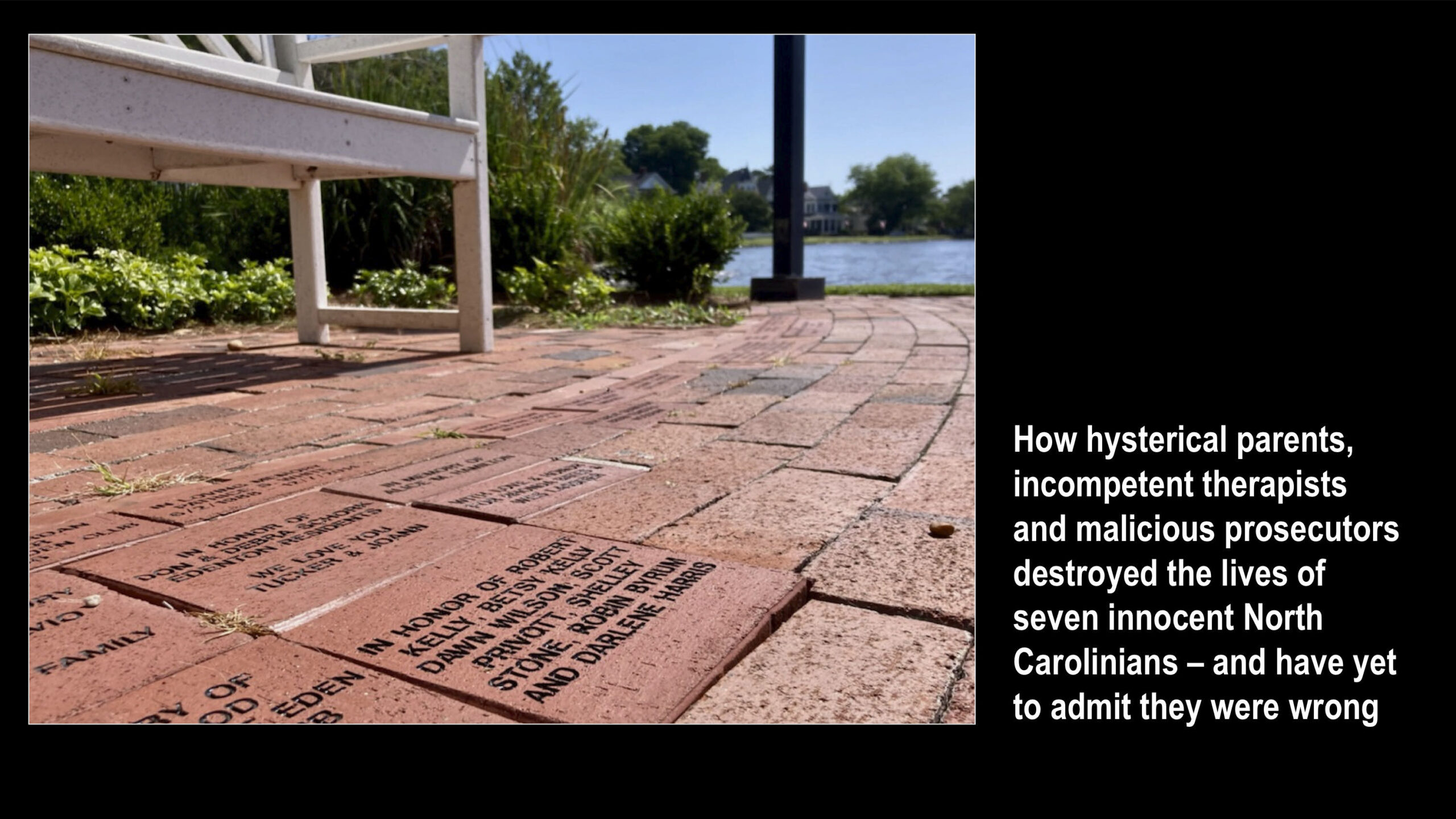
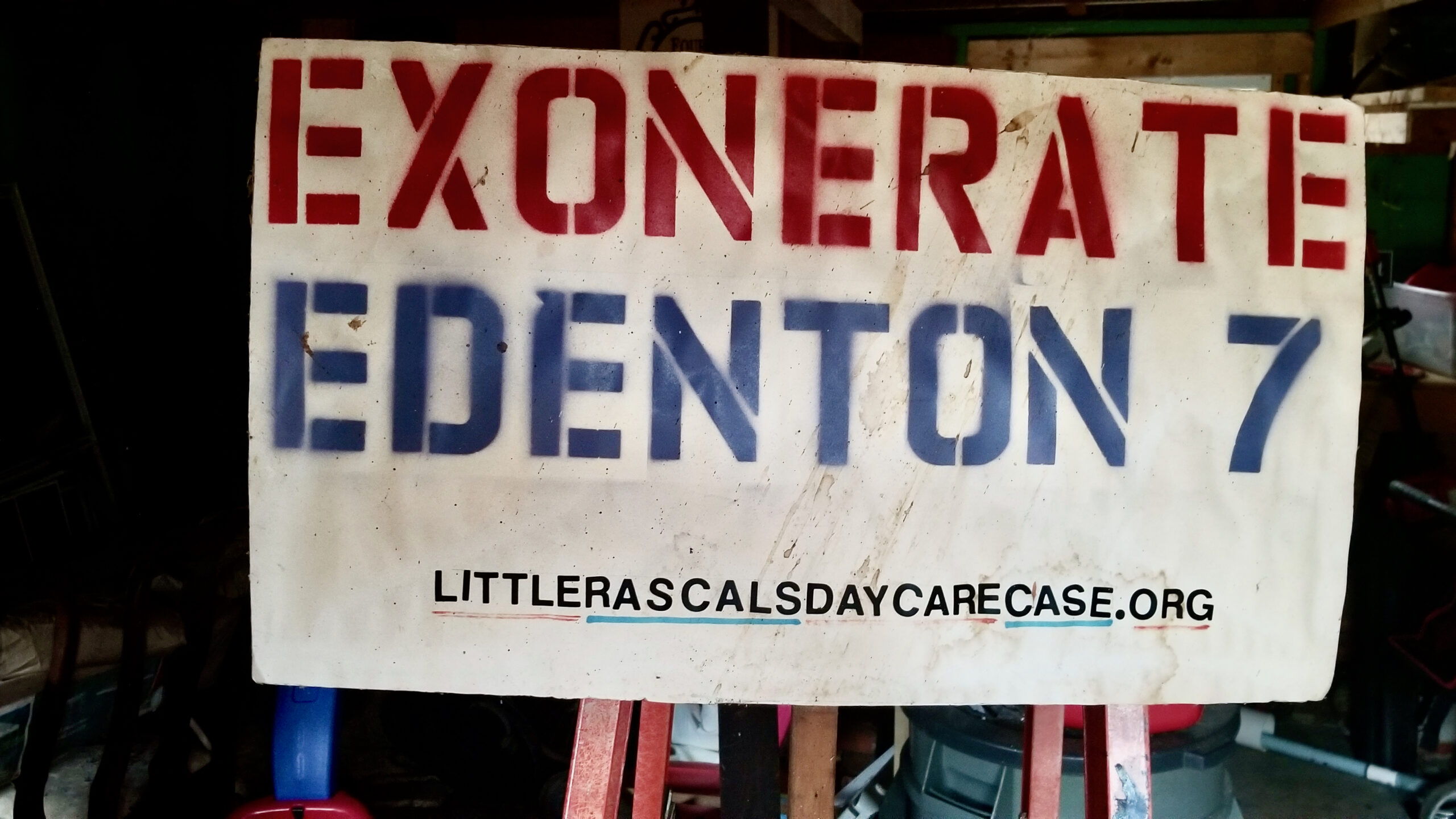
Among the alleged perpetrators: the sheriff and mayor. But prosecutors would charge only Robin Byrum, Darlene Harris, Elizabeth “Betsy” Kelly, Robert “Bob” Kelly, Willard Scott Privott, Shelley Stone and Dawn Wilson – the Edenton 7.
Along with sodomy and beatings, allegations included a baby killed with a handgun, a child being hung upside down from a tree and being set on fire and countless other fantastic incidents involving spaceships, hot air balloons, pirate ships and trained sharks.
By the time prosecutors dropped the last charges in 1997, Little Rascals had become North Carolina’s longest and most costly criminal trial. Prosecutors kept defendants jailed in hopes at least one would turn against their supposed co-conspirators. Remarkably, none did. Another shameful record: Five defendants had to wait longer to face their accusers in court than anyone else in North Carolina history.
Between 1991 and 1997, Ofra Bikel produced three extraordinary episodes on the Little Rascals case for the PBS series “Frontline.” Although “Innocence Lost” did not deter prosecutors, it exposed their tactics and fostered nationwide skepticism and dismay.
With each passing year, the absurdity of the Little Rascals charges has become more obvious. But no admission of error has ever come from prosecutors, police, interviewers or parents. This site is devoted to the issues raised by this case.
On Facebook


Little Rascals Day Care Case
This Facebook page is an offshoot of littlerascalsdaycarecase.org, which addresses the wrongful prosecution of the Edenton Seven and other such victims.

Meanwhile in Edenton....
This content isn't available right now
When this happens, it's usually because the owner only shared it with a small group of people, changed who can see it or it's been deleted.0 CommentsComment on Facebook
Allies for our cause!
This content isn't available right now
When this happens, it's usually because the owner only shared it with a small group of people, changed who can see it or it's been deleted.0 CommentsComment on Facebook
The courts have a long history of capriciously pulling the rug out from under Junior's appeals, but maybe this time....
This content isn't available right now
When this happens, it's usually because the owner only shared it with a small group of people, changed who can see it or it's been deleted.0 CommentsComment on Facebook
Click for earlier Facebook posts archived on this site
Click to go to

Today’s random selection from the Little Rascals Day Care archives….
For therapist, creating memory is easy task
 June 13, 2012
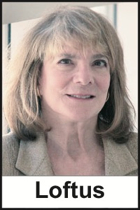
“Actually, making a false memory is pretty easy.
“(Psychologist Elizabeth) Loftus describes a father convincing his daughter she’d gotten lost in a mall when she was five years old. At first, the daughter denied any memory of the event, but as the father provided more fake details – ‘Don’t you remember that I told you we would meet at the Tug Boat?’ – the daughter began to ‘remember’ and even provide details of her own. Eventually when her father said, ‘I was so scared,’ she responded, ‘Not as scared as I was!’…
“You can probably imagine the implications of false memory in the courtroom or on the therapist’s couch (which famously leads to the courtroom)….”
– From “How You Remember, How You Decide: Memory Part II”
by Garth Sundem in Psychology Today (October 6, 2010)
One less platform for ritual-abuse fantasizers
 April 27, 2012
Friday news roundup:
■ Darkness to Light, the Charleston-based nonprofit with the goal “End Child Abuse,” has responded to my request to disassociate itself from one of the last promoters of the ritual-abuse day-care hoax. This is from Erika Rowell, program coordinator for D2L: “After taking a long look at the Survivorship website we have decided to remove it from our resource list.”
■ The North Carolina Supreme Court’s latest release on petitions allowed and denied included no ruling on Junior Chandler’s appeal. Next possible release date: June 14.
■ The New York Times reports a jarring increase in the number of retractions published in scientific journals. The Times focuses on heavyweights such as Science and the New England Journal of Medicine, but I have to wonder whether – OK, hope that – this phenomenon might one day extend to the likes of the Journal of Child Sexual Abuse, the Journal of Psychohistory and Treating Abuse Today, all of which failed to apply professional skepticism to the abuse fantasies of their contributors.
In this classroom, only certainty about ‘ritual abuse’
 Aug. 3, 2014
“Over the last 12 years, there have been hundreds of day care cases across the United States which involved allegations of ritual child abuse. The discovery and successful prosecution of a number of these cases has done much to expose cult activity and increase our awareness. While day care cases may ultimately be the ‘Achilles’ heel’ of organized cults who desire to expand their power and influence, there is nonetheless tremendous reluctance on the part of most victims to come forward. This is primarily due to the response of the media and the public.
“Along with the very real fear of reprisal or death associated with disclosure, adult survivors of ritual abuse who come forward face not only a climate of disbelief, but a lack of support services as well. Having endured the unspeakable horrors of ritual abuse, they face further victimization by an entire system in denial…..
“It is also often difficult to obtain conclusive medical evidence supportive of a child’s allegations of ritual physical and sexual abuse. Most cults use very sophisticated abuse, torture, and mind control techniques which are difficult to detect. For example, during the abuse and programming of children, cults may use the following: electroshock; pins and needles which are inserted under the fingernails or into sexual or other orifices of the body; knife cuts or burns into the scalp, onto the soles of the feet, or in the creases of the skin; as well as injuries designed to be explainable by otherwise acceptable means….
“Many cults either own or have access to a crematorium, and are assisted by cult physicians and/or coroners who cover up the cause of death of their victims. Less sophisticated methods for body disposal which have been used effectively are lime or acid pits, as well as tree shredders….
“When a concerned parent or therapist manages to make the child feel safe enough to make a disclosure, the system responds by discounting the allegations on the basis that the disclosure was not made at the onset of the therapeutic process….
“Children frequently report having been taken by train, boat, submarine or airplane to a specific location to participate in ritual activity. Often they are blindfolded and only told the name of the location after they have arrived.
“In reality, such transportation may only have been simulated, and a false location given. Or the child may, in fact, have been in a plane which flew in a circle for 20 minutes, with the ultimate destination falsified. In either case, facts are distorted to discredit later disclosures….
“(Footnote:) My contact with survivors in South Carolina and other states in the South reveals that alligators are commonly used as a means of disposal in these areas….”
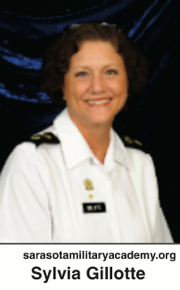
– From “Representing Children in Family Court: A Resource Manual for Attorneys and Guardians Ad Litem,” a (no longer available) publication of the South Carolina Bar (1993, 1995) by Sylvia Lynn Gillotte, chairman of the Resource Manual Project, Officer of the Governor, Guardian Ad Litem Program, in Spartanburg, S.C.
Ms. Gillotte makes an earnest and articulate argument that the nation’s day cares were (are?) plagued by “satanic ritual abuse.” Predictably absent in her 5,000-word manifesto, however, is anything approaching the requisite extraordinary evidence for extraordinary claims. Electroshock? Tree shredders? Plane rides? Alligators? “Cult physicians and/or coroners”?
Unlike so many who shared her convictions in the 1980s and ’90s, Ms. Gillotte has not retreated from the arena. Now an adjunct professor in the department of criminology at the University of South Florida Sarasota-Manatee, she teaches a course on “Legal Perspectives on Crimes Against Children” that features a main text by John E.B. Myers and a Skype interview with Randy Noblitt.
Professor Gillotte’s syllabus is unusual if not unique in 21st-century academia. Much more typical: Catherine Caldwell-Harris’s at Boston University.
Despite our wide differences, Professor Gillotte has generously taken the time to address my skepticism about ritual abuse. Later this week I’ll be quoting from our exchange.
Did replay of Salem prove human progress is ‘myth’?
 April 5, 2014
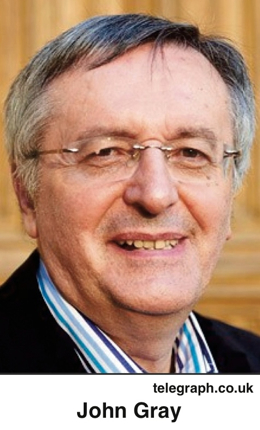
“Outside of science, progress is simply a myth.… In science the growth of knowledge is cumulative. But human life as a whole is not a cumulative activity; what is gained in one generation may be lost in the next.”
– From “Straw Dogs: Thoughts on Humans and Other Animals” (2002) by John Gray, British political philosopher
An arguable proposition, certainly – but how else to explain the widespread acceptance of day-care ritual-abuse claims 300 years after the Salem Witch Trials? As noted by sociologist David G. Bromley, this chronic failure to learn-and-remember makes inevitable yet more moral panics – whatever their specifics.
And how else to explain this just-published revisionist history?