Rascals case in brief
In the beginning, in 1989, more than 90 children at the Little Rascals Day Care Center in Edenton, North Carolina, accused a total of 20 adults with 429 instances of sexual abuse over a three-year period. It may have all begun with one parent’s complaint about punishment given her child.
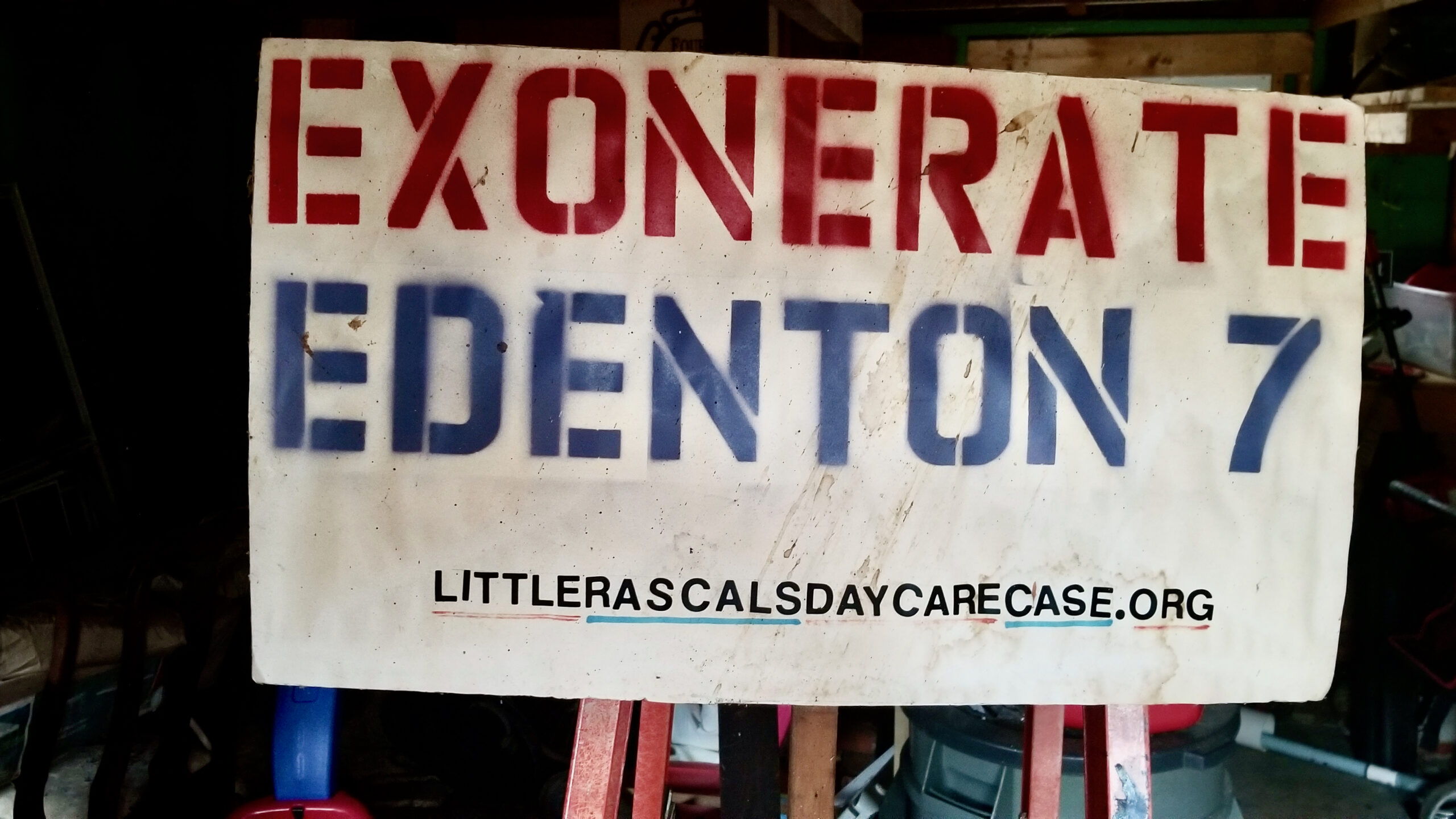
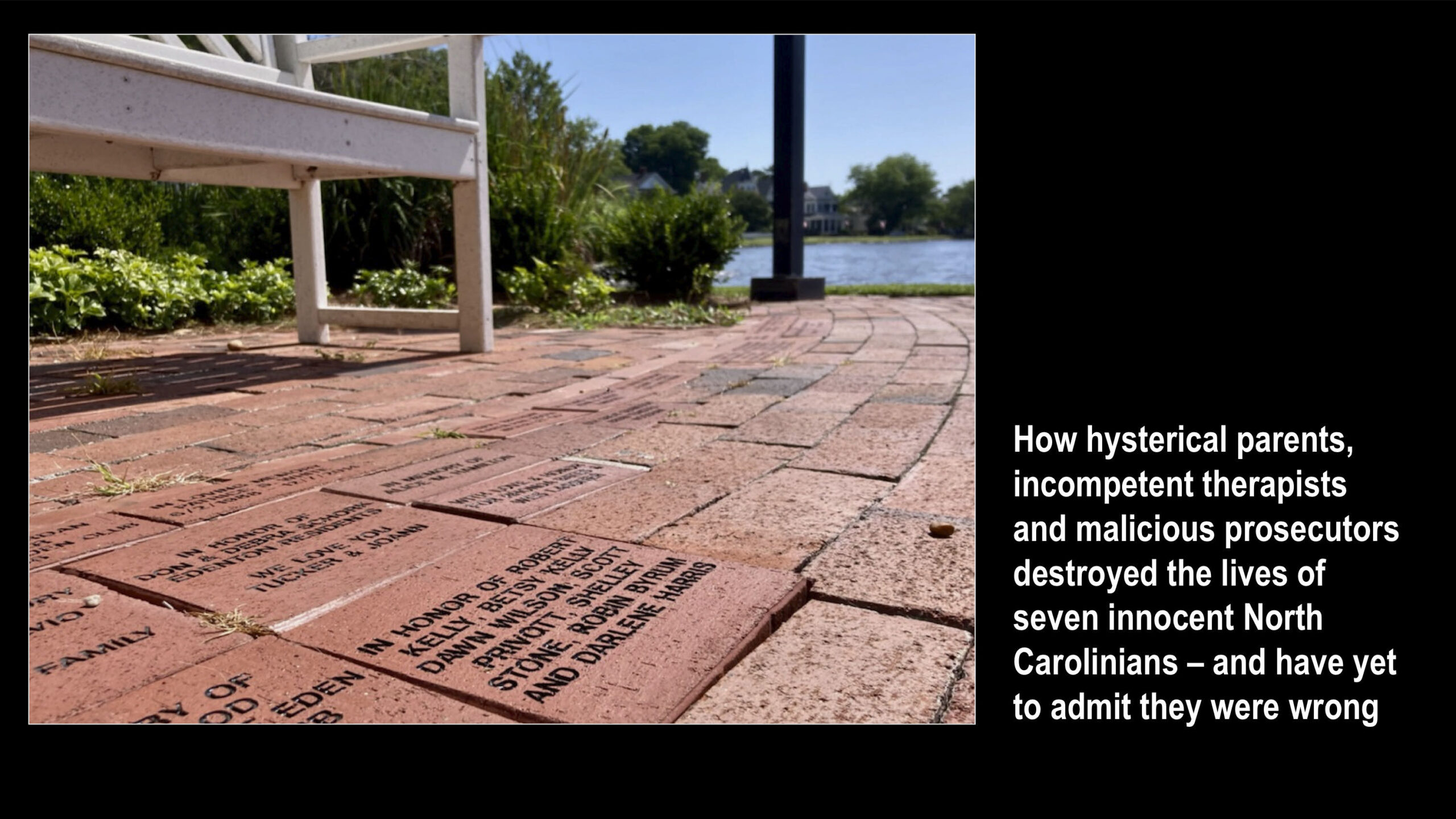
Among the alleged perpetrators: the sheriff and mayor. But prosecutors would charge only Robin Byrum, Darlene Harris, Elizabeth “Betsy” Kelly, Robert “Bob” Kelly, Willard Scott Privott, Shelley Stone and Dawn Wilson – the Edenton 7.
Along with sodomy and beatings, allegations included a baby killed with a handgun, a child being hung upside down from a tree and being set on fire and countless other fantastic incidents involving spaceships, hot air balloons, pirate ships and trained sharks.
By the time prosecutors dropped the last charges in 1997, Little Rascals had become North Carolina’s longest and most costly criminal trial. Prosecutors kept defendants jailed in hopes at least one would turn against their supposed co-conspirators. Remarkably, none did. Another shameful record: Five defendants had to wait longer to face their accusers in court than anyone else in North Carolina history.
Between 1991 and 1997, Ofra Bikel produced three extraordinary episodes on the Little Rascals case for the PBS series “Frontline.” Although “Innocence Lost” did not deter prosecutors, it exposed their tactics and fostered nationwide skepticism and dismay.
With each passing year, the absurdity of the Little Rascals charges has become more obvious. But no admission of error has ever come from prosecutors, police, interviewers or parents. This site is devoted to the issues raised by this case.
On Facebook


Little Rascals Day Care Case
This Facebook page is an offshoot of littlerascalsdaycarecase.org, which addresses the wrongful prosecution of the Edenton Seven and other such victims.

Meanwhile in Edenton....
This content isn't available right now
When this happens, it's usually because the owner only shared it with a small group of people, changed who can see it or it's been deleted.0 CommentsComment on Facebook
Allies for our cause!
This content isn't available right now
When this happens, it's usually because the owner only shared it with a small group of people, changed who can see it or it's been deleted.0 CommentsComment on Facebook
The courts have a long history of capriciously pulling the rug out from under Junior's appeals, but maybe this time....
This content isn't available right now
When this happens, it's usually because the owner only shared it with a small group of people, changed who can see it or it's been deleted.0 CommentsComment on Facebook
Click for earlier Facebook posts archived on this site
Click to go to

Today’s random selection from the Little Rascals Day Care archives….
Isn’t half of Junior’s life enough, North Carolina?
Sept. 8, 2014
“The aging prison population represents a national human-made epidemic decades in the making. …
“Our current trajectory is economically infeasible and morally untenable….
“Although there is no commonly agreed-upon age at which an incarcerated individual is ‘old’ – definitions range from 50 to 65 – it is clear that the number of people in prison requiring significant age-related medical care will continue to rise at a substantial rate. From 1995 to 2010, the U.S. prison population aged 55 or older nearly quadrupled….
“On average, it costs approximately twice as much to incarcerate someone aged 50 and over ($68,270) than a younger, more able-bodied individual ($34,135)….
“The elderly in prison also demonstrate a greater risk of injury, victimization, ailing health, and death than their younger counterparts….
“The phenomenon of accelerated aging, which can be attributed to the prevalence of environmental stressors coupled with a lack of access to holistic healthcare, means that the body of an incarcerated 50-year-old has a ‘physiological age’ that is 10 to 15 years older….
“The stated objectives of incarceration would suggest that correctional spending should be allocated among demographics in proportion to their public safety risk and potential for behavioral change.
“Aging adults in prison have the lowest recidivism rate and pose almost no threat to public safety. Nationwide, 43.3 percent of all released individuals recidivate within three years, while only 7 percent of those aged 50-64 are returned to prison for new convictions….”
– From “The High Costs of Low Risk: The Crisis of America’s Aging Prison Population” prepared by the Osborne Association (July 2014) (Hat tip, the New York Times)
Today is Andrew Junior Chandler’s 57th birthday. He has been in prison since he was 29 years old. Even if he were guilty – which he clearly is not – how can the State of North Carolina justify his continued incarceration?
27 million chances to provoke mass hysteria
Sept. 26, 2012
“The (Little Rascals) kids stories have unerringly followed the ritual abuse plot, progressing lately to tales of witnessing babies slaughtered. Perhaps not coincidentally, their most bizarre allegations began surfacing around the time that 27 million viewers watched ‘Do You Know the Muffin Man?’ a (Lifetime TV) movie that rehashed details from several ritual abuse cases, but included the wholly fictional climax of parents discovering day-care teachers worshipping the devil amidst piles of kiddie porn.”
– From “The Ritual Sex Abuse Hoax” by Debbie Nathan (Village Voice, January 12, 1990)
“Muffin Man” aired October 22, 1989 – simultaneous with not only the ongoing arrests of Little Rascals defendants but also the satanic-baby-kidnap rumor sweeping East North Carolina.
“These stories keep cropping up all over the country,” observes the “Muffin Man” prosecutor. “With this many Satan ritual abuse cases, there has got to be something out there.” (In the Little Rascals case, this “Where there’s smoke…” rationale was most notoriously put forth by UNC Chapel Hill psychologist Mark Everson.)
In Bucks County, Pa., however, District Attorney Alan Rubenstein couldn’t help noticing that complaints about ritual abuse at Breezy Point Day School went from a trickle to a torrent the day after “Muffin Man” aired. Unlike so many other prosecutors in Edenton and elsewhere, Rubenstein saw through the claims and crushingly debunked them.
Oh, those consequences of imaginations run amok
Dec. 21, 2012
“In the accusatorial post-McMartin climate, day care providers… took measures to protect themselves from false allegations. They installed video cameras to record all of their activities, opened up private spaces to public view by taking down doors to bathrooms and closets and, fearing the act now could be misinterpreted, stopped hugging and holding their young charges.
“State legislatures… hurriedly mandated the fingerprinting and criminal records check of all current and prospective day care providers; state licensing agencies tightened regulations and by legislative fiat were given more teeth to enforce them. Yet insurance liability premiums soared, forcing many small day care centers out of business and many more, unlicensed and uninsured, to go underground.
“Heralded at the start of the (1980s) as playgrounds for children, day care centers were feared at its end as playthings of the devil.”
– From “The Devil Goes to Day Care: McMartin and the Making of a Moral Panic” by Mary De Young in the Journal of American Culture (April 1, 1997)
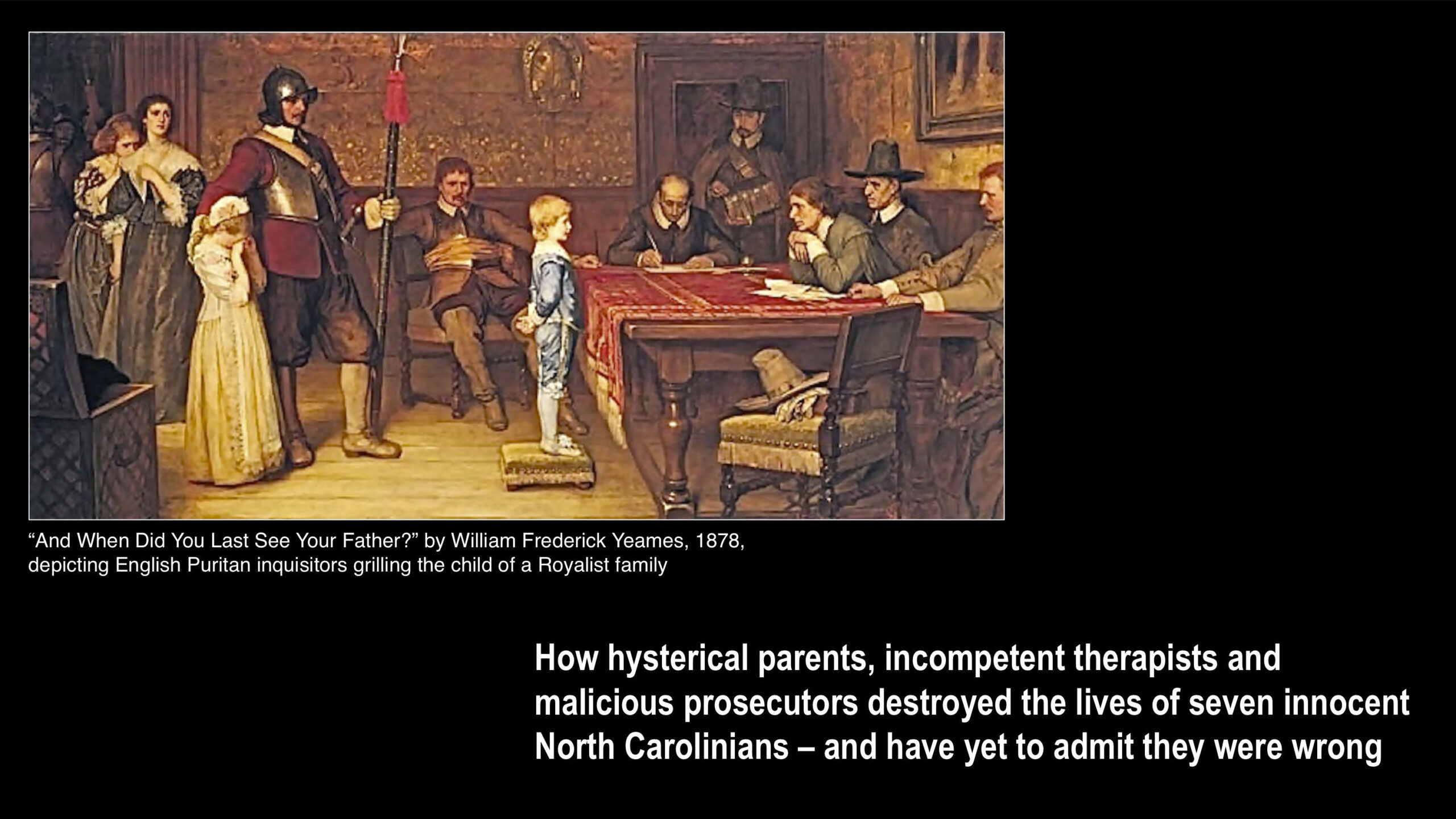
Second to none was North Carolina’s overreaction, highlighted by the creation of “interagency task forces.”
Of mice and memory and the moral panic
July 29, 2013
“Scientists at the Massachusetts Institute of Technology have developed the ability to implant mice with false memories. The memories can be easily induced and are just as strong as real memories, physiological proof of something psychologists and lawyers have known for years.
“The findings are a serious matter. According to the Innocence Project, eyewitness testimony played a role in 75 percent of guilty verdicts eventually overturned by DNA testing after people spent years in prison. Some prisoners may even have been executed due to false eyewitness testimony. It was not because the witnesses were lying. They were just wrong, said Susumu Tonegawa, a molecular biologist and the lead author in the MIT study.
“In the longest criminal trial in American history, the McMartin family, who operated a preschool in California, was charged with multiple incidents of child abuse. After seven years and $15 million in prosecution expenses, some charges were dropped and the defendants were acquitted of others when it became clear some of the accusations were based on false memories, some possibly planted by childrens’ therapists.”
– From “Scientists Produce False Memories In Mice” by Joel N. Shurkin, Inside Science News Service (July 25, 2013)
The same day’s Guardian of London adds this response from Chris French, head of the Anomalistic Psychology Research Unit at Goldsmiths, University of London:
“Memory… is a reconstructive process which involves building a specific memory from fragments of real memory traces of the original event but also possibly including information from other sources.”
“Information from other sources” – that is, from prosecution therapists – was what contaminated the memories of child witnesses in cases such as McMartin and Little Rascals.