
Rascals case in brief
In the beginning, in 1989, more than 90 children at the Little Rascals Day Care Center in Edenton, North Carolina, accused a total of 20 adults with 429 instances of sexual abuse over a three-year period. It may have all begun with one parent’s complaint about punishment given her child.
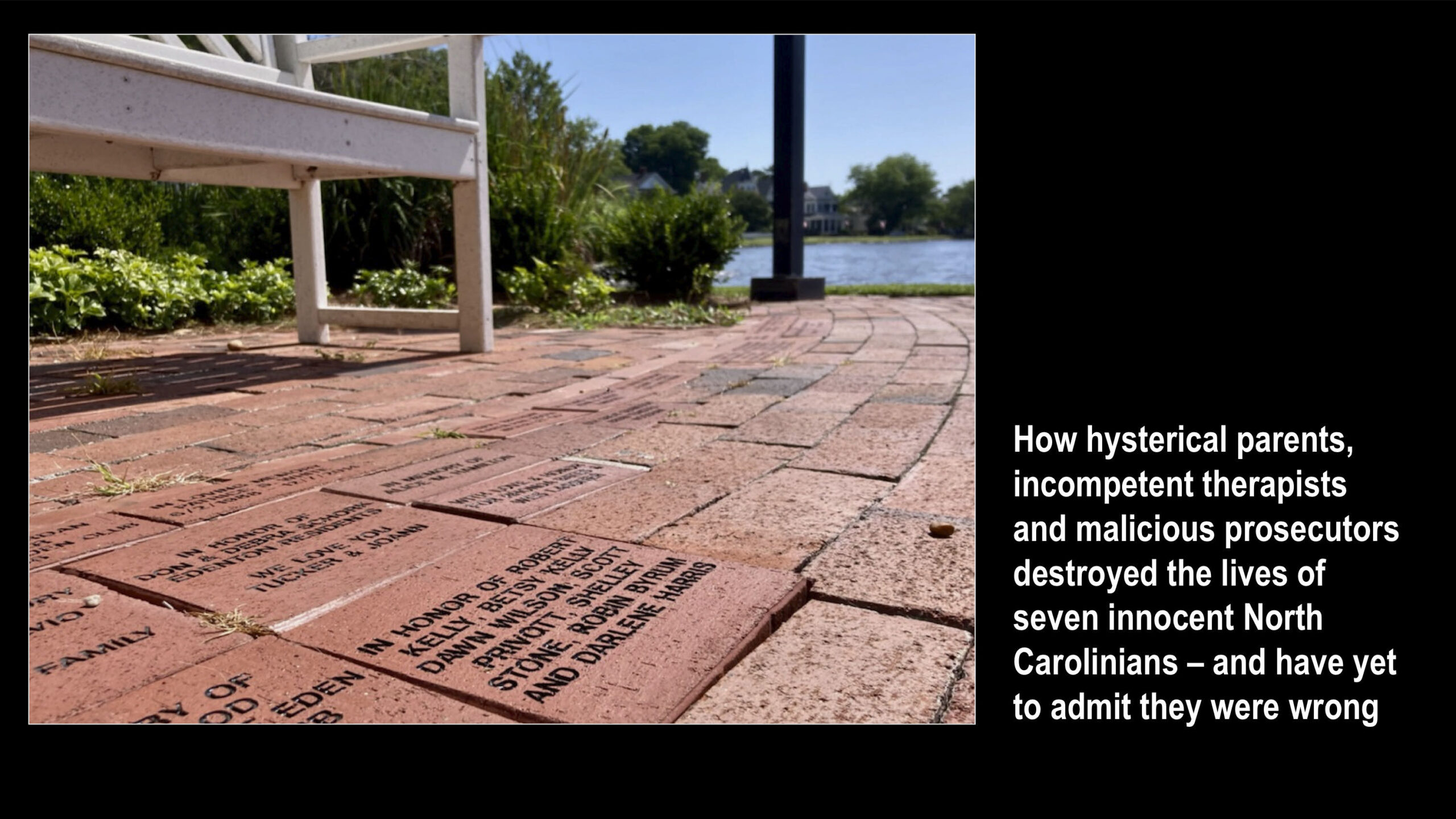
Among the alleged perpetrators: the sheriff and mayor. But prosecutors would charge only Robin Byrum, Darlene Harris, Elizabeth “Betsy” Kelly, Robert “Bob” Kelly, Willard Scott Privott, Shelley Stone and Dawn Wilson – the Edenton 7.
Along with sodomy and beatings, allegations included a baby killed with a handgun, a child being hung upside down from a tree and being set on fire and countless other fantastic incidents involving spaceships, hot air balloons, pirate ships and trained sharks.
By the time prosecutors dropped the last charges in 1997, Little Rascals had become North Carolina’s longest and most costly criminal trial. Prosecutors kept defendants jailed in hopes at least one would turn against their supposed co-conspirators. Remarkably, none did. Another shameful record: Five defendants had to wait longer to face their accusers in court than anyone else in North Carolina history.
Between 1991 and 1997, Ofra Bikel produced three extraordinary episodes on the Little Rascals case for the PBS series “Frontline.” Although “Innocence Lost” did not deter prosecutors, it exposed their tactics and fostered nationwide skepticism and dismay.
With each passing year, the absurdity of the Little Rascals charges has become more obvious. But no admission of error has ever come from prosecutors, police, interviewers or parents. This site is devoted to the issues raised by this case.
On Facebook


Little Rascals Day Care Case
This Facebook page is an offshoot of littlerascalsdaycarecase.org, which addresses the wrongful prosecution of the Edenton Seven and other such victims.

Meanwhile in Edenton....
This content isn't available right now
When this happens, it's usually because the owner only shared it with a small group of people, changed who can see it or it's been deleted.0 CommentsComment on Facebook
Allies for our cause!
This content isn't available right now
When this happens, it's usually because the owner only shared it with a small group of people, changed who can see it or it's been deleted.0 CommentsComment on Facebook
The courts have a long history of capriciously pulling the rug out from under Junior's appeals, but maybe this time....
This content isn't available right now
When this happens, it's usually because the owner only shared it with a small group of people, changed who can see it or it's been deleted.0 CommentsComment on Facebook
Click for earlier Facebook posts archived on this site
Click to go to

Today’s random selection from the Little Rascals Day Care archives….
Officer Toppin sure had an eye for ‘red flags’
July 24, 2013
“(Edenton police officer Brenda) Toppin, who conducted the first interviews of children allegedly abused at the center, testified that ‘In the early interviews, I had very few children disclosing to me…. Most of the children were not telling me specifically about Mr. Bob.’
“ ‘Red flags,’ however, caused her to continue her questioning. The ‘red flags’ included children being tense when the subject of the day-care center was mentioned, she said, and not talking to her as normal children would.”
– From the Associated Press (December 4, 1991)
It doesn’t take much reading between the lines to see Brenda Toppin’s persistence in the face of “very few children disclosing to me” or her overreaction to those absurdly vague “red flags.”
A surviving fragment of tape laid out even more saliently her abusive interview technique. Read for yourself a transcript of one of Toppin’s interviews with a child. The transcript entered the court record during the appeals process.
When the people we trust can’t be trusted

Jan. 25, 2017
“Why is there such a cultural bias toward stories of abuse – and especially toward grotesque and absurd tales, even when there is no reliable evidence that any crime occurred in the first place?
“The very people we count on to protect our society – prosecutors, police, social workers, jurors, even parents – are eliciting fantasies from children that express our worst collective fears. ….
“The libel that our society has imposed on child-care workers is a kind of projection of guilt for the damage that we ourselves have done, as parents and as a society. We have given our children to strangers to rear, and it makes us uneasy and fearful. Is it any wonder we have a bad conscience?…. ”
– From “Child-care Demons” by Lawrence Wright in The New Yorker (Oct. 3, 1994)

Clemency now rare; is it fear of blowback?
 Dec. 8, 2013
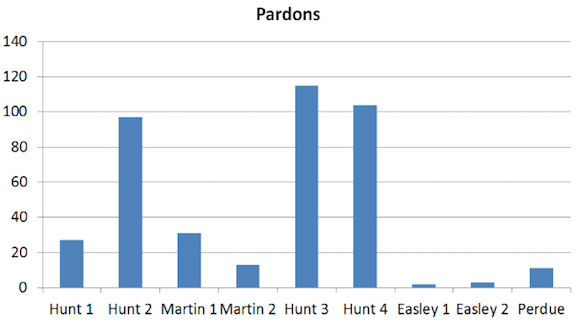
“Obviously, there’s a modern trend towards more limited use of executive clemency that extends beyond the current president. I speculate that the increased media scrutiny given to pardons and commutations has made presidents reluctant to exercise clemency…..
“The same trend… may be present in North Carolina as well…. Most of Governor Easley’s pardons were in cases in which DNA evidence exonerated the defendant, while almost all of Governor Perdue’s pardons concerned the racially tainted Wilmington 10 cases…. It is too early to tell how much, or how little, Governor McCrory will exercise executive clemency.”
– From “Do Only Turkeys Get Pardons?” by Jeff Welty at the North Carolina Criminal Law blog (Dec. 5)
The chart above, compiled by Welty, a faculty member at the University of North Carolina School of Government, depicts poignantly the odds faced by Junior Chandler and others pursuing clemency from recent North Carolina governors.
Since Jim Hunt left office in 2001, pardons have become historically scarce, paralleling the drop-off at the presidential level. But that smattering of clemency, as Welty points out, is most like to occur in December, under cover of the Christmas spirit.
Beware of jurors wearing deerstalker caps

April 10, 2016
“(Daniel Green’s) Durham-based defense team says it has new evidence that challenges major parts of the prosecution’s case, while bolstering their request for a new trial. They claim that misleading testimony and misconduct by the prosecutor and jury helped send Green to prison for (the 1993 murder of James Jordan) he did not commit.
“The evidence outlined in court documents includes… a sworn statement from the jury forewoman who admits she did her own investigation of Jordan’s murder, which violated a judge’s order. Paula Locklear says that during the trial, she visited the South Carolina creekside where the body was found and developed her own theory on how the killing occurred. A Charlotte legal expert says her action amounts to a ‘tremendous problem’ for the original case and could get Green’s conviction overturned….”
– From “New questions raised in slaying case of Michael Jordan’s father” by Michael Gordon and Mark Washburn in the Charlotte Observer (April 9) (cached)
Sound familiar? It should! As a juror in Bob Kelly’s trial, Dennis T. Ray not only conducted his own “crime” scene surveys, but also shared a Cosmopolitan article about how to identify child molesters, relayed incriminating claims from a jailhouse snitch and even displayed a supposed “magic key” described by child witnesses.
Unfortunately, Judge Marsh McLelland didn’t consider Ray’s rogue behavior – or that of a second juror, who dramatically revealed during deliberations that he himself had been abused as a child – to be a “tremendous problem.”
In fact, McLelland found precious few reasons to take issue with the prosecution’s case.