Rascals case in brief
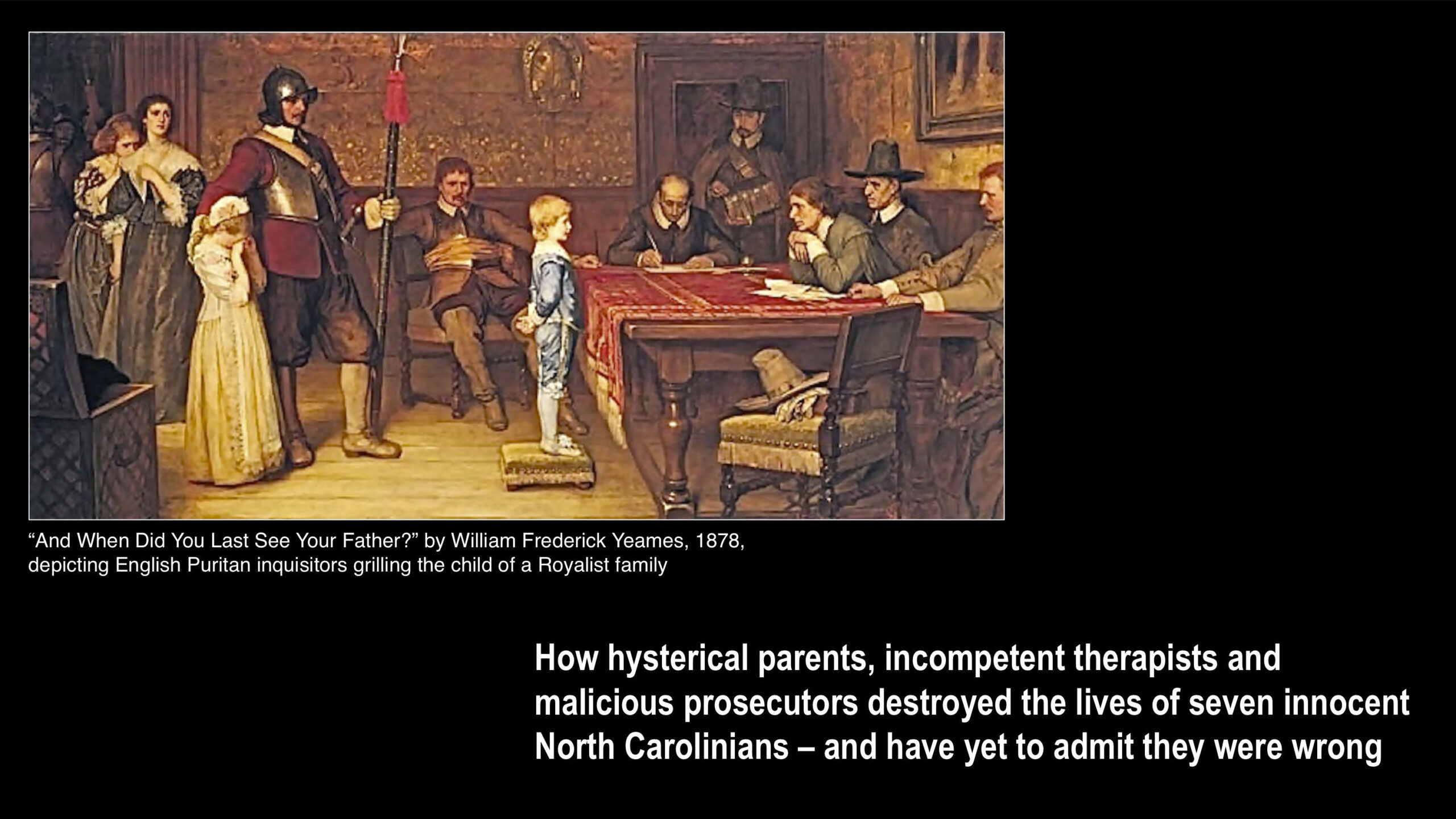
In the beginning, in 1989, more than 90 children at the Little Rascals Day Care Center in Edenton, North Carolina, accused a total of 20 adults with 429 instances of sexual abuse over a three-year period. It may have all begun with one parent’s complaint about punishment given her child.
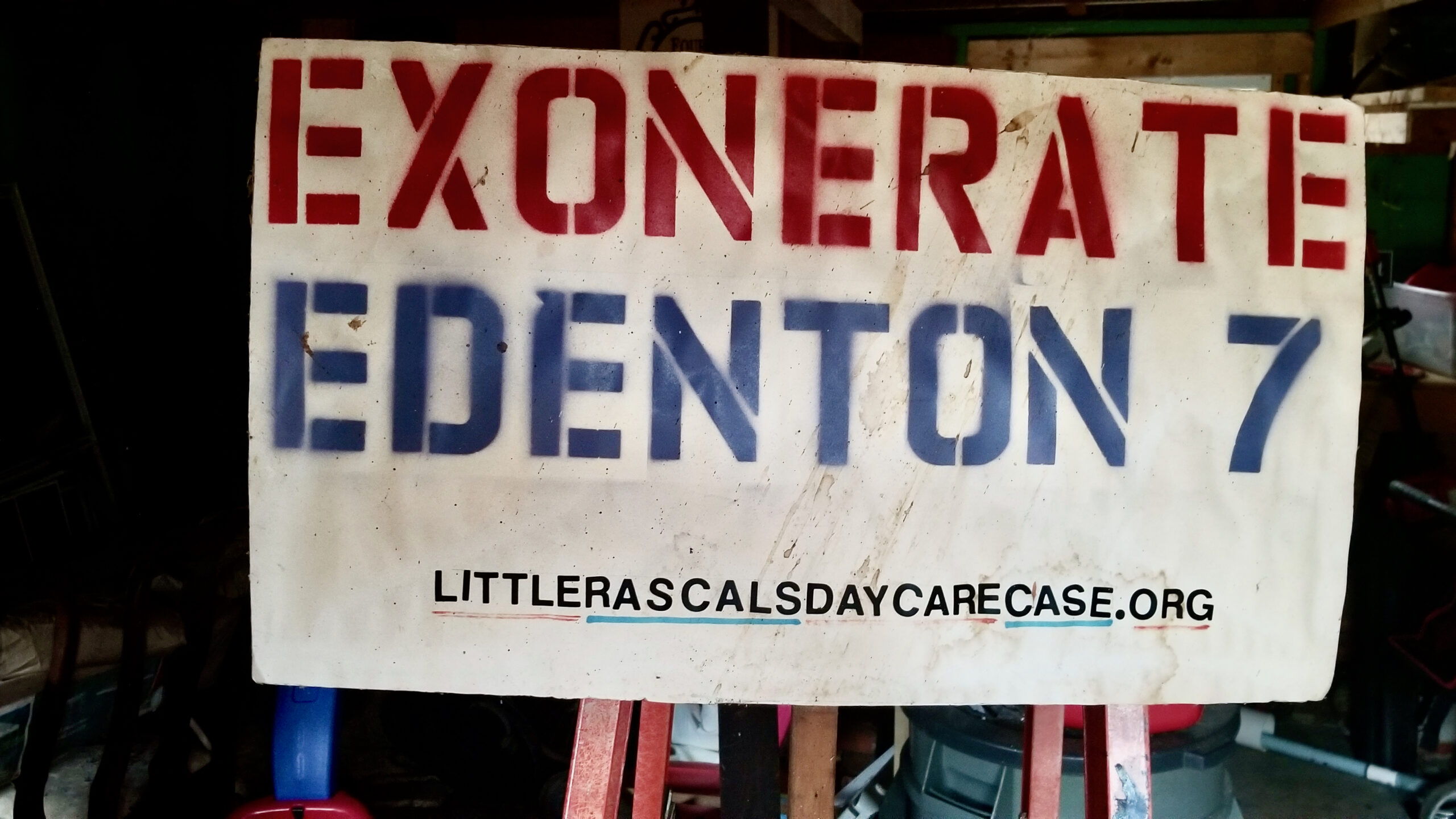
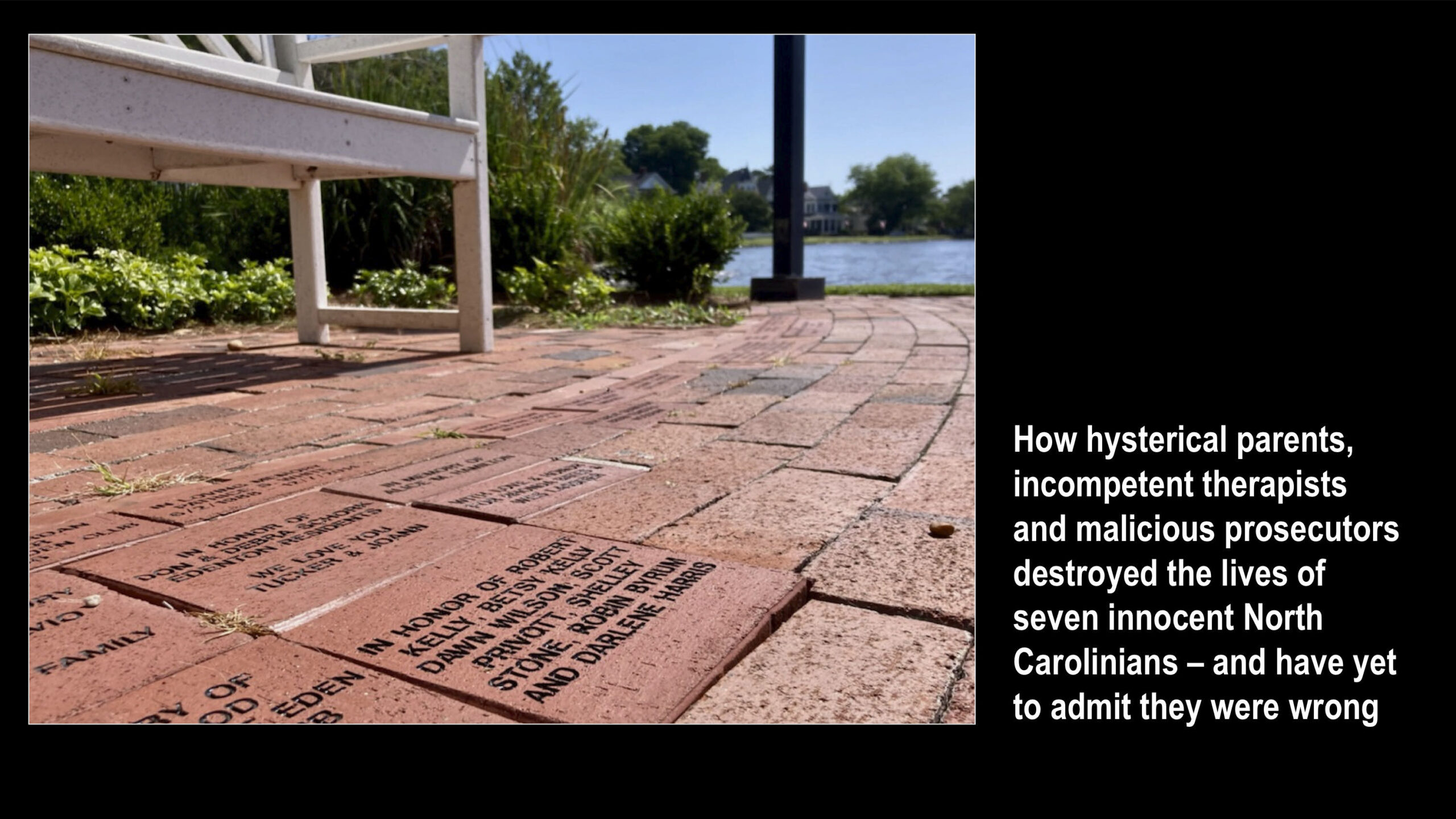
Among the alleged perpetrators: the sheriff and mayor. But prosecutors would charge only Robin Byrum, Darlene Harris, Elizabeth “Betsy” Kelly, Robert “Bob” Kelly, Willard Scott Privott, Shelley Stone and Dawn Wilson – the Edenton 7.
Along with sodomy and beatings, allegations included a baby killed with a handgun, a child being hung upside down from a tree and being set on fire and countless other fantastic incidents involving spaceships, hot air balloons, pirate ships and trained sharks.
By the time prosecutors dropped the last charges in 1997, Little Rascals had become North Carolina’s longest and most costly criminal trial. Prosecutors kept defendants jailed in hopes at least one would turn against their supposed co-conspirators. Remarkably, none did. Another shameful record: Five defendants had to wait longer to face their accusers in court than anyone else in North Carolina history.
Between 1991 and 1997, Ofra Bikel produced three extraordinary episodes on the Little Rascals case for the PBS series “Frontline.” Although “Innocence Lost” did not deter prosecutors, it exposed their tactics and fostered nationwide skepticism and dismay.
With each passing year, the absurdity of the Little Rascals charges has become more obvious. But no admission of error has ever come from prosecutors, police, interviewers or parents. This site is devoted to the issues raised by this case.
On Facebook


Little Rascals Day Care Case
This Facebook page is an offshoot of littlerascalsdaycarecase.org, which addresses the wrongful prosecution of the Edenton Seven and other such victims.

Meanwhile in Edenton....
This content isn't available right now
When this happens, it's usually because the owner only shared it with a small group of people, changed who can see it or it's been deleted.0 CommentsComment on Facebook
Allies for our cause!
This content isn't available right now
When this happens, it's usually because the owner only shared it with a small group of people, changed who can see it or it's been deleted.0 CommentsComment on Facebook
The courts have a long history of capriciously pulling the rug out from under Junior's appeals, but maybe this time....
This content isn't available right now
When this happens, it's usually because the owner only shared it with a small group of people, changed who can see it or it's been deleted.0 CommentsComment on Facebook
Click for earlier Facebook posts archived on this site
Click to go to

Today’s random selection from the Little Rascals Day Care archives….
How hard it was to say, ‘Boy, was I wrong’
 Aug. 10, 2012
Carol Tavris:
“After the McMartin trial in 1986, I wrote an article for the Los Angeles Times about research that had been done on how to interview children in sex abuse cases. Evidence at the time suggested that sometimes you have to ask children leading questions or they will not tell you they have been molested.
“For example, if you interviewed a child after a genital examination and you asked her just to tell what the doctor did, almost no child would volunteer that the doctor touched her genitals. But if you asked a leading question, such as, ‘The doctor touched your private parts, didn’t he?’ the children would say ‘yes.’ The L.A. Times headlined this article, ‘Do Children Lie? Not About This.’
“Of course that was preposterous. Of course children lie ‘about this’ and lots of other things. But my essay, although based on research at the time, helped support the child advocates who were on a rampage against child molesters, and who were running around saying ‘children never lie’ and selling bumper stickers that said ‘Believe the Children.’’ I didn’t foresee that prosecutors and therapists would use these same studies to coerce the hell out of kids.
“When I think of my own embarrassment about that little article, and how hard it was to say, ‘Boy, was I wrong about that research,’ I realize how difficult it must be for all those ‘believe the children’ people to acknowledge they were wrong, too. In fact, most of them haven’t. They are more entrenched than ever in their pernicious beliefs.”
– From “The Measure of a Woman: An Interview with Social Scientist Carol Tavris”
in Skeptic magazine (Feb. 9, 2011)
‘What may be the largest child sexual abuse trial this country has ever seen’
July 22, 2016
“FARMVILLE, N.C. – Farmville’s only courtroom has never played host to a felony trial. This week, the town’s 4,000 residents will watch a parade of jurors, lawyers, psychologists, parents and children converge on that courtroom. There, they will unfold what may be the largest child sexual abuse trial this country has ever seen: the trial of Robert F. Kelly Jr. of Edenton.
 “The trial was moved to this one-blink community in Pitt County, 65 miles west of Edenton in Eastern North Carolina, because of pretrial publicity.
“But the spotlight will find Farmville, if not for the unprecedented number of sexual abuse indictments, then for the sordid nature of the charges. And if not for that, then for the impact the trial – expected to last three to four months – could have on future large-scale child-abuse prosecutions.
“Jury selection is scheduled to start today….”
– From “Witnesses, jurors, lawyers mass for sexual-abuse trial” by Knight-Ridder News Service in the Baltimore Sun (July 22, 1991)
In fact, the trial would last nine months, not three or four. Although prosecutors won initial convictions of both Kelly and Dawn Wilson, for whatever reasons – surely including the eye-opening effects of Ofra Bikel’s “Innocence Lost” trilogy – the nation was spared “future large-scale child-abuse prosecutions.”

Whatever happened to Kelly’s ex-lawyer? This….
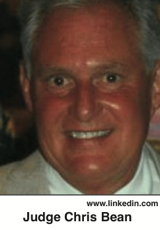 Nov. 8, 2013
While we await Gov. McCrory’s decision on whether to promote Nancy Lamb to district attorney, another key figure in the Little Rascals prosecution is stepping aside.
From the Elizabeth City Daily Advance:
EDENTON – Judge Chris Bean, chief district court judge in the 1st Judicial District, does not plan to seek re-election to another term.
Bean, who has been a judge for more than two decades, said recently he plans to step down when his current term ends in December 2014.
“I have been doing this for 20-some years,” Bean said. “It has been a fascinating career.”
Unmentioned by Judge Bean (or by the Advance, which seems to have purged Little Rascals from its memory) is his deeply prejudicial testimony against former client Bob Kelly.
Bean and Lamb have continued to share an immunity to just consequences. (Compare the enormity of the Little Rascals prosecution with the penny-ante misconduct that typically brings about disbarment in North Carolina.)
Only their innocent victims – the Edenton Seven, the child witnesses – paid a price, and it was a high one indeed.
Kelly defenders risked ‘financial and social suicide’
July 13, 2015
Throughout the long unfolding of the Little Rascals Day Care prosecution, outsiders often sought to determine the “mood of Edenton.” This was a challenging task even in the early days of the case, and it became just about impossible after the first “Innocence Lost” episode cast the town in a starkly unflattering light.
The default response to anyone with a notepad: Go away.
In 1996, however, a defense attorney weighing Edenton as a site for Bob Kelly’s possible retrial had better luck. His case notes include this candid and chilling evaluation from a longtime Edentonian:
“(The resident) didn’t believe that any of the defendants, but especially Bob, had a chance of getting a fair trial in Edenton. Although the constant talk of Little Rascals has died down, he said people still wouldn’t dare mention the idea of innocence. He believes that probably half of (Chowan County) either doesn’t believe Bob did it or at least not to the extent alleged. He believes the largest group of ‘nonbelievers’ to be those of lesser means, and especially minorities.
“He said that anyone of means or in any type of business in town would be committing financial and social suicide if they voiced any belief in Bob’s innocence.
“He said that even if he knew Bob to be innocent, or less guilty than charged, he would have a hard time voting so as a juror in light of the lifelong social repercussions. If there was even one or two jurors who believed Bob was guilty, they would be able to pressure everyone else into voting with them….”