Rascals case in brief
In the beginning, in 1989, more than 90 children at the Little Rascals Day Care Center in Edenton, North Carolina, accused a total of 20 adults with 429 instances of sexual abuse over a three-year period. It may have all begun with one parent’s complaint about punishment given her child.
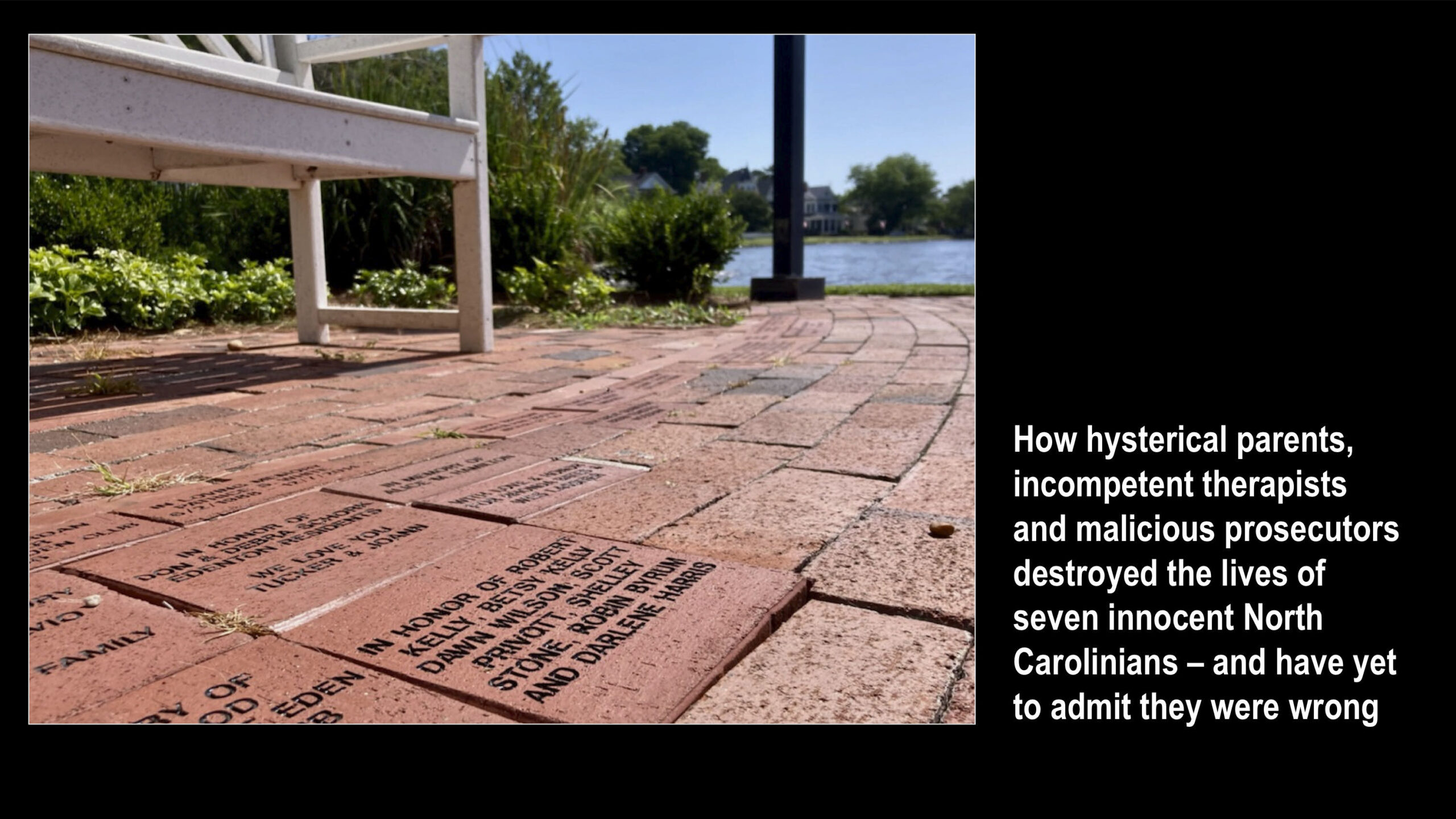
Among the alleged perpetrators: the sheriff and mayor. But prosecutors would charge only Robin Byrum, Darlene Harris, Elizabeth “Betsy” Kelly, Robert “Bob” Kelly, Willard Scott Privott, Shelley Stone and Dawn Wilson – the Edenton 7.
Along with sodomy and beatings, allegations included a baby killed with a handgun, a child being hung upside down from a tree and being set on fire and countless other fantastic incidents involving spaceships, hot air balloons, pirate ships and trained sharks.
By the time prosecutors dropped the last charges in 1997, Little Rascals had become North Carolina’s longest and most costly criminal trial. Prosecutors kept defendants jailed in hopes at least one would turn against their supposed co-conspirators. Remarkably, none did. Another shameful record: Five defendants had to wait longer to face their accusers in court than anyone else in North Carolina history.
Between 1991 and 1997, Ofra Bikel produced three extraordinary episodes on the Little Rascals case for the PBS series “Frontline.” Although “Innocence Lost” did not deter prosecutors, it exposed their tactics and fostered nationwide skepticism and dismay.
With each passing year, the absurdity of the Little Rascals charges has become more obvious. But no admission of error has ever come from prosecutors, police, interviewers or parents. This site is devoted to the issues raised by this case.
On Facebook


Little Rascals Day Care Case
This Facebook page is an offshoot of littlerascalsdaycarecase.org, which addresses the wrongful prosecution of the Edenton Seven and other such victims.

Meanwhile in Edenton....
This content isn't available right now
When this happens, it's usually because the owner only shared it with a small group of people, changed who can see it or it's been deleted.0 CommentsComment on Facebook
Allies for our cause!
This content isn't available right now
When this happens, it's usually because the owner only shared it with a small group of people, changed who can see it or it's been deleted.0 CommentsComment on Facebook
The courts have a long history of capriciously pulling the rug out from under Junior's appeals, but maybe this time....
This content isn't available right now
When this happens, it's usually because the owner only shared it with a small group of people, changed who can see it or it's been deleted.0 CommentsComment on Facebook
Click for earlier Facebook posts archived on this site
Click to go to

Today’s random selection from the Little Rascals Day Care archives….
Of mice and memory and the moral panic
July 29, 2013
“Scientists at the Massachusetts Institute of Technology have developed the ability to implant mice with false memories. The memories can be easily induced and are just as strong as real memories, physiological proof of something psychologists and lawyers have known for years.
“The findings are a serious matter. According to the Innocence Project, eyewitness testimony played a role in 75 percent of guilty verdicts eventually overturned by DNA testing after people spent years in prison. Some prisoners may even have been executed due to false eyewitness testimony. It was not because the witnesses were lying. They were just wrong, said Susumu Tonegawa, a molecular biologist and the lead author in the MIT study.
“In the longest criminal trial in American history, the McMartin family, who operated a preschool in California, was charged with multiple incidents of child abuse. After seven years and $15 million in prosecution expenses, some charges were dropped and the defendants were acquitted of others when it became clear some of the accusations were based on false memories, some possibly planted by childrens’ therapists.”
– From “Scientists Produce False Memories In Mice” by Joel N. Shurkin, Inside Science News Service (July 25, 2013)
The same day’s Guardian of London adds this response from Chris French, head of the Anomalistic Psychology Research Unit at Goldsmiths, University of London:
“Memory… is a reconstructive process which involves building a specific memory from fragments of real memory traces of the original event but also possibly including information from other sources.”
“Information from other sources” – that is, from prosecution therapists – was what contaminated the memories of child witnesses in cases such as McMartin and Little Rascals.
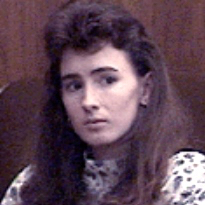
Robin Byrum, youngest of Edenton Seven, recalls brutality at hands of prosecution
April 29, 2017
Robin Byrum, not long out of high school and pregnant with her first child, went to work at Little Rascals Day Care Center in September 1988. A year later she was in prison under $500,000 bond, charged with 23 counts of child sex abuse. Prosecutors had no credible evidence against her, but they were betting the youngest defendant would implicate Bob Kelly and the others accused.
“I was in the wrong place at the wrong time,” she recalls today in her first interview since charges finally were dropped against her in 1996. “They thought I would tell on the others. That was the only reason I was swept up.”
Now 15 years into her second marriage, she lives in Eastern North Carolina. For her privacy I’m not mentioning her town or married name. “I’ve gone on with my life. It’s turned out well, in spite of all that….”
——-
After months of sporadic questioning she was arrested in January 1990. “Three men from the SBI came to my mother’s house. It was so frightening. They intimidated me. One of them put his foot up on the table and I could see the gun in his ankle holster. He said, ‘I’d hate to see you taken away from that child.’
“Then we went to the police station in Edenton. [SBI agent] Kevin McGinnis said he would give me one more chance to talk. I could hear my baby crying in the next room. When I told him again I didn’t know anything, he was so angry he kicked the desk across the room.”
Along with Betsy Kelly and Dawn Wilson, she was put in a cell in women’s prison in Raleigh. “I was three hours from my only family in North Carolina. Strip-searched before and after every visit.
“They put another prisoner in there with us, a snitch, thinking she could get us to talk. But we had nothing to tell….. One day they even tossed our cell, looking for ‘satanic’ passages marked in our Bibles.”
As the months passed, prosecutors offered Byrum ever more tempting plea deals. In a particularly poignant moment in “Innocence Lost: The Plea” (1997) she explains to Ofra Bikel why she had even turned down a deal offering no active time, but an admission of guilt: “‘That would mean knowing I would not ever have to be separated from my child again. But then I’d have to live with the rest of my life that I [said I] did something when I didn’t do it.’”
In 1990, bond was reduced to a still absurd $200,000 and her grandparents and two aunts in Kentucky managed to pay in time to get her home for Christmas.
Today Byrum, 46, works in health information management. “My office manager knew about the case, but the doctors hadn’t put two and two together until they went to your site. One of them shook his head and said, ‘How did seven people go to prison on something completely unfounded?’ Well, I’m still baffled too….
“How could anyone believe all these things happened? We were a block from downtown, in a building with huge windows and no curtains. Parents walked their 2- and 3-year-olds there, and they dropped by all the time….
“Didn’t a light bulb ever once come on that made somebody use their common sense?”

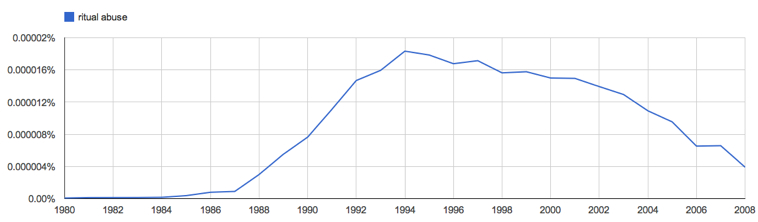
Remember when ‘ritual abuse’ was a hot topic?
 Aug. 19, 2013
A brief visual aside, courtesy of the Google books Ngram Viewer:
However much frustration I feel in pursuing exoneration for the Edenton Seven – plenty! – I do take some reassurance in watching the ritual abuse moral panic slowly lose its hold on public discourse, as shown in the Ngram above or here.
Wikipedia stifles ‘ritual abuse’ disinformation campaign
 July 31, 2015
“Since February, 2008, on Wikipedia’s page on ‘Satanic Ritual Abuse,’ Wikipedia’s staff has been suppressing and deleting credible posts from credible sources (including my posts – I am a licensed California psychologist) that have documented substantial criminal and psychological evidence of criminal ritual abuse, and instead has completely discounted the existence of ritual abuse.
“As of July 27, 2009, Wikipedia’s page on ‘Satanic ritual abuse’ begins as follows: ‘Satanic ritual abuse (SRA, sometimes known as ritual abuse, ritualistic abuse, organised abuse, sadistic abuse and other variants) refers to a moral panic that originated in the United States in the 1980s, spreading throughout the country and eventually to many parts of the world, before subsiding in the late 1990s.’
“Wikipedia has now escalated its censorship of all information supporting the existence of ritual abuse by blacklisting four important websites about ritual abuse on July 18, 2009….”
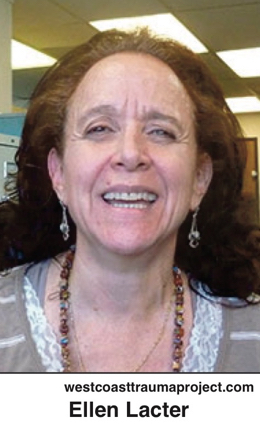
– From a post by Ellen Lacter at her End Ritual Abuse website in which she recounts her repeated but unsuccessful attempts (cached) to budge Wikipedia editors from their stubborn rationality. (Holocaust deniers are similarly non grata.)
Supposed experts such as Lacter do still command an audience, however shrunken from the giddy days of the moral panic. This recent article quotes her as suggesting the motivation behind the Louisiana theater killings might have been “to gain power, transfer power, and strengthen and share in the power of Satan and demons…”