Rascals case in brief
In the beginning, in 1989, more than 90 children at the Little Rascals Day Care Center in Edenton, North Carolina, accused a total of 20 adults with 429 instances of sexual abuse over a three-year period. It may have all begun with one parent’s complaint about punishment given her child.
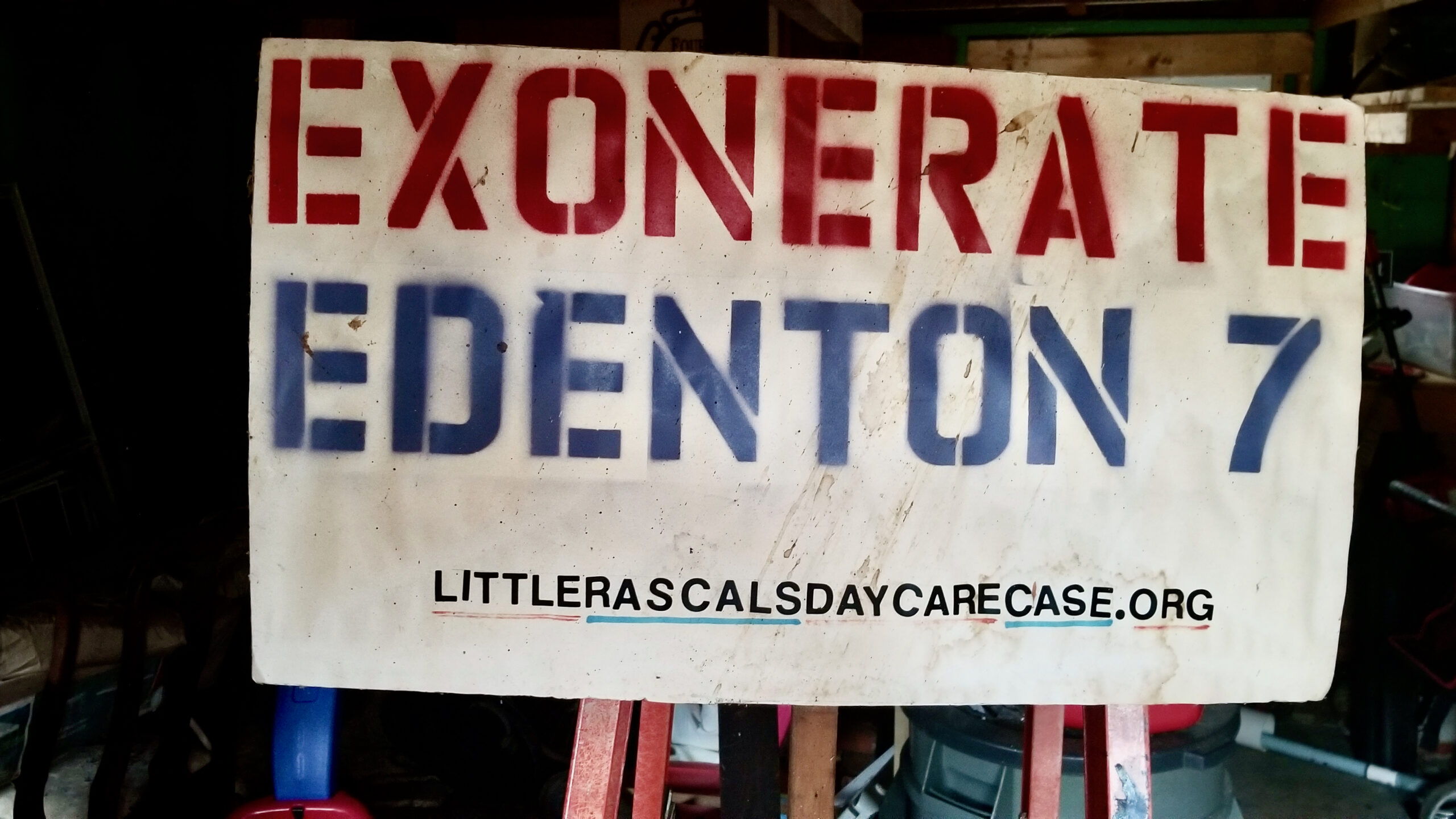
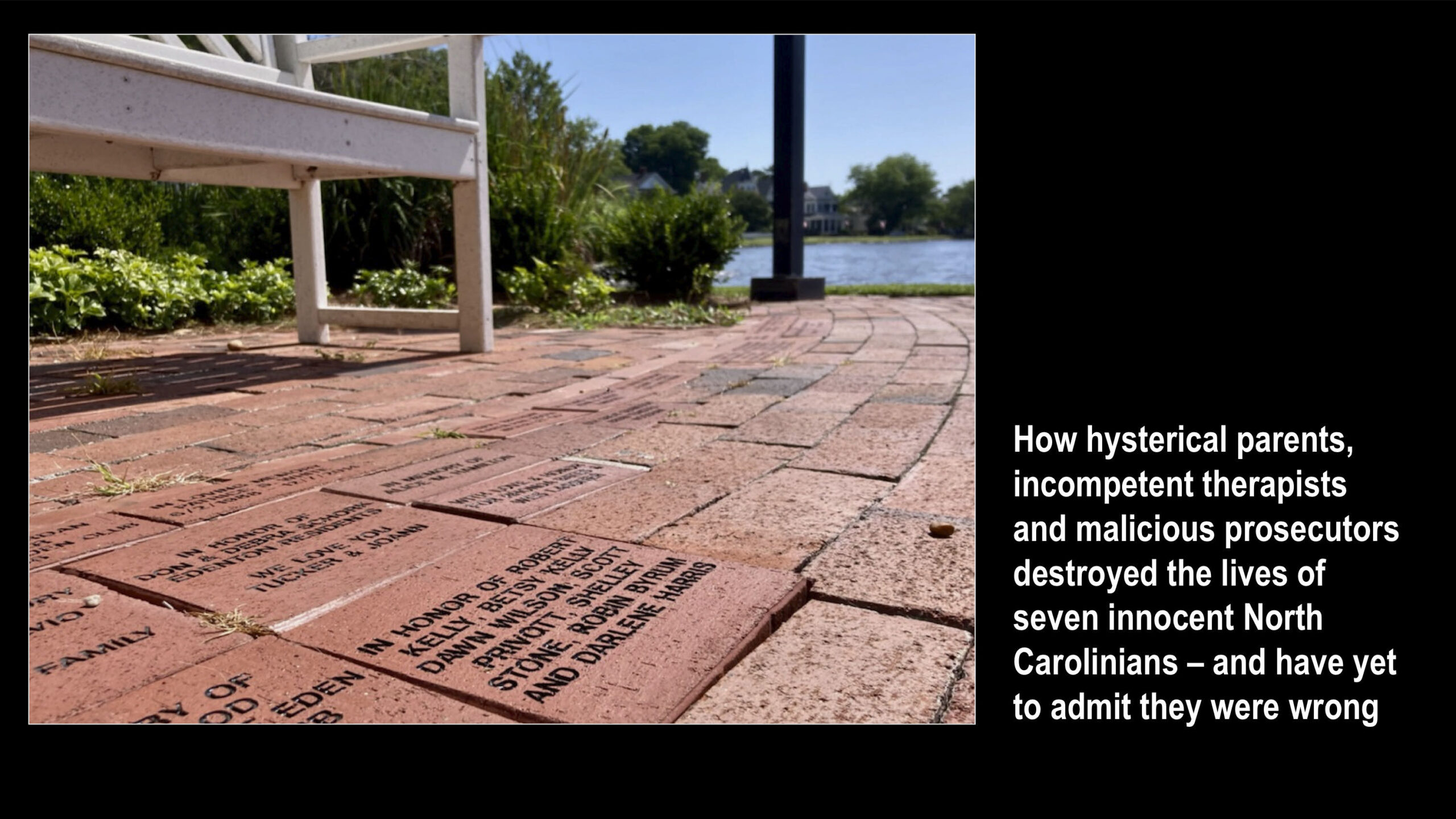
Among the alleged perpetrators: the sheriff and mayor. But prosecutors would charge only Robin Byrum, Darlene Harris, Elizabeth “Betsy” Kelly, Robert “Bob” Kelly, Willard Scott Privott, Shelley Stone and Dawn Wilson – the Edenton 7.
Along with sodomy and beatings, allegations included a baby killed with a handgun, a child being hung upside down from a tree and being set on fire and countless other fantastic incidents involving spaceships, hot air balloons, pirate ships and trained sharks.
By the time prosecutors dropped the last charges in 1997, Little Rascals had become North Carolina’s longest and most costly criminal trial. Prosecutors kept defendants jailed in hopes at least one would turn against their supposed co-conspirators. Remarkably, none did. Another shameful record: Five defendants had to wait longer to face their accusers in court than anyone else in North Carolina history.
Between 1991 and 1997, Ofra Bikel produced three extraordinary episodes on the Little Rascals case for the PBS series “Frontline.” Although “Innocence Lost” did not deter prosecutors, it exposed their tactics and fostered nationwide skepticism and dismay.
With each passing year, the absurdity of the Little Rascals charges has become more obvious. But no admission of error has ever come from prosecutors, police, interviewers or parents. This site is devoted to the issues raised by this case.
On Facebook


Little Rascals Day Care Case
This Facebook page is an offshoot of littlerascalsdaycarecase.org, which addresses the wrongful prosecution of the Edenton Seven and other such victims.

Meanwhile in Edenton....
This content isn't available right now
When this happens, it's usually because the owner only shared it with a small group of people, changed who can see it or it's been deleted.0 CommentsComment on Facebook
Allies for our cause!
This content isn't available right now
When this happens, it's usually because the owner only shared it with a small group of people, changed who can see it or it's been deleted.0 CommentsComment on Facebook
The courts have a long history of capriciously pulling the rug out from under Junior's appeals, but maybe this time....
This content isn't available right now
When this happens, it's usually because the owner only shared it with a small group of people, changed who can see it or it's been deleted.0 CommentsComment on Facebook
Click for earlier Facebook posts archived on this site
Click to go to

Today’s random selection from the Little Rascals Day Care archives….
‘No abuse until the interviews began….’
Feb. 11, 2013
“After reading a number of these interviews (of children) in the Wee Care (Kelly Michaels) case, it is difficult to believe that adults charged with the care and protection of young children would be allowed to use the vocabulary that they used in these interviews, that they would be allowed to interact with the children in such sexually explicit ways, or that they would be allowed to bully and frighten their child witnesses in such a shocking manner. No amount of evidence that sexual abuse had actually occurred could ever justify the use of these techniques especially with three- and four-year-old children.
“Above and beyond the great stress, intimidation, and embarrassment that many of the children so obviously suffered during the interviews, we are deeply concerned about the long-lasting harmful effects of persuading children that they have been horribly sexually and physically abused, when in fact there may have been no abuse until the interviews began….”
– From an amicus curiae brief to the Appellate Court of New Jersey from Stephen Ceci and Maggie Bruck on behalf of the 46-member Committee of Concerned Social Scientists (1994)
Moral panics, strange to begin with, also make strange bedfellows

June 14, 2018
“America has a long history of episodic moral panics in which self-styled experts, sensationalistic journalists and public officials used emotionally charged language and a barrage of (often distorted) statistics to portray a particular social problem as widespread and urgent….
“The 1980s brought [a] moral panic precipitated by unease about double-income families and the supervision of children by strangers at day-care centers….
“All these scares produced unexpected political alliances. Conservatives concerned with moral purity, law-and-order and Christian values joined forces with feminists worried about victims of sexual trauma and liberals in favor of strong government regulation. When forces from the right and left converge in a moral panic, their causes possess greater appeal to the public. We see this today as women’s rights advocates join the sex-trafficking fight along with the religious right. The result is a runaway train with no real political force left in opposition….”
– From “President Trump signed a new law that aims to fight online sex trafficking. Here’s why that’s bad.” by Sascha Cohen in the Washington Post (April 12)

Double-decker graves, portable crematoriums… and so on
Feb. 22, 2013
“The argument for an organized network of satanists is virtually irrefutable. Ritual abuse survivors’ reports contain many fantastic elements. Rather than regard the implausible features of these accounts as grounds for skepticism, however, proponents of the satanic conspiracy theory insist that it is precisely these elements than mean the stories must be true. No one, they insist, would or could make up such bizarre, macabre stories.
“Sometimes proponents retreat to the position that satanists commit bizarre activities precisely so that victims will not be believed when they recount their experiences. This latter tack illustrates the problem of infinite regress (a sequence of reasoning or justification that can never come to an end).
“When confronted with the difficulty of concealing so many homicides, proponents explain that satanists dispose of bodies… in double-decker graves. Challenges to this argument lead to assertions that bodies are burned. The observation that bodies cannot be burned in ordinary fires leads to the assertion that they are cremated. The problems of gaining access to crematoriums lead to contentions that satanists use special portable crematoriums. Further protestation may yield the argument that child-witnesses may be mistaken about some deaths because satanists sometimes use life-like dolls rather than live humans to terrorize children into silence.
“The continual retreat from the lack of confirming evidence shifts the burden of proof from those seeking to demonstrate a satanist network to those questioning such assertions.”
– From “The Satanism Scare,” edited by David G. Bromley (1991)
Prosecutors learned wrong lesson from McMartin
March 28, 2012
Had North Carolina prosecutors been interested in anything other than racking up convictions, they would’ve given earnest consideration to analyses such as this one in the Los Angeles Times in 1990, barely a week after a jury returned not guilty verdicts in the McMartin Pre-School case:
“Experts across the country say the interview techniques intended to extract the truth from youngsters who attended the Manhattan Beach nursery school were so misguided as to make the children seem coerced, rehearsed and ultimately unbelievable to the jury….
“According to both child development and criminal defense experts who have closely monitored the case for the last six years, some of the adults — the parents, the prosecutors, the therapists — who tried hardest to find out what happened in the first place may have done the most to confuse the case in the end…. Most of the children were never given the chance to simply tell what, if anything, happened to them.
“‘They were never given the opportunity to tell their stories as they knew them, in their own words, until long after their minds had been contaminated with the thoughts and fears of the adults around them,’ said David Raskin, a psychologist at the University of Utah who has been studying child abuse cases for the last 15 years. By then, he said, it was too late.”
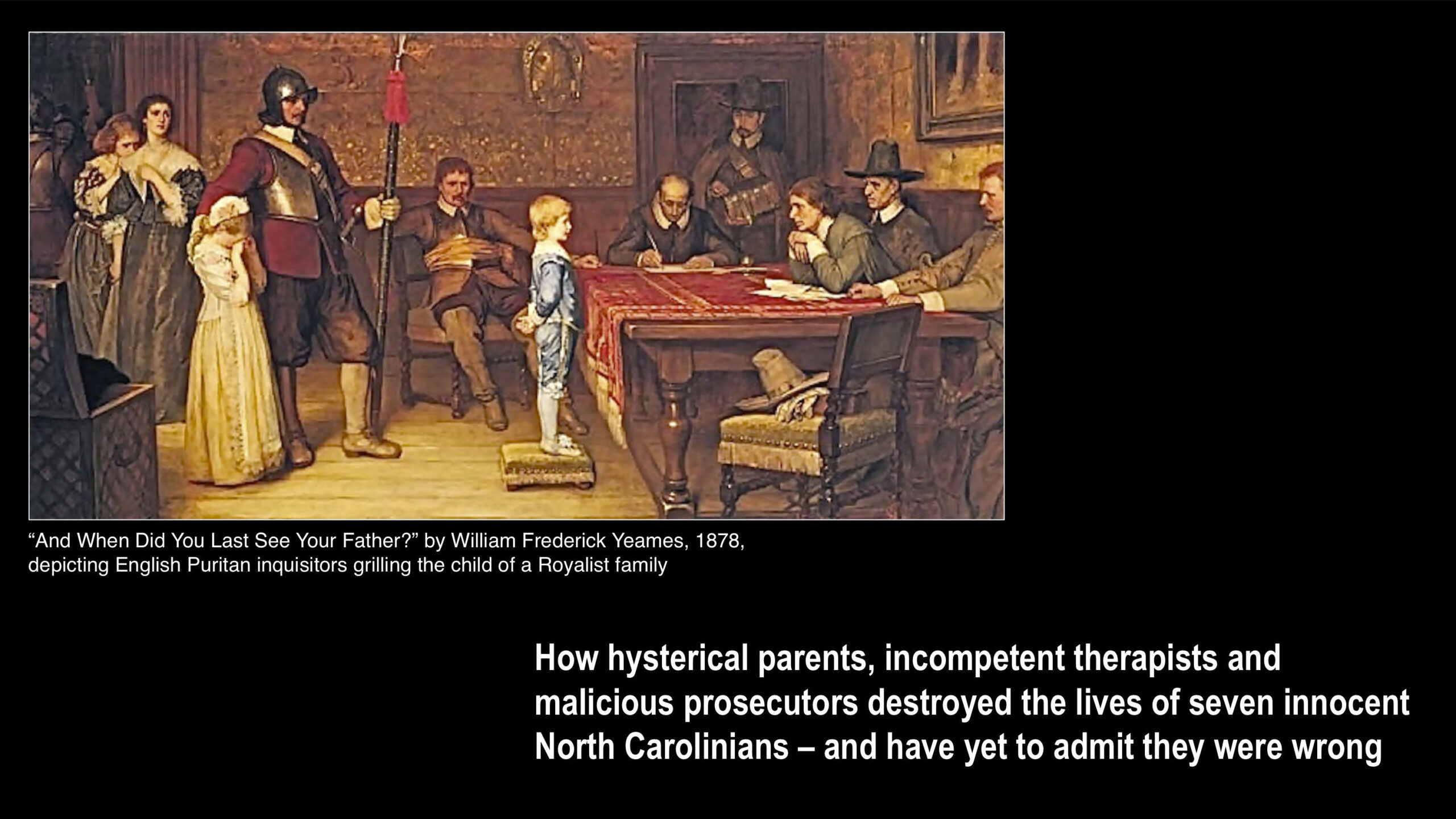
Contamination proved every bit as rampant among child-witnesses in the Little Rascals case, but prosecutors had learned from McMartin to conceal it by denying access to verbatim records of therapists’ interviews.