Rascals case in brief
In the beginning, in 1989, more than 90 children at the Little Rascals Day Care Center in Edenton, North Carolina, accused a total of 20 adults with 429 instances of sexual abuse over a three-year period. It may have all begun with one parent’s complaint about punishment given her child.
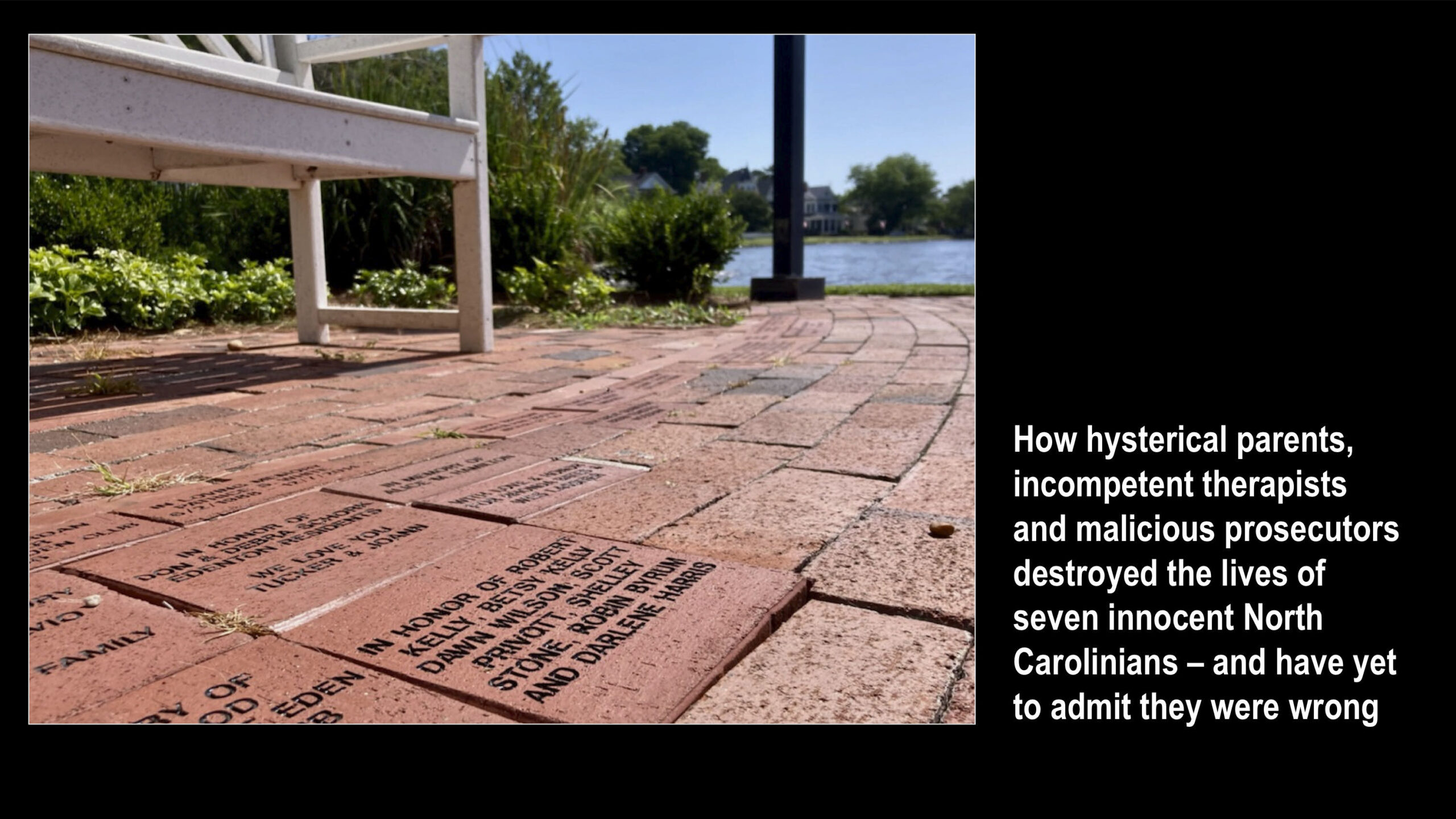
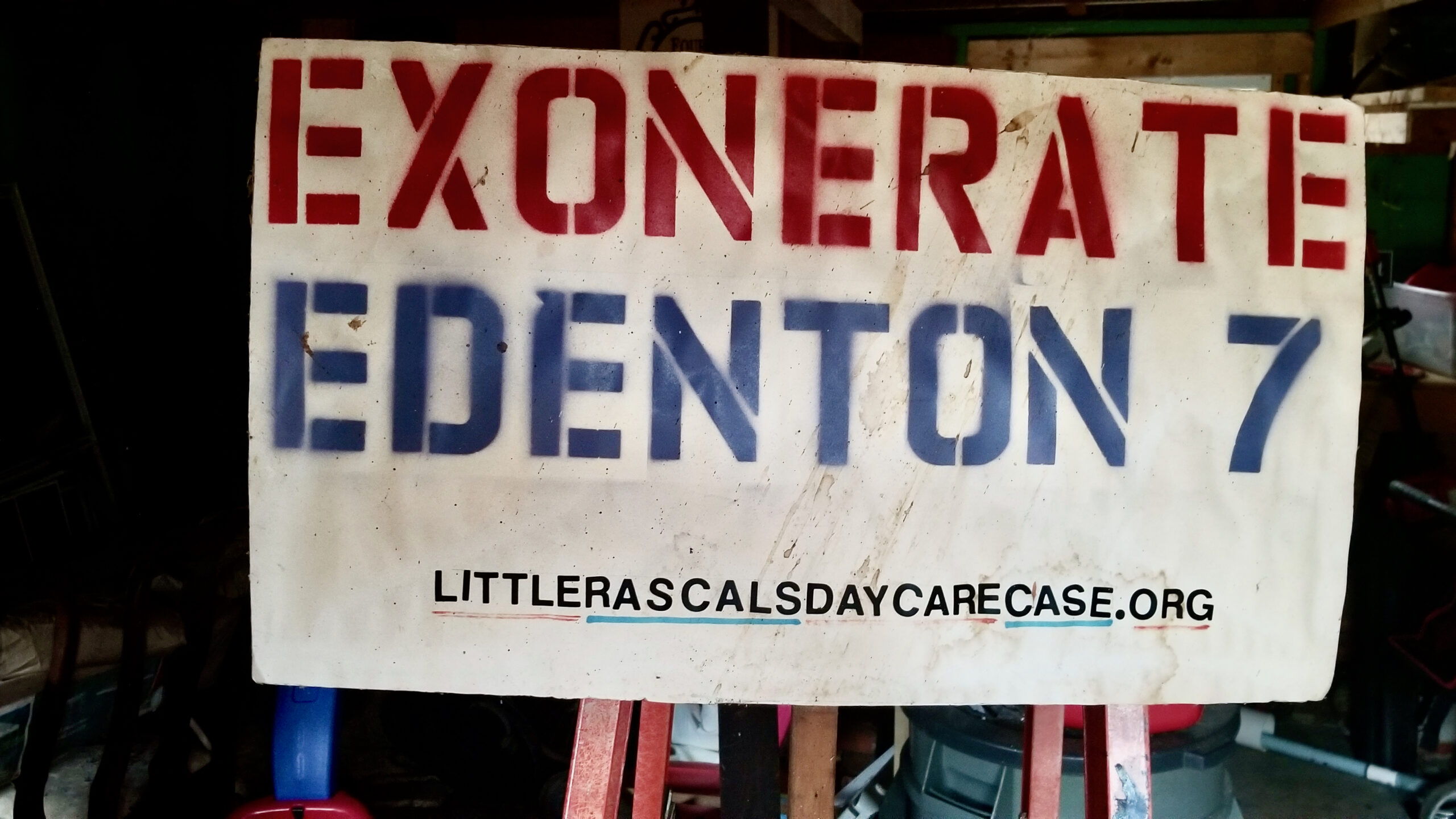
Among the alleged perpetrators: the sheriff and mayor. But prosecutors would charge only Robin Byrum, Darlene Harris, Elizabeth “Betsy” Kelly, Robert “Bob” Kelly, Willard Scott Privott, Shelley Stone and Dawn Wilson – the Edenton 7.
Along with sodomy and beatings, allegations included a baby killed with a handgun, a child being hung upside down from a tree and being set on fire and countless other fantastic incidents involving spaceships, hot air balloons, pirate ships and trained sharks.
By the time prosecutors dropped the last charges in 1997, Little Rascals had become North Carolina’s longest and most costly criminal trial. Prosecutors kept defendants jailed in hopes at least one would turn against their supposed co-conspirators. Remarkably, none did. Another shameful record: Five defendants had to wait longer to face their accusers in court than anyone else in North Carolina history.
Between 1991 and 1997, Ofra Bikel produced three extraordinary episodes on the Little Rascals case for the PBS series “Frontline.” Although “Innocence Lost” did not deter prosecutors, it exposed their tactics and fostered nationwide skepticism and dismay.
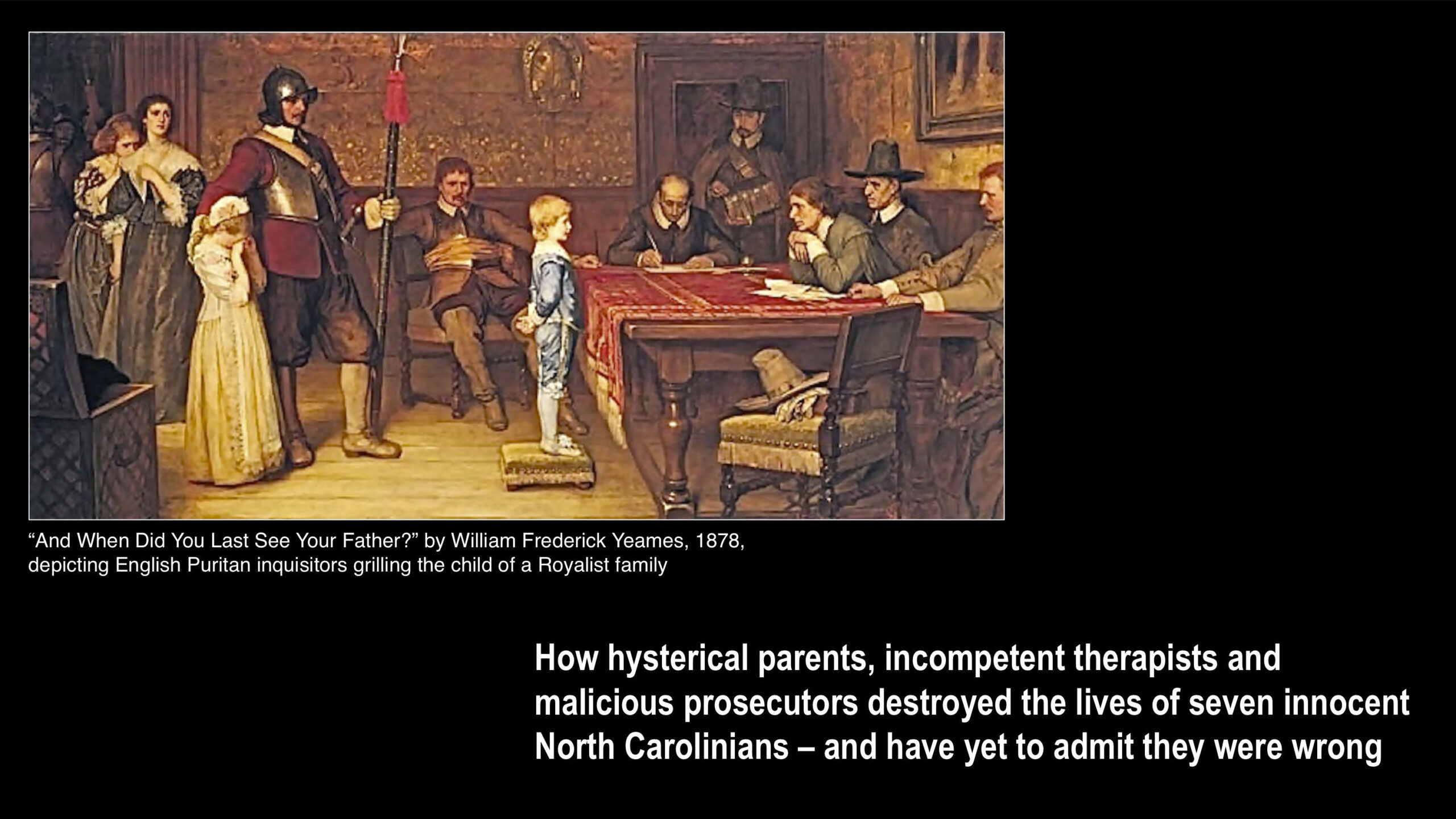
With each passing year, the absurdity of the Little Rascals charges has become more obvious. But no admission of error has ever come from prosecutors, police, interviewers or parents. This site is devoted to the issues raised by this case.
On Facebook


Little Rascals Day Care Case
This Facebook page is an offshoot of littlerascalsdaycarecase.org, which addresses the wrongful prosecution of the Edenton Seven and other such victims.

Meanwhile in Edenton....
This content isn't available right now
When this happens, it's usually because the owner only shared it with a small group of people, changed who can see it or it's been deleted.0 CommentsComment on Facebook
Allies for our cause!
This content isn't available right now
When this happens, it's usually because the owner only shared it with a small group of people, changed who can see it or it's been deleted.0 CommentsComment on Facebook
The courts have a long history of capriciously pulling the rug out from under Junior's appeals, but maybe this time....
This content isn't available right now
When this happens, it's usually because the owner only shared it with a small group of people, changed who can see it or it's been deleted.0 CommentsComment on Facebook
Click for earlier Facebook posts archived on this site
Click to go to

Today’s random selection from the Little Rascals Day Care archives….
Can Edenton squeeze in one more historical marker?
 Nov. 27, 2014
“Of the dozen or so historical markers clustered in the town of Edenton, only one – recognizing novelist Inglis Fletcher – postdates the 1800s.
“The North Carolina Highway Historical Marker Committee now has the opportunity, 25 years after the first arrest in the Little Rascals case, to add to that number a 20th Century event inarguably significant in the legal and social history of not just North Carolina but also the nation.”
– From my application proposing “history on a stick” recognition for the Little Rascals Day Care case
The marker committee, composed of historians from four-year colleges across the state, will meet in December to decide which pending applications meet its criteria.
Authorities misled parents by cherry-picking evidence
 March 27, 2013
“Authorities fed… parents and public (in Edenton) a biased reading of the evidence, but few realized it was biased.
“Consider the following: John and David, two friends in the day care, are both questioned. John says he and David were both molested, but David says it didn’t happen. Thus the evidence is 50/50 on John and 50/50 on David. They can’t be both right.
“What now? If David keeps denying, he is dropped from the investigation, and the negative evidence on John exits with David. Meanwhile, John’s parents are not told that David denies, and John’s case goes ahead. From 50/50, the allegation has become 100 percent true.
“For this investigation to inevitably produce more victims of abuse, three things are necessary:
“1. Parents are told that their child was named by others as abused, but not told that their child was not abused according to still other children.
“2. Parents are told that denial by their child is a sign of abuse and that therefore the child should be questioned by therapists until he admits.
“3. In some therapy sessions, the children do disclose even if they were not abused.
“Did the prosecution in the Little Rascals investigate in such a manner? The (North Carolina) Appeals Court certainly was of that opinion. It was the principal reason the convictions of Robert Kelly and Dawn Wilson were overturned.”
– From “Why False Beliefs Prevail: the Little Rascals Child Sex Abuse Prosecutions” by Anthony Oberschall in “Essays in Honor of Raymond Boudon” (2000)
Oberschall doesn’t use the term, but I’m reminded of the widespread and pernicious “file drawer effect” – that is, “the practice of scientific researchers to file away studies with negative outcomes.”
Prosecutors claimed WHAT happened here?
 April 6, 2015
A team from the Duke Wrongful Convictions Clinic recently traveled to Buncombe and Madison counties to collect documents from court clerks’ offices, to interview witnesses and to inspect locations where Junior Chandler allegedly abused children who rode his day-care bus.
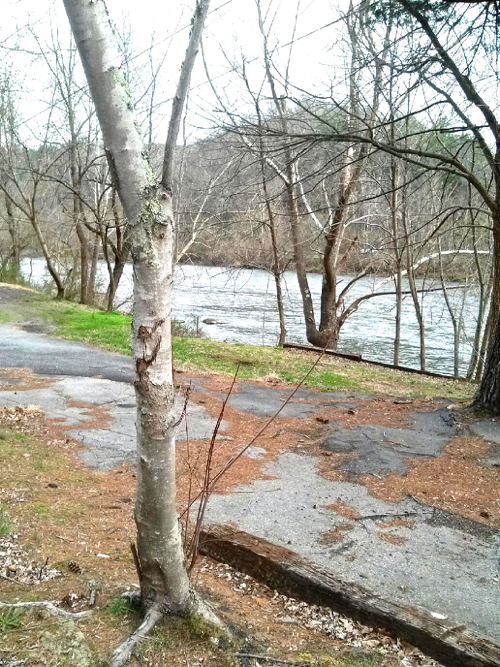
Billy Chandler, Junior’s brother, and Clayton Rice, his lifelong friend, guided the Duke investigators (and me) along Junior’s daily route. The narrow, twisting backroads led us to the sites along the French Broad River where prosecutors claimed Junior had repeatedly committed the most bizarre sexual crimes imaginable.
The photo at the right shows a typical vantage. It has always seemed incredible to me that Junior – as described in Mark Montgomery’s amended petition for writ of certiorari – “would drive off his route to a parking area next to the French Broad River, strip the clothes off the toddlers, troop the naked children down to the river, put them on a rowboat, proceed to insert various objects into their anuses and vaginas, bring them back to the bus, put their clothes back on and deliver them home.”
Actually visiting and walking around the supposed crime scenes, which are completely open to neighbors and passersby, only reinforces my impression: The allegations against Junior are simply inconceivable.
So where do things stand as Junior Chandler approaches his 29th year in prison? Clinic co-director Theresa Newman provided this cautious update: “The Duke Wrongful Convictions Clinic has spent the past few months studying the file passed to them by previous post-conviction counsel, researching the developments in the relevant medical and psychological science since the mid-1980s, and otherwise trying to master this complicated and complex case. We are now moving into the next phase of our typical investigation….”
The title of Newman’s illuminating TEDx talk at Elon University couldn’t be more apt: “Waiting is a Beast.”
Governor’s Clemency Office: ‘Reviewed and denied’
 April 26, 2014
“Given the near certainty of Junior’s innocence (his first jury could not reach a verdict), given the fact that he has already served 26 years in prison with only a single infraction (committed in his third week in prison), given the fact that many others similarly situated have been freed by the courts, Junior is a worthy candidate for a commutation of sentence.”
– Letter from Mark Montgomery, Andrew Junior Chandler’s appellate attorney, to Gov. Bev Perdue (Dec. 7, 2012)
“This letter is to inform you that your request for a commutation of sentence on behalf of Mr. Chandler has been reviewed and denied.
“If he would like to reapply, he may do so three years from the date of this letter.”
– Letter to Montgomery from Pat Hansen, Governor’s Clemency Office (March 25, 2014
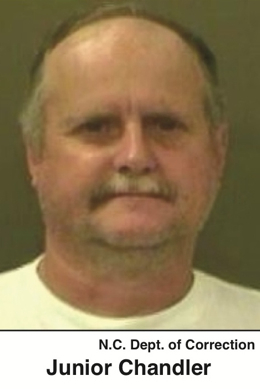
So ends the latest of Andrew Junior Chandler’s repeated attempts to find a path out of Avery-Mitchell Correctional Institution, where he has spent the past 27 years for a crime neither he nor anyone else committed. He may in fact be the last still-imprisoned victim of the “satanic ritual abuse” day care panic.
“I don’t know what they have against me,” Junior told me by phone this week. I don’t know either – I don’t even know who “they” are. But I can’t imagine that those prosecutors who so persuasively argued that “Junior would drive off his route to a park by a river, strip the children of their clothes, troop them down to the river, put them in a rowboat, commit various sexual acts, put them back on the bus and take them home” are eager to see the case dusted off and reexamined.