Rascals case in brief
In the beginning, in 1989, more than 90 children at the Little Rascals Day Care Center in Edenton, North Carolina, accused a total of 20 adults with 429 instances of sexual abuse over a three-year period. It may have all begun with one parent’s complaint about punishment given her child.
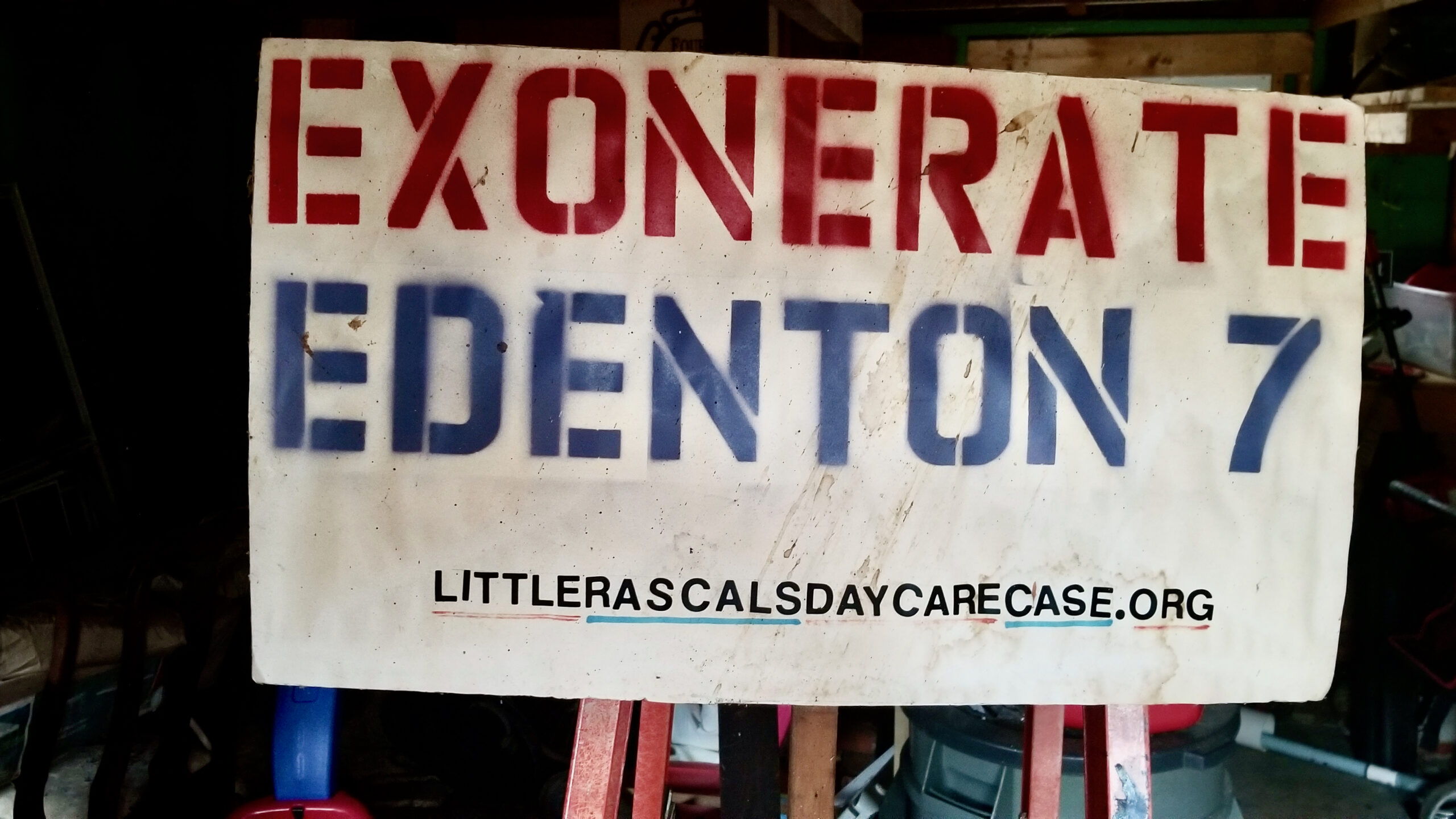
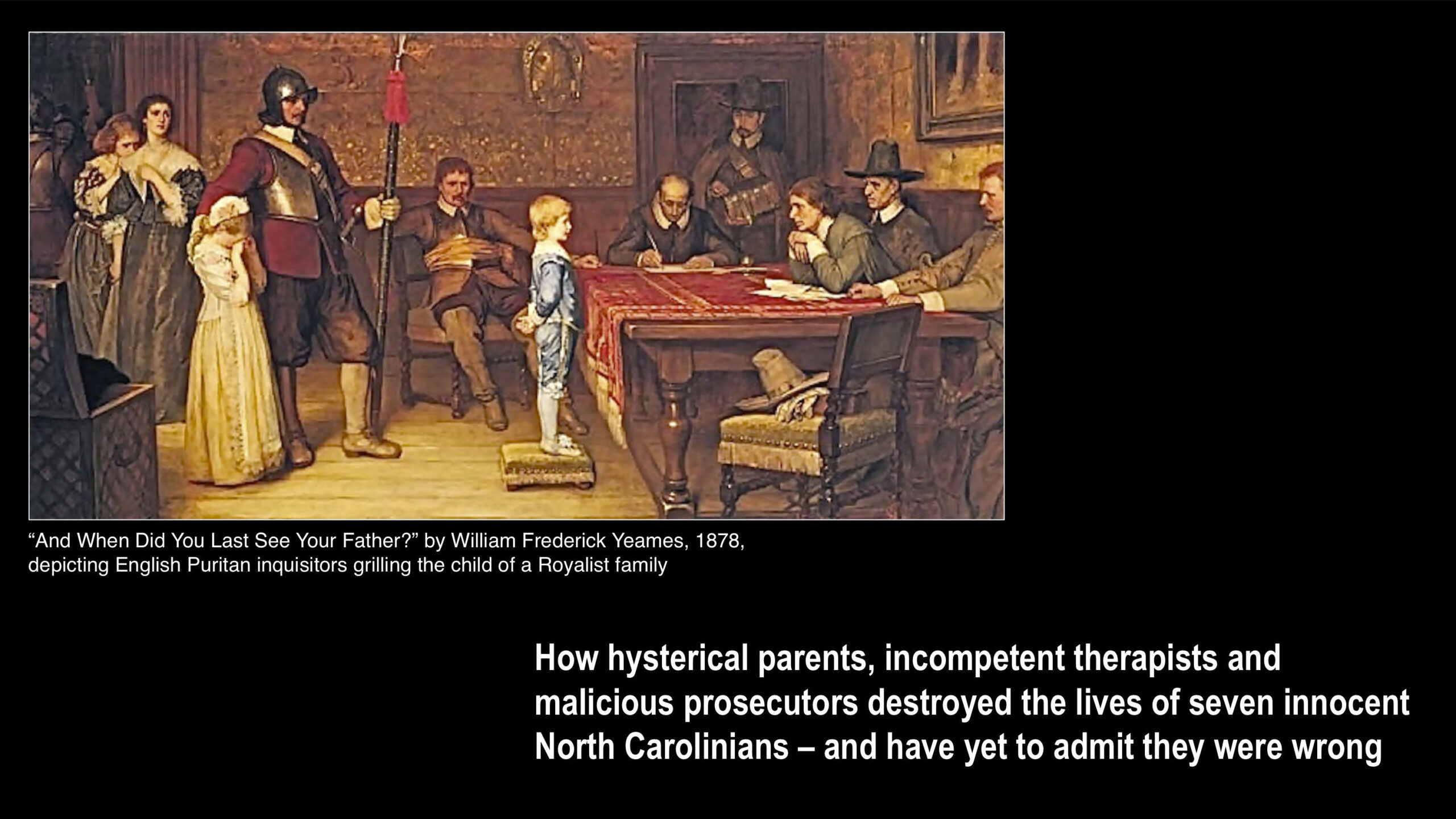
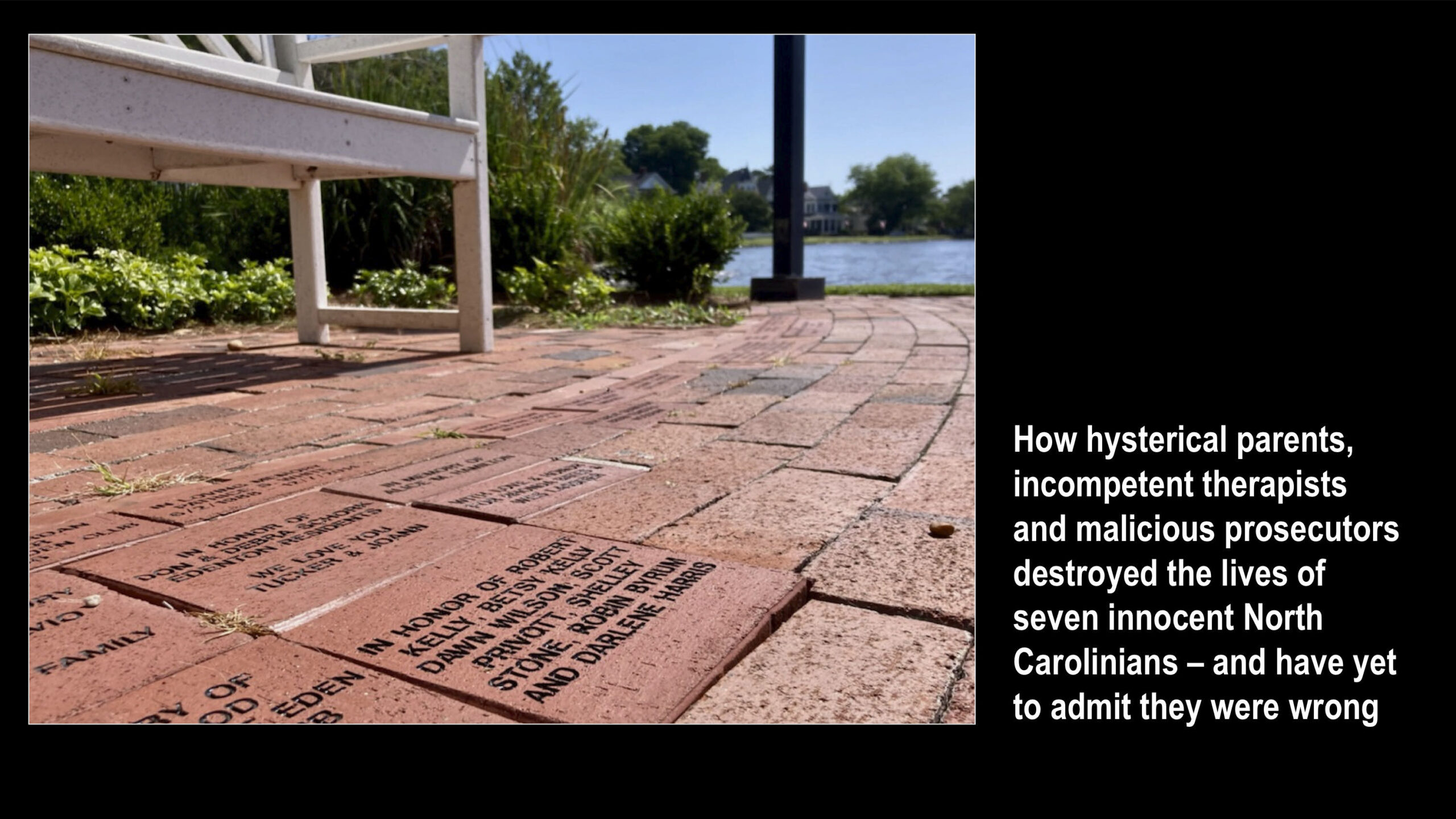
Among the alleged perpetrators: the sheriff and mayor. But prosecutors would charge only Robin Byrum, Darlene Harris, Elizabeth “Betsy” Kelly, Robert “Bob” Kelly, Willard Scott Privott, Shelley Stone and Dawn Wilson – the Edenton 7.
Along with sodomy and beatings, allegations included a baby killed with a handgun, a child being hung upside down from a tree and being set on fire and countless other fantastic incidents involving spaceships, hot air balloons, pirate ships and trained sharks.
By the time prosecutors dropped the last charges in 1997, Little Rascals had become North Carolina’s longest and most costly criminal trial. Prosecutors kept defendants jailed in hopes at least one would turn against their supposed co-conspirators. Remarkably, none did. Another shameful record: Five defendants had to wait longer to face their accusers in court than anyone else in North Carolina history.
Between 1991 and 1997, Ofra Bikel produced three extraordinary episodes on the Little Rascals case for the PBS series “Frontline.” Although “Innocence Lost” did not deter prosecutors, it exposed their tactics and fostered nationwide skepticism and dismay.
With each passing year, the absurdity of the Little Rascals charges has become more obvious. But no admission of error has ever come from prosecutors, police, interviewers or parents. This site is devoted to the issues raised by this case.
On Facebook


Little Rascals Day Care Case
This Facebook page is an offshoot of littlerascalsdaycarecase.org, which addresses the wrongful prosecution of the Edenton Seven and other such victims.

Meanwhile in Edenton....
This content isn't available right now
When this happens, it's usually because the owner only shared it with a small group of people, changed who can see it or it's been deleted.0 CommentsComment on Facebook
Allies for our cause!
This content isn't available right now
When this happens, it's usually because the owner only shared it with a small group of people, changed who can see it or it's been deleted.0 CommentsComment on Facebook
The courts have a long history of capriciously pulling the rug out from under Junior's appeals, but maybe this time....
This content isn't available right now
When this happens, it's usually because the owner only shared it with a small group of people, changed who can see it or it's been deleted.0 CommentsComment on Facebook
Click for earlier Facebook posts archived on this site
Click to go to

Today’s random selection from the Little Rascals Day Care archives….
Less bonding, less crying, more thinking – why not?
Jan. 21, 2013
“According to advocates (of victim impact statements), they allow victims to personalize the crime and elevate the status of the victim by describing the effect the crime has had on them or their families. Some laud the courtroom ritual as an aid in the emotional recovery of the victim…. A few legal scholars suggest that the well-intentioned personalization of a crime can blur the line between public justice and private retribution….”
– From “Death by Treacle” by Pamela Haag in the American Scholar (Spring 2012)
“Prosecutor Nancy Lamb and the mothers of the victims burst into tears. Court officials handed out tissues.”
– From “Day Care Owner Convicted on 99 Counts of Child Abuse” by the Associated Press (April 22, 1992)
Count me with those “few legal scholars” who doubt justice is well served by injections of sentimentality. (Although Bob Kelly’s sentencing seems to have concluded without victim impact statements, prosecutors ensured an ample display of mawkishness – the front row was packed with supposed child-victims holding tight to their dolls and teddy bears.)
But sentimentality also extends to the blindered bonding of Little Rascals prosecutors and parents.
What if Nancy Lamb had managed to keep even the slightest professional distance between herself and the parents, instead of being swallowed up in their manic cause? Might she have been able to glimpse reality?
And what if Bill Hart had avoided dating (and later marrying) one of those parents?
Pennsylvania prosecutor Alan Rubenstein managed to avoid such pitfalls – why couldn’t others?
Immunity of office allows zeal, recklessness to go unchecked

June 29, 2016
“Compensation is intended in part as a deterrent: a municipality that has to pay heavily for police or prosecutorial misconduct ought to be less likely to allow it to happen again. But it is taxpayers, not police or prosecutors, who bear the costs of litigation and compensation. Prosecutors enjoy almost total immunity in cases of misconduct, even if they deliberately withhold exculpatory evidence from a jury. A 2011 Supreme Court ruling also made it virtually impossible to sue a prosecutor’s office for such violations….”
– From “The Price of a Life: What’s the right way to compensate someone for decades of lost freedom?” by Ariel Levy in the New Yorker (April 13, 2015)
To “deliberately withhold exculpatory evidence” seems all too neatly illustrated in Bob Kelly’s trial. Here’s how the North Carolina Court of Appeals described the prosecution’s actions:
“Judge L. Bradford Tillery, a pretrial Judge, directed the State to file and present for in camera review identifying information, medical and psychotherapeutic files and DSS files with respect to the ‘indictment children’….
“In apparent compliance with Judge Tillery’s order… the State turned over a box of files to the trial court, Judge (Marsh) McLelland presiding. The box contained, inter alia, complete medical notes and therapy notes on the 29 indictment children, 12 of whom testified at defendant’s trial and 17 of whom did not….
“After trial, defendant’s appellate counsel went to the Office of the Clerk of Court for Pitt County to view the exhibits. He opened several boxes containing trial exhibits, none of which were sealed. One of the boxes contained 29 files labeled with the names of the indictment children…. Defendant argues that the files contained undisclosed information that would have been material to the defense.”
To wit, the withheld files were bulging with exculpation – conflicting claims, evidence of hysteria, eyewitness testimony that nothing happened.
Prosecutors H.P. Williams Jr., Bill Hart and Nancy Lamb walked away rebuked by the Appeals Court but otherwise unpenalized. How differently might the Little Rascals case have unfolded had they known their recklessness wouldn’t be shielded by prosecutorial immunity?

Were tales any taller in Salem than in Edenton?
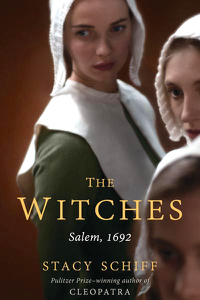 Dec, 4, 2016
“The testimony [in the Salem witch trials] is full of tall tales, unless you happen to believe – as one woman confessed, having vowed to tell the truth, the whole truth, and nothing but the truth – that she flew on a stick with her church deacon and two others to a satanic baptism, and that she had, the previous Monday, carried her minister’s specter through the air along with her, having earlier conferred in her orchard with a satanic cat….”
– From “The Witches: Salem, 1692” by Stacy Schiff (2015)
UNC sociologist sought to deflate moral panic
 March 6, 2013
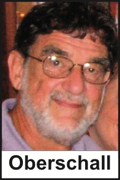
Anthony “Tony” Oberschall, professor (now emeritus) of sociology at UNC Chapel Hill, wrote extensively – if not prominently – about the insanity of the Little Rascals case. How was Oberschall able to resist the storyline that seduced so many others?
“Before retiring from UNC in 2005,” he recalls, “I taught in universities for 40 years. One of my fields of writing and research concerned collective behavior – collective myths, false beliefs, rumors, how they originate and why they are believed.
“As the Little Rascals prosecution unfolded right before my eyes (actually, as reported in the News & Observer), it became obvious to me that this was but one more instance of moral panic, false beliefs and miscarriage of justice….”
Oberschall likens the prosecution narrative to “the widely believed Iraqi WMD story disseminated by the Bush administration in 2002. Unthinking acceptance of what the authorities are asserting, alas, happens all too often.”
In early 1993, Oberschall sent the N&O both an op-ed column and a response to a Dennis Rogers column, but neither appeared nor drew a response from the paper. (They have now been posted on the Bookshelf of Case Materials on this site.)
“At that point,” he says, “having been stonewalled, I decided to research Little Rascals in depth and wrote several times about it in scholarly publications in subsequent years.”
More about Oberschall’s research in Thursday’s post.