
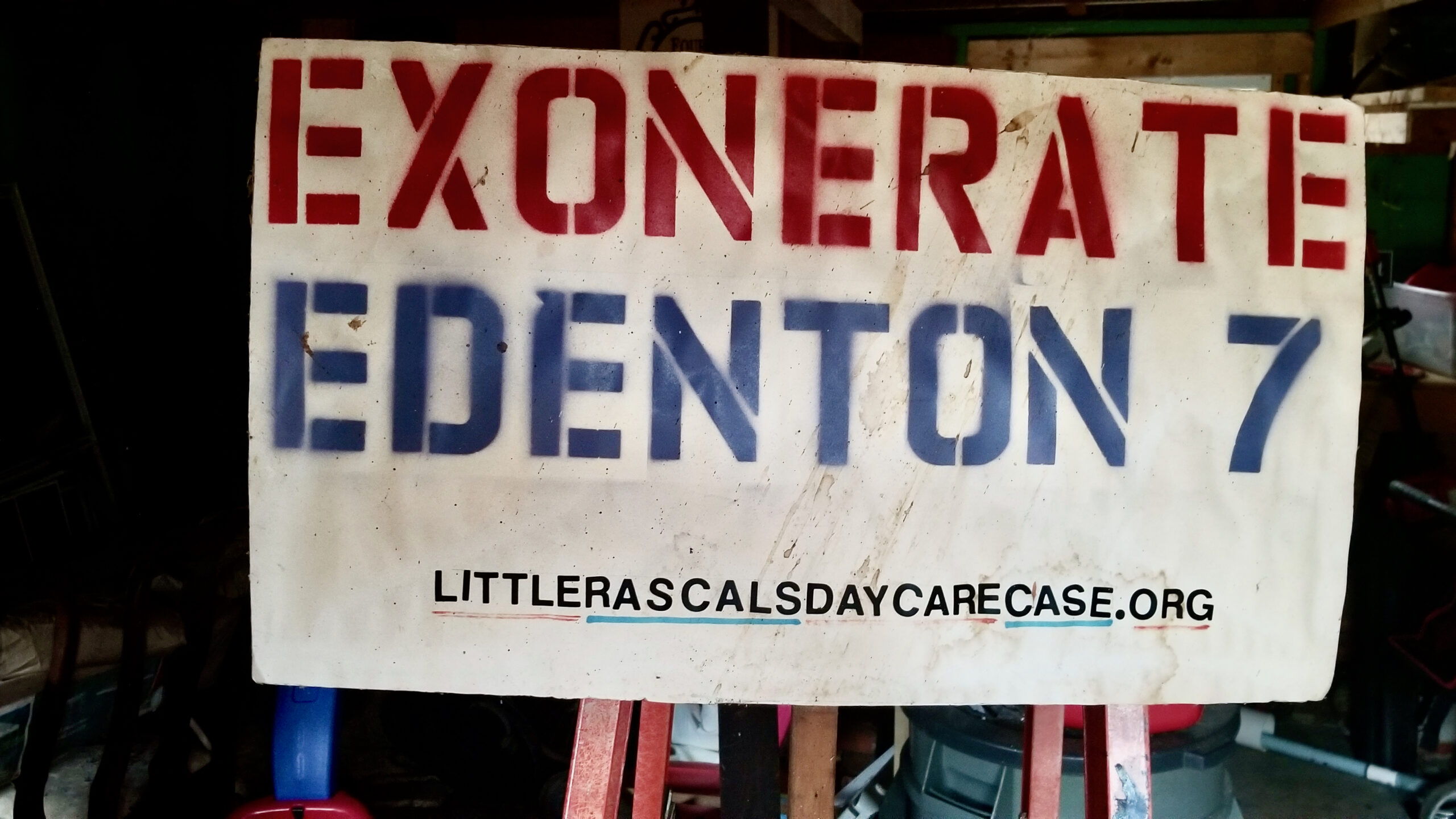
Rascals case in brief
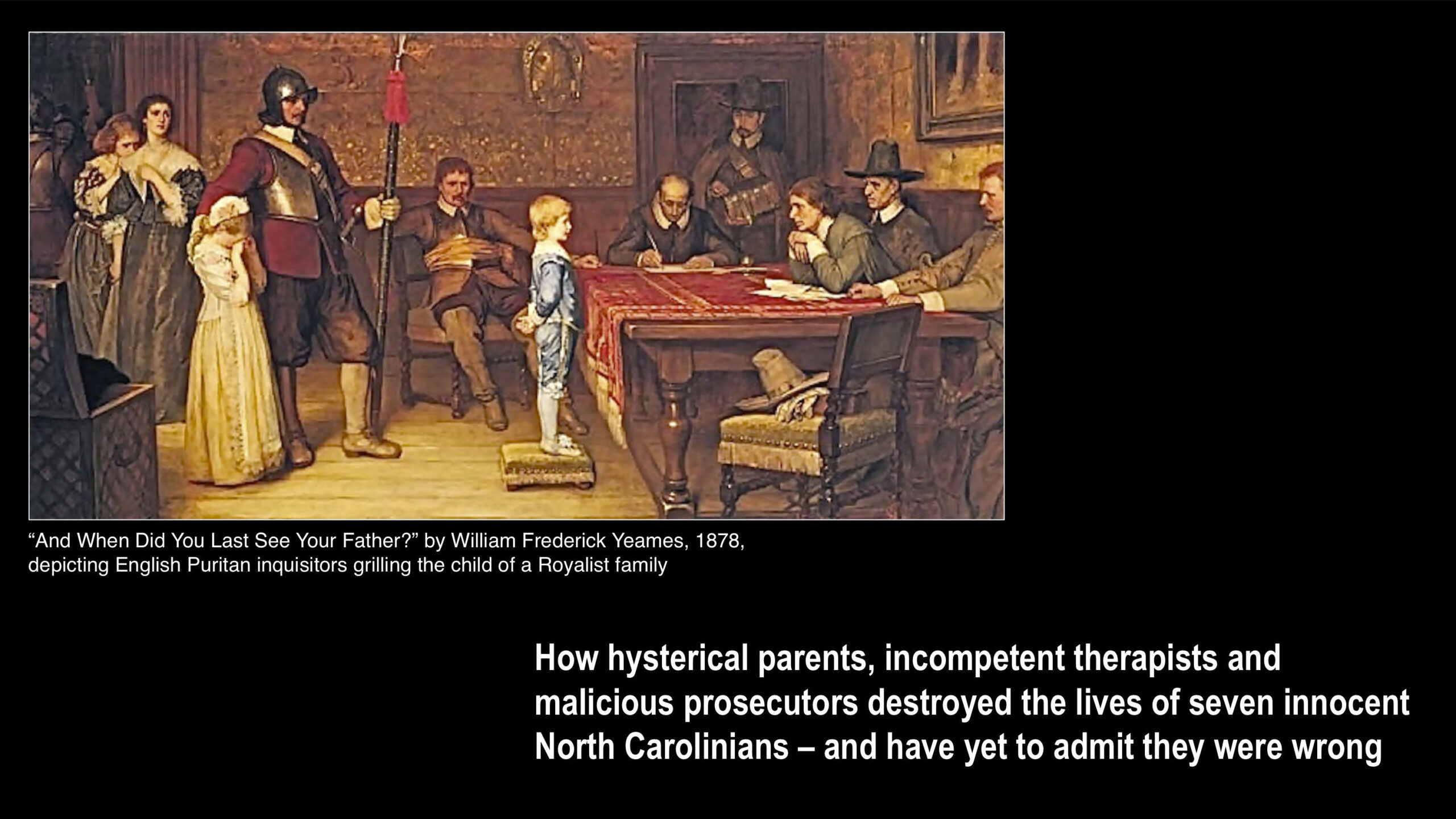
In the beginning, in 1989, more than 90 children at the Little Rascals Day Care Center in Edenton, North Carolina, accused a total of 20 adults with 429 instances of sexual abuse over a three-year period. It may have all begun with one parent’s complaint about punishment given her child.
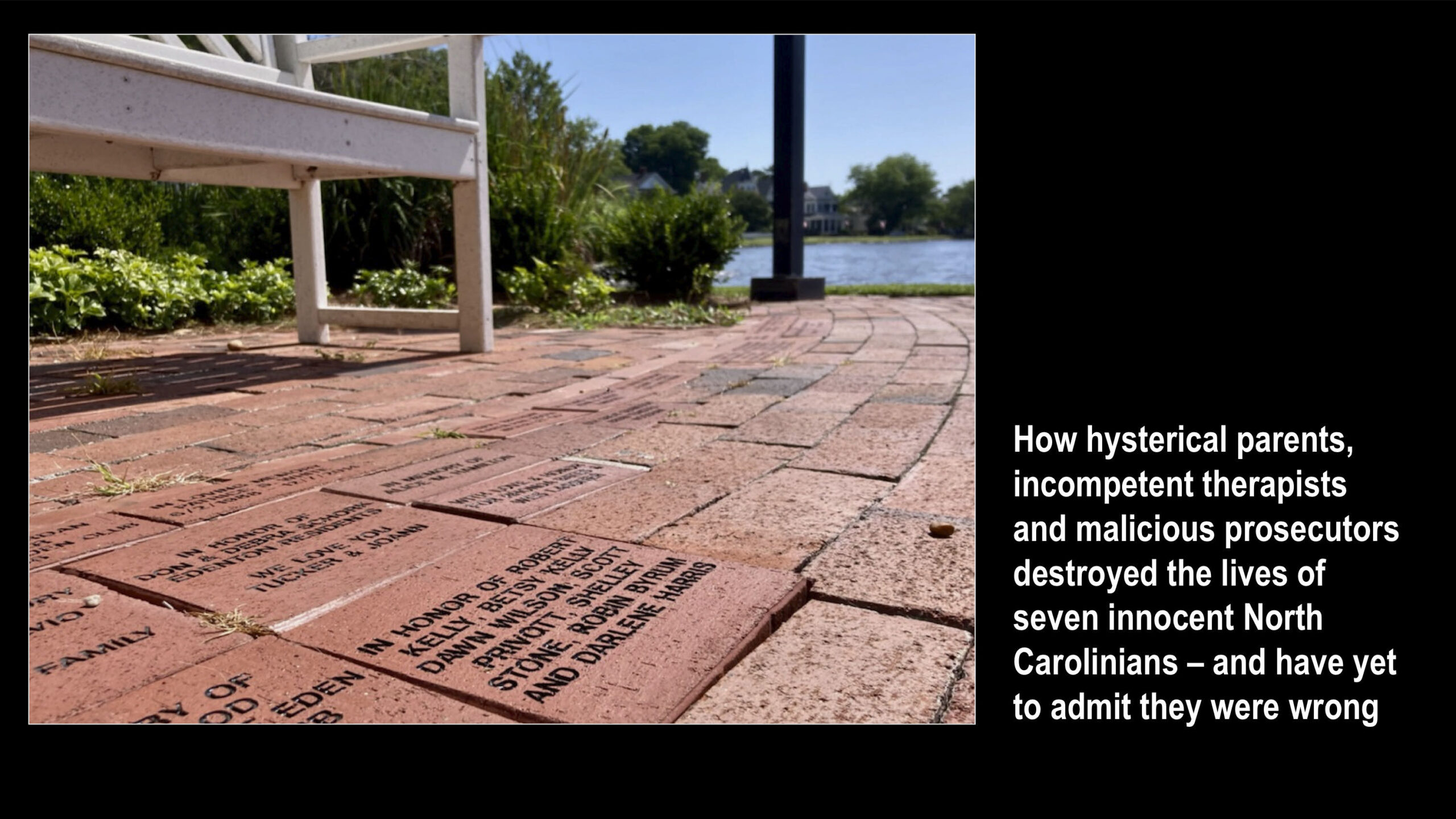
Among the alleged perpetrators: the sheriff and mayor. But prosecutors would charge only Robin Byrum, Darlene Harris, Elizabeth “Betsy” Kelly, Robert “Bob” Kelly, Willard Scott Privott, Shelley Stone and Dawn Wilson – the Edenton 7.
Along with sodomy and beatings, allegations included a baby killed with a handgun, a child being hung upside down from a tree and being set on fire and countless other fantastic incidents involving spaceships, hot air balloons, pirate ships and trained sharks.
By the time prosecutors dropped the last charges in 1997, Little Rascals had become North Carolina’s longest and most costly criminal trial. Prosecutors kept defendants jailed in hopes at least one would turn against their supposed co-conspirators. Remarkably, none did. Another shameful record: Five defendants had to wait longer to face their accusers in court than anyone else in North Carolina history.
Between 1991 and 1997, Ofra Bikel produced three extraordinary episodes on the Little Rascals case for the PBS series “Frontline.” Although “Innocence Lost” did not deter prosecutors, it exposed their tactics and fostered nationwide skepticism and dismay.
With each passing year, the absurdity of the Little Rascals charges has become more obvious. But no admission of error has ever come from prosecutors, police, interviewers or parents. This site is devoted to the issues raised by this case.
On Facebook


Little Rascals Day Care Case
This Facebook page is an offshoot of littlerascalsdaycarecase.org, which addresses the wrongful prosecution of the Edenton Seven and other such victims.

Meanwhile in Edenton....
This content isn't available right now
When this happens, it's usually because the owner only shared it with a small group of people, changed who can see it or it's been deleted.0 CommentsComment on Facebook
Allies for our cause!
This content isn't available right now
When this happens, it's usually because the owner only shared it with a small group of people, changed who can see it or it's been deleted.0 CommentsComment on Facebook
The courts have a long history of capriciously pulling the rug out from under Junior's appeals, but maybe this time....
This content isn't available right now
When this happens, it's usually because the owner only shared it with a small group of people, changed who can see it or it's been deleted.0 CommentsComment on Facebook
Click for earlier Facebook posts archived on this site
Click to go to

Today’s random selection from the Little Rascals Day Care archives….
Exoneree sees through prosecutors’ excuses: ‘I call BS’
June 30, 2016
“North Carolina’s district attorneys say a proposed rule that would require them to turn over evidence of innocence after a person is convicted is….”
Anyone familiar with the worst practices of DAs won’t be surprised at the rest of Martha Waggoner’s sentence:
“….unnecessary because prosecutors already believe it should be turned over at any point, including post-conviction.”
Chris Mumma of the N.C. Center on Actual Innocence, herself punished for exposing wrongful prosecutions, wondered why DAs would object to putting their high standard in writing: “If all the rule does is raise confidence in the process, then it’s beneficial.”
A more visceral response appeared on reporter Waggoner’s Facebook page – from exoneree Dwayne Dail:
“If it is unnecessary and they already believe that there is a rule that holds them to that standard, then why haven’t they been doing it?! Why have they argued that they had no obligation to do this? Why wasn’t I told that there was an alternative suspect in MY case, who just so happened to be the true perp? Why did I only find out after years of investigation during my civil suits, after my exoneration, that the actual perp’s name was in their files but was never investigated? I call BS.”
Dail was convicted of raping a 12-year-old Goldsboro girl in 1987. DNA evidence cleared him in 2007.

Assistant attorney general complains: ‘Innocence is in vogue now’
Aug. 11, 2016
“[North Carolina] Assistant Attorney General Jess Mekeel said [Johnny] Small’s motion should be dismissed.
“ ‘Innocence is in vogue now,’ he told the judge, the Associated Press reported.
“Exonerations are certainly on the rise. Last year, about 150 people were exonerated, a record number, according to the National Registry of Exonerations….
“Mekeel [said] he considers reopening cases based on recanted testimony to be a threat to the American legal system.
“ ‘This is an attempt to retry a 28-year-old case. Twelve jurors made that determination already. They heard the evidence. They concluded the defendant was guilty,’ Mekeel said, according to WRAL. ‘They jeopardize the stability and reliability of our justice system.’ ”
– From “Man spent 28 years in prison after his friend accused him of murder. Now, the friend said he lied” by Travis M. Andrews in the Washington Post (Aug. 9)
“Innocence is in vogue now” – what a revealing glimpse of the inner prosecutor! As if exonerations were a fad, an unwarranted threat to “the stability and reliability of our justice system.”
Is it any wonder that district attorneys such as Jon David so eagerly pursue innocence advocates such as Chris Mumma?
Journal editors find excuses to avoid retraction
Dec. 10, 2012
I’ve been surprised – naively, I suppose – by the refusal of professional journals such as Nursing Research, Child Abuse & Neglect and Relational Child & Youth Care Practice to retract articles that supported the moral panic of ritual abuse in day cares.
The editors’ common justification is that they published no “specific errors,” such as citing the Little Rascals case by name. This seems to me a narrow and disingenuous view. These articles are wrong to the bone, as wrong as if they had been based on cold fusion or the Protocols of Zion.
Here’s what the Charlotte Observer, my former employer, had to say in 2006 about how it had contributed to the infamous Wilmington coup d’etat of 1898:
“An apology is inadequate to atone for the Observer’s role in promoting the white supremacist campaign. But an apology is due….
“We apologize to the black citizens and their descendants whose rights and interests we disregarded, and to all North Carolinians, whose trust we betrayed by our failure to fairly report the news and to stand firmly against injustice.”
Newspapers, as “the first rough draft of history,” enjoy and deserve some leeway in reaching their standards of accuracy. But the editors at the Observer (and other participating North Carolina dailies) didn’t quibble over “specific errors.” They addressed the root defect in their coverage. Is it too much to expect the same from the editors of professional journals?
Sheriff, mayor escaped prosecutors’ dragnet
May 22, 2013
“One of the biggest strengths for the prosecution was that these children would go home every night to a parent or parents fully aligned with the prosecution theory. The story line would be reinforced at dinner, bathtime, playtime, bedtime….
“The children were, of course, separated from further contact with the accused day care workers, and by the time of trial their young memories of the actual person had been replaced by the fictional person, if they could remember who the perpetrators were supposed to be at all.
“At one point, a Little Rascals child pointed to a picture of the sheriff as one of the defendants; this identification, of course, was selectively ignored.”
– From “The Metanarrative of Suspicion in Late Twentieth-Century America” by Sandra Baringer (2004)
Edenton’s mayor was also among the initially accused, who numbered either 20, 24 or “dozens,” depending on the source. The inevitable question: How did prosecutors come to choose the Edenton Seven? Who lucked out – and why?