Rascals case in brief
In the beginning, in 1989, more than 90 children at the Little Rascals Day Care Center in Edenton, North Carolina, accused a total of 20 adults with 429 instances of sexual abuse over a three-year period. It may have all begun with one parent’s complaint about punishment given her child.
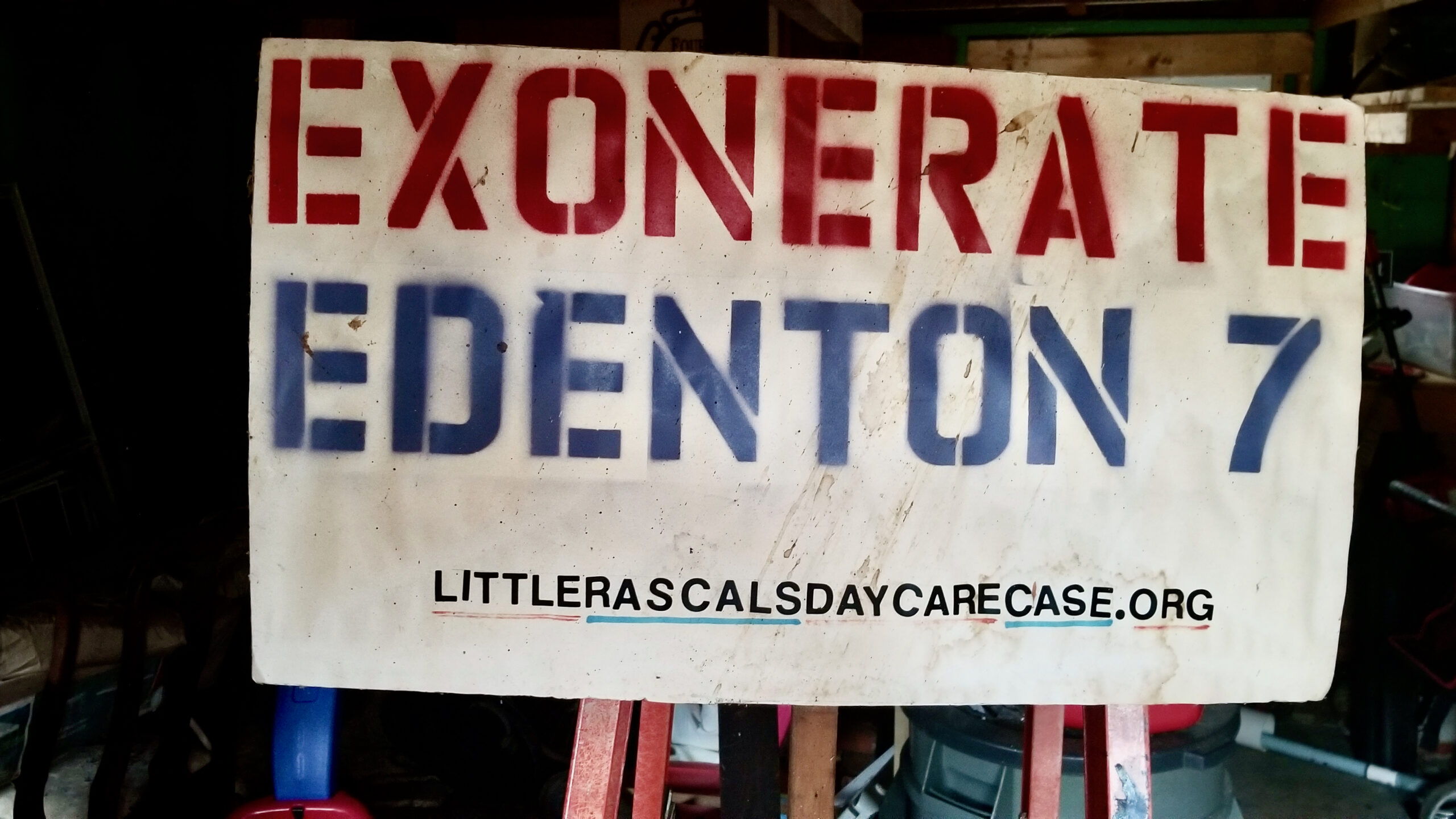
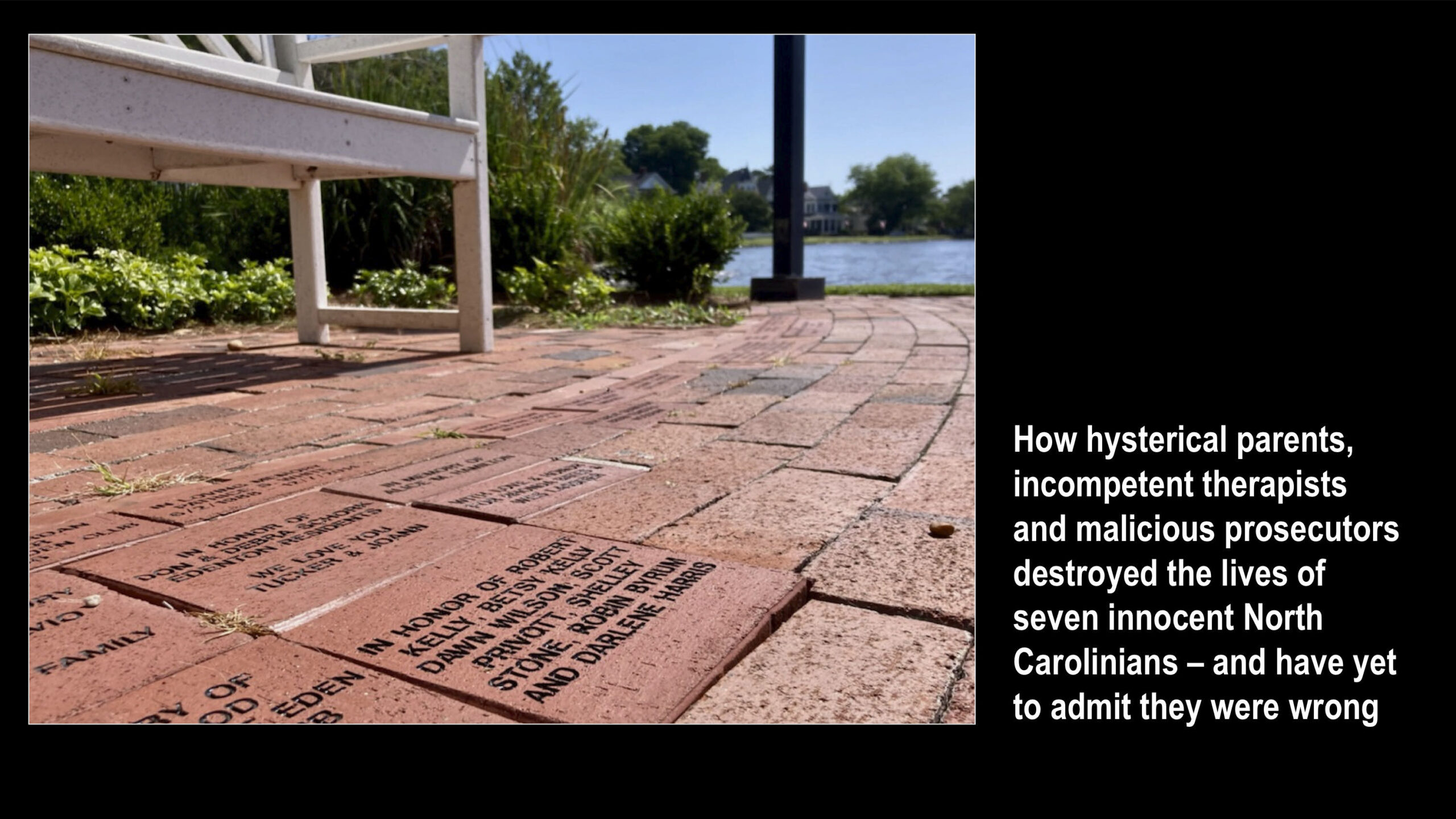
Among the alleged perpetrators: the sheriff and mayor. But prosecutors would charge only Robin Byrum, Darlene Harris, Elizabeth “Betsy” Kelly, Robert “Bob” Kelly, Willard Scott Privott, Shelley Stone and Dawn Wilson – the Edenton 7.
Along with sodomy and beatings, allegations included a baby killed with a handgun, a child being hung upside down from a tree and being set on fire and countless other fantastic incidents involving spaceships, hot air balloons, pirate ships and trained sharks.
By the time prosecutors dropped the last charges in 1997, Little Rascals had become North Carolina’s longest and most costly criminal trial. Prosecutors kept defendants jailed in hopes at least one would turn against their supposed co-conspirators. Remarkably, none did. Another shameful record: Five defendants had to wait longer to face their accusers in court than anyone else in North Carolina history.
Between 1991 and 1997, Ofra Bikel produced three extraordinary episodes on the Little Rascals case for the PBS series “Frontline.” Although “Innocence Lost” did not deter prosecutors, it exposed their tactics and fostered nationwide skepticism and dismay.
With each passing year, the absurdity of the Little Rascals charges has become more obvious. But no admission of error has ever come from prosecutors, police, interviewers or parents. This site is devoted to the issues raised by this case.
On Facebook


Little Rascals Day Care Case
This Facebook page is an offshoot of littlerascalsdaycarecase.org, which addresses the wrongful prosecution of the Edenton Seven and other such victims.

Meanwhile in Edenton....
This content isn't available right now
When this happens, it's usually because the owner only shared it with a small group of people, changed who can see it or it's been deleted.0 CommentsComment on Facebook
Allies for our cause!
This content isn't available right now
When this happens, it's usually because the owner only shared it with a small group of people, changed who can see it or it's been deleted.0 CommentsComment on Facebook
The courts have a long history of capriciously pulling the rug out from under Junior's appeals, but maybe this time....
This content isn't available right now
When this happens, it's usually because the owner only shared it with a small group of people, changed who can see it or it's been deleted.0 CommentsComment on Facebook
Click for earlier Facebook posts archived on this site
Click to go to

Today’s random selection from the Little Rascals Day Care archives….
Prosecutors learned wrong lesson from McMartin
March 28, 2012
Had North Carolina prosecutors been interested in anything other than racking up convictions, they would’ve given earnest consideration to analyses such as this one in the Los Angeles Times in 1990, barely a week after a jury returned not guilty verdicts in the McMartin Pre-School case:
“Experts across the country say the interview techniques intended to extract the truth from youngsters who attended the Manhattan Beach nursery school were so misguided as to make the children seem coerced, rehearsed and ultimately unbelievable to the jury….
“According to both child development and criminal defense experts who have closely monitored the case for the last six years, some of the adults — the parents, the prosecutors, the therapists — who tried hardest to find out what happened in the first place may have done the most to confuse the case in the end…. Most of the children were never given the chance to simply tell what, if anything, happened to them.
“‘They were never given the opportunity to tell their stories as they knew them, in their own words, until long after their minds had been contaminated with the thoughts and fears of the adults around them,’ said David Raskin, a psychologist at the University of Utah who has been studying child abuse cases for the last 15 years. By then, he said, it was too late.”
Contamination proved every bit as rampant among child-witnesses in the Little Rascals case, but prosecutors had learned from McMartin to conceal it by denying access to verbatim records of therapists’ interviews.
Day-care ritual-abuse claims vs. ‘The Cosby Show’
 Sept. 20, 2013
“In 1984 in particular we see a turning point in the media representation of American motherhood. Two major media events exemplified the cultural contradictions in which working mothers were caught:
“On one end of the spectrum, the McMartin day-care child-molestation scandal (followed by a barrage of similar scandals), and on the other end the spectrum, the premiere and runaway success of ‘The Cosby Show.’
“The former served as the direst warning of what happens when mothers go to work and entrust their children to others. The latter suggested that you could work at a demanding job, express frequent exasperation with your kids and threaten to murder them on a regular basis, and yet have a loving husband and children and be a terrific mother….”
– From “The Mommy Myth: The Idealization of Motherhood and How It Has Undermined Women” by Susan J. Douglas and Meredith W. Michaels (2004)
When millions believe in alien abduction….
Jan. 25, 2013
“With regard to recovered memories, ritual abuse charges and multiple personalities, the tide seems to have turned. Courts are continuing to reverse decisions…The Edenton Seven have been released from prison…. Yet many of these people’s lives have been wrecked by false allegations….
“If, as some polls claim, millions of Americans believe in alien abduction, we have a long way still to go before credulity, superstition and hysterical epidemics are on the wane…”
– From “Hystories: Hysterical Epidemics and Modern Media” by Elaine Showalter (1998)
Prognosis uncertain for misled child-witnesses
May 7, 2012
From an exchange with Stephen Ceci, author (with Maggie Bruck) of the landmark “Jeopardy in the Courtroom: A Scientific Analysis of Children’s Testimony” (1995):
Q: What may have happened to the child-witnesses as a result of being so profoundly misdiagnosed? One Little Rascals child-witness who responded anonymously to an advertisement I placed in the Edenton paper continues to say she was abused by Bob Kelly, although she admits to doubts about the female defendants.
A: We lack good scientific data on the long-term beliefs of individuals who as children were suggestively interviewed. A handful of studies, none of which resemble allegations of sexual abuse, seem to indicate that they grow up with the belief that they were abused, replete with the same psychological sequelae of true abuse survivors.
But you’ll note I use phrases such as “seem to indicate,” because the data are not uniform or consistent and the scenarios are not sex abuse ones. I think many, perhaps most, memory researchers would expect someone who was convinced as a child that he or she was victimized to grow into an adult with the same problems seen in actual victims, e.g., distrust of authority figures, insecurity, etc..
–
What extreme caution Dr. Ceci, an unsurpassed authority on child abuse, uses not to present theory and speculation as fact…. If only the therapists and theoreticians behind the day-care-abuse mania had shown half the professional uncertainty….