Rascals case in brief
In the beginning, in 1989, more than 90 children at the Little Rascals Day Care Center in Edenton, North Carolina, accused a total of 20 adults with 429 instances of sexual abuse over a three-year period. It may have all begun with one parent’s complaint about punishment given her child.
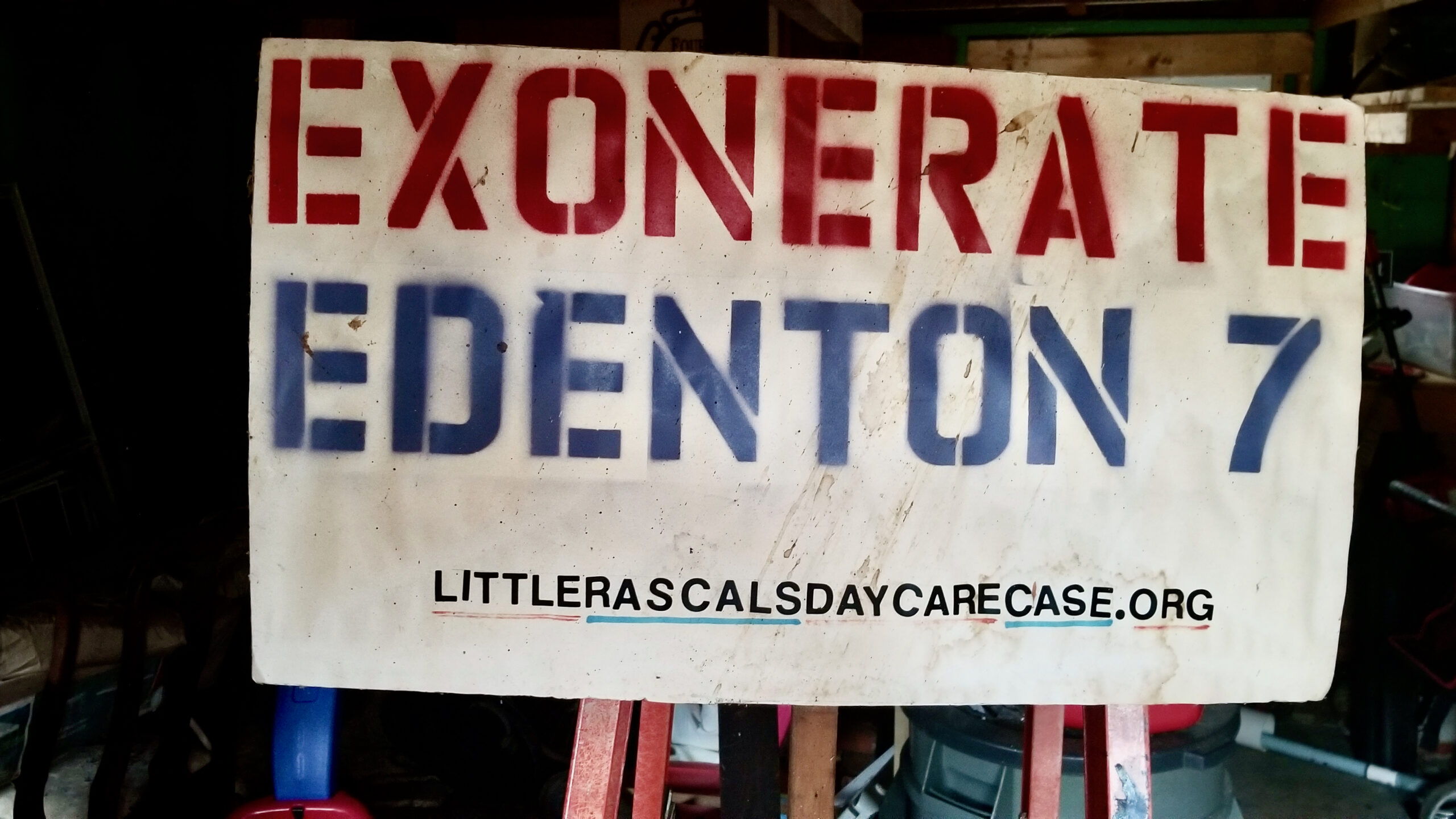
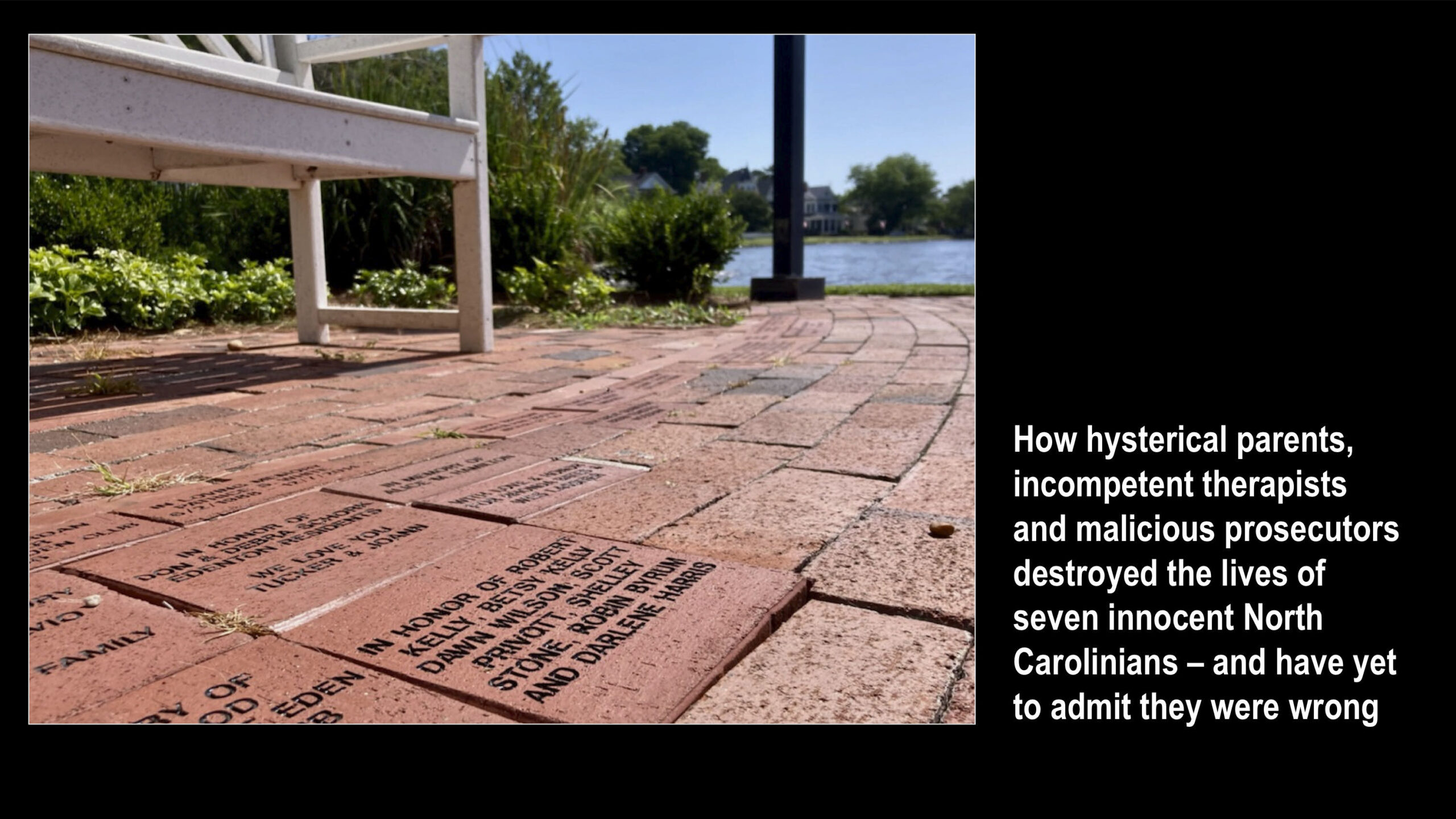
Among the alleged perpetrators: the sheriff and mayor. But prosecutors would charge only Robin Byrum, Darlene Harris, Elizabeth “Betsy” Kelly, Robert “Bob” Kelly, Willard Scott Privott, Shelley Stone and Dawn Wilson – the Edenton 7.
Along with sodomy and beatings, allegations included a baby killed with a handgun, a child being hung upside down from a tree and being set on fire and countless other fantastic incidents involving spaceships, hot air balloons, pirate ships and trained sharks.
By the time prosecutors dropped the last charges in 1997, Little Rascals had become North Carolina’s longest and most costly criminal trial. Prosecutors kept defendants jailed in hopes at least one would turn against their supposed co-conspirators. Remarkably, none did. Another shameful record: Five defendants had to wait longer to face their accusers in court than anyone else in North Carolina history.
Between 1991 and 1997, Ofra Bikel produced three extraordinary episodes on the Little Rascals case for the PBS series “Frontline.” Although “Innocence Lost” did not deter prosecutors, it exposed their tactics and fostered nationwide skepticism and dismay.
With each passing year, the absurdity of the Little Rascals charges has become more obvious. But no admission of error has ever come from prosecutors, police, interviewers or parents. This site is devoted to the issues raised by this case.
On Facebook


Little Rascals Day Care Case
This Facebook page is an offshoot of littlerascalsdaycarecase.org, which addresses the wrongful prosecution of the Edenton Seven and other such victims.

Meanwhile in Edenton....
This content isn't available right now
When this happens, it's usually because the owner only shared it with a small group of people, changed who can see it or it's been deleted.0 CommentsComment on Facebook
Allies for our cause!
This content isn't available right now
When this happens, it's usually because the owner only shared it with a small group of people, changed who can see it or it's been deleted.0 CommentsComment on Facebook
The courts have a long history of capriciously pulling the rug out from under Junior's appeals, but maybe this time....
This content isn't available right now
When this happens, it's usually because the owner only shared it with a small group of people, changed who can see it or it's been deleted.0 CommentsComment on Facebook
Click for earlier Facebook posts archived on this site
Click to go to

Today’s random selection from the Little Rascals Day Care archives….
Why Mike Easley had to deny errors in Little Rascals trials

June 19, 2017
“Our criminal justice famously presumes that every accused person is innocent until proven guilty. But once a conviction is obtained, that presumption is turned on its head. Charges were brought, and a jury, which saw evidence and heard from the witnesses firsthand, voted to convict. At that point, finality sets in.
“Prosecutors tasked with defending a conviction against compelling evidence that it was wrongfully secured typically have two choices. They can accept the responsibility for participating — directly or indirectly — in an injustice, or they can insist that nothing went awry or that whatever mistakes may have been made were ‘immaterial’– that is, the jury would have convicted anyway. The justice system strongly pushes them in the latter direction. Ambitious, hard-charging prosecutors know that the way to the top is amassing guilty verdicts, not admitting mistakes. In 47 states [including North Carolina], their bosses – the county district attorney, the state’s attorney general – are elected. Incompetence, or appearing ‘soft on crime,’ can be fatal at the ballot box….
“The refusal to admit a mistake – or even an act of bad faith – holds true regardless of whether the prosecutor defending the conviction had any involvement at the trial level, personally knew the key players or even worked in the same office…. This may be due, in part, to a phenomenon that [Northeastern University law professor Daniel Medwed] calls ‘the conformity effect.’ Prosecutors… are ‘culturally aligned with that side and tend to defer to their peers who were the original decision makers.’ “
– From “For shame” by Lara Bazelon at Slate (April 7, 2016)
Although examples of such prosecutorial lockstep are legion, most relevant here is N.C. Attorney General Mike Easley’s response to the overturning of the convictions of Little Rascals defendants Bob Kelly and Dawn Wilson. Easley, himself a former district attorney (and future governor), laid it on thick:
“The decision casts no doubt on the credibility of the children or the integrity of the investigation…. In both cases, the facts supporting the convictions were clear and overwhelming. [The N.C. Court of Appeals] disregarded these facts and misapplied the law.”
Four months later, throwing in the towel after the N.C. Supreme Court upheld the Court of Appeals, Easley managed to find fault not with the prosecutors but with the children. “All prosecutors know that cases involving children weaken with age,” he said. “A retrial in this matter will be extremely difficult.”

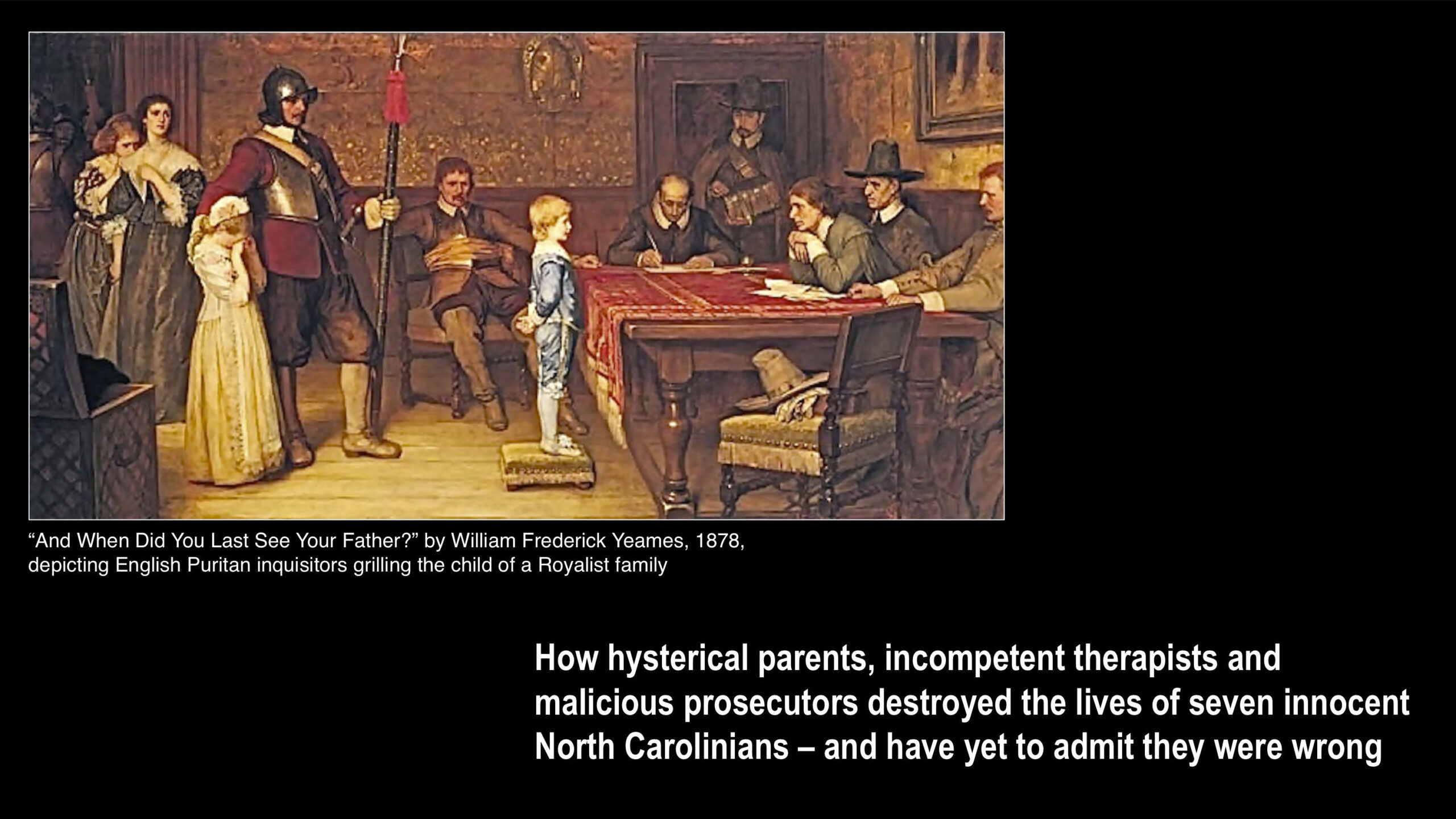
Three centuries later, witch trials remain uncomfortably relevant
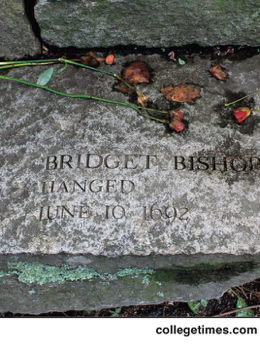 Oct. 31, 2016
“Historical truths emerge only with time, after which they are ours, particularly on Halloween, to mangle.
“Early on, the Salem witch trials disappeared from the record; a hush descended over 1692 for generations. ‘The People of Salem Do Not Like to Be Questioned in Regard to the Witchery Affair’ reads a Philadelphia Inquirer headline – from 1895. It fell to others to resurrect the ‘witchcraft,’ as the South did during the debate over slavery. Then came Arthur Miller, who made off with the story, or at least a version of it.
“A lush mythology grew up around the trials, one that reassured us that these events took place in a remote land in no way resembling our own. In truth, they are deeply woven into the American fabric. They are more relevant than the lore suggests – our earliest instance of conspiratorial fantasy and reckless demonizing, of the brand of national distemper that grips us in anxious times.”
– From “Five Myths about the Salem witch trials” by Stacy Schiff in the Washington Post (Oct. 30)
Fifteen years ago today: Massachusetts officially exonerates five women hanged as witches in Salem.
Skeptics not welcome where ‘awareness’ rules
Dec. 19, 2012
“Down with skepticism, up with awareness.”
– Button worn at a conference on “multiple personality disorder” (hat tip, religioustolerance.org)
Six words that say it all, from MPD to satanic ritual abuse to recovered memory therapy.
There’s plenty to be said for “awareness,” of course – just not as a euphemism for “gullibility.”
‘Too many therapists with too little expertise’
Sept. 11, 2013
“Why did the epidemic of day care hysteria happen just when and where it did? Why in 1982? Why in the United States?…. You can’t have a panic about day care centers unless you have day care centers. These had become a necessary fixture of American life as more mothers entered the work force, families traveled far distances to chase available jobs and there were fewer available grandmothers to help babysit. Undoubtedly parental guilt in turning over parental responsibility played a role.
“Among therapists, there was concern over previously not taking seriously enough the statements of kids who had actually experienced sexual abuse. There were also too many therapists with too little expertise who were able nonetheless to self-promote and gain authority as fake ‘experts.’ This sad episode is the clearest caution imaginable to any therapist feeling the impulse to jump onto a current or future fad bandwagon.”
– From “Saving Normal: An Insider’s Revolt Against Out-of-Control Psychiatric Diagnosis, DSM-5, Big Pharma, and the Medicalization of Ordinary Life” by Allen Frances (2013)
Despite Dr. Frances’s timidity in exposing the “complete bunk” of multiple personality disorder, his influence across psychiatry is undisputed. But will his words be sufficient to deter the next generation of overreaching therapists from jumping onto the “fad bandwagon”?