
Rascals case in brief
In the beginning, in 1989, more than 90 children at the Little Rascals Day Care Center in Edenton, North Carolina, accused a total of 20 adults with 429 instances of sexual abuse over a three-year period. It may have all begun with one parent’s complaint about punishment given her child.
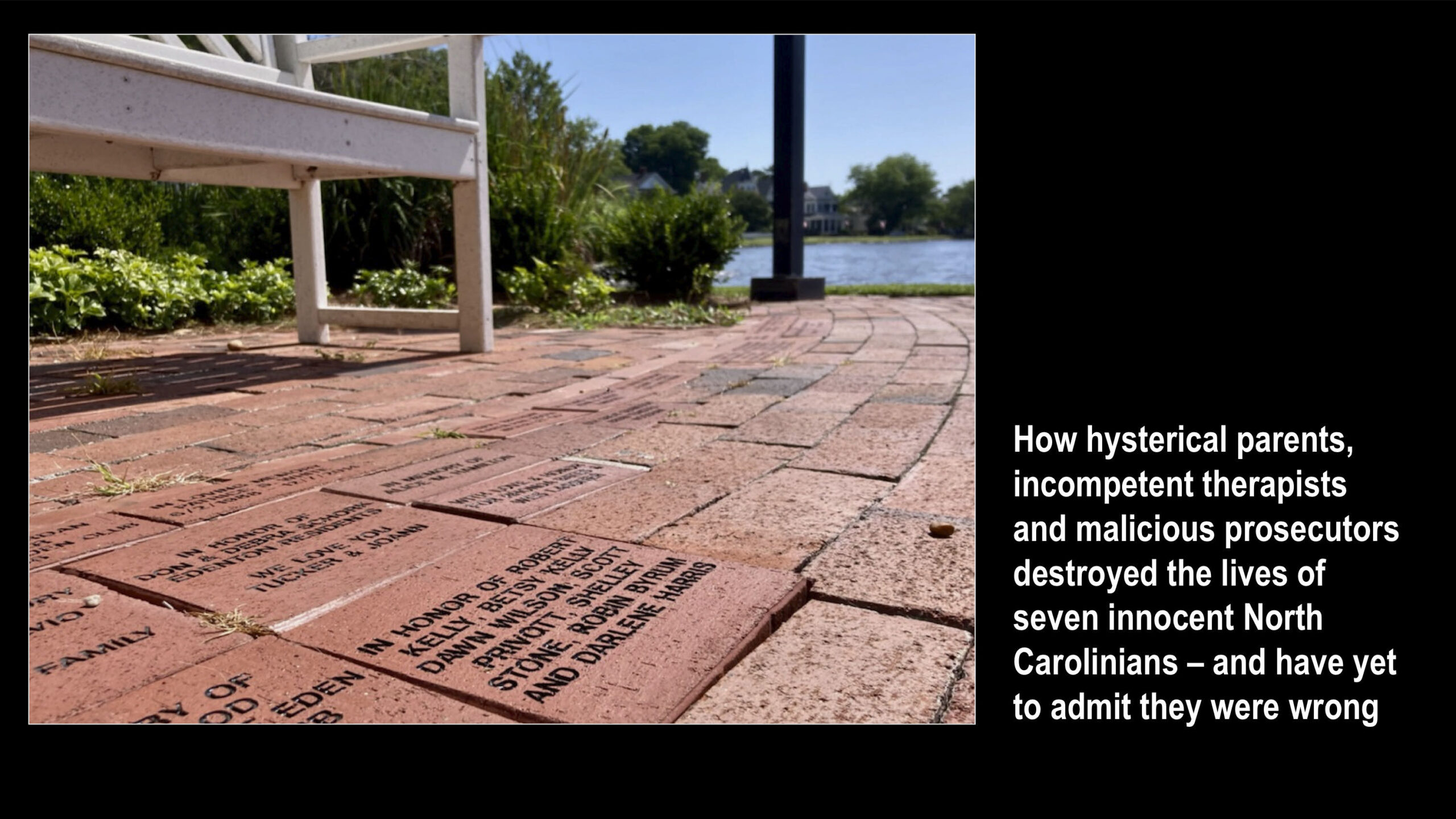
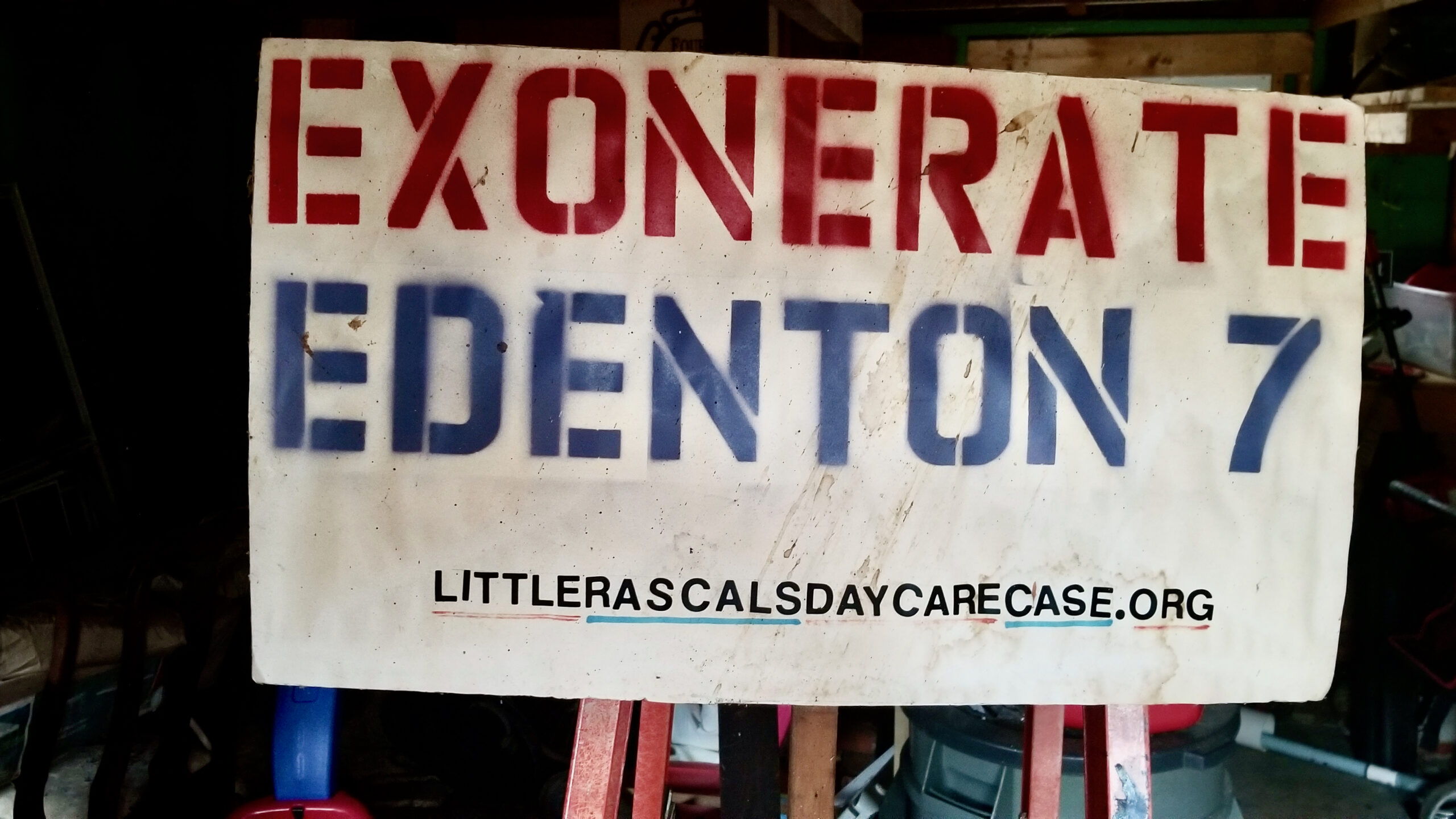
Among the alleged perpetrators: the sheriff and mayor. But prosecutors would charge only Robin Byrum, Darlene Harris, Elizabeth “Betsy” Kelly, Robert “Bob” Kelly, Willard Scott Privott, Shelley Stone and Dawn Wilson – the Edenton 7.
Along with sodomy and beatings, allegations included a baby killed with a handgun, a child being hung upside down from a tree and being set on fire and countless other fantastic incidents involving spaceships, hot air balloons, pirate ships and trained sharks.
By the time prosecutors dropped the last charges in 1997, Little Rascals had become North Carolina’s longest and most costly criminal trial. Prosecutors kept defendants jailed in hopes at least one would turn against their supposed co-conspirators. Remarkably, none did. Another shameful record: Five defendants had to wait longer to face their accusers in court than anyone else in North Carolina history.
Between 1991 and 1997, Ofra Bikel produced three extraordinary episodes on the Little Rascals case for the PBS series “Frontline.” Although “Innocence Lost” did not deter prosecutors, it exposed their tactics and fostered nationwide skepticism and dismay.
With each passing year, the absurdity of the Little Rascals charges has become more obvious. But no admission of error has ever come from prosecutors, police, interviewers or parents. This site is devoted to the issues raised by this case.
On Facebook


Little Rascals Day Care Case
This Facebook page is an offshoot of littlerascalsdaycarecase.org, which addresses the wrongful prosecution of the Edenton Seven and other such victims.

Meanwhile in Edenton....
This content isn't available right now
When this happens, it's usually because the owner only shared it with a small group of people, changed who can see it or it's been deleted.0 CommentsComment on Facebook
Allies for our cause!
This content isn't available right now
When this happens, it's usually because the owner only shared it with a small group of people, changed who can see it or it's been deleted.0 CommentsComment on Facebook
The courts have a long history of capriciously pulling the rug out from under Junior's appeals, but maybe this time....
This content isn't available right now
When this happens, it's usually because the owner only shared it with a small group of people, changed who can see it or it's been deleted.0 CommentsComment on Facebook
Click for earlier Facebook posts archived on this site
Click to go to

Today’s random selection from the Little Rascals Day Care archives….
Chaplain writes memoir about supporting defendants
Nov. 21, 2011
 Raymond Lawrence, the New York City chaplain who founded the Committee for Support of the Edenton Seven, was an attentive and often appalled observer at Bob Kelly’s trial. This passage is excerpted from a memoir now posted in its entirety on the Bookshelf:
“Among the more obscene performances I witnessed by the prosecution was a long argument that Robert Kelly had had vaginal intercourse with a five-year-old girl.
“On a screen about four feet square the prosecutor displayed a color slide the girl’s genitalia, with two adult thumbs shown pulling back the labia to display the hymen and vaginal opening. The hymen appeared fully intact, covering most of the vaginal opening. The prosecutor thus spent what I recall as hours arguing that the stretch marks in the hymen were evidence of adult penile penetration.
“I wondered why the defense attorney did not rise up and ask if this were Alice in Wonderland…. It was as if I had entered an alternate universe.”
Prognosis uncertain for misled child-witnesses
May 7, 2012
From an exchange with Stephen Ceci, author (with Maggie Bruck) of the landmark “Jeopardy in the Courtroom: A Scientific Analysis of Children’s Testimony” (1995):
Q: What may have happened to the child-witnesses as a result of being so profoundly misdiagnosed? One Little Rascals child-witness who responded anonymously to an advertisement I placed in the Edenton paper continues to say she was abused by Bob Kelly, although she admits to doubts about the female defendants.
A: We lack good scientific data on the long-term beliefs of individuals who as children were suggestively interviewed. A handful of studies, none of which resemble allegations of sexual abuse, seem to indicate that they grow up with the belief that they were abused, replete with the same psychological sequelae of true abuse survivors.
But you’ll note I use phrases such as “seem to indicate,” because the data are not uniform or consistent and the scenarios are not sex abuse ones. I think many, perhaps most, memory researchers would expect someone who was convinced as a child that he or she was victimized to grow into an adult with the same problems seen in actual victims, e.g., distrust of authority figures, insecurity, etc..
–
What extreme caution Dr. Ceci, an unsurpassed authority on child abuse, uses not to present theory and speculation as fact…. If only the therapists and theoreticians behind the day-care-abuse mania had shown half the professional uncertainty….
Why prosecutors can’t admit they’re wrong
 March 5, 2012
“DURHAM — Tracey Cline could not admit she was wrong….”
Thus begins J. Andrew Curliss’s latest behavioral analysis of Durham County’s latest disgraced district attorney.
Coincidentally, Curliss cites a book I’ve been reading to better understand the rigidly wrongheaded behavior of the Little Rascals prosecutors.
“Carol Tavris, a Los Angeles social psychologist who has researched and written about the behavior and decision-making of prosecutors, said studies show the human brain, when sorting out conflicting beliefs and actions, will engage in a powerful act known as ‘self-justification.’
“It can keep people from admitting they are wrong and can be more powerful and more dangerous than an explicit lie, she said in an interview and in a 2007 book she co-authored, ‘Mistakes Were Made (But Not By Me)’…
“Self-justification is especially concerning in the justice system, Tavris said, because authorities often view themselves as ‘good guys’ doing the ‘right thing’….
“ ‘It’s really, really, really hard to face the reality that you screwed up,’ she said. ‘When we have a view of ourselves as good, competent, ethical, honest people and we are now confronted with evidence that we did something that was incompetent, unethical, immoral or harmful, we have two choices. We can ’fess up – say, “Oh, my God, look at this evidence, what did I do? How can I make amends?” – or, we deny.’ ”
Here’s a recent public ’fessing up that could be a model for errant prosecutors: “I want to express my sincere regret and apology…. It was a terrible mistake, and we knew it was wrong while we were doing it. Instead of getting caught up in it, I should have stopped it.”
Alas, it comes not from Cline – or from H. P. Williams Jr., Bill Hart or Nancy Lamb – but from the NFL coach who oversaw the “bounty” system for disabling opposing players.
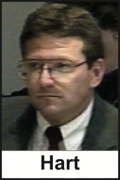
Bill Hart used day-care moms as dating pool
 Aug. 6, 2012
Let’s say you were a special deputy attorney general called in from Raleigh to help prosecute the Little Rascals case. Now imagine: What would be the most inappropriate, the most ethically questionable way you could possibly spend your spare time in Edenton? How about starting to date the mother of one of the alleged victims?
Yes, that’s exactly what Bill Hart chose to do. He and Patricia A. Kephart had been involved for months even before Bob Kelly’s trial began.
Readers of this blog won’t be surprised to learn that Hart denied any impropriety and blamed the defense for trying “to divert attention from the case.”
But Rich Rosen, professor of criminal procedure at the UNC Chapel Hill School of Law, told the News & Observer of Raleigh (Dec. 20, 1991) that “It certainly raises questions in my mind. A prosecutor is not supposed to have any personal involvement or interest in the case.”
One question raised in my own mind: Unlikely, yes, but what if Hart had experienced a pang of doubt about the validity of the prosecution’s case? Would he have been able to admit that to his girlfriend (much less to his fellow prosecutors)?
At the conclusion of the state’s case, prosecutors dropped charges related to Kephart’s daughter. Hart and Kephart later married.