
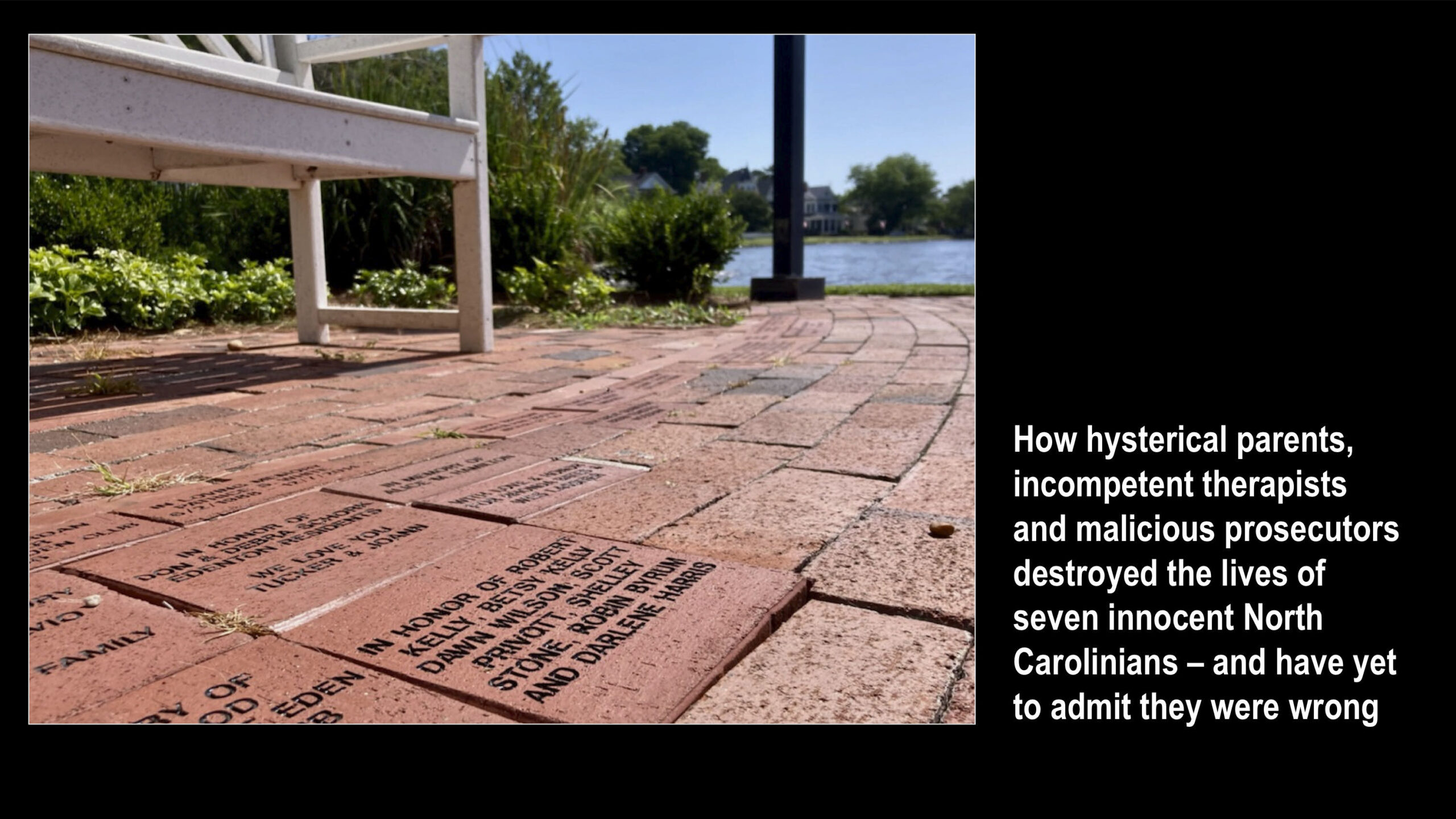

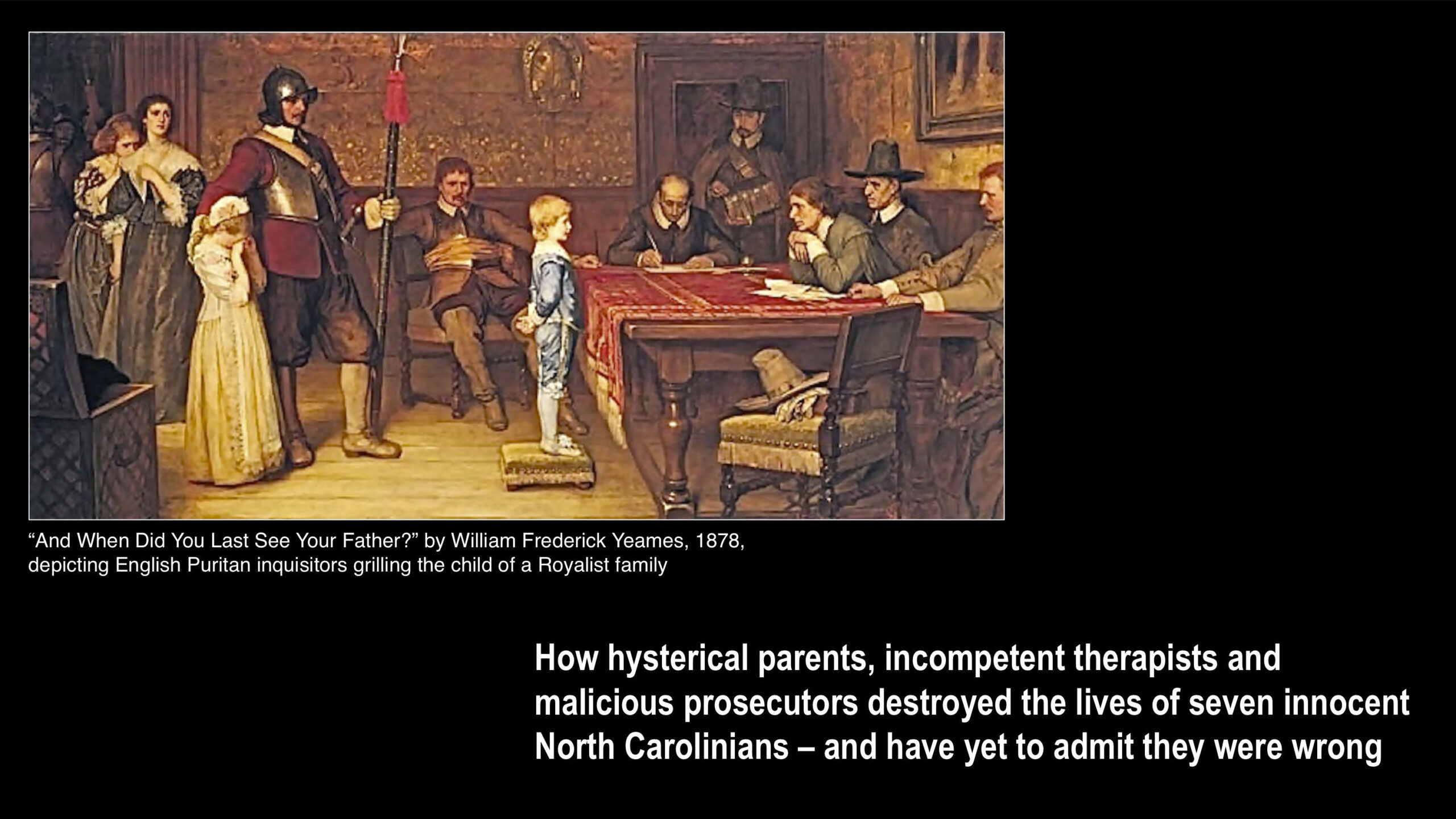
Rascals case in brief
In the beginning, in 1989, more than 90 children at the Little Rascals Day Care Center in Edenton, North Carolina, accused a total of 20 adults with 429 instances of sexual abuse over a three-year period. It may have all begun with one parent’s complaint about punishment given her child.
Among the alleged perpetrators: the sheriff and mayor. But prosecutors would charge only Robin Byrum, Darlene Harris, Elizabeth “Betsy” Kelly, Robert “Bob” Kelly, Willard Scott Privott, Shelley Stone and Dawn Wilson – the Edenton 7.
Along with sodomy and beatings, allegations included a baby killed with a handgun, a child being hung upside down from a tree and being set on fire and countless other fantastic incidents involving spaceships, hot air balloons, pirate ships and trained sharks.
By the time prosecutors dropped the last charges in 1997, Little Rascals had become North Carolina’s longest and most costly criminal trial. Prosecutors kept defendants jailed in hopes at least one would turn against their supposed co-conspirators. Remarkably, none did. Another shameful record: Five defendants had to wait longer to face their accusers in court than anyone else in North Carolina history.
Between 1991 and 1997, Ofra Bikel produced three extraordinary episodes on the Little Rascals case for the PBS series “Frontline.” Although “Innocence Lost” did not deter prosecutors, it exposed their tactics and fostered nationwide skepticism and dismay.
With each passing year, the absurdity of the Little Rascals charges has become more obvious. But no admission of error has ever come from prosecutors, police, interviewers or parents. This site is devoted to the issues raised by this case.
On Facebook


Little Rascals Day Care Case
This Facebook page is an offshoot of littlerascalsdaycarecase.org, which addresses the wrongful prosecution of the Edenton Seven and other such victims.

Meanwhile in Edenton....
This content isn't available right now
When this happens, it's usually because the owner only shared it with a small group of people, changed who can see it or it's been deleted.0 CommentsComment on Facebook
Allies for our cause!
This content isn't available right now
When this happens, it's usually because the owner only shared it with a small group of people, changed who can see it or it's been deleted.0 CommentsComment on Facebook
The courts have a long history of capriciously pulling the rug out from under Junior's appeals, but maybe this time....
This content isn't available right now
When this happens, it's usually because the owner only shared it with a small group of people, changed who can see it or it's been deleted.0 CommentsComment on Facebook
Click for earlier Facebook posts archived on this site
Click to go to

Today’s random selection from the Little Rascals Day Care archives….
Moral panics, strange to begin with, also make strange bedfellows

June 14, 2018
“America has a long history of episodic moral panics in which self-styled experts, sensationalistic journalists and public officials used emotionally charged language and a barrage of (often distorted) statistics to portray a particular social problem as widespread and urgent….
“The 1980s brought [a] moral panic precipitated by unease about double-income families and the supervision of children by strangers at day-care centers….
“All these scares produced unexpected political alliances. Conservatives concerned with moral purity, law-and-order and Christian values joined forces with feminists worried about victims of sexual trauma and liberals in favor of strong government regulation. When forces from the right and left converge in a moral panic, their causes possess greater appeal to the public. We see this today as women’s rights advocates join the sex-trafficking fight along with the religious right. The result is a runaway train with no real political force left in opposition….”
– From “President Trump signed a new law that aims to fight online sex trafficking. Here’s why that’s bad.” by Sascha Cohen in the Washington Post (April 12)

Prosecutorial arrogance – it’s forever!
March 1, 2016
“It would be hard to imagine a more glaring judicial conflict of interest than the one the Supreme Court considered in a case out of Pennsylvania on Monday.
“In 1986, Terrance Williams was convicted of killing a man named Amos Norwood with a tire iron when he was 18. Prosecutors in the Philadelphia district attorney’s office sought the death penalty, and got it….
“A state court found that the prosecutors had lied, and vacated Mr. Williams’s sentence. But the Pennsylvania Supreme Court unanimously reversed that ruling. The court’s chief justice at the time, Ronald Castille, wrote a concurring opinion criticizing the lower court’s ruling for ‘condemning’ the prosecutors.
“The problem was that Mr. Castille himself led the district attorney’s office when it prosecuted Mr. Williams, and personally authorized seeking the death penalty in that case…. Nevertheless, he refused to recuse himself from Mr. Williams’s case….”
– From “Should a Judge Rule on His Own Case?” editorial in the New York Times (Feb. 29)
Meanwhile in North Carolina, prosecutors yet again show great interest in maintaining their conviction rate and little if any in ensuring justice has been done (text cache).
View from 1908: ‘The lawyer alone is obdurate’

May 5, 2016
“Psychologists have long recognized that human memory is highly fallible. Hugo Münsterberg taught in one of the first American psychology departments, at Harvard. In a 1908 book called ‘On the Witness Stand,’ he argued that, because people could not know when their memories had deceived them, the legal system’s safeguards against lying – oaths, penalties for perjury, and so on – were ineffective.
“He expected that teachers, doctors, and politicians would all be eager to reform their fields. ‘The lawyer alone is obdurate,’ Münsterberg wrote.”
– From “Recognition: How a travesty led to criminal-justice innovation in Texas” by Paul Kix in the New Yorker (Jan. 18)
Dr. Munsterberg saw clearly the stubbornness of lawyers, even if he may have overestimated the open-mindedness of those other callings.
Children don’t remember, but are sure abuse happened
 May 25, 2012
“Maggie Bruck, co-author of ‘Jeopardy in the Courtroom: A Scientific Analysis of Children’s Testimony’ and a professor of psychiatry at Johns Hopkins University, says no long-term psychological studies exist that track groups of children involved in alleged sex-abuse rings, in part because of confidentiality issues.
“But Bruck has studied follow-up interviews of children involved in cases similar to the notorious McMartin preschool trial. Some kids continue to believe they were abused. Bruck suspects it’s because their families or therapists have reinforced the stories of abuse. ‘The children say they don’t remember the salient, allegedly terrifying details,’ she told me. ‘But they are sure it happened.’ ”
– From “Who Was Abused?” by Maggie Jones in the New York Times (Sept. 19, 2004)
Might the Little Rascals children be among the subjects of that follow-up research? Sorry, Dr. Bruck says predictably – “Confidential information.”