Rascals case in brief
In the beginning, in 1989, more than 90 children at the Little Rascals Day Care Center in Edenton, North Carolina, accused a total of 20 adults with 429 instances of sexual abuse over a three-year period. It may have all begun with one parent’s complaint about punishment given her child.
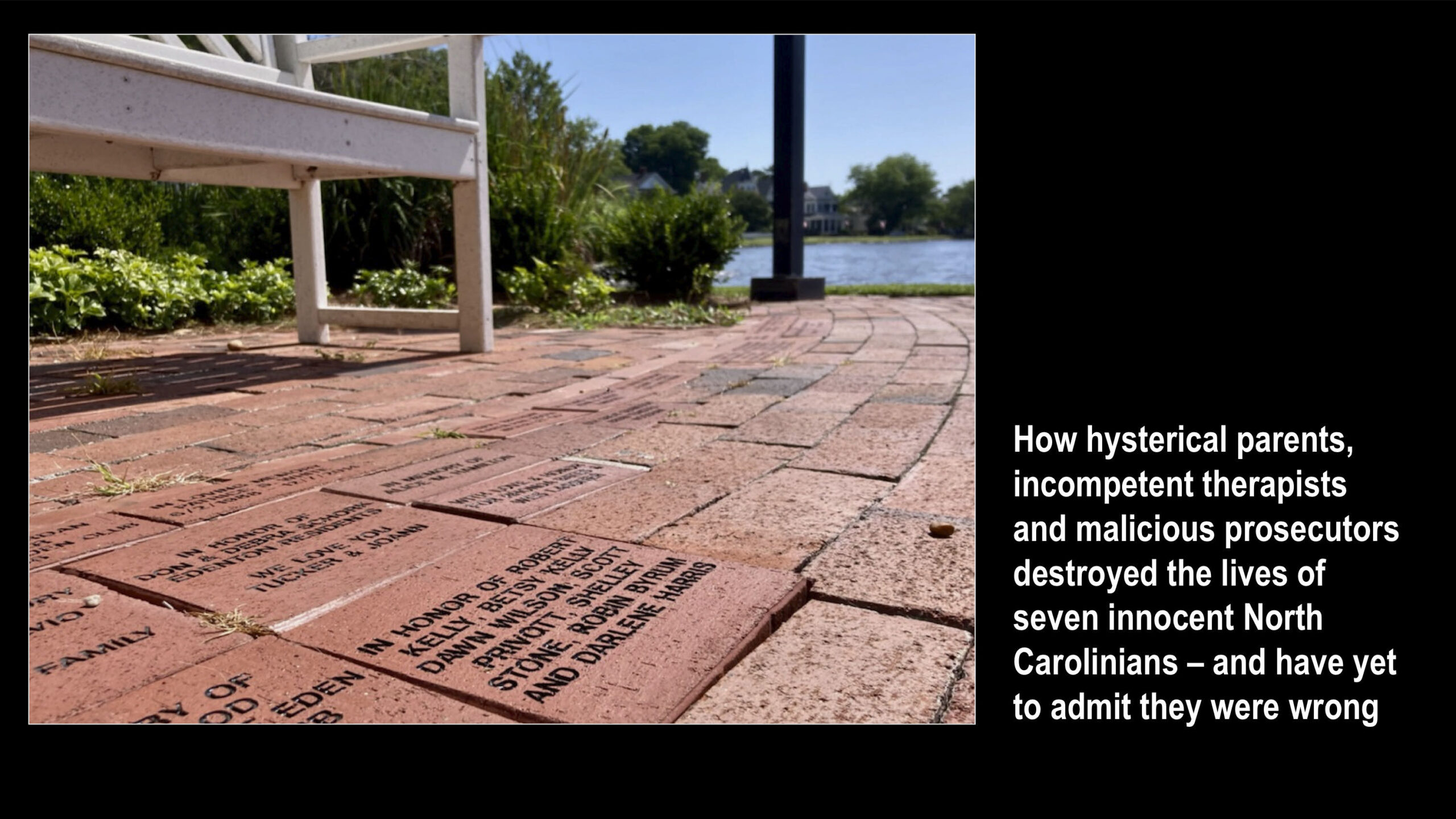
Among the alleged perpetrators: the sheriff and mayor. But prosecutors would charge only Robin Byrum, Darlene Harris, Elizabeth “Betsy” Kelly, Robert “Bob” Kelly, Willard Scott Privott, Shelley Stone and Dawn Wilson – the Edenton 7.
Along with sodomy and beatings, allegations included a baby killed with a handgun, a child being hung upside down from a tree and being set on fire and countless other fantastic incidents involving spaceships, hot air balloons, pirate ships and trained sharks.
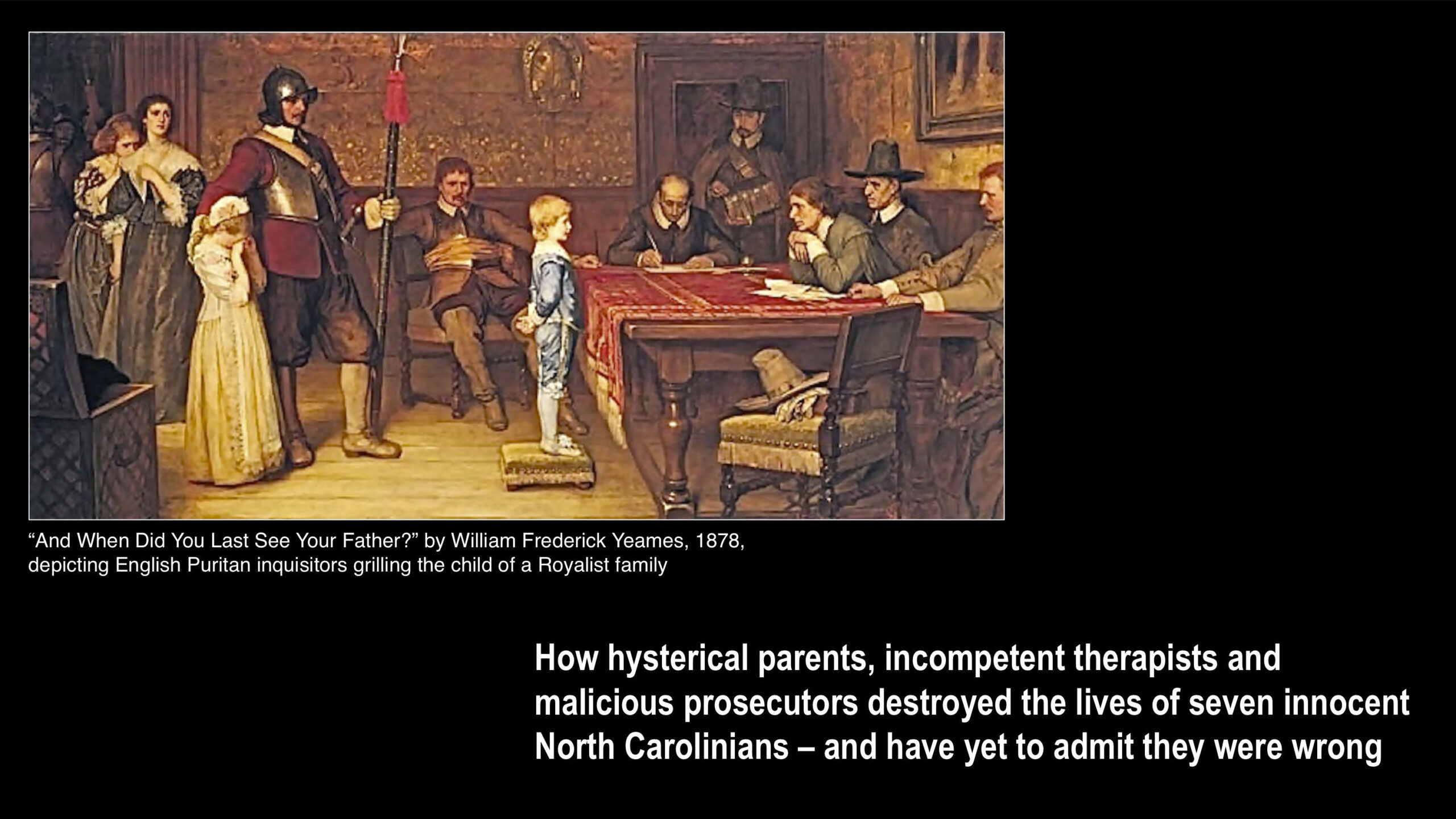
By the time prosecutors dropped the last charges in 1997, Little Rascals had become North Carolina’s longest and most costly criminal trial. Prosecutors kept defendants jailed in hopes at least one would turn against their supposed co-conspirators. Remarkably, none did. Another shameful record: Five defendants had to wait longer to face their accusers in court than anyone else in North Carolina history.
Between 1991 and 1997, Ofra Bikel produced three extraordinary episodes on the Little Rascals case for the PBS series “Frontline.” Although “Innocence Lost” did not deter prosecutors, it exposed their tactics and fostered nationwide skepticism and dismay.
With each passing year, the absurdity of the Little Rascals charges has become more obvious. But no admission of error has ever come from prosecutors, police, interviewers or parents. This site is devoted to the issues raised by this case.
On Facebook


Little Rascals Day Care Case
This Facebook page is an offshoot of littlerascalsdaycarecase.org, which addresses the wrongful prosecution of the Edenton Seven and other such victims.

Meanwhile in Edenton....
This content isn't available right now
When this happens, it's usually because the owner only shared it with a small group of people, changed who can see it or it's been deleted.0 CommentsComment on Facebook
Allies for our cause!
This content isn't available right now
When this happens, it's usually because the owner only shared it with a small group of people, changed who can see it or it's been deleted.0 CommentsComment on Facebook
The courts have a long history of capriciously pulling the rug out from under Junior's appeals, but maybe this time....
This content isn't available right now
When this happens, it's usually because the owner only shared it with a small group of people, changed who can see it or it's been deleted.0 CommentsComment on Facebook
Click for earlier Facebook posts archived on this site
Click to go to

Today’s random selection from the Little Rascals Day Care archives….
‘Have you ever stopped to consider…?’
July 31, 2013
“Have you ever stopped to consider what the statistical odds must be against the following allegations made by the prosecution? How could the following all be true?
“1. That seven child abusers would somehow all show up at the Little Rascals Day Care during the same time period.
“2. That out of these seven alleged abusers not one had any record of any sexual misbehavior in their past.
“3. That out of all seven of these alleged abusers not one was found to be in possession of any child pornography or other suggestive materials.
“4. That with multiple-hundreds of alleged abuses claimed to have taken place, not one single piece of ‘hard’ evidence was ever found. Nor was there a single adult witness to any behavior even suggestive of abuse.
“5. That out of all seven of these alleged abusers, not one would be willing to testify against the others in return for easier treatment.”
– From a Feb. 22, 1994, letter sent to prosecutors and the press by Jeffrey Keimer of Portola Valley, Calif.
These are questions that occurred to someone following the Little Rascals case from 3,000 miles away. Too bad they seem not to have occurred to so many prosecutors, therapists, parents, reporters and jurors. Up close, was the “ritual abuse” narrative simply too mesmerizing?
Dog bites man: ‘Paper will not be retracted’
 Aug. 26, 2015
In November 2012 the journal Nursing Research declined my request to retract Susan J. Kelley’s 1990 article based on the existence of “satanic ritual abuse” in day cares. The editor contended that “Conditions that would lead to a retraction are not present.”
Nursing Research having since installed a new editor, I recently tried again. This time I was able to include two important academic developments: Richard Noll’s expose of the “satanic ritual abuse” movement in Psychiatric Times and Dr. Allen Frances’ personal apology for failing to do more to challenge that movement.
This is an excerpt from the response I received from editor Susan J. Henly, professor emerita, University of Minnesota School of Nursing:
“As I understood it, your argument for retraction (of ‘Parental Stress Response to Sexual Abuse and Ritualistic Abuse of Children in Day-care Centers’) was based on the rationale that: the title embraced and promoted the existence of ritual sexual abuse in day cares that did not exist, and that not a single respected academic or professional would be willing to give credence to claims about ritualistic sexual abuse from the times during which the research was conducted.
“In response, I re-read Kelley et al. (1990) many times, reviewed background information, contacted the author, and communicated with the editor of another journal that has published papers on child sexual abuse by Dr. Kelley. Documents related to the original peer review of the Nursing Research paper are not available, and the Editor (Dr. Florence Downs) who accepted the paper is deceased.
“I searched for other papers on this topic from the 1980s to the present and did not locate any, including other original research by Dr. Kelley, that had been retracted. I discussed the methods of the research with Dr. Kelley; she verified what was stated in the paper, which I found to be in accord with expectations for scientific standards and ethical conduct of research. The editor I contacted about a related paper said the journal stood by the integrity of their review process and quality of the scholarship that had been published.
“With regards to issues related to credence of claims about ritualistic sexual abuse, Finkelhor, Williams, Burns, & Kalinowski (1988) included this sort of abuse in their national study of sexual abuse in day care. More recently, Salter (2013) provided a critical overview of debates arising from allegations of organized sexual abuse and addressed issues related to terminology. (Dr. Michael Salter is Senior Lecturer in Criminology at the University of Western Sydney). Also, a book by (Ross) Cheit (2014) summarized scholarly work that uses empirical data to challenge the view that cases from the 1980s were based on moral panic of the type described in your message. (Dr. Cheit is Professor of Political Science and Public Policy at Brown University.)
“Findings from the many papers (thousands) in the peer-reviewed literature focused on the forensic, sociological, political, family and health aspects of child sexual abuse will no doubt, with time, contribute to better understanding that can be used to keep children from harm as well as protect the rights of those wrongly accused – both issues that are of critical importance to all citizens.
“Retraction is a mechanism for correcting the literature and alerting readers to publications that contain such seriously flawed or erroneous data that their findings and conclusions cannot be relied upon (Committee on Publication Ethics, n.d.). Criteria for retraction of a paper include: clear evidence that findings were unreliable, the paper was redundant or plagiarized, or the research was conducted unethically.
“Using the process described above, I did not find evidence of any of these concerns in Kelley (1990). For this reason, the paper will not be retracted.”
Dr. Henly’s rejection letter is thoughtful and earnest, and I appreciate the time and effort it required. Some editors would’ve simply ignored me. But it is far too narrow, blindered to the big picture. This is from my response to her:
“The ‘satanic ritual abuse’ day-care moral panic is prominently in the news media these days with publication of ‘We Believe the Children: A Moral Panic in the 1980s” by Richard Beck. Unlike Ross Cheit’s revisionist “The Witch-Hunt Narrative,’ Beck’s book already has been positively reviewed in such periodicals as the New York Times (twice), the Wall Street Journal and the Washington Post. It is the long-awaited standard history of this era, and it establishes clearly that “satanic ritual abuse” was no more than a toxic myth.
“Your citations in defense of Dr. Susan J. Kelley’s article do nothing to disqualify your first criterion for retraction: ‘clear evidence that findings were unreliable.’
“The ‘ritualistic abuse of children in day-care centers’ motivating the article simply never happened – what evidence of unreliability could be clearer?
“Would Dr. Kelley today argue otherwise?”
‘We’ve learned a lot….’ (Too bad it took so long)
March 30, 2012
Kee MacFarlane is the notorious therapist who led the ritual abuse scare of the late 1980s (and pioneered the misuse of anatomically correct dolls in interviewing children). In just four months MacFarlane diagnosed more than 360 children at the McMartin Pre-School as abused.
In 2005 she declined to be interviewed by CNN but sent a statement:
“We’ve learned a lot in 20 years about how to interview children for forensic purposes and how to manage complex cases such as this one. It would be a sad commentary if we didn’t learn from such painful experience.”
Not much of a mea culpa – but still more than anyone connected with the Little Rascals prosecution has managed.
‘Overzealous intervenors’ muddy waters in abuse cases
 April 13, 2012
“A decade-long investigation by the FBI has found no evidence linking child abuse with organized satanic cults.
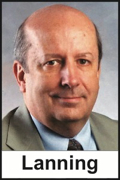
“In a recent report by the agency, Special Agent Kenneth Lanning warns about the influence of ‘overzealous intervenors,’ such as therapists and parents, ‘who may be affected by their zeal to uncover child sexual abuse, satanic activity, conspiracies.’ Their influence can contaminate a case so much that no one will ever determine what, if anything, really happened….”
– From the San Diego Union-Tribune (December 27, 1992)