Rascals case in brief
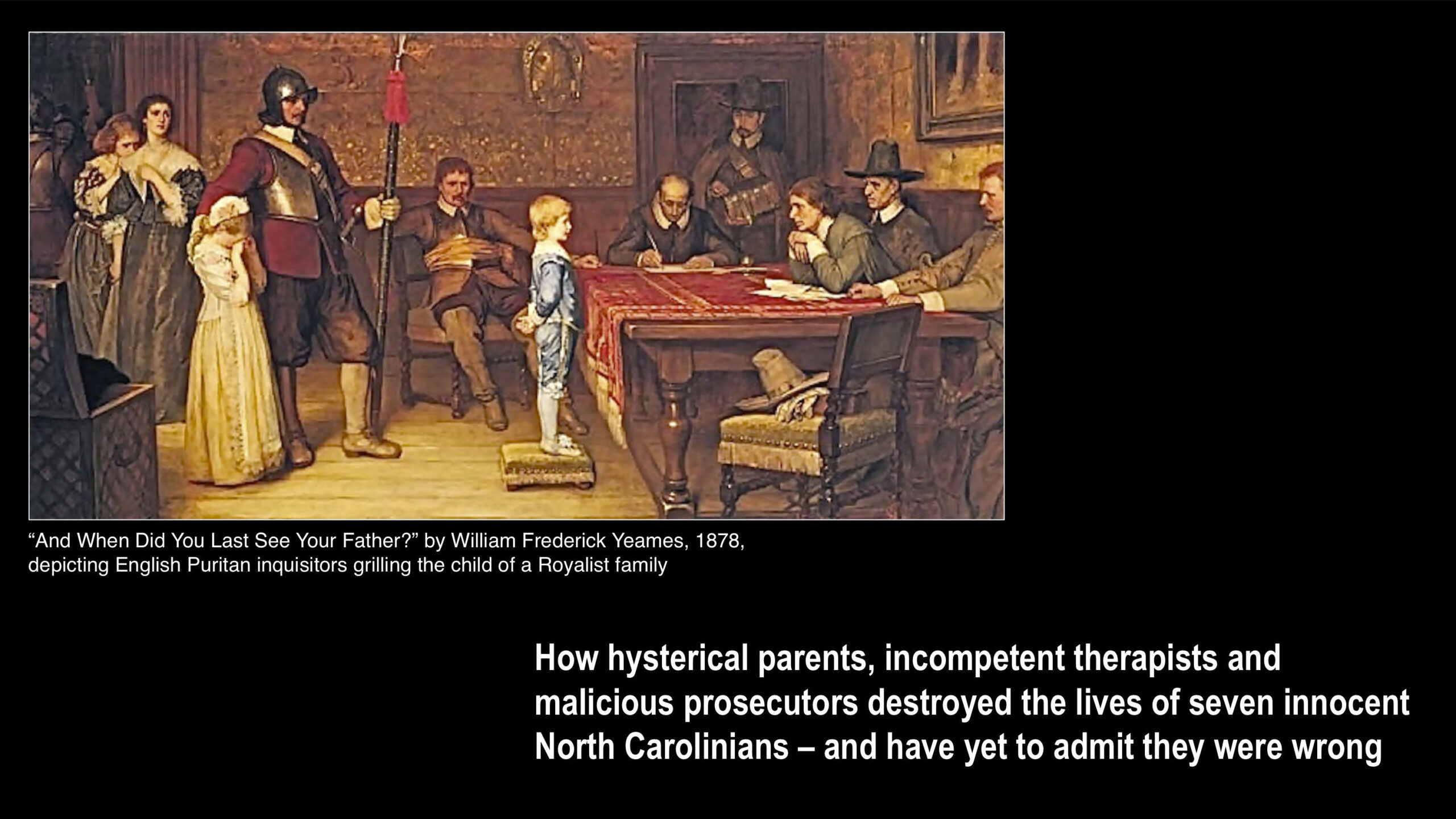
In the beginning, in 1989, more than 90 children at the Little Rascals Day Care Center in Edenton, North Carolina, accused a total of 20 adults with 429 instances of sexual abuse over a three-year period. It may have all begun with one parent’s complaint about punishment given her child.
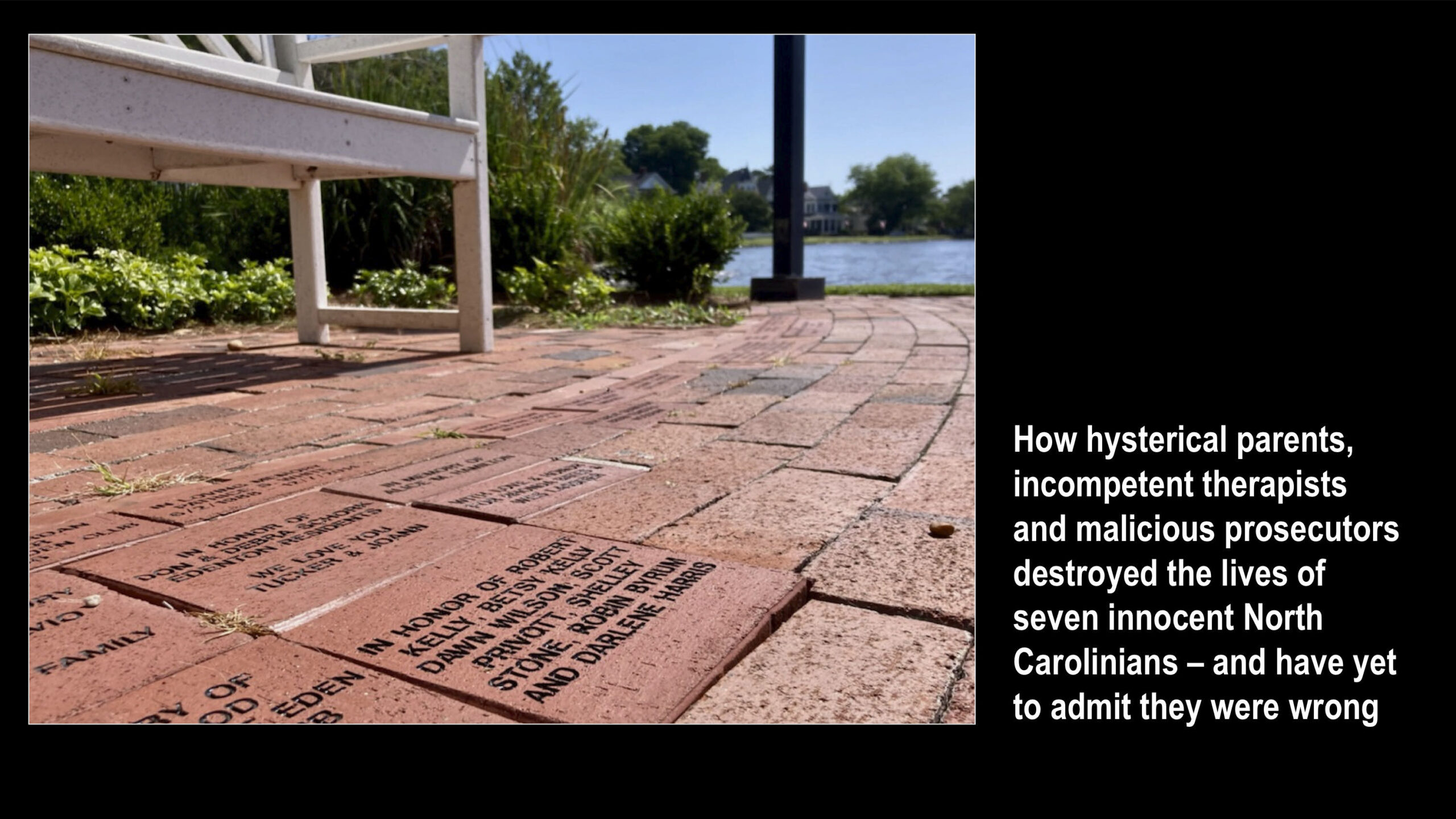
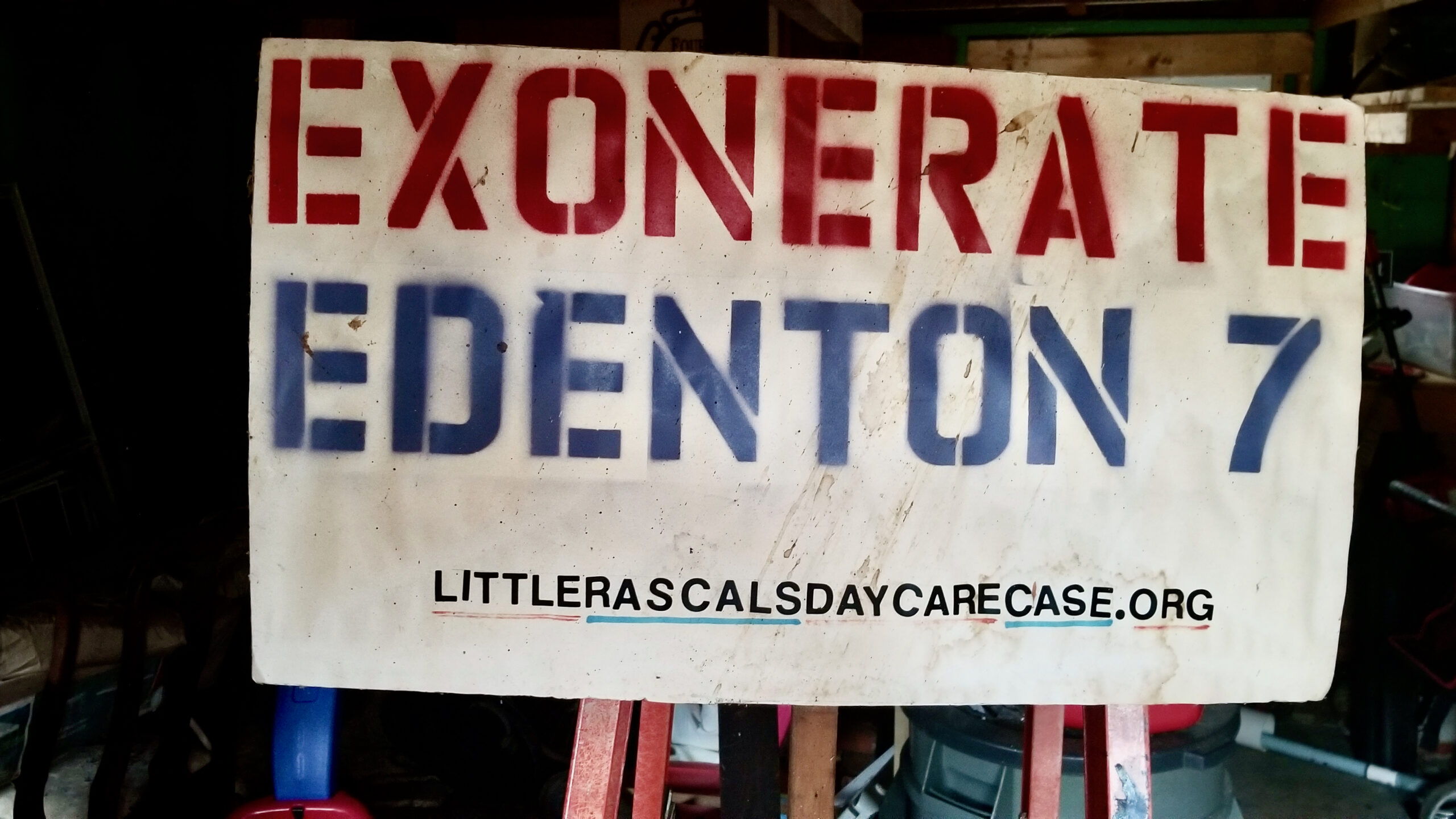
Among the alleged perpetrators: the sheriff and mayor. But prosecutors would charge only Robin Byrum, Darlene Harris, Elizabeth “Betsy” Kelly, Robert “Bob” Kelly, Willard Scott Privott, Shelley Stone and Dawn Wilson – the Edenton 7.
Along with sodomy and beatings, allegations included a baby killed with a handgun, a child being hung upside down from a tree and being set on fire and countless other fantastic incidents involving spaceships, hot air balloons, pirate ships and trained sharks.
By the time prosecutors dropped the last charges in 1997, Little Rascals had become North Carolina’s longest and most costly criminal trial. Prosecutors kept defendants jailed in hopes at least one would turn against their supposed co-conspirators. Remarkably, none did. Another shameful record: Five defendants had to wait longer to face their accusers in court than anyone else in North Carolina history.
Between 1991 and 1997, Ofra Bikel produced three extraordinary episodes on the Little Rascals case for the PBS series “Frontline.” Although “Innocence Lost” did not deter prosecutors, it exposed their tactics and fostered nationwide skepticism and dismay.
With each passing year, the absurdity of the Little Rascals charges has become more obvious. But no admission of error has ever come from prosecutors, police, interviewers or parents. This site is devoted to the issues raised by this case.
On Facebook


Little Rascals Day Care Case
This Facebook page is an offshoot of littlerascalsdaycarecase.org, which addresses the wrongful prosecution of the Edenton Seven and other such victims.

Meanwhile in Edenton....
This content isn't available right now
When this happens, it's usually because the owner only shared it with a small group of people, changed who can see it or it's been deleted.0 CommentsComment on Facebook
Allies for our cause!
This content isn't available right now
When this happens, it's usually because the owner only shared it with a small group of people, changed who can see it or it's been deleted.0 CommentsComment on Facebook
The courts have a long history of capriciously pulling the rug out from under Junior's appeals, but maybe this time....
This content isn't available right now
When this happens, it's usually because the owner only shared it with a small group of people, changed who can see it or it's been deleted.0 CommentsComment on Facebook
Click for earlier Facebook posts archived on this site
Click to go to

Today’s random selection from the Little Rascals Day Care archives….
‘Black helicopters’ over Edenton? Sure, why not?
Feb. 27, 2015
“…. A social worker from North Carolina informed the group (the Society for the Investigation, Treatment and Prevention of Ritual and Cult Abuse) that in the day-care sex-abuse case she was investigating, she thought she remembered the kids talking about black helicopters. She said she would look into it.”
– From “Conspiracy Theories and Paranoia: Notes from a Mind-Control Conference” by Evan Harrington in the Skeptical Inquirer (September-October 1996)
The “ritual and cult abuse” conference took place in Dallas in March 1995, several years after the trials of Bob Kelly and Dawn Wilson (and just a couple of months before the North Carolina Court of Appeals overturned their convictions). But I wouldn’t be surprised if the social worker chatting with Dr. Harrington was a prosecution therapist still eagerly accumulating and broadcasting claims … this one perhaps.
Toppin’s interview notes: ‘Just a lot of extra paper’

Aug. 1, 2017
“In the McMartin case, the defense used videotapes of therapists’ interviews with the children to suggest that the idea of abuse had been implanted.
“[Ofra] Bikel says, ‘The authorities in North Carolina [in the Little Rascals case], who I know met with the McMartin prosecutors, learned from them that the therapists’ notes should just be summaries. They learned that if you want to win a case, it’s a bad idea to have tapes around.’
“The prosecution interviewer [Brenda Toppin] is shown testifying that she cannot say why her original interview notes were destroyed: ‘It’s just a lot of extra paper,’ she said.”
– From “Justice Abuse? ‘Frontline’ Documentary Takes Hard Look At A Small-town Scandal” by Bart Mills in the Chicago Tribune (July 20, 1993)

Death noted: Little Rascals judge Marsh McLelland
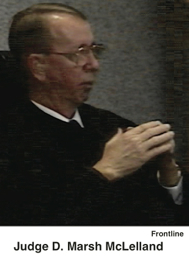 April 13, 2015
D. Marsh McLelland, judge in the trials of Little Rascals defendants Bob Kelly and Dawn Wilson, died last month in Burlington. He was 94.
This laudatory obituary in the Greensboro News & Record barely mentions the most consequential case in McLelland’s career – “He was brought out of retirement by the state’s chief justice to hear the Little Rascals Day Care child sex abuse case….” – and this one in the Burlington Times-News mentions it not at all.
Had McLelland stayed retired, the prosecution of the Edenton Seven might well have been derailed early on.
The judge originally assigned to the case, L. Bradford Tillery, stepped down under pressure from Deputy Attorney General Bill Hart. Mark Montgomery, Bob Kelly’s appellate attorney, explains why:
“Hart did not like the way Tillery was handling the case. The final straw was when Tillery ordered Hart to turn over the State’s interviews of those kids who were not the subject of indictments. He did not order them given to the defense, as he should have done, but Tillery was going to look through them himself. If he had, he would have seen that most of the kids at the day care, including Hart’s adoptive daughter, had said nothing happened and the jury would have heard about that.
“To prevent that, Hart filed motions accusing Tillery of being biased against the State. Rather than punishing Hart, Tillery took himself out of the case to avoid any appearance of partiality. Enter McLelland.
“Because Tillery had already ordered the interviews turned over to the court, that was a done deal. But McLelland never looked at them. I stumbled across them in the exhibit room of the courthouse and informed the Court of Appeals in my brief. The failure of the State to turn over to the defense the interviews of kids who said nothing happened was one of the grounds for a new trial for Bob.”
Tillery clearly was stung by Hart’s ploy: “I have served as a judge of Superior Court for over 20 years, and I never found it necessary to take such a step…. Neither have I ever been made to feel before that one side or the other considered me to be not only an adversary but also fair game …. for reckless assertions.”
If only Tillery had responded not by resigning but by sanctioning Hart for withholding evidence.
For witch hunts, it’s location location location
Dec. 14, 2011
Among the leaders of the Committee for Support of the Edenton Seven was Doug Wiik, whose own Breezy Point Day School in Bucks County, Pennsylvania, had just been cleared of similar abuse accusations. I asked him to compare the two cases.
“I remember that Barbara Fleischman, a dear friend who had moved to North Carolina from Bucks County, called to let me know that the child abuse contagion had reared its head in Edenton.
“Having been deeply affected by my personal experience, I felt the need to reach out. I read about Raymond Lawrence’s formation of the Edenton Seven committee, and after several discussions with him and Dee Swain (a fuel dealer in Washington, N.C.) I was truly inspired to do what I could. I was gratified to find individuals who would fight the injustice being perpetrated upon the Kellys.
 “The eventual outcome in Little Rascals was the correct one, but the damage done to many individuals was enormous. We all have a list of heroes in our lives, and Bob Kelly and Dawn Wilson certainly were added to mine. Both stood firm in speaking truth to a community that lacked leadership in politics and law enforcement….
“The Edenton case and my own were just two of many produced by the 1980s culture. It happened in Salem 300 years ago, and it will happen again some day.
“So why did my child care business survive, when so many others didn’t?
“We had the exact same claims of horrors perpetrated against children. We had the same media coverage that initially proclaimed ʻChildren don’t lie.ʼ We had the same overzealous child abuse investigators from the county Department of Children and Youth Services. We had the identical mass hysteria.
“But we also had leadership! District Attorney Alan Rubenstein was a seeker of justice, not political gain. He conducted a long, expensive criminal investigation, one that branded the parents’ and children’s claims as false and reckless.
“I’d also be remiss if I didn’t mention my employees and our parent community, who all knew nothing had happened at Breezy Point. They went on camera, wrote letters to editors and participated in several large meetings answering all questions about our school.
“My experience lasted five or six years, caused lots of heartache and did much financial damage. However, Breezy Point Day School still opens at 7 a.m. and closes at 6 p.m. every day and is still filled with several hundred happy children, parents and staff.
“It’s a shame Bob and Betsy Kelly chose Edenton, North Carolina, to open a child care business and not Bucks County, Pennsylvania.”
● ● ●
Later this week I’ll post excerpts from the DA’s 1990 investigative report, along with a few of his recollections (he’s now a judge).