Rascals case in brief
In the beginning, in 1989, more than 90 children at the Little Rascals Day Care Center in Edenton, North Carolina, accused a total of 20 adults with 429 instances of sexual abuse over a three-year period. It may have all begun with one parent’s complaint about punishment given her child.
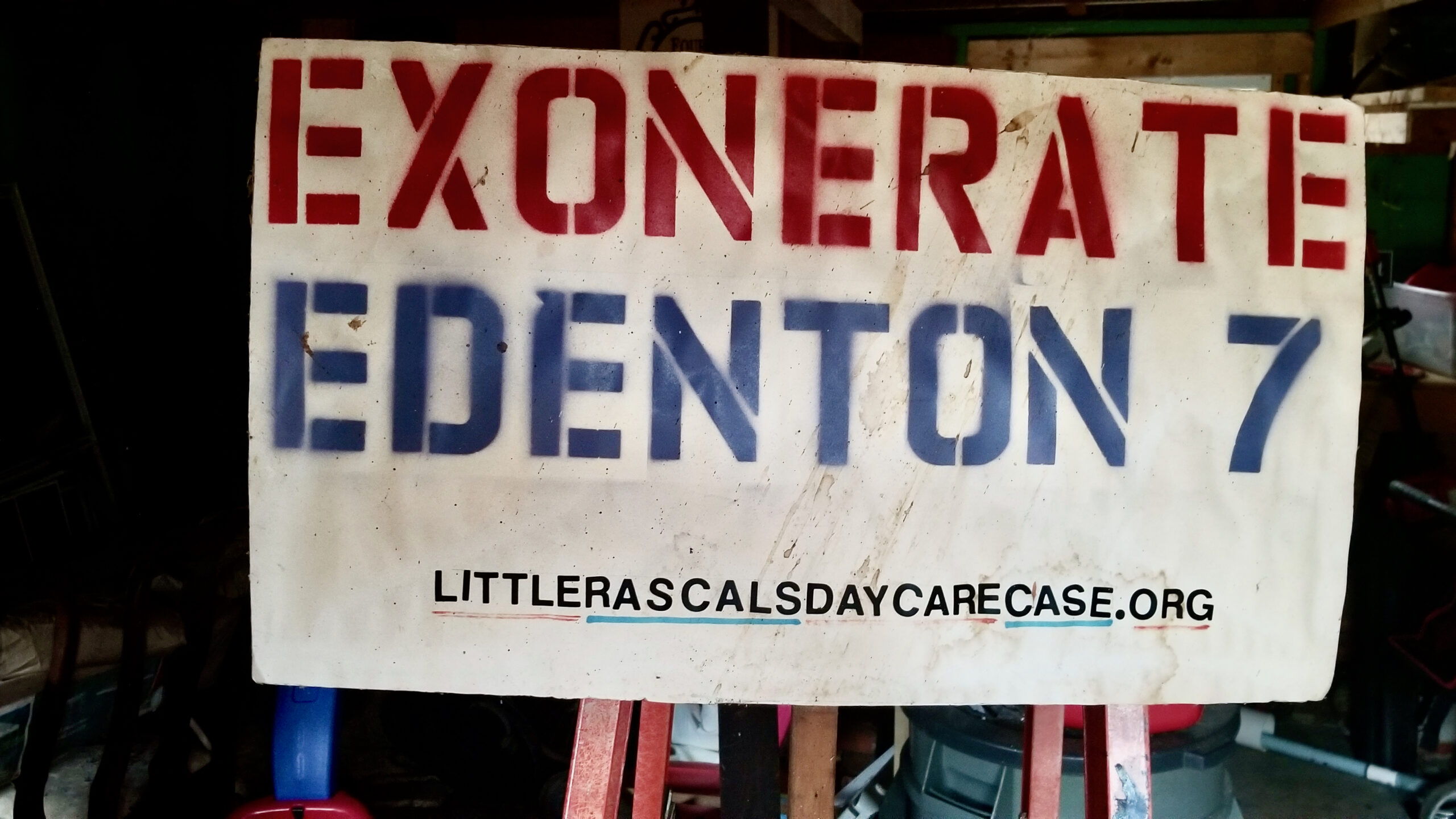
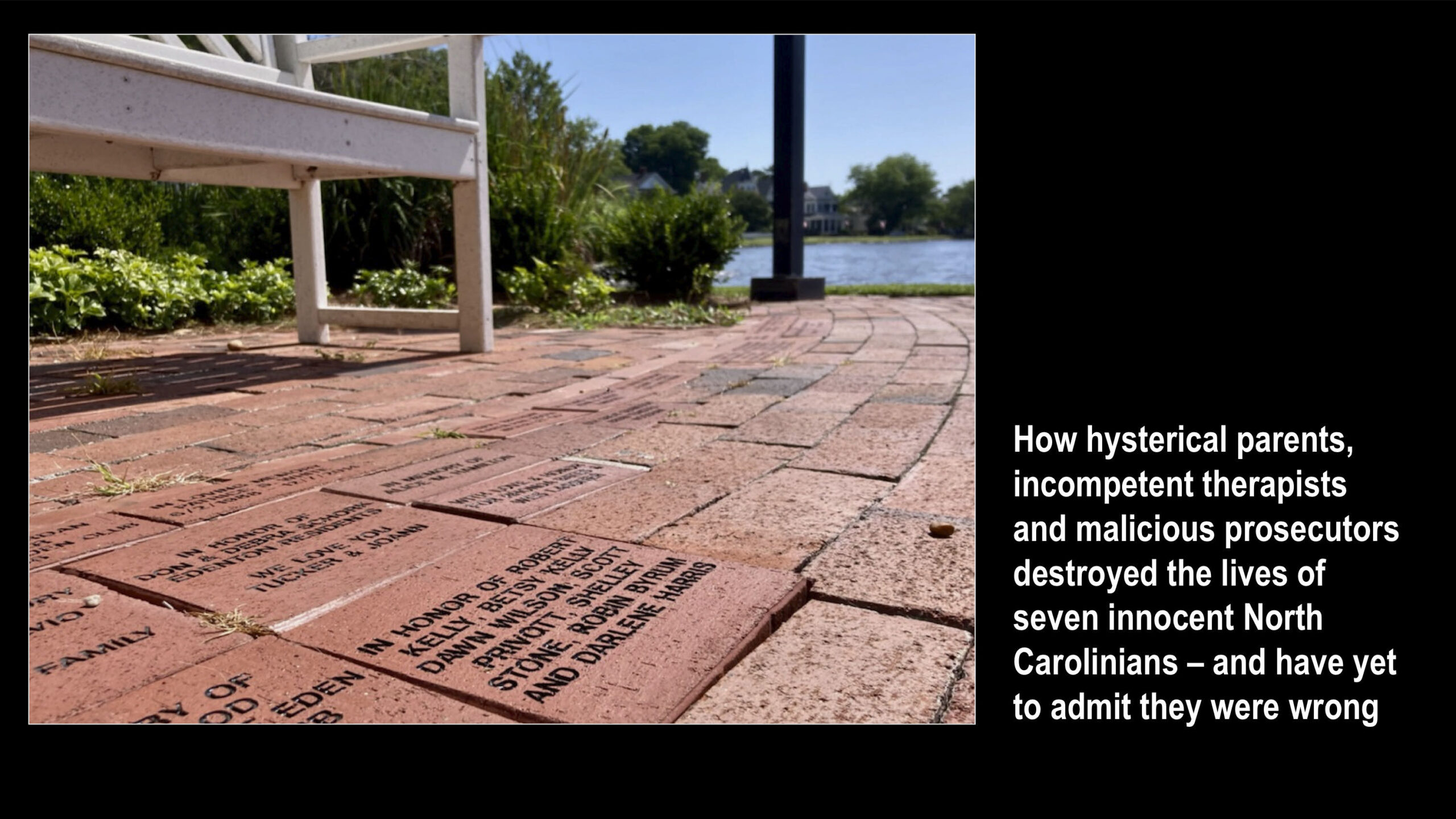
Among the alleged perpetrators: the sheriff and mayor. But prosecutors would charge only Robin Byrum, Darlene Harris, Elizabeth “Betsy” Kelly, Robert “Bob” Kelly, Willard Scott Privott, Shelley Stone and Dawn Wilson – the Edenton 7.
Along with sodomy and beatings, allegations included a baby killed with a handgun, a child being hung upside down from a tree and being set on fire and countless other fantastic incidents involving spaceships, hot air balloons, pirate ships and trained sharks.
By the time prosecutors dropped the last charges in 1997, Little Rascals had become North Carolina’s longest and most costly criminal trial. Prosecutors kept defendants jailed in hopes at least one would turn against their supposed co-conspirators. Remarkably, none did. Another shameful record: Five defendants had to wait longer to face their accusers in court than anyone else in North Carolina history.
Between 1991 and 1997, Ofra Bikel produced three extraordinary episodes on the Little Rascals case for the PBS series “Frontline.” Although “Innocence Lost” did not deter prosecutors, it exposed their tactics and fostered nationwide skepticism and dismay.
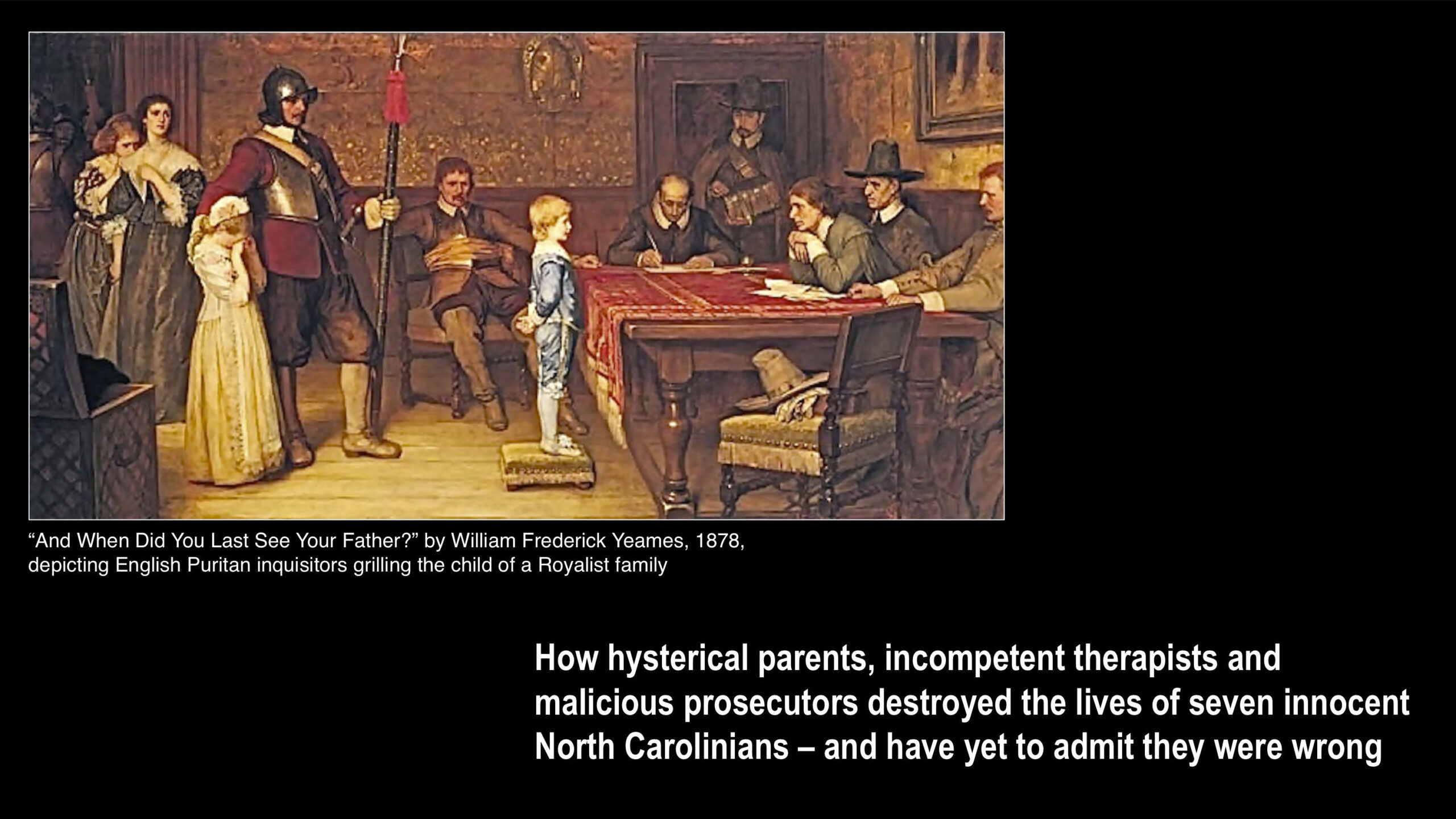
With each passing year, the absurdity of the Little Rascals charges has become more obvious. But no admission of error has ever come from prosecutors, police, interviewers or parents. This site is devoted to the issues raised by this case.
On Facebook


Little Rascals Day Care Case
This Facebook page is an offshoot of littlerascalsdaycarecase.org, which addresses the wrongful prosecution of the Edenton Seven and other such victims.

Meanwhile in Edenton....
This content isn't available right now
When this happens, it's usually because the owner only shared it with a small group of people, changed who can see it or it's been deleted.0 CommentsComment on Facebook
Allies for our cause!
This content isn't available right now
When this happens, it's usually because the owner only shared it with a small group of people, changed who can see it or it's been deleted.0 CommentsComment on Facebook
The courts have a long history of capriciously pulling the rug out from under Junior's appeals, but maybe this time....
This content isn't available right now
When this happens, it's usually because the owner only shared it with a small group of people, changed who can see it or it's been deleted.0 CommentsComment on Facebook
Click for earlier Facebook posts archived on this site
Click to go to

Today’s random selection from the Little Rascals Day Care archives….
Constitution prohibits ‘punishment in limbo’
Feb. 22, 2012
“(Even as) prosecutors quietly dropped all charges against the remaining three defendants, (Nancy Lamb) had the temerity to hint that there was sufficient evidence to convict if the state were disposed to go to trial.
“This kind of talk betrays the same imperious mentality that has left (Robin Byrum, Shelley
Stone and Darlene Harris) turning in the wind for eight years.
“A person charged with a crime is entitled under our Constitution to a timely resolution… a chance either to pay his debt to society or get on with his life. There is no excuse for punishment in limbo.”
– Editorial in the Greensboro News & Record, Dec. 21, 1996
The truth about justice – as seen on TV!
Jan. 29, 2016
“The release last month of ‘Making a Murderer’ capped a year in which popular culture’s portrayal of the criminal justice system seems to have shifted. Out with the old tropes about truth-seeking investigators and tidy resolutions; in with the disquieting, dysfunctional reality of many courtrooms and police stations….
“Yes, post-conviction DNA testing and the work of Innocence Projects around the country have exonerated more than 1,700 defendants. Those cases heighten awareness of potential errors and demonstrate that wrongful convictions happen. But Americans shouldn’t expect certainty about innocence. Sometimes the focus on finding new evidence to exonerate distracts from the question of whether the old evidence proved guilt….
“Fewer than 70,000 federal felonies are prosecuted each year, while roughly 2.5 million felonies proceed through the state courts. Many state cases involve near-simultaneous investigation and prosecution. One rarely finds out ‘what really happened.’
“The prosecutor in Avery’s trial argued in his closing statement that ‘reasonable doubts are for innocent people.’ They are not. And procedural protections like access to defense counsel and freedom from coerced interrogations extend to both the innocent and the guilty. The real contribution of these documentaries is not to ask ‘whodunit’ but to reveal what was done to defendants….
“The United States criminal justice system needs fewer guilt-assuming interrogation tactics, more disclosure of potentially exculpatory information to the defense, expanded oversight units within prosecutors’ offices to investigate potential miscarriages of justice and fuller appellate scrutiny of convictions.
“The moment is ripe for reform, culturally and politically….”
– From by “ ‘Making a Murderer’ Is About Justice, Not Truth” by Lisa Kern Griffin, Duke Law professor and former federal prosecutor, in the New York Times (Jan. 12)
Will this heightened skepticism about the nation’s justice system ever trickle down to exonerate the Edenton Seven and free Junior Chandler?

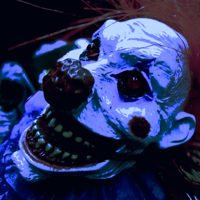
Creepy clowns: today’s version of ‘satanic ritual abuse’ cults?
 Sept. 5, 2016
“Police say they are doing extra patrols in a Winston-Salem neighborhood after two children reported seeing a clown trying to lure kids into the woods with treats…. and one adult reported hearing the clown.
“Officers say they found no evidence of a clown in the woods.
“About four hours later, a caller who refused to give a name reported seeing a clown about 2 miles away. Police say again they found no evidence of a clown.
“Several unverified clown sightings in northern South Carolina have been in the news recently.”
– From “Winston-Salem police increase patrols after clown sightings” in the News & Observer (Sept. 5)
“The rumor has traveled like a Halloween ghost – from Wilson to Coats to Apex to Raleigh.
“Perplexed law enforcement agencies statewide have been fielding inquiries for weeks about stubborn – but unfounded – rumors of a plan by unidentified Satan worshipers to kidnap and sacrifice children….between the ages of 2 and 5 for a human sacrifice on Halloween.
“Sheriff Freddy W. Narron of Johnston County said rumors seem to have started after a local newspaper printed articles about Satanic cults.”
– From “Rumors of satanists kidnapping children are tough to snuff out” in the News & Observer (Oct. 28, 1989)
What fertile ground North Carolina, circa 1989, provided for hysteria about 2- to 5-year-olds. The sheriff of Johnston County seems to have summoned considerably more skepticism about farfetched rumors than the Little Rascals prosecutors. Within three months of the Halloween panic all of the Edenton Seven had been arrested.
What sequela might we expect from the Great Clown Panic of 2016? Prosecutors, line up your child witnesses!
In search of a ‘frank and unblinking appraisal’
 Feb. 20, 2014
Following up on the curious case of Richard Noll v. Psychiatric Times, I wrote editor-in-chief James L. Knoll IV to ask about the removal of Dr. Noll’s “satanic ritual abuse” essay from the Psychiatric Times website.
Did the journal plan to address in some fashion the issues raised in Dr.
Noll’s piece? “Unfortunately, I am not at liberty to comment on the situation,” Dr. Knoll replied.
Next I turned to Psychiatric Times’ editorial board, described on the site as “(not) just figureheads with impressive résumés…. They give us their frank and unblinking appraisal of the contents of each and every issue….”
This is from a letter I sent to 22 PT board members:
“I am writing you in response to Dr. Allen Frances’s call for psychiatrists to ‘step forward and do the right thing’ about the profession’s failure to confront the ‘satanic ritual abuse’ claims of the 1980s and early ’90s.
“As you know, Psychiatric Times removed from its website Dr. Richard Noll’s history of the SRA era….
“Dr. Noll concluded by asking: ‘Are we ready now to reopen a discussion on this moral panic? Will both clinicians and historians of psychiatry be willing to be on record? Shall we continue to silence memory, or allow it to speak?’
“How do you, as a member of the Psychiatric Times editorial board, answer these questions?
“Would you now be willing to join with Dr. Frances in formally setting the record straight about SRA and in making amends to the scores of wrongfully prosecuted victims of the moral panic?”
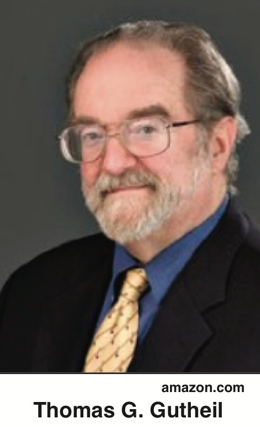
So far I have not been overwhelmed with responses to these questions. In fact, I have received only a single “frank and unblinking appraisal” – from Thomas G. Gutheil, professor of psychiatry, Beth Israel Deaconess Medical Center, Harvard
Medical School.
“I do agree (with Dr. Frances),” he writes. “The 1992 FBI report compiled by Kenneth Lanning should have put an end to this, when he investigated many claimed cases from law enforcement viewpoint and in multiple cases found not a shred of physical evidence, DNA, cells or bloodstains from butchered babies or sacrificed virgins.
“The problem is that social viruses like this are hard to assess and halt, like their biologic counterparts. I agree that individuals, especially in the legal system, should own up to their serious errors and miscarriages of justice, since improved science has blown up many claims, yet some prosecutors (e.g., Martha Coakley in Mass.) have not reversed themselves nor freed the imprisoned.
“However, I am not sure the entire mental health professions should share the blame.”
To be sure, distribution of responsibility among the professions is uneven – the Little Rascals prosecutors called on no psychiatrists at all, only psychologists, off-brand psychotherapists, etc.