‘Conditions that would lead to a retraction’? Sorry, no

121119DoughertyNov. 19, 2012

Crucial to the moral panic was a wave of ill-conceived academic and professional literature.
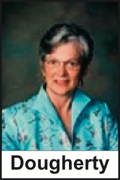
I asked Molly C. Dougherty, editor of Nursing Research, whether her journal had ever published a retraction of “Parental Stress Response to Sexual Abuse and Ritualistic Abuse of Children in Day-Care Centers” (January/February 1990). As is obvious in the title, Susan J. Kelley’s article embraces and promotes the existence of ritual abuse in day cares.

Dr. Dougherty told me that no retraction had appeared in the past or would appear in the future: “The authors of the article were careful to provide a thorough sample description without including information that linked participants to any specific location or case. Conditions that would lead to a retraction are not present.”

This is from my reply to her:

“Of course you are correct that Susan J. Kelley didn’t say which day-care cases were the basis for ‘Parental Stress Response to Sexual Abuse and Ritualistic Abuse of Children in Day-Care Centers.’ (Fells Acres seems a likely candidate, since it was Kelley’s own improper interviewing of child-witnesses that led to the overturning of convictions in that case.)

“But the problem here is not specific to Fells Acres, McMartin or Little Rascals. The entire article was founded on a false belief: that satanic ritual abuse occurred at even one day care. No such ‘multiple victim, multiple offender’ allegations were ever validated. In case after bizarre case, charges were eventually dropped and guilty verdicts overturned.

“The decade-long moral panic finally collapsed in the early 1990s. Today you will not find a single respected academic or professional willing to give credence to the claims of the ritual abuse era.

“By contrast, this excerpt from Kelley’s abstract demonstrated her unquestioning advocacy:

“ ‘The purpose of this study was to examine the stress responses of parents to the sexual and ritualistic abuse of their children in day-care centers…. Parents of sexually abused children reported significantly more psychological distress than parents of nonabused children, with parents of ritually abused children displaying the most severe psychological distress.’

“Plainly, this article was guilty of what you lament in your (unrelated) September 11 blog post:
“failure to address legitimate alternative views and evidence.” And what better example of the “pseudo-science in the guise of science” criticized by Eileen Gambrill?

“I will leave you with a final question: Does Nursing Research really want to leave this article as its last word on the subject?”

So far, Dr. Dougherty’s answer seems to be yes.
One thing led to another…. boy, did it ever!

121116GrometsteinNov. 16, 2012

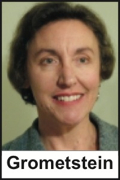
“In North America in the 1980s, the moral panic about organized child abuse arose in a context that included the following scares:

  • “a moral panic about satanic activity;
  • “a scare about missing and murdered children;
  • “great public anxiety about incest, redefined as child sexual abuse during the 1970s;
  • “a wave of disputed custody cases in which women accused their former husbands of sexually abusing children during court-ordered visitations;
  • “self-help books by women claiming to be ‘survivors’ of incest and ritual abuse;
  • “therapists’ claims that many of their adult women patients suffered from multiple-personality disorder as a result of severe childhood sexual and ritual abuse.

“Of particular importance were claims that society was in denial about widespread child sexual abuse…. Thus, claims about organized child abuse by caregivers were made in a context of claims about similar issues, and the effect of claims in one panic was to reinforce claims in another.”

– From “Wrongful Conviction and the Moral Panic About Organized Child Abuse: National and International Perspectives” by Randall Grometstein (2005)

Who do that voodoo? Why, prosecution’s ‘experts’

Nov. 14, 2012

“Prosecutors building these high-profile cases well understood the problems posed by the strange charges and the fantasy-riddled narratives of the child plaintiffs. How could they make credible to jurors the extraordinary prowess of defendants who could assault whole classes of preschoolers daily, dressing and undressing 20 or more, all accomplished in a half hour’s time, in a busy school, with no one noticing, no child ever sent home with mismatched socks?…

“Jurors had to be given a reason that 4-year-olds could be raped with butcher knives that left them uninjured, could be tied naked to trees and raped in broad daylight….

“The state’s solution lay with their experts – witnesses who could explain and render such mysteries comprehensible.”

– From “No Crueler Tyrannies: Accusation, False Witness and other Terrors of Our Times” by Dorothy Rabinowitz (2003)

Ah, those invaluable mystery-solving experts – such as Eileen Treacy of the Kelly Michaels trial, Kee MacFarlane of McMartin and of course Mark “Where there’s smoke….” Everson of Little Rascals.

What would prosecutors have done without them? (Probably, a helluva lot less harm.)

Did prosecutors sell out for name recognition?

121112RobertsNov. 12, 2012

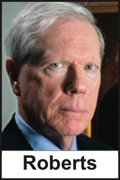
“It is not conceivable that any of the prosecutors (in cases such as Little Rascals) believed a word of the charges responsible for ruining the lives of so many people. The cases were brought for one reason alone: to gain name recognition for the prosecutors.”

– From “The Tyranny of Good Intentions: How Prosecutors and Bureaucrats Are Trampling the Constitution in the Name of Justice” by Paul Craig Roberts and Lawrence M. Stratton (2008)

Could prosecutors really have sold their souls (not to mention their public trust) for mere “name recognition”? Or did their lust for guilty verdicts blind them to the obvious?

Most days, the latter seems more likely to me. Or perhaps a hybrid….

Indisputably, however, career benefits did attach to trumpeting from the courthouse steps that you’ve sent away Bob Kelly for 12 consecutive life sentences.

Sex-abuse journalism raises ‘strange question’

120625RabinowitzNov. 9, 2012

“Did I recognize that child sex abuse existed and was a serious problem? reporters would ask. A strange question, that. The discussion of no other crime would require such a disclaimer. Journalists who have written about false murder charges are seldom asked to provide reassurance that they know murder is a bad thing, and it really happens.”

– From “No Crueler Tyrannies: Accusations, False Witness and Other Terrors of Our Times” by Dorothy Rabinowitz  (2003)

‘Yawning gaps in evidence’? Sounds familiar

Nov. 7, 2012

“Mass hysteria always makes perfect sense when we are trapped in it. It can take decades – or even longer – before the crazed irrationality of a particular episode shows itself for what it was.”

– From “When Mass Hysteria Convicted 5 Teenagers” in The New York Times (October 27)

Thanks to a new documentary by Ken Burns, the Central Park Five – all convicted of a widely publicized 1989 rape and beating – will soon return to the spotlight. According to the Times,
Burns depicts “the forces that led citizens, politicians, the media and the criminal justice system to brush past yawning gaps in the evidence in the case.”

Beyond a shared year on the timeline of wrongful prosecutions, these urban teenagers, black and Hispanic, seem to have borne few similarities to the Edenton Seven. But I could never read  the  words “yawning gaps in evidence” without thinking of a Little Rascals prosecution built almost entirely on the resolutely manipulated, deceitfully paraphrased testimony of children.

A children’s book not appropriate for children

121105Don't2

Nov. 5, 2012

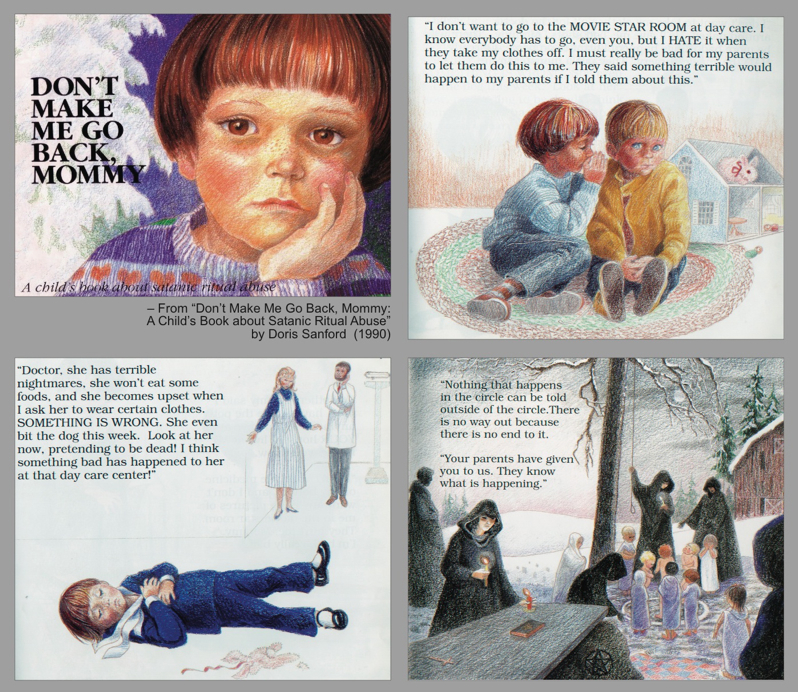
“When five-year-old Allison’s parents begin to see a change in her behavior at home, they seek professional help for her. They find that Allison and other children have been ritually abused at a day care center. Thus begins Allison’s recovery….”

– From “Don’t Make Me Go Back, Mommy: A Child’s Book about Satanic Ritual Abuse” by Doris Sanford  (1990)

Who knows how many lucky youngsters found this colorfully illustrated hardback under the Christmas tree? (More than 7,000 copies made it into print.)

Although Sanford credits herself with “months of intensive research into the nature and practice of satanic ritual abuse,” her dedication to “Patti Hills, Survivor…. We honor you, Patti! ” suggests she relied heavily on a Portland, Oregon, therapist “who claims to be… a witness to human sacrifice” (Willamette Week, Oct. 22, 1997). Also consulting: Lauren Stratford, author of the discredited baby-breeder memoir “Satan’s Underground.”

In 1993, “Don’t Make Me Go Back, Mommy” helped advance a notorious ritual-abuse case against a Spring Valley, Calif., child-care volunteer. The mother of one of Dale Akiki’s supposed victims admitted under cross-examination that she had read the book to her daughter, and it likely made the rounds of other parents. (After more than two years behind bars and a seven-month trial, Akiki was found not guilty of all charges.)

Eventually, however, “Don’t Make Me Go Back, Mommy” would become a target of appropriate (and sometimes hilarious) ridicule.

McMartin case brought emulation, not illumination

Nov. 2, 2012

“The (McMartin) episode and its conclusion were ravaged by the mass media and produced a tremendous repercussion throughout the nation – but not the one of caution, as one might have expected…. (Time magazine reported that) ‘Nationally, the attention generated by the case set off an explosion of reports claiming sexual abuse of children, increasing such reports from 6,000 in in 1976 to an estimated 350,000 in 1988.’”

– From “Witch-Children: From Salem Witch-Hunts to Modern Courtrooms” by Hans Sebald (1995)

‘Belief in a devil’ is essential to fanatics

Oct. 31, 2012

“Mass movements can rise and spread without a belief in God, but never without belief in a devil.”

– Eric Hoffer in his landmark analysis of fanaticism, “The True Believer” (1951)

Hoffer’s point was impressively made in the day-care mania. In no case I’ve found – in this country at least – did religion play a significant factor. To the contrary, several ministers and churches were on the receiving end of wrongful prosecution.

‘With fewer accounts of human sacrifice….’

120413LanningOct. 29, 2012

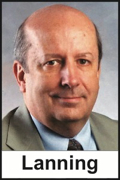
“For at least eight years American law enforcement has been aggressively investigating the allegations of victims of ritualistic abuse. There is little or no evidence for the portion of their allegations that deals with large-scale baby breeding, human sacrifice and organized satanic conspiracies.”

– Kenneth V. Lanning, supervisory special agent at the behavioral science unit, National Center for the Analysis of Violent Crime, FBI Academy, Quantico, Va. (Aug. 19, 1991)

Two decades later, what’s most striking about agent Lanning’s statement isn’t the content – what could’ve been more predictable? – but the context: The moral panic held such sway that the FBI was forced to devote no less than eight years to discrediting it.

Lanning’s 1992 analysis (i.e., debunking) of all aspects of satanic ritual abuse has been called “perhaps the most important and influential document ever written on the topic.”

Here’s what Lanning said about day care allegations:

“Children currently or formerly attending a day care center gradually describe their victimization at the center and at other locations to which they were taken by the day care staff. The cases include multiple victims and offenders, fear, and bizarre or ritualistic activity, with a particularly high number of female offenders. Descriptions of strange games, insertion of foreign objects, killing of animals, photographing of activities, and wearing of costumes are common. The accounts of the young children, however, do not seem to be quite as ‘bizarre‘ as those of the adult survivors, with fewer accounts of human sacrifice….”

Angered by the report, some therapists accused Lanning of being a satanist who had infiltrated the FBI to advance the cause.