
Why have historians overlooked day-care mania?

120727TerzianJuly 27, 2012

“It has always intrigued me that, in a culture that is relentlessly self-critical… the pre-school hysteria and witch-hunts of the 1980s and ’90s (have) attracted little, if any, notice among historians and social analysts.

“Which is odd: We moderns like to think that we are exempt from some of the baser instincts of human nature, but hysteria, mob rule, and spectral fears are still very much with us.

“Moreover, in this instance, the American judicial system failed systematically, blighting hundreds of lives: Many more genuinely innocent people went to prison, and for longer terms, than any Communist during the McCarthy era.”

– From “Remember McMartin” by Philip Terzian in the Weekly Standard (Nov. 11, 2011)
A tormented wait for prosecutors to admit defeat

120725StoneJuly 25, 2012

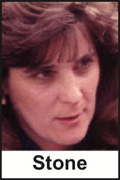
“The terms of (Shelley Stone’s release on $342,000 bond) included an order to stay out of downtown Edenton so she would not run across any children – or parents of children – who had attended Little Rascals.

“One exception came two years ago, when she was allowed to attend her daughter’s high school graduation.

“Stone and her family live in Tyner, a few miles outside Edenton. They receive public assistance.

“‘I’ve had people say to me point blank: “Gee, Shelley, I would hire you, but I’m afraid I’d lose customers,”’ Stone says. ‘Now, when you can’t a job within 30 miles, that’s bad.’

“Prosecutors say they still have not decided whether to try her on 12 charges of sexual abuse, which could mean life in prison. Meanwhile, she waits….

“‘It’s been going on for seven years. Is it going to go on for another seven years, or 10 years or 20 years? Am I going to die with this still going on?…

“‘I worry every day. Are they going to come and say, “We’re going to take you to trial now”?’”

– Adapted from the Associated Press, Sept. 23, 1996

Three months later the state dropped all charges against Stone (and Robin Byrum and Darlene Harris).

As in other Little Rascals cases, Nancy Lamb attributed the dismissals to  concern for the child-witnesses and to limited resources in the DA’s office, not to any belated recognition of the defendants’ innocence. “We didn’t bring charges in 1989 and 1990 thinking that these people weren’t guilty,” she told the AP. “Why would we do such a thing? We had enough evidence all along to convict all three, or we would not have brought charges.”

But Lamb needn’t have been too disappointed. After all, how many juries would’ve rendered harsher punishment to these three innocent young women than the seven years of torture the state inflicted?

Defective interviews? Irrelevant, DA insisted

July 23, 2012

“ ‘Don’t focus on the question, focus on the answer,’ (District Attorney H. P. Williams Jr.) said, referring to the defense argument that children were asked leading questions.”

– The Associated Press, March 28, 1992

Did prosecutors know all along that the interview process was corrupt at the core and that their case was in essence (if not in the strict legal sense) fruit of a poisonous tree?

Or had they, too, simply lost their bearings in the hysteria?

Honk if you believe that….

120720LicensePlateJuly 20, 2012

… Little Rascals parents were caught up in a frenzy of panic and misinformation.

… Ill-prepared therapists served prosecutors, not their patients.

… In their zeal for convictions, prosecutors behaved cruelly and unethically.

… 20th century North Carolina never saw a more sweeping injustice.

… Bob and Betsy Kelly, Dawn Wilson, Shelley Stone, Robin Byrum, Darlene Harris and Scott Privott deserve full and unequivocal exoneration.

Suppose you gave a lynch party, and nobody came?

July 18, 2012

“Law enforcement officials are teaming up with social services experts to investigate and more effectively prosecute child sexual abuse in North Carolina day-care facilities….

“State Bureau of Investigation Director Charles Dunn said… the goal is to train up to 300 individuals in the state’s largest cities.

“Under the protocol, agencies in counties would establish guidelines for interagency task forces. Each task force would include an investigative unit and a resource unit.

“The typical investigative unit would include a child protective services social worker, law enforcement officer, consultant from the state day-care licensing agency and an SBI agent.

“The resource unit might include medical personnel, SBI lab experts, mental health workers and representatives of the attorney general’s and local district attorney’s offices…

“The General Assembly (this year required) SBI notification within 24 hours of any report of sexual abuse in a day-care setting. ‘The Little Rascals case really just helped to focus the public’s and the legislature’s attention,’ ” Dunn said.

– From the Associated Press, July 21, 1992

I suppose this massive response by the state could be described as closing the barn door after the horse is out – except, of course, for the absence of a horse in the first place.

Two decades have passed since all that staff training, protocol drafting and attention focusing, but apparently the state’s interagency task forces are still waiting to be activated for the next day-care ritual abuse case.

Betsy Kelly wouldn’t succumb to state’s torture

120716CheshireJuly 16, 2012

“Elizabeth Kelly was denied parole Friday, three months after pleading no contest to charges of sexually abusing children at her Edenton day care.

“Mrs. Kelly, sentenced to seven years, was eligible for parole upon entering prison because she had already served more than two years while awaiting trial.

“Prosecutor Bill Hart said opposition to Mrs. Kelly’s release was heightened by her statements of innocence after entering her plea.

“‘From my work dealing with sex offenders there is no way you can treat a sex offender and restore them to the community until that person admits the wrongness of her actions and takes responsibility….’”

– From the Associated Press, April 16, 1994

From the beginning, the prosecution never missed a chance to tighten the thumbscrews on Betsy Kelly: Plead guilty, implicate your husband or suffer grave consequences. Although she eventually took a plea bargain, she never accommodated Bill Hart’s pious insistence that she admit “the wrongness of her actions.”

In October 1989, about six weeks after her arrest, a hearing had been held in Raleigh on whether Kelly should be forced to move from a mental health unit into Dorm C at women’s prison.

Recalls Faye Sultan, a Charlotte forensic psychologist who testified on her behalf: “She had been found guilty of nothing at that point, but she was being housed in the most isolated, restrictive facility in the prison, where Death Row and disciplinary inmates were housed. Seems a bit unfair, no?”

Sultan testified that Kelly’s “psychological condition is rapidly deteriorating, and in fact she is on the edge of becoming psychotic.”

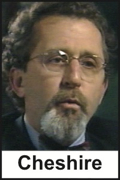
Why would the state insist on moving a pretrial “safekeeping” defendant to such a hostile environment? “The reason was to pressure Betsy,” says Joe Cheshire, her lawyer. “They didn’t know her very well, did they?”

When skepticism is set aside for outrage

111019Tavris2July 13, 2012

“It is painful to admit this, but when the McMartin story first hit the news, the two of us, independently, were inclined to believe that the preschool teachers were guilty. Not knowing the details of the allegations, we mindlessly accepted the ‘where there’s smoke, there’s fire’ cliché; as scientists, we should have known better.

“When, months after the trial ended, the full story came out – about the emotionally disturbed mother who made the first accusation and whose charges became crazier and crazier until even the prosecution stopped paying attention to her; about how the children had been coerced over many months to ‘tell’ by zealous social workers on a moral crusade; about how the children’s stories became increasingly outlandish – we felt foolish and embarrassed that we had sacrificed our scientific skepticism on the altar of outrage.

“But our dissonance is nothing compared with that of the people who were personally involved in or who took a public stand, including the many psychotherapists, psychiatrists and social workers who consider themselves skilled clinicians and advocates for children’s rights.

– From “Mistakes Were Made (But Not by Me)” by Carol Tavris and Elliot Aronson (2007)

Of course, not everyone who “mindlessly accepted the ‘where there’s smoke, there’s fire’ cliché’ ” has recovered his misplaced scientific skepticism.

Prosecutors claimed to see ‘coherent package’

July 11, 2012

“And what did Doctor (Mark) Everson say what to look for? A coherent package that’s consistent. You look at the behavior and what the child says…. He talked about sexual acting out, coaxing sexual behavior, masturbation, fears, and anxieties. New fears that come up that aren’t developmentally appropriate for a child that age, such as a fear of men or a particular man, changes in their personality caused by stress like regressive behavior, bed wetting, clinginess, thumb sucking.

“And as I name these, I hope that you are sitting there remembering how many of these children so far have had these kinds of behaviors.”

– From prosecutor Nancy Lamb’s closing argument in the trial of Bob Kelly

“… What could be expected for ritually abused children? That vexing question prompted everyone involved in the McMartin Preschool case to look for symptoms, and in their urgency, to mistake normal developmentally-based behaviors, quirky idiosyncrasies and even the iatrogenic effects of intimidating interviews for sequelae of ritual abuse. In this nascent moral panic, the widely circulated ‘symptom lists‘ transformed messy subjectivity into embodied and interpretable texts….”

– From “The Day Care Ritual Abuse Moral Panic” by Mary DeYoung (2004)

To day-care ritual-abuse prosecutors, what Nancy Lamb called “these kinds of behaviors” embraced everything from bed-wetting to hyperactivity to eating disorders. No dot went unconnected.

Contrary to such handy lists, however, numerous studies have found no “coherent package” of symptoms of child sexual abuse.

Another expert unfazed by being completely wrong

120709BurgessJuly 9, 2012

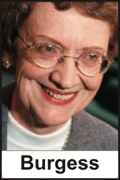
What happens to a social scientist who builds her career on exposing illusory “sex rings” and “ritual abuse” at day cares? And, more specifically, whose seminar at Kill Devil Hills apparently seeded the hysteria behind the prosecution of the Edenton Seven?

If you’re Ann Wolbert Burgess, it’s no problem. You just plunge ahead – and don’t look back.

Here’s how Debbie Nathan and Michael Snedeker described Burgess in 2001 in “Satan’s Silence: Ritual Abuse and the Making of a  Modern American Witch Hunt”:

“promoter of the use of children’s drawings to diagnose sexual abuse, developer of the idea of the sex ring, participant in developing the case that imprisoned the Amirault family and currently a researcher into the traumatic aftereffects of ritual abuse.”

For some people, that would be a career’s worth of wrongheaded ideas. But Burgess, now professor of psychiatric mental health nursing at Boston College, continues to accumulate merit badges on new topics such as heart attack victims, AIDS, infant kidnapping, online predators, nursing home abuse, women in prison, mass murder and elder abuse. Here she is in Raleigh on May 29 testifying as “an expert in crime scene classification and offender typology.”

Whew.

I’ve asked Dr. Burgess to reflect on Little Rascals and other examples of ritual abuse prosecutions. Too bad the subject didn’t come up when she was on the witness stand in Raleigh.

Why we want to forget the day-care abuse craziness

111125TalbotJuly 6, 2012

“When you once believed something that now strikes you as absurd, even unhinged, it can be almost impossible to summon that feeling of credulity again.

“Maybe that is why it is easier for most of us to forget, rather than to try and explain, the Satanic-abuse scare that gripped this country in the early ‘80s – the myth that Devil-worshipers had set up shop in our day-care centers, where their clever adepts were raping and sodomizing children, practicing ritual sacrifice, shedding their clothes, drinking blood and eating feces, all unnoticed by parents, neighbors and the authorities.”

– Margaret Talbot, writing in The New York Times Magazine, Jan. 7, 2001