Prosecution waited futilely for defendant to roll

July 4, 2012

“The state has done me wrong and imprisoned me for over six years,” Bob Kelly said in 1995 after his conviction was overturned and prosecutors were deciding whether to try him again.

“They want me to take a plea so they can save face. It will never happen.”

Oh, how the prosecution dreamed of at least one of the Edenton Seven rolling over, pointing a finger at a fellow defendant.

Never happened, despite their being held under vague charges for endless months – and later offered every inducement short of a trip to Disney World.

Even when Betsy Kelly and Scott Privott took pleas to reduce their prison time, they continued to insist on their innocence.

There’s painfully little to admire in the story of the Little Rascals case, but the defendants’ strength under pressure was extraordinary.
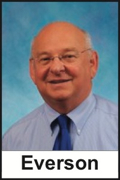
What made Mark Everson an expert witness?

120702Everson1July 2, 2012

Perhaps the prosecution’s most influential expert witness during the 1992 trial of Bob Kelly was psychologist Mark Everson, director of the Program on Childhood Trauma and Maltreatment in UNC Chapel Hill’s department of psychiatry.

Here’s how Everson responded to a defense expert’s testimony that children are suggestible and should not be repeatedly interviewed: “It’s kind of naïve. It’s the kind of statement you really wouldn’t make if you worked with these kids.”

In a Charlotte Observer interview 10 years later, Everson seemed unmoved by the continuing wave of scientific research exposing the fallacy of “Children don’t lie.” He said he found it hard to believe that every Little Rascals child-witness had been badly interviewed and confused: “There’s so much smoke there, it’s hard to imagine there’s no fire.”

Where there’s smoke there’s fire?

Good lord. I wasn’t surprised to hear such naivete from a juror – “Something must have happened,” one told Ofra Bikel — but from a respected UNC faculty member whose opinion influenced whether Bob Kelly would be convicted and imprisoned?

Last week I emailed two questions to Everson at his Chapel Hill office:

– Have you changed your mind?

– How much credence do you give researchers such as Ceci and Bruck who have demonstrated the unreliability of child-witnesses?

I’ve yet to hear back.

But it’s hard to optimistic about a possible reassessment when Everson continues to choose Kathleen Coulborn Faller as his most frequent coauthor.

Nancy Lamb has an explanation for everything

June 29, 2012

“One month after drawing national attention when she dismissed final charges involving the children at the day-care center, (Nancy Lamb) clings to her belief that Robert Kelly is a child molester….

“Still, she admits it’s not easy to explain why none of the defendants have turned against each other, even though they were offered deals by her office.

“ ‘You did have kind of a group dynamic going on where they did hang around together and support each other and encourage each other to hang tough,’ Lamb said.”

– From the Norfolk Virginian-Pilot, July 2, 1997

Ritual-abuse mania contaminated legitimate prosecutions

June 27, 2012

“When well-intentioned but misguided individuals use questioning techniques known to increase the risk of false allegations of sexual abuse, a cascade of unfortunate events can follow.

“Consequences of corruptive interview techniques include the risk of innocent individuals being falsely accused as well as abused children not being believed.”

– From “Forensic Issues in Child Sexual Abuse Allegations” by Charles L. Scott, M.D., in Psychiatric Times (December 1, 2008)

Scott points out a seldom-mentioned but potentially tragic after-effect of the day-care ritual-abuse mania: A loss of credibility for children who actually have been sexually abused. The clouds labeled “McMartin” and “Little Rascals” now hang over every such prosecution.

Oh, for the ability to recognize something ‘odd’

120625RabinowitzJune 25, 2012

“I saw this woman in her 20s … accused of something like 2,800 charges of child sex abuse. Oh, I thought, well, that’s very odd….

“I thought, How can (Kelly Michaels) one woman, one young, lone woman in an absolutely open place like the child care center of the church in New Jersey that she worked for – how could she have committed these enormous crimes against 20 children, dressed and undressed them and sent – you know what it is to dress and undress even one child every day without getting their socks lost? – 20 children in a perfectly public place, torture them for two years, frighten and terrorize them, and they never went home and told their parents anything?… This did seem strange.”

– Dorothy Rabinowitz, recalling on C-SPAN the 1985 case that led to her Pulitzer-winning coverage of the ritual-abuse day-care mania

“This did seem strange.”

From the vantage of 2012, of course, such allegations seem not only “strange” but also patently incredible.

So why didn’t everybody – therapists, journalists, prosecutors, jurors – share Rabinowitz’s reasonable doubt?

How did such a grotesque misconception flourish?

Had skepticism really fallen that far out of fashion during the “Believe the Children” zeitgeist?

Holocaust child-survivors needed no coaxing

120622SiegelJune 22, 2012

“Teen-age Holocaust victims had no trouble looking their abusers straight in the face and saying, ‘You did this to me, you monster.’ None of them, when they were younger, had to have any of their memories elicited. Nor were there embellishments of clowns throwing fire around the room.

“The author of a book on Holocaust survivors, ‘New Lives,’ had this to say: ‘I interviewed hundreds of Holocaust survivors. Would that they could forget anything. At age 4, at age 5 they remembered everything on the SS officers’ uniforms.’ ”

“The author is the Wall Street Journal’s Dorothy Rabinowitz, the first journalist to provide the same in-depth reportage about Fells Acres that ‘Frontline’ provided about Little Rascals and Abby Mann did for the McMartin trial in an HBO movie.”

– From “Abusing Justice, in the Name of Children” by Ed Siegel in the Boston Globe (September 8, 1995)

Little Rascals: A ‘travesty of justice’ for the ages

June 20, 2012

“The Little Rascals case still remains the greatest travesty of justice I’ve ever been associated with or seen or even heard about… since like 1960.”

– Joe Cheshire, attorney for Bob and Betsy Kelly (Triangle Business Journal, 1998)

Children ‘got mixed up’? Believe them anyway

June 18, 2012

“Yes, prosecutors blundered terribly by piling on charges and piling on defendants, just because they could.

“Yes, some of the parents became hysterical and acted out of guilt. That’s the way people act when told their children have been sexually abused – by someone to whom they entrusted them, to whom they personally delivered them every day.

“And here’s another thing the experts are right about. The children weren’t perfect witnesses. They got mixed up. They talked about spaceships and houses that walked.

“But that’s what it means to be a child, and what makes children prey to pedophiles. Children don’t know how to defend themselves. They’re easy to scare and apt to do what adults tell them to do.

“There is plenty to learn from the tragic mistakes in the Little Rascals case. But the final tragedy would be to conclude that child sex abuse is some sort of figment of our social imagination, and not the very real predator it is.”

– From a column by Lorraine Ahearn in the Greensboro News & Record (June 1, 1997)

As previously mentioned, journalists were among those who just couldn’t believe nothing happened at Little Rascals.

Ms. Ahearn, who covered part of Bob Kelly’s trial before becoming a columnist, has changed her line of work since 1997 – has she also changed her mind about ritual sex abuse at day cares? Apparently not:

“I am no longer a working journalist, and I am not interested in weighing in.

“You may glean whatever you wish from the (column). I did cover the trial as a reporter and that was what my column was based upon, not second-hand views about unrelated cases.”

I’d be the last to disparage shoe-leather reporting, but it’s those “second-hand views about unrelated cases” – from journalists such as Debbie Nathan and social scientists such as Stephen Ceci and Maggie Bruck – that enable us to comprehend the incomprehensible.

●  ●  ●

Do I ever tire of asking the Lorraine Ahearns, the David Finkelhors, the Kathleen Coulborn Fallers, the H.W. Williamses, the Elisabeth Porter-Hurds and the Michele L. Zimmermans, “Have you changed your mind?”

Well, yes, I do. But do they ever tire of insisting they haven’t?

For therapist, creating memory is easy task

111205LoftusJune 13, 2012

“Actually, making a false memory is pretty easy.

“(Psychologist Elizabeth) Loftus describes a father convincing his daughter she’d gotten lost in a mall when she was five years old. At first, the daughter denied any memory of the event, but as the father provided more fake details – ‘Don’t you remember that I told you we would meet at the Tug Boat?’ – the daughter began to ‘remember’ and even provide details of her own. Eventually when her father said, ‘I was so scared,’ she responded, ‘Not as scared as I was!’…

“You can probably imagine the implications of false memory in the courtroom or on the therapist’s couch (which famously leads to the courtroom)….”

– From “How You Remember, How You Decide: Memory Part II”
by Garth Sundem in Psychology Today (October 6, 2010)