Innocence, alas, does not guarantee exoneration

120611ExonJune 11, 2012

After discovering the National Registry of Exonerations, I was happy to see that it lists Little Rascals defendants Bob Kelly and Dawn Wilson, whose convictions were overturned on appeal.

But what about Betsy Kelly and Scott Privott, who both finally accepted plea deals while maintaining their innocence, and Robin Byrum, Darlene Harris and Shelley Stone, all of whom waited years for prosecutors to drop charges?

The registry, a joint project of the University of Michigan Law School and the Center on Wrongful Convictions at Northwestern University, speaks unequivocally about “a wave of child sex abuse hysteria that swept the country….

“Starting in the early 1980s, some prosecutors, therapists and child welfare workers became
convinced that child sex abuse on a massive scale was rampant in their communities. They
believed that most of the victims were too afraid or embarrassed to discuss the abuse, so they
worked to overcome this fear and reluctance by using highly suggestive, persistent and
unrelenting questioning techniques when interviewing the young children.

“It worked. Some of the children complied and accused parents, day-care workers and adult acquaintances of numerous horrifying and bizarre acts. This led to a series of extraordinary prosecutions, many involving allegations of satanic rituals.”

Unfortunately, this acknowledgment of the moral panic doesn’t earn the remaining “Edenton 5” a listing in the registry. Here’s why, according to research assistant Ted Koehler:

“For a case to count as an exoneration for our purposes, a person convicted of a crime must be declared factually innocent by a government official or organization with authority to make such a declaration.

“If this has not happened, a person can still be exonerated if the person was relieved of all consequences of the criminal conviction by a government official with proper authority, through pardon, acquittal of the charges for which the person was originally convicted, or dismissal of those same charges. In such a case, the pardon, acquittal, dismissal or posthumous exoneration must have been the result, at least in part, of evidence of innocence that either (i) was not presented at the trial at which the person was convicted; or (ii) if the person pled guilty, was not known to the defendant or to the defense attorney and the court at the time the plea was entered.

“The Edenton case was a terrible witch hunt. Regretfully, though, because they do not meet the criteria above, Kelly’s and Privott’s guilty pleas and the dropped charges against Byrum, Stone, and Harris do not fit our definition of an exoneration, and are not listed on the registry for that reason.”

I understand the registry’s need to set the bar so high. But what a curious twist that the defendants’ only hope for exoneration lies with the same state that so unjustly prosecuted them.
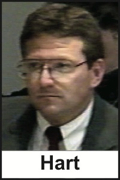
Bill Hart played by his own (poker) rules

111202HartJune 8, 2012

“The duty of the prosecutor is to seek justice, not merely to convict.”

– American Bar Association

“The primary responsibility of prosecution is to see that justice is accomplished.”

– National District Attorneys Association

“If you were playing poker, would you be playing with your full hand
showing?”

– Bill Hart, special deputy attorney general, defending his unwillingness
to share evidence with the Little Rascals defense

A mother to fear at your day-care door

June 6, 2012

“The Kellys decided to buy the day care center after a previous owner quit following a dispute with a mother (who) was upset that her son didn’t get cake at a party because he wouldn’t wear a bib, Mrs. Kelly said (in testimony at Bob Kelly’s trial).

– The Associated Press, Feb. 11, 1992

What a coincidence – Jane Mabry, the disgruntled mother who ran off the first day-care owner, is the very same disgruntled mother who shut down the Kellys!

Citing self, professor finds ‘false allegations quite rare’

120514FallerJune 4, 2012

“Drawing upon clinical experience and research, Faller… asserted that false allegations are quite rare and pointed out that children have little motivation for making a false accusation, but offenders have considerable motivation for persuading professionals that children are either lying, mistaken, or crazy.”

– From “Interviewing Children About Sexual Abuse: Controversies and Best Practice” by Kathleen Coulborn Faller (2007)

Yes, that Kathleen Coulborn Faller, whose stubborn belief in day-care ritual abuse was expressed four years earlier in “Understanding and Assessing Child Sexual Maltreatment.”

Although “Interviewing Children…” isn’t specific to ritual abuse cases, Dr. Faller’s casual dismissal of false allegations echoes the “Believe the Children” mantra of that era.

So much wrongheadedness she manages to pack into a single sentence:

■ “Drawing upon clinical experience and research, Faller… asserted that false allegations are quite rare… ” Here she cites not only her own anecdotal impressions, but also the profoundly misguided research conducted during the height of the abuse mania.

■ “… and pointed out that children have little motivation for making a false accusation…” In fact, children who have been coaxed, threatened and worn down have every motivation to please their interrogators.

■ “… but offenders have considerable motivation for persuading professionals that children are either lying, mistaken, or crazy.” Did it occur to Dr. Faller that offenders have not a bit more such motivation than innocent defendants?

■ ■ ■

Ritual abuse: the creationism of social science?

A funny story about the Little Rascals case (really!)

June 1, 2012

An incident recalled by a former Edenton resident:

“A friend had a son in Little Rascals but wouldn’t let him participate in the ‘hunt.’ She shielded him, as best she could, and didn’t interrogate him.

“Years later, when Bob Kelly was released, she thought it best to tell the son herself. He exploded in anger. Alarmed and filled with trepidation, she asked just what Mr. Bob had done to cause such a reaction.

“The child’s answer: Bob hadn’t let him put ketchup on his peanut butter sandwich.”

If anyone deserves pardon, why not Edenton Seven?

May 30, 2012

Is the case for pardoning the Wilmington 10 any more compelling than that for pardoning the Edenton Seven?

As the N&O’s Bruce Siceloff points out, “Somebody firebombed Mike’s Grocery, a white-owned store in a black Wilmington neighborhood, during three days of racial violence in February 1971. When firefighters and police came to put out the blaze, somebody fired shots at them.”

In Edenton, by contrast, no crime was committed, making exoneration all the more challenging: There’s no alternative “somebody” to point to.

‘Understanding and Assessing’ ritual-abuse mythology

May 28, 2012

How would Bruce A. Robinson, founder of the comprehensive and widely respected ReligiousTolerance.org, describe the credibility now given ritual abuse?

“I am unaware of any child psychologist or similar specialist who still believes ritual abuse happened in child care facilities. I think there is a consensus that repeated direct questioning of young children will get them to reveal stories about events that never happened. Over time, these stories often become ‘memories.’ ”

Mr. Robinson, meet Kathleen Coulborn Faller, professor in the School of Social Work at the University of Michigan.

As previously noted, Dr. Faller in “Understanding and Assessing Child Sexual Maltreatment” (second edition, 2003) identifies herself as a true believer. Here’s how she makes her case:

■ “Responses to allegations of ritual abuse have undergone a transformation in the last 10 years, so that any case… elicits great skepticism. In fact, it is no longer au courant to believe in the existence of ritual abuse.”

Au courant? Does she really consider scientific research into children’s testimony to be some kind of fad, like pet rocks?

■ “The vigor of the attack against ritual abuse… reinforces the belief of some professionals, myself included, that there is substance to ritual abuse….”

What!? And where are these other professionals?

■ “Ultimately the backlash… resulted in the reversal of some criminal convictions involving ritual abuse (New Jersey v. Michaels, 1994; North Carolina v. Kelly, 1995)… ”

In fact, these convictions were overthrown not because public and professional opinion had begun to shift, but because their many legal defects were obvious to appeals courts.

● ● ●

I’ve again asked Dr. Faller to respond.

Children don’t remember, but are sure abuse happened

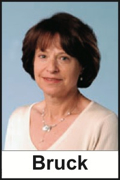
120418BruckMay 25, 2012

“Maggie Bruck, co-author of ‘Jeopardy in the Courtroom: A Scientific Analysis of Children’s Testimony’ and a professor of psychiatry at Johns Hopkins University, says no long-term psychological studies exist that track groups of children involved in alleged sex-abuse rings, in part because of confidentiality issues.

“But Bruck has studied follow-up interviews of children involved in cases similar to the notorious McMartin preschool trial. Some kids continue to believe they were abused. Bruck suspects it’s because their families or therapists have reinforced the stories of abuse. ‘The children say they don’t remember the salient, allegedly terrifying details,’ she told me. ‘But they are sure it happened.’ ”

– From “Who Was Abused?” by Maggie Jones in the New York Times (Sept. 19, 2004)

Might the Little Rascals children be among the subjects of that follow-up research? Sorry, Dr. Bruck says predictably – “Confidential information.”

‘The most innocent man I have ever defended’

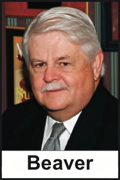
120523BeaverMay 23, 2012

Experienced trial lawyers can’t afford to dwell on lost cases. Sometimes that’s quite a challenge:

“Robert Fulton Kelly…. was the most innocent man I have ever defended and the most victimized criminal defendant in the state’s history. He taught me that under certain circumstances madness can rule the day and overcome everything that is right and just.”

– Gerald Beaver (North Carolina Lawyers Weekly, 2010)

Prosecutors grudgingly loosen grip on Bob Kelly

May 22, 2012

Fifteen years ago today: Claiming they want to spare their child-witnesses from another round of testimony, prosecutors drop the last Little Rascals charges against remaining defendants Bob Kelly and Dawn Wilson.

Nancy Lamb is referring to the children when she says, “They know who I am and why I walked into their lives and stayed awhile. They remember.” Of course she also “stayed awhile,” as an uninvited guest from hell, in the lives of the Edenton Seven.

Kelly remains on the hook for an unrelated sexual abuse charge filed more than a year earlier.
Finally, on Sept. 23, 1999, that charge too will be dropped, and for the first time in a decade he isn’t living under the thumb of prosecutors.