French prosecutors erred – and admitted it!

120403Clement1April 4, 2012

“An appeals court Thursday overturned the conviction of six people accused of participating in a pedophilia ring in northern France five years ago, unraveling one of the most mismanaged cases in French judicial history and leaving the nation asking how the court system could have gone so awry.

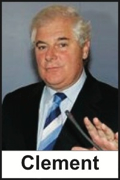
“ ‘I apologize to the acquitted and their families,’ Justice Minister Pascal Clement said at a news conference after the verdict was announced in Paris.

“He ordered a triple investigation of the police, judiciary and social services involved in the case…. ‘I want the French people to know that I will get to the bottom of this,’ he said.

“Paris’s chief prosecutor, Yves Bot, had personally asked the appeal court to acquit the six, calling the case a ‘true catastrophe’ and demanding an investigation into who was responsible for such a gross miscarriage of justice. ‘We must do what is necessary to make sure this doesn’t happen again,’ Bot said.

“But others were heartened by the appeal, saying that it showed that the courts were capable of self-criticism and self-correction.

“ ‘That’s indispensable in a democracy,’ said Dominique Wolton, a sociologist at France’s National Council for Scientific Research.

“The case began in 2000 in the town of Outreau after a number of children told a teacher that they had been abused.

“It was marred by deep doubts from the beginning, said Yves Jannier, France’s attorney general.

“He noted that the investigative report by the police in July 2002 found ‘more doubts than certainties’ in the accusations, but said, ‘No one had enough critical sense to stop the machine.’ ”

– From the International Herald Tribune, Dec. 2, 2005

Thanks to lawyer-neighbor Lou Lesesne for steering me to this account of the Outreau Affair.
Although the case differs in numerous significant ways from such U.S. ritual-abuse prosecutions as Little Rascals and McMartin, I was most struck by the readiness of French officials to acknowledge and apologize for a justice system gone crazy.

Soon after, president Jacques Chirac wrote letters to 13 acquitted defendants and to the widow of a defendant who committed suicide in prison awaiting trial: “Justice is the soul of the republic. We have the imperative duty to draw all the lessons from the immense sufferings endured by all the accused whose innocence has now been established.”

How to explain the French state’s humane response to its costly misdeeds, while our own prosecutors, attorneys general, governors, et al., keep silent?

Why aren’t they too “capable of self-criticism and self-correction”?

Why don’t they too recognize “the immense sufferings endured by all the accused”?

What jurors learned from ‘Every Mother’s Worst Fear’

April 2, 2012

Among the contaminants reported in the deliberations of the first Little Rascals jury was a Redbook article used to profile Bob Kelly as a child molester. Its content never was detailed, so I looked it up (thanks yet again, Charlotte Mecklenburg Library).

Beneath the panic-inducing headline – “Why I’m Every Mother’s Worst Fear” – I was surprised to find virtually nothing relevant to day cares. Instead, the author offered insights such as:

“There are far more child molesters who operate like me than there are those who forcibly kidnap children. What the abductors do makes the headlines. What I do is more common and less noticeable. Most child molesters are established in our communities, known to others as just another good neighbor. We may even be married with kids of our own.”

An editor’s note drove home the point: “Finally, believe a child who reports a sexual overture or encounter, no matter how respectable or unlikely the accused person might seem.”

These descriptions, of course, fit the crazy-making template for ritual-abuse prosecutions:

If he seems like a child abuser, then he is.

If he doesn’t seem like a child abuser, then he is – “no matter how unlikely.”

‘We’ve learned a lot….’ (Too bad it took so long)

March 30, 2012

Kee MacFarlane is the notorious therapist who led the ritual abuse scare of the late 1980s (and pioneered the misuse of anatomically correct dolls in interviewing children). In just four months MacFarlane diagnosed more than 360 children at the McMartin Pre-School as abused.

In 2005 she declined to be interviewed by CNN but sent a statement:

“We’ve learned a lot in 20 years about how to interview children for forensic purposes and how to manage complex cases such as this one. It would be a sad commentary if we didn’t learn from such painful experience.”

Not much of a mea culpa – but still more than anyone connected with the Little Rascals prosecution has managed.

Prosecutors learned wrong lesson from McMartin

March 28, 2012

Had North Carolina prosecutors been interested in anything other than racking up convictions, they would’ve given earnest consideration to analyses such as this one in the Los Angeles Times in 1990, barely a week after a jury returned not guilty verdicts in the McMartin Pre-School case:

“Experts across the country say the interview techniques intended to extract the truth from youngsters who attended the Manhattan Beach nursery school were so misguided as to make the children seem coerced, rehearsed and ultimately unbelievable to the jury….

“According to both child development and criminal defense experts who have closely monitored the case for the last six years, some of the adults — the parents, the prosecutors, the therapists — who tried hardest to find out what happened in the first place may have done the most to confuse the case in the end…. Most of the children were never given the chance to simply tell what, if anything, happened to them.

“‘They were never given the opportunity to tell their stories as they knew them, in their own words, until long after their minds had been contaminated with the thoughts and fears of the adults around them,’ said David Raskin, a psychologist at the University of Utah who has been studying child abuse cases for the last 15 years. By then, he said, it was too late.”

Contamination proved every bit as rampant among child-witnesses in the Little Rascals case, but prosecutors had learned from McMartin to conceal it by denying access to verbatim records of therapists’ interviews.

McMartin: Patient Zero in day-care abuse contagion?

111019Tavris2March 26, 2012

How did the moral panic over day-care ritual abuse spread so widely? Did some undetected psychotropic waft from Manhattan Beach to Edenton to Christchurch, New Zealand?

I was reminded of that lingering question while reading the smart and lively “Mistakes Were Made (But Not by Me): Why We Justify Foolish Beliefs, Bad Decisions and Hurtful Acts” (2007).

Although Carol Tavris and Elliot Aronson address the day-care panic only briefly, their reference to the McMartin case having produced “copycat accusations against day care teachers across the country” caught my attention. Yes, the timing, pattern and similarity of these cases suggest conscious imitation, but I haven’t seen the evidence.

“We didn’t mean ‘copycat’ literally,” Tavris explains in an e-mail. “It’s just that the McMartin hysteria scared people, and got them worried about their own local day care centers, and motivated DAs and cops to advance their careers by finding these villains… and thereby launched a thousand other efforts to find molesters under the bed and in the day care classrooms…. That’s what a hysterical epidemic means.”

Coincidentally, I’ve been corresponding with Michael Hill, professor of sociology at Victoria University of Wellington, who has traced outbreaks in New Zealand and Australia directly to visits from such American Appleseeds as Roland Summit and Kee MacFarlane.

Forensic evaluator or therapist? A distinction not made

120323WyattMarch 23, 2012

“A given professional must undertake either a forensic examination or therapy, not both, with any given child.

“The roles of forensic evaluator and ongoing therapist are different. The forensic evaluator must not become an advocate for the child, a role often difficult to avoid when one is an ongoing therapist.

“For this reason the American Psychological Association’s Guidelines for Psychological Evaluations in Child Protection Matters (1999) holds, ‘Psychologists generally do not conduct psychological evaluations in child protection matters in which they serve in a therapeutic role for the child or the immediate family or have had other involvement that may compromise
their objectivity.’ ”

– From “A Behavior Analytic Look at Contemporary Issues in the Assessment of Child
Sexual Abuse” by W. Joseph Wyatt in The Behavior Analyst Today (March 22, 2007)

By serving enthusiastically as agents of the prosecution, Betty Robertson, Judy Abbott, Susan Childers and Michele Zimmerman not only ignored that crucial ethical distinction, but also fostered psychological havoc where there had been none.

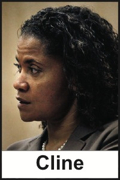
Tracey Cline, Mike Nifong and H.P. Williams

120321ClineMarch 21, 2012

“In July 1993, (Tracey Cline) headed to the state’s northeast corner to work as a prosecutor in a cluster of counties near Elizabeth City. Her stint there was short-lived, just six months, and unremarkable, according to supervisors….

“ ‘I hated to see her leave….’ (former District Attorney H. P.) Williams said. ‘I would have given her a good recommendation.’ ’’

– From the News & Observer of Raleigh, February 19, 2012

Williams may have nothing to say on behalf of the innocent Little Rascals defendants, but he seems ever eager to speak well of Cline and Durham’s other epically unethical DA.

‘The right man’ was the wrong man? No way!

120319TriversMarch 19, 2012

In “The Folly of Fools: The Logic of Deceit and Self-Deception in Human Life” (2011), Robert Trivers briefly addresses the causes and costs of the ritual abuse mania.

I asked Trivers, professor of anthropology and biological sciences at Rutgers University, about the role played by prosecutors in such cases:

“Prosecutors are notoriously vulnerable to tunnel vision – i.e., once a suspect has been identified, others disappear from sight; they also need to justify themselves in retrospect.

“I was told by (Innocence Project cofounder Peter J.) Neufeld that even after incontrovertible DNA evidence, 75 percent of the original detectives who came up with (and helped convict) the wrong person still say they believe they got ‘the right man.’ ”

Court finds Hart’s ploy ‘grossly improper’

March 16, 2012

“The appeals court called a maneuver (in Dawn Wilson’s trial) by the chief special prosecutor, Bill Hart, ‘grossly improper.’

“The judges found that Hart had tried to impugn the reputation of Wilson by placing in the courtroom audience two people whose presence was likely to intimidate Wilson.

“Hart never called the pair as witnesses, but… by his actions had implied to Wilson that he intended to use the two people against her in a way that might result in self-incrimination.”

– From the (Norfolk) Virginian-Pilot, May 3, 1995

In 1995 the N.C. Court of Appeals overturned her conviction. And then of course the prosecutors rushed to apologize to Dawn Wilson for their disgraceful vilification.

The ugly truth about ‘Nancy Lamb’s state of mind’

120314BrockMarch 14, 2012

“Prosecutor Nancy Lamb practiced a little ‘voodoo’ psychology by telling the jury that when Dawn Wilson held and played with her child during breaks in the trial, it wasn’t because she loved the child – it was all a show for the benefit of the jury.

“No psychologist could have accurately reported on the state of mind or the motives of Wilson when she played with her child. However, had a psychologist known that Wilson had been offered a plea bargain which included no jail time if she pointed the finger at the others, and had told prosecutors to ‘Find yourselves another patsy,’ that psychologist might have known something about Nancy Lamb’s state of mind when she made those statements.”

– From “Due Process Is Good Psychology,” article in
Michigan Lawyer Weekly by Michael G. Brock

Defending this smear, one of many, Lamb said Wilson was presenting herself as a good mother, and “We had to remove that mask.”

In 1995 the N.C. Court of Appeals overturned her conviction. And then of course the prosecutors rushed to apologize to Dawn Wilson for their disgraceful vilification.