Rascals case in brief
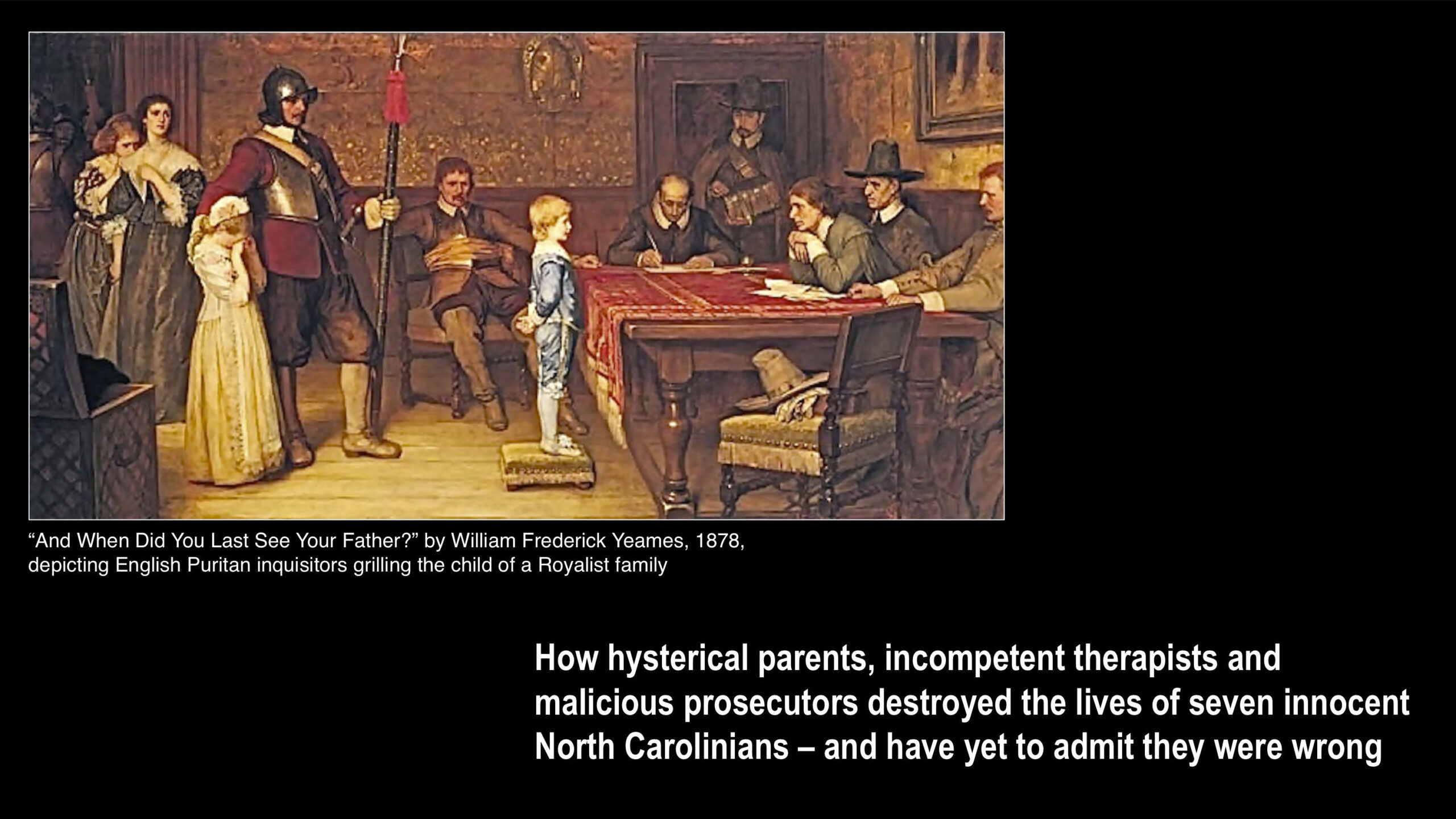
In the beginning, in 1989, more than 90 children at the Little Rascals Day Care Center in Edenton, North Carolina, accused a total of 20 adults with 429 instances of sexual abuse over a three-year period. It may have all begun with one parent’s complaint about punishment given her child.
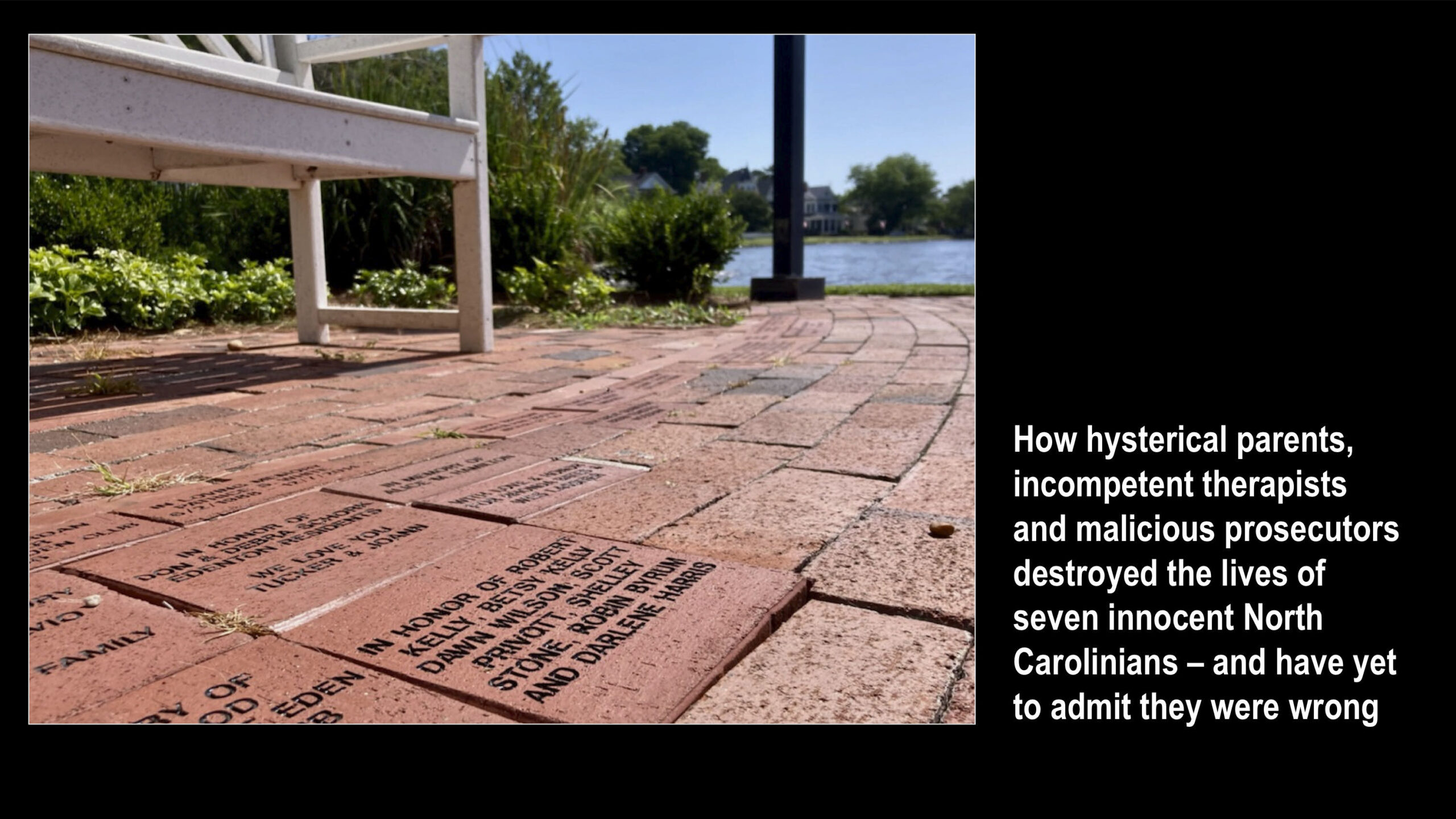
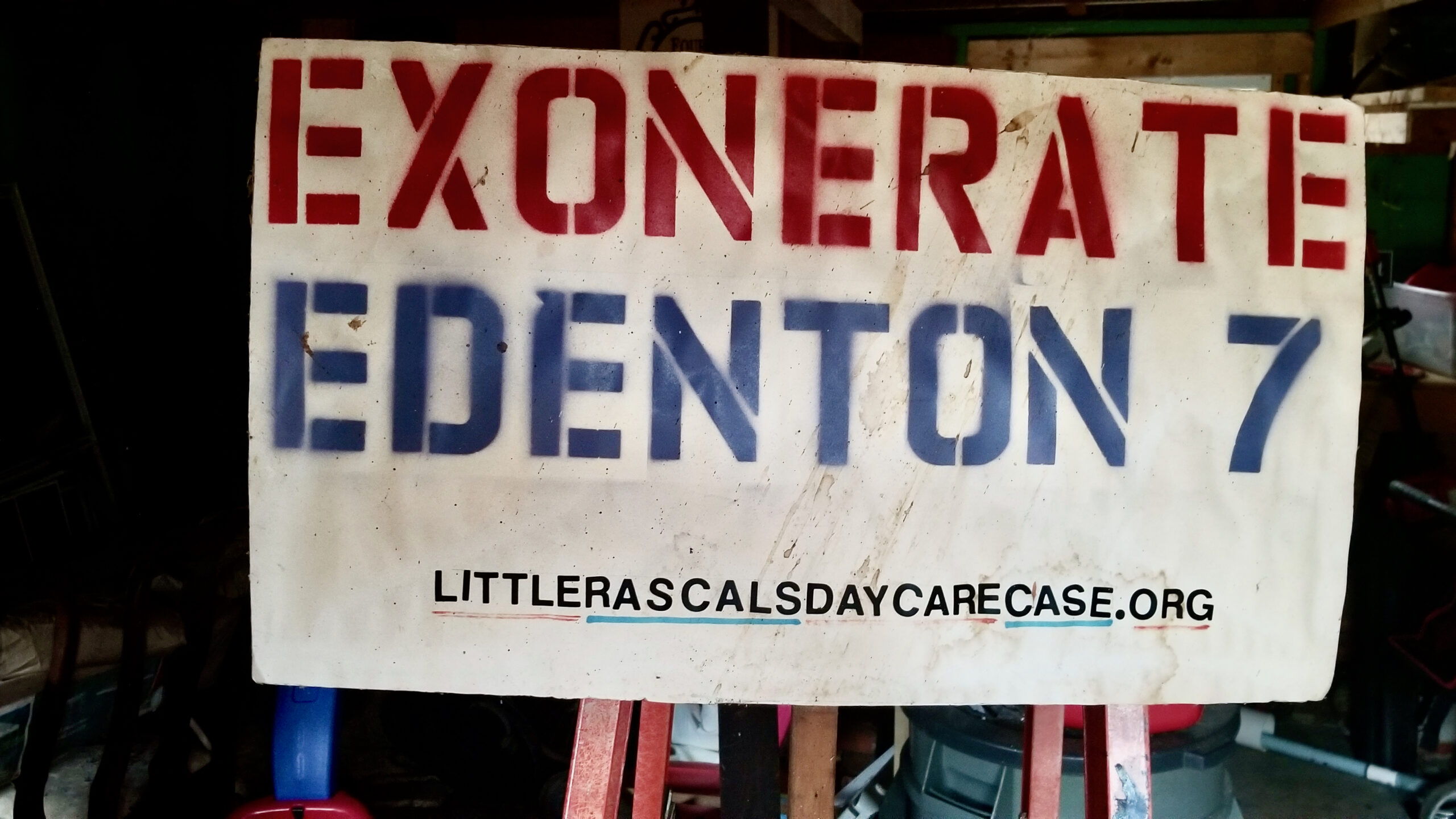
Among the alleged perpetrators: the sheriff and mayor. But prosecutors would charge only Robin Byrum, Darlene Harris, Elizabeth “Betsy” Kelly, Robert “Bob” Kelly, Willard Scott Privott, Shelley Stone and Dawn Wilson – the Edenton 7.
Along with sodomy and beatings, allegations included a baby killed with a handgun, a child being hung upside down from a tree and being set on fire and countless other fantastic incidents involving spaceships, hot air balloons, pirate ships and trained sharks.
By the time prosecutors dropped the last charges in 1997, Little Rascals had become North Carolina’s longest and most costly criminal trial. Prosecutors kept defendants jailed in hopes at least one would turn against their supposed co-conspirators. Remarkably, none did. Another shameful record: Five defendants had to wait longer to face their accusers in court than anyone else in North Carolina history.
Between 1991 and 1997, Ofra Bikel produced three extraordinary episodes on the Little Rascals case for the PBS series “Frontline.” Although “Innocence Lost” did not deter prosecutors, it exposed their tactics and fostered nationwide skepticism and dismay.
With each passing year, the absurdity of the Little Rascals charges has become more obvious. But no admission of error has ever come from prosecutors, police, interviewers or parents. This site is devoted to the issues raised by this case.
On Facebook


Little Rascals Day Care Case
This Facebook page is an offshoot of littlerascalsdaycarecase.org, which addresses the wrongful prosecution of the Edenton Seven and other such victims.

Meanwhile in Edenton....
This content isn't available right now
When this happens, it's usually because the owner only shared it with a small group of people, changed who can see it or it's been deleted.0 CommentsComment on Facebook
Allies for our cause!
This content isn't available right now
When this happens, it's usually because the owner only shared it with a small group of people, changed who can see it or it's been deleted.0 CommentsComment on Facebook
The courts have a long history of capriciously pulling the rug out from under Junior's appeals, but maybe this time....
This content isn't available right now
When this happens, it's usually because the owner only shared it with a small group of people, changed who can see it or it's been deleted.0 CommentsComment on Facebook
Click for earlier Facebook posts archived on this site
Click to go to

Today’s random selection from the Little Rascals Day Care archives….
British child abuse investigators too quick on trigger

June 5, 2016
“One in five of all children born in a single year in England was referred to social services before they reached age 5…. Up to 150,000 pre-school children were reported over fears of abuse or neglect, most unnecessarily….
“Researchers (at the University of Central Lancashire) said while public and professional vigilance was welcome, the number of alerts received by social services meant staff were wasting their time on innocent families, and making it harder to find the children who are at risk.
“After a series of high profile cases where serious abuse was missed, social workers are under intense pressure… and end up checking up more of the warnings they receive than is necessary, the research suggests.
Lead researcher Professor Andy Bilson said, ‘We have this mantra that says it’s everybody’s job to safeguard children, but what we are doing doesn’t actually safeguard children.”
– From “One in five children referred over suspected abuse” at BBC News (May 25)
Not mentioned in the Central Lancashire report is the subcategory of “satanic ritual abuse” – about which the British are similarly prone to false alarm.

‘The most innocent man I have ever defended’
 May 23, 2012
Experienced trial lawyers can’t afford to dwell on lost cases. Sometimes that’s quite a challenge:
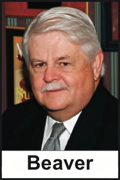
“Robert Fulton Kelly…. was the most innocent man I have ever defended and the most victimized criminal defendant in the state’s history. He taught me that under certain circumstances madness can rule the day and overcome everything that is right and just.”
– Gerald Beaver (North Carolina Lawyers Weekly, 2010)
Parents ill-prepared to practice psychology
Nov. 28, 2011
 “The Little Rascals case offers a trove of testimony illustrating how immersion into the popular psychology of sexual abuse gave parent-experts the terms and concepts to retrospectively interpret their children’s behaviors and emotions, and to do so with the ring of authority….
“One mother testified that once she had learned the psychology of sexual abuse, she realized her child’s denial that anything untoward had happened at the day care center actually was a sign that he had been sexually abused.”
– From “The Day Care Ritual Abuse Moral Panic” by Mary De Young (2004)
‘Conditions that would lead to a retraction’? Sorry, no
 Nov. 19, 2012
Crucial to the moral panic was a wave of ill-conceived academic and professional literature.
I asked Molly C. Dougherty, editor of Nursing Research, whether her journal had ever published a retraction of “Parental Stress Response to Sexual Abuse and Ritualistic Abuse of Children in Day-Care Centers” (January/February 1990). As is obvious in the title, Susan J. Kelley’s article embraces and promotes the existence of ritual abuse in day cares.
Dr. Dougherty told me that no retraction had appeared in the past or would appear in the future: “The authors of the article were careful to provide a thorough sample description without including information that linked participants to any specific location or case. Conditions that would lead to a retraction are not present.”
This is from my reply to her:
“Of course you are correct that Susan J. Kelley didn’t say which day-care cases were the basis for ‘Parental Stress Response to Sexual Abuse and Ritualistic Abuse of Children in Day-Care Centers.’ (Fells Acres seems a likely candidate, since it was Kelley’s own improper interviewing of child-witnesses that led to the overturning of convictions in that case.)
“But the problem here is not specific to Fells Acres, McMartin or Little Rascals. The entire article was founded on a false belief: that satanic ritual abuse occurred at even one day care. No such ‘multiple victim, multiple offender’ allegations were ever validated. In case after bizarre case, charges were eventually dropped and guilty verdicts overturned.
“The decade-long moral panic finally collapsed in the early 1990s. Today you will not find a single respected academic or professional willing to give credence to the claims of the ritual abuse era.
“By contrast, this excerpt from Kelley’s abstract demonstrated her unquestioning advocacy:
“ ‘The purpose of this study was to examine the stress responses of parents to the sexual and ritualistic abuse of their children in day-care centers…. Parents of sexually abused children reported significantly more psychological distress than parents of nonabused children, with parents of ritually abused children displaying the most severe psychological distress.’
“Plainly, this article was guilty of what you lament in your (unrelated) September 11 blog post:
“failure to address legitimate alternative views and evidence.” And what better example of the “pseudo-science in the guise of science” criticized by Eileen Gambrill?
“I will leave you with a final question: Does Nursing Research really want to leave this article as its last word on the subject?”
So far, Dr. Dougherty’s answer seems to be yes.