
Advising parents ‘one of the damnedest things I ever did’

130218PearceFeb. 18, 2013

Gov. Jim Hunt was serving his fourth term (1997-2001) when prosecutors dropped the last Little Rascals charges. Although Gary Pearce, Hunt’s longtime adviser and later biographer, doesn’t remember the governor being involved in the case, Pearce experienced his own Edenton moment:

“I actually got called by one of the parents who had heard of me. I met with them and worked with them on a program that UNC-TV did (in 1993 to give parents a chance to respond to “Innocence Lost: The Verdict”). I did it just out of curiosity. It was one of the damnedest things I ever did.

“What the parents were claiming happened was, in the truest sense of the word, incredible. But they seemed absolutely and genuinely and sincerely convinced that it had happened….

“The best word to describe the whole thing is ‘gothic.’”

Defense attorneys were excluded from the program, UNC-TV director Tom Howe explained, because “We’re not really interested in getting into a tit-for-tat about guilt or innocence.”

Police chief deputized McMartin parents

Feb. 15, 2013

From a letter that the police chief in Manhattan Beach, Calif., sent to parents of children attending McMartin Preschool after the arrest of Ray Buckey on Sept. 7, 1983:

“This Department is conducting a criminal investigation involving child molestation…. The following procedure is obviously an unpleasant one, but to protect the rights of your children as well as the rights of the accused, this inquiry is necessary….

“Please question your child to see if he or she has been a witness to any crime or if he or she has been a victim.  Our investigation indicates that possible criminal acts include: oral sex, fondling of genitals, buttock or chest area, and sodomy, possibly committed under the pretense of ‘taking the child’s temperature.’  Also photos may have been taken of children without their clothing.  Any information from your child regarding having ever observed Ray Buckey to leave a classroom alone with a child during any nap period, or if they have ever observed Ray Buckey tie up a child, is important.

“Please complete the enclosed information form and return it to this Department in the enclosed stamped return envelope as soon as possible….”

“Please question your child….”

As would be demonstrated in McMartin, Little Rascals and dozens of other day-care ritual abuse cases, these four words ensured that anxious parents interrogated their children until they at last “revealed” stories of sharks, witches and murdered babies.

The chief’s letter showed his naïvete not only about the allegations of  “possible criminal acts” at McMartin, but also about the inevitable hysteria they would produce. “….Please keep this investigation strictly confidential,” he advised parents, “because of the nature of the charges and the highly emotional effect it could have on our community.”

Ritual-abuse therapists, meet UFO debriefers

120622SiegelFeb. 13, 2013

“Can we say beyond a shadow of a doubt that any day-care operators in the country are innocent? No. Can we say that those who claim they were abducted by UFOs were not? No.

“(That) is not a frivolous comparison. The methodology used by therapists on the children is the same methodology used by UFO debriefers. The debriefers ask, Did you see a light? The therapists ask, Did you get taken to a secret tunnel? The debriefers ask, Did you feel a probe by the aliens? The therapists ask, Did Mr. Bob stick a knife in your vagina?

“When people, even fully functional members of their communities, regurgitate what they have been told about space probes, we call them lunatics. When children, after constant prodding, regurgitate what they have been told about intimate probes, we put people in prison.”

– From “Abusing Justice, in the Name of Children” by Ed Siegel in the Boston Globe (Sept. 8, 1995)

‘No abuse until the interviews began….’

Feb. 11, 2013

“After reading a number of these interviews (of children) in the Wee Care (Kelly Michaels) case, it is difficult to believe that adults charged with the care and protection of young children would be allowed to use the vocabulary that they used in these interviews, that they would be allowed to interact with the children in such sexually explicit ways, or that they would be allowed to bully and frighten their child witnesses in such a shocking manner. No amount of evidence that sexual abuse had actually occurred could ever justify the use of these techniques especially with three- and four-year-old children.

“Above and beyond the great stress, intimidation, and embarrassment that many of the children so obviously suffered during the interviews, we are deeply concerned about the long-lasting harmful effects of persuading children that they have been horribly sexually and physically abused, when in fact there may have been no abuse until the interviews began….”

– From an amicus curiae brief to the Appellate Court of New Jersey from Stephen Ceci and Maggie Bruck on behalf of the 46-member Committee of Concerned Social Scientists (1994)

McMartin’s prosecutor’s pitch was certainly graphic

Feb. 8, 2013

“Your honor, ladies and gentlemen, this is a case about trust and betrayal of trust… trust placed in the hands of Ray Buckey and Peggy Buckey.  Parents who will testify will tell you… they didn’t ask about activities that were going on at the preschool. They didn’t piece together the clues they were getting from their children. These parents will tell you they now understand the importance of listening. The case contains 100 felony counts of Section 288-A and B, and one count of conspiracy….

“Betrayal! These innocent children placed their trust in these two teachers and the teachers betrayed them…. One mother observed her two daughters performing oral copulation on each other. Another mother saw a sore rectum in her child. She will tell you she did not want to go to school, did not want to sit on her father’s lap and that she ran through the house singing, ‘What you see is what you are/ You’re a naked movie star.’

“One mother will tell you that she saw her daughter masturbating with a wooden pole. One mother will tell you that her children had nightmares.  One mother will tell you that her child had a rectal fissure. Another mother will tell you she saw bloody stools when her child went to the bathroom.  Then, the people will ask you to bring back verdicts on all 100 counts….”

– From Deputy District Attorney Lael Rubin’s opening statement in the McMartin Preschool ritual-abuse case

After the jury acquitted the Buckeys on 52 counts and deadlocked on 13 counts, Rubin complained that “They were lucky. I just hope to God that years from now we don’t hear about Ray Buckey molesting children…. I don’t think I would do anything different.”

Rubin seems to have been almost as graceless a loser as Nancy Lamb, doesn’t she? Almost.

‘Long history of panic’ extended to day-care cases

130206FairchildFeb. 6, 2013

“Panic provides a rationale for action, sometimes overreaction or even manipulation. As such, it is the subject of heated accusation and denial that can create a swirl of confusion and frustration.

“Nonetheless, some lessons stand out in the long history of panic. There is no basis for imagining that the frenzied 19th century reactions to disease are a slumbering beast waiting to be roused. Too much government infrastructure and information stand between populations and unfettered panic….”

– From “A Brief History of Panic” by Amy L. Fairchild, David Merritt Johns and Kavita Sivara Makrishnan, public health researchers at Columbia University  (the New York Times, January 28, 2013)

“Frenzied…. reactions” to disease epidemics may have subsided since the 19th century, but they were crucial in animating the day-care ritual-abuse prosecutions of the 1980s and ’90s. And “government infrastructure” – that is, district attorneys’ offices – wasn’t a deterrent but an accelerant!

Junior Chandler wasn’t asking for much, but got nothing

120123ChandlerFeb. 4, 2013

Junior Chandler, writing from Avery-Mitchell Correctional Center, January 23, 2013:

“All of the high profile and high publicity cases in the last 20 years –  nearly every one of those people are home…. Except for me and I am still in prison…. April 15, 2013, will be 26 years.

“I know it’s extremely hard to get help to prove my innocence when there isn’t a crime committed to begin with.

“It doesn’t look like I got any help from Gov. Perdue when she left office, as I haven’t heard from anyone, nor has my time (sentence) changed any. All I was asking was time served or my time to be run concurrent instead of back to back, as my record on the street before and my record in here should mean something….

“But I guess it don’t matter – as I’ve seen people continually be in trouble (but) make honor grade and get out and then come right back in prison!

“Well, I’ll close for now. Maybe someone will be able to help get the truth out!”

Junior’s hopes for release now lie with North Carolina Prisoner Legal Services, which is deciding whether to take on his case.

Beware of parents in search of ‘truth’

Feb. 1, 2013

“The Little Rascals case serves as a good reminder that parents also are part of the child-savers interest group and have as much, in fact probably more, of a vested interest in ‘getting to the truth’ than any of their professional associates….

“From the witness stand, one mother describes how her repeated questioning of her three-year-old son finally confirmed that he, too, had been abused by Bob Kelly…

Mother: First time I questioned him, we were laying on my bed and I was just, you know, ‘Do you like Mr. Bob?’ ‘Has Mr. Bob ever done anything bad to you?’ And as we were talking I got more specific…. ‘Has Mr. Bob ever touched your hiney? ‘Has he ever put his finger in your hiney?’

Attorney: Was that the only time you questioned him?

Mother: No, it went on….

Attorney: Now tell me how it developed that you began to get statements from him that raised a question in your mind about sexual abuse.

Mother: (My son) was being questioned a lot from that first time on, quite often. And then that last week it was probably a few hours every day thing…. I got a response from him. Um, he told me that Mr. Bob had put his penis in his mouth and peed on him….

Attorney: How did he come up with those kinds of statements?

Mother: Because I asked him…. He had been hearing it at least once a week since I first started questioning him and then that last week he was hearing it every day.

“In their empirical research on repeated interviewing, Ceci and Bruck (1995) find that while children do remember more with each additional interview, their reports also become more inaccurate over time.

“Simply put, they recall both more accurate and inaccurate details with each successive interview. Further, repeated interviews signal the interviewers’ bias to the children, cueing them on how to answer in a way that pleases their interrogators.”

– From “The Day Care Ritual Abuse Moral Panic” by Mary De Young (2004)

By time to testify, children knew their lines

Jan. 30, 2013

“They have been through more dress rehearsals than the cast of ‘Cats.’”

– Joe Cheshire, lawyer for Betsy Kelly, protesting the latitude given the prosecution in preparing Little Rascals children to testify (New York Times, Aug. 19, 1991)

Edenton’s history was no defense against panic

130128CourthouseJan. 28, 2013

Manhattan Beach, California; Malden, Massachusetts; Christchurch, New Zealand; Maplewood, New Jersey; Sao Paulo, Brazil…. For more than a decade, unfounded allegations of day-care ritual abuse were breaking out all over the planet.

But for sheer cultural anomaly it’s hard to match the emergence of such a case in historic and pristine Edenton, North Carolina, not unreasonably billed as “the South’s Prettiest Small Town.”

Edenton had made lots of headlines before Little Rascals, but almost none since the 1700s.

Among the town’s prominent residents: Joseph Hewes, signer of the Declaration of Independence; Hugh Williamson, signer of the Constitution; James Iredell, George Washington’s youngest appointee to the U.S. Supreme Court.

Penelope Barker hosted the Edenton Tea Party to protest British taxes (that’s her waterfront house in the opening scene of “Innocence Lost”).

Harriet Jacobs, author of “Incidents in the Life of a Slave Girl,” was a native.

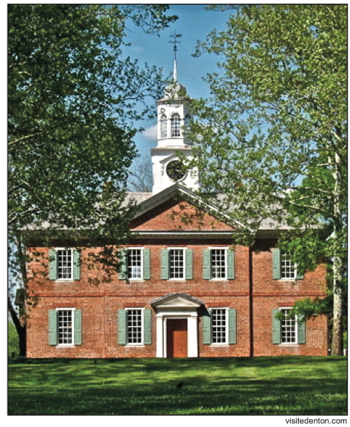
You won’t find a Walmart in Edenton (population 5,000 and slowly shrinking), but its trove of civic treasures includes a 1925 moviehouse, a 1939 baseball park and a 1767 courthouse (above right), the state’s oldest.

So why Edenton of all places? How did this charming, 300-year-old hamlet happen to offer all the essential ingredients for a world-class ritual-abuse panic? I wish I knew (and I wish Edenton did too).