Did fear of Bob Kelly keep women behind bars?

Jan. 25, 2012

I’ve heard again from the anonymous caller who responded to my ad in the Elizabeth City Advance addressing children involved in the Little Rascals case.

The caller reiterated her certainty that she had been sexually abused by Bob Kelly, but – to my shock – she expressed doubts about the degree of involvement of other defendants, especially the young women who worked at the day care.

“I don’t hold any grudges against them,” she said. “I think he made them do whatever they did – it wasn’t on their own.”

Why then would these women choose to stay imprisoned, when testifying against Bob Kelly would’ve won them instant freedom?

“They were scared of him,” she said.

Does that seem probable? Or even conceivable?

Robin Byrum, 19 when she was arrested, spent almost a year in jail before her bond was reduced from $500,000 to $200,000. Meanwhile, her husband took care of their 7-month-old son.

In “Innocence Lost: The Plea” (1997), Byrum explained why she had been tempted by but repeatedly refused the prosecutors’ deal: “…. I would not ever have to be separated from my child again. But then I’d have to live with the rest of my life that I (said I) did something when I didn’t do it.”
25 years of wrongful imprisonment – and counting

Jan. 23, 2012

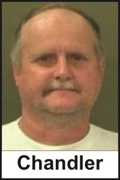
Last week I visited Avery-Mitchell Correctional Institution in Spruce Pine to talk to Junior Chandler, who soon will have served 25 years on charges strikingly similar to those in the Little Rascals case.

Junior, now 54, may well be the last still-imprisoned victim of the ritual-abuse contagion that swept the nation’s day cares in the ’80s and early ’90s.

I’ll be updating his case soon.

120123ChandlerIn Junior’s former life in the mountain town of Revere, he told me, he was close to his parents, his wife and two boys, his two brothers.

Early on, he and his brothers helped their uncle grow tobacco and corn. Before driving a van for the Madison County Day Care Center, he had worked for the Forest Service, the Department of Transportation and Southern Railroad. At least one job he gave up because it interfered with his softball tournaments and night fishing.

In prison, visits from his family became less frequent, and eventually his wife filed for divorce. “Two life sentences,” Junior says. “She couldn’t wait, you know.” And his sons couldn’t keep watching him aging away in his prison grays.

When his father died in 1997, he attended the funeral in handcuffs. He worries about his mother, who recently suffered a stroke.

He sleeps in a bunk bed in a dorm with 33 other inmates. His assigned janitorial job is cleaning meal trays. For relaxation he plays volleyball and horseshoes, watches Westerns on TV, reads a little. His only write-up was a scuffle not long after he arrived. “It’s learning to walk away and how to carry yourself,” he says.

Of course I was touched by Junior’s deep sadness and resignation. Sometimes I find it too easy to minimize the emotional havoc wrought by incarceration of the guilty – just imagine what it must be like for the innocent.

Prosecutors’ motto: But they’re still guilty!

Jan. 20, 2012

Although the West Memphis Three weren’t day care workers, their notorious case – most recently updated in HBO’s “Paradise Lost 3: Purgatory” – holds obvious parallels to that of the Edenton 7.

In both courtrooms voodoo justice ruled.

Most poignant to me, however, is that prosecutors in Arkansas and North Carolina shared a dedication to ensuring the defendants’ long-overdue release bore the least possible resemblance to exoneration.

In August 2011 the West Memphis Three were required to enter an Alford plea, maintaining their innocence but acknowledging that sufficient evidence existed to convict them.

On May 23, 1997, Nancy Lamb announced the decision not to challenge the overturned convictions of Bob Kelly and Dawn Wilson in order to “allow wounds to heal…. The paramount thing is not having to drag these children through this again.” Her timing seemed aimed – futilely, as it turned out – at averting the national outrage that would come four days later with the airing of the final episode of “Innocence Lost.”

Two years later, when the last charges against Kelly were dismissed, here’s how Joseph Neff of the News & Observer described the scene:

“The prosecutors in the longest, most expensive criminal case in North Carolina history picked a day when all attention was focused elsewhere to quietly throw in the towel.

“It was Sept. 15, as Hurricane Floyd churned northward toward landfall the next day, that Assistant District Attorney Nancy Lamb filed a two-page document with the Clerk of Superior Court in Edenton, dismissing eight counts of sexual abuse against Robert Kelly.”

Why would prosecutors let ‘monster’ walk?

Jan. 18, 2012

“One way or another, justice has failed miserably in the agonizing case of the Little Rascals Day Care…. Last week, eight years after launching an investigation into possible sex abuse at the center, prosecutors announced they were dropping all charges against those who worked at the center.

“That means one of two things:

“(1) Either the defendants originally charged with hundreds of allegations of sex abuse in the 1980s are going to go virtually unpunished for their unspeakable deeds; or

“(2) Those same defendants have been badly treated by an overzealous prosecution team that broke all the rules of fairness in winning flawed guilty verdicts….”

– Editorial in The Charlotte Observer, May 29, 1997

So was that “overzealous prosecution team” simply blindered true believers, or did they realize early on their case was rotten to the core?

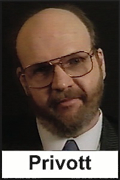
Defendant Scott Privott, who pled no contest and was released on probation after spending more than three years in prison, cuts through to the truth when he asks:

“Why did they offer me a plea? You know, if I’m supposed to be the monster that they said I was, if I did these crimes that they said I did, why would they offer me a plea?”

Why indeed, H.P. Williams?… Nancy Lamb?… Bill Hart?

The darkness that lurks behind Darkness to Light

Jan. 16, 2012

Darkness to Light is a Charleston-based nonprofit with the goal “End Child Abuse.” Since its founding in 2000, D2L claims to have trained adults in 48 states and 10 foreign countries in how to prevent, recognize and react to child sexual abuse. Among its allies: YMCAs.

Unfortunately, D2L is less than meticulous in associating itself with other organizations. This is a letter I sent D2L officials on Dec. 5:

Darkness to Light does a disservice to the public and to your cause when you include on your list of resources the Survivorship website.

120116BrickMugSurvivorship’s board president is Neil Brick, who identifies himself as “the founder of S.M.A.R.T. (Stop Mind Control and Ritual Abuse Today) at http://ritualabuse.us. He is a survivor of ritual abuse and a survivor advocate. He works on developing supports for survivors and getting information out to the general public about ritual abuse. He runs yearly ritual abuse conferences on the east coast of the United States every year at http://ritualabuse.us/smart-conference. Links to his presentation transcripts and research papers are http://ritualabuse.us/smart/neil-brick.”
S.M.A.R.T. is perhaps the most prominent organization still insisting that numerous day-care providers in the 1980s and early 1990s subjected children to “satanic ritual abuse.” Although the day-care panic eventually waned and courts freed nearly all the unfortunate defendants, S.M.A.R.T. continues to see abuse in every one of these cases – from McMartin to Little Rascals to Fells Acres, etc.

Like Scientologists and Holocaust deniers, S.M.A.R.T. has been banned from editing Wikipedia entries. Neither should its disinformation campaign be given a platform by Darkness to Light.

Darkness to Light has yet to respond to that letter or to a Dec. 30 follow-up soliciting “a statement explaining why you continue to support this organization.”  I’d be happy to publish such an explanation, but even happier to learn that D2L has cut its ties to the ritual abuse movement.

‘I am now convinced I was terribly wrong’

Jan. 13, 2012

For months I have been fruitlessly searching the record for a public apology from even one prominent perpetrator of the ritual-abuse day-care hoax. At last I have happened upon such a statement:

“I want to announce publicly that as a firm believer of the ‘Believe The Children’ movement of the 1980s, that started with the McMartin trials in California…. I am now convinced that I was terribly wrong… and many innocent people were convicted and went to prison as a result….

So who was this lone heroic figure who stepped forward, confessed his mistake and acknowledged the pain it had caused? Was it a repentant prosecutor or judge? A psychologist, perhaps?

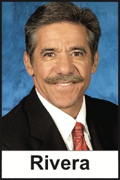
120113RiveraWell, no. It was Geraldo Rivera.

Of all the talk-show hosts who grabbed giddily, repeatedly and unquestioningly onto the latest claim of ritual abuse, it was Geraldo, starting in 1987, who went furthest over the top.

“Estimates are that there are over 1 million Satanists in this country…” he told viewers. “The majority of them are linked in a highly organized, very secretive network. From small towns to large cities, they have attracted police and FBI attention to their Satanic ritual child abuse, child pornography and grisly Satanic murders. The odds are that this is happening in your town.”

By Dec. 12, 1995, however, Geraldo had experienced a change of heart. That’s the night he hosted the CNBC special “Wrongly Accused and Convicted of Child Molestation.”

“He is to be commended for stating his new belief in public,” observed the invaluable religioustolerance.org.

“Unfortunately, a one-minute apology and recantation is hardly sufficient to reverse the damage done by many hours of sensational programming, grounded on misinformation.”

How much like Penn State were day-care cases?

Jan. 11, 2012

“It’s worth remembering, in the 1980s we had a whole spate of false accusations of… sexual abuse of children. The McMartin Preschool, all those supposed satanic cults in day care centers, turned out to be false…. It’s worth it to remind people of that.”

– Legal analyst Jeffrey Toobin, interviewed on CNN (Nov. 15) about the Penn State case

In fact, deep distinctions separate Penn State and the “multi-victim, multi-offender” – MVMO, in the sex-crime argot – accusations typified by McMartin and Little Rascals.

Since 1995, Ontario Consultants on Religious Tolerance has investigated 40 alleged MVMOs at 24 locations around the world. Number of substantiated instances of ritual abuse: zero.

According to its research, “Any criminal acts were non-ritual abuse by a single perpetrator… Almost all the crimes with which people were charged never happened.”

Regardless, Toobin’s reminder is a welcome counterpoint to the Judge Nancy Grace school of instant verdicts.

Among the costs of incarceration: a marriage

Jan. 9, 2012

Perhaps the most inexplicable of the prosecution’s targets was 40-year-old Scott Privott, owner of an Edenton video store and shoe repair shop.

Son of a district court judge, he served as president of the local country club. No evidence ever surfaced to support the rumor that Privott’s video store was a hub for child pornography or to counter his claim never to have even set foot on the Little Rascals premises. According to the prosecution, children at the day care identified him as a perpetrator.

120109PrivottIn April 1993 his bail was reduced from $1 million to $50,000, and he was released on bond from Chowan County Jail. Fourteen months later, Privott accepted the state’s offer of a plea of no contest, still insisting on his innocence, and received a sentence of time served with an additional five years probation.

He says he has been happily married for 14 years and doesn’t want to reveal where he now lives. I asked him to share some recollections about the case:

“Bob and I were more acquaintances than close friends. I played golf with him when he was the pro. Bob rented movies from my store, and he and many others would come by and have coffee and just talk. In fact, many of the accusing parents rented movies from me. (Bob Kelly suspects Privott may have been drawn into the case when Kelly’s truck was seen parked in front of the video store.)….

“In jail I spent the time reading and watching TV. We weren’t allowed newspapers, so I wasn’t sure what was being written about the case…. At times it was hard to keep my spirits up. I had gallbladder surgery and recuped at Central Prison in Raleigh and at McCain (Correctional Hospital in Raeford, closed in 2010)….

“Jail had just a walled-in area for outside activity, but at McCain I enjoyed being able to walk around the yard with others awaiting trial…I was in “safekeeping” and actually met some intelligent, thoughtful people. I never had any problems, as the majority knew the entire LRDC case was a farce….

“My wife came on Sundays, but as the years rolled on the visits were less and less, and then I noted a change I had been kind of expecting. She brought my mother with her, and in the later years she stood back and kind of let the visits be between mother and son. It turned out she had met someone new in her life. She didn’t have the nerve to tell me, but I figured it out….”

Does ‘convicting innocent people count as crime’?

Jan. 6, 2012

“Innocence Lost” aired too late to save the Edenton Seven, but its influence in deflating the nation’s ritual-abuse bubble is hard to exaggerate. Shock and outrage – and considerable ridicule of North Carolina justice – followed each of the three episodes.

Walter Goodman’s 1993 New York Times review pointed to “the likelihood that no crime was committed, unless convicting innocent people counts as a crime.”

“To say this tragic farce has resembled a hysterical witch hunt,” Phil Kloer wrote in the Atlanta Journal and Constitution in 1997, “is to demean witch hunts.”

Journalists, too, suffer ‘incurable blind spots’

Jan. 4, 2012

120104Pendergrast“A few years back, I met a fellow investigative journalist in North Carolina….The subject came around to the Little Rascals case. He assured me the day care workers were guilty….

“I told him about how the McMartin case in California had been the first nationally publicized case to use interviews that practically bullied children into reporting mythical, often totally implausible abuse. Little Rascals was a textbook case of the same kind of tactics, and Ofra Bikel’s three fine documentaries left no doubt about this terrible miscarriage of justice.

“Yet my friend refused to listen to any other evidence or point of view. It transpired that his wife had recovered ‘memories’ of sexual abuse – another subject on which he would hear no other evidence….

“I tell you this just to let you know I am familiar with cases in which otherwise objective journalists develop seemingly incurable blind spots.”

–  From a 1997 letter to Columbia Journalism Review by Mark Pendergrast, author of “Victims of Memory,” challenging criticism of the False Memory Syndrome Foundation