
Prosecutors staged revival of ‘spectral evidence’

130405SalemApril 5, 2013

“In the Little Rascals Day Care case testimony was given about children being attacked by sharks kept in a pool by the accused. No prosecutor believed this story, and had such tales been told by adults, their credibility would have been laughed at…. However, (two Edenton defendants) were convicted, because under a new precedent, obviously false stories by children were set aside in the minds of prosecutors and juries, because of the belief that testimony from children needed to be treated differently….

“In (the Salem Witch Trials of) 1692, as in the modern day-care cases, the heart of the episode was the claims of the accusers versus the denials of the accused. Jurors were forced to choose between two sets of competing claims with no independent verification for any of them. Although not all the accusers were children, many were, and the idea of protecting the children played a heavy role in the prosecutions.

“Accusers claimed that the specters of the accused hurt them…. This kind of uncorroborated evidence became known as ‘spectral evidence,’ and on the basis of that evidence convictions routinely occurred. Contrary to popular, modern representations, all this took place in an orderly manner in a special court set up to investigate the outbreak. Within the rules of the day, the accused people had fair trials, just as the (day-care defendants) had a fair trial.

“What brought the trials to an end was the growing belief by the elites in Massachusetts Bay Colony, especially the clergy, that spectral evidence could not be trusted…. The trials continued, but under a new court where spectral evidence was not admissible, (and) the convictions largely stopped….”

– From “No Finality in Fells Acres” by Bernard Rosenthal, author of “Salem Story: Reading the Witch Trials of 1692”

“In spectral evidence, the admission of victims’ conjectures is governed only by the limits of their fears and imaginations, whether or not objectively proven facts are forthcoming to justify them. (State v. Dustin, 122 N.H. 544, 551 (N.H. 1982)).”

– From “Spectral Evidence Law & Legal Definition

“Governed only by the limits of their fears and imaginations” – doesn’t that nail it!
Oh, those spoilsports, voicing ‘disbelief and skepticism’

April 3, 2013

In my fruitless attempt to extract a retraction from the journal Child Abuse & Neglect, I quoted only the abstract of “Sexual Abuse of Children in Day Care Centers” by Susan J. Kelley, Renee Brant and Jill Waterman.

But because the 1993 article continues to be cited in the literature – most recently in the International Journal of Law and Psychiatry – it deserves a more detailed review.

Most offensive to me is the authors’ use of ostensibly sophisticated statistics. For example: “The mean number of different types of sexual acts per child ranged from 5.3 sexual acts per child in (Kathleen Coulborn) Faller’s (1988) sample to 6.6 different types of sexual abuse per child in Kelley’s (1989) study.”

Can’t you just picture the authors’ computers straining under the weight of all their meticulous research? In reality, of course, the “mean number of different types of sexual acts per child” was… zero.

And the anecdotes! What ever were Kelley, Brant and Waterman thinking as their fingers typed such unfounded claims as these:

  • “Foreign objects used to penetrate children in day care center cases have included such items and pencils, needles, knives, scissors and crucifixes.”
  • “Allegations of pornographic photographs and videos being taken of children in day care center cases sometimes surface…. Unfortunately, in very few cases have law enforcement officials been able to locate the pornography.”
  • “Children who have been ritualistically abused describe participation in group ceremonies, use of chants and songs, adults dressed in costumes and masks, threats with supernatural powers….the sacrifice of animals, the ingestion of blood, feces and urine, and murders.”

Despite the authors’ unbridled certitude, they can’t help complaining that “One of the first complications in the evaluation of ritualistic abuse cases is the frequent disbelief and skepticism on the part of the professionals secondary to the bizarre and extreme nature of the allegations.”

“Complications,” indeed.

The limits of ‘unequivocal and undeniable evidence’

130401FestingerApril 1, 2013

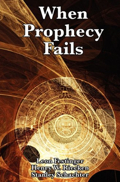
“Suppose an individual believes something with his whole heart; suppose further that he has a commitment to this belief, that he has taken irrevocable actions because of it; finally, suppose that he is presented with evidence, unequivocal and undeniable evidence, that his belief is wrong; what will happen?

“The individual will frequently emerge, not only unshaken, but even more convinced of the truth of his beliefs than ever before….”

– From “When Prophecy Fails” by Leon Festinger, Henry Riecken and Stanley Schachter (1956)

The three social psychologists studied the refusal of a cult of UFO believers to accept that their belief in an imminent apocalypse had been proven false. Seth Mnookin usefully dusts off this case in “The Panic Virus: A True Story of Medicine, Science and Fear,” his 2011 expose of the groundless claim that childhood vaccination causes autism.

Before the day-care ritual-abuse mania ran its course, its theorists and trophy hunters clung ever more tightly to a belief system with no rational means of support. Long after the phoniness of the Little Rascals prosecution had become clear to the world, Nancy Lamb managed to conjure up an unrelated abuse charge against Bob Kelly. And even today

For Little Rascals DA, mum was always the word

March 29, 2013

“ELIZABETH CITY – Attorneys for the seven defendants in the Edenton child abuse case want to know what techniques were used to elicit accusations from the children…. Prosecutors don’t want to tell them….

“(District Attorney H.P.) Williams would not address a reporter’s questions about how the Edenton investigation was conducted….

“Mr. Williams declined to say how the Edenton investigation grew from complaints by three families to its current size. He declined to say how they communicated with parents or whether a letter was sent out.

“He would not discuss who had interviewed the children or what interview techniques had been used….”

– From “Prosecutors won’t discuss techniques” in the Raleigh News & Observer (Feb. 25, 1990)

Two decades later Williams, though no longer district attorney, was still “not in a position to talk about it.”

Coincidentally – or not – the Little Rascals story shared Page 2C with one noting that “Social workers are trying to determine why reported cases of child abuse and neglect in North Carolina jumped 27 percent in 1989, while cases nationally are expected to rise only 3 percent or 4 percent….”

A consultant with the state Division of Social Services observed that “Any time you get a radical increase in the number of complaints, you’re probably getting a number of complaints of questionable validity…..Folks who make those reports need to use some common sense.”

Authorities misled parents by cherry-picking evidence

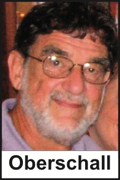
130306OberschallMarch 27, 2013

“Authorities fed… parents and public (in Edenton) a biased reading of the evidence, but few realized it was biased.

“Consider the following: John and David, two friends in the day care, are both questioned. John says he and David were both molested, but David says it didn’t happen. Thus the evidence is 50/50 on John and 50/50 on David. They can’t be both right.

“What now? If David keeps denying, he is dropped from the investigation, and the negative evidence on John exits with David. Meanwhile, John’s parents are not told that David denies, and John’s case goes ahead. From 50/50, the allegation has become 100 percent true.

“For this investigation to inevitably produce more victims of abuse, three things are necessary:

1. Parents are told that their child was named by others as abused, but not told that their child was not abused according to still other children.

2. Parents are told that denial by their child is a sign of abuse and that therefore the child should be questioned by therapists until he admits.

3. In some therapy sessions, the children do disclose even if they were not abused.

“Did the prosecution in the Little Rascals investigate in such a manner? The (North Carolina) Appeals Court certainly was of that opinion. It was the principal reason the convictions of Robert Kelly and Dawn Wilson were overturned.”

– From “Why False Beliefs Prevail: the Little Rascals Child Sex Abuse Prosecutions” by Anthony Oberschall in “Essays in Honor of Raymond Boudon” (2000)

Oberschall doesn’t use the term, but I’m reminded of the widespread and pernicious “file drawer effect” – that is, “the practice of scientific researchers to file away studies with negative outcomes.”

A DA unafraid ‘to go where the truth leads….’

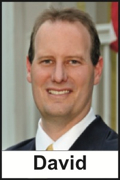
130325DavidMarch 25, 2013

“I really see us as sharing the goal of making sure this conviction rests on credible and substantial evidence. I’m going to go where the truth leads in this matter.”

– Jon David, district attorney in Brunswick, Columbus and Bladen counties,
responding to a request from the North Carolina Center on Actual Innocence
to review DNA evidence in the case of Joseph Sledge

Mandy Locke’s account in the News & Observer will inspire confidence in neither the competence nor the good faith of North Carolina justice. Sledge, imprisoned 34 years for a double murder, has encountered unspeakable frustrations in his pursuit of exoneration.

Like Willie Grimes, however, Sledge is at last benefiting from a district attorney unimpaired with willful blindness toward his office’s past failures.

If the Edenton Seven are ever able to achieve true exoneration from the state, it likely won’t be with the acquiescence of the prosecutors, much less their assistance.

Prosecutor believed he had closed the deal early on

March 22, 2013

“’There are some people who said we could have stopped after the first child testified.”

– District Attorney H.P. Williams Jr., expressing confidence that the jury was being persuaded by the state’s stream of child-witnesses against Bob Kelly, The Associated Press, Dec. 9, 1991

Potent weapon for N.C. DAs: court calendar

March 20, 2013

“Unlike their counterparts in every other state, North Carolina prosecutors have control over criminal court calendars.

“In the Little Rascals case, prosecutors used their trial-scheduling authority to let defendants wait for years before proceeding with their cases. They have held the power of the calendar over (Bob) Kelly for a decade without having to account to any other government authority.”

– From “Little Rascals Day Care case still not over” in the Raleigh News & Observer (Jan. 4, 1999)

Almost nine more months would pass before prosecutors dropped the last charges against Bob Kelly.

Despite efforts at reform, district attorneys in North Carolina still maintain near total control over court calendars.

Could N&O have thwarted ‘prosecutor gone wild’?

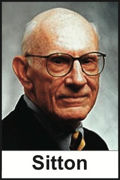
130318SittonMarch 18, 2013

“When I look back, I think my greatest mistake (was) my failure as editor of the News & Observer to make sure we had a top-notch investigative reporter on the Little Rascals case in Edenton.

“Our regional person was adequate as a regional correspondent, a full-time staffer, but he was not the person to see what was wrong with this case and to do the necessary digging to root it out.

“That prosecutor had gone wild, eaten up by ambition, I suppose, to hang these people, these people who operated the Little Rascals Day Care Center, no matter how.

“…All the kids talked about being borne through the air this way and that way and flying all over, and it was crazy stuff.

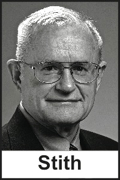
130318Stith“As it turned out, (the Edenton Seven were eventually released), but it wrecked their lives forever. And I still feel sorry about that, still feel sorry about it.

“I think had we sent someone like Pat Stith down there, that would have been it.

“But see, at that time, Edenton already was a pretty far reach for the News & Observer…. (Our) pulling out of eastern North Carolina (to cut expenses) might have affected my thinking (about) whether we were really responsible for doing something about that miscarriage of justice.”

– From an interview with Claude Sitton, editor of the Raleigh News & Observer from 1968 to 1990 (Southern Oral History Program, Southern Historical Collection, UNC Chapel Hill, July 12, 2007)

‘No innocent person should have to endure….’

March 15, 2013

“To the extent that we may have contributed in any way to the public perception that you might have been involved in this crime, I am deeply sorry.

“No innocent person should have to endure such an extensive trial in the court of public opinion, especially when public officials have not had sufficient evidence to initiate a trial in a court of law.

“We intend in the future to treat you as the victims of this crime, with the sympathy due you because of the horrific loss you suffered.”

– From a letter hand-delivered to John Ramsey, father of JonBenet Ramsey, by Boulder, Colo., District Attorney Mary Lacy in 2008

Just a reminder that, however difficult it is for prosecutors to admit their mistakes, it is not impossible. Other than pride and self-righteousness, what stands in the way of an apology from H. P. Williams, Bill Hart and Nancy Lamb to the Edenton Seven?