Edenton newspaper shed little light on case

130313LoomisMarch 13, 2013

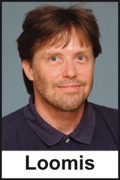
In researching his master’s thesis, “Modern Witch Hunts: How Media Have Mishandled Ritual Child-Sex-Abuse Cases,” UNC Chapel Hill journalism student David O. Loomis focused on the inadequate coverage provided by the weekly Chowan Herald in Edenton.

“North Carolina law,” Loomis acknowledged, “prohibits official disclosure of information about ongoing criminal investigations. Under the circumstances, gathering information about questionable interrogations conducted in therapy sessions would be a difficult and complex undertaking for a small reporting staff on a tight budget….”

The comments he elicited from Jack D. Grove, former managing editor of the Herald, reflect the challenge stories such as Little Rascals present tiny newsrooms – and the severely limited guidance they are able to make available to readers in forming opinions:

On his journalistic experience: “I was never a professional reporter.”

On being almost three months behind the Elizabeth City Advance in starting to cover the story: “In a small town like Edenton, reputations are at stake. Reputations are everything in a small town.”

On relations with prosecutors and police: “The district attorney became our prime source…. I didn’t ask questions of the Police Department at all, because I knew what the answers were going to be…. I did ask Brenda Toppin, who I did not know was lead investigator, but I got an uncharacteristic cold shoulder. She said, ‘I can’t comment on an ongoing investigation.’ That was interesting.”

On the newsroom budget: “I could only make long-distance calls when the boss would let me. He never refused. But he had to approve.”

 On outside pressure: “I was approached by several influential businessmen who clouded up and rained all over me for putting a (Little Rascals) story on the back page. I said, ‘Go tell Pete Manning (the publisher), don’t tell me.’ These businessmen, almost all parents of Little Rascals children, went into a closed-door meeting with Pete. We never again had a story anywhere but on the front page after that.”

Courtesy of David Loomis, “Modern Witch Hunts” is now available on the Bookshelf of case materials on this website.
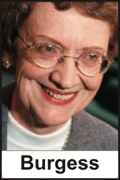
The unsinkable Ann Wolbert Burgess

120709BurgessMarch 8, 2013

“Over 15 years ago, a number of children were sexually abused while attending three different day care centers sponsored by military services…

“This is the fourth follow-up interview with parents of 42 (of those) children….

“(In 1984 children at West Point day care) reported that the perpetrators wore masks and black robes. Pencils and fingers penetrated vaginas and rectums. Children were threatened with harm to themselves and their parents if they told that they witnessed the abuse of other children….

“After extensive investigation, the federal prosecutor declined to bring the case to trial due to the young ages of the children and the fragility of their memories….

“One lingering source of distress for the parents was that two of the criminal cases (Presidio and West Point) fell apart. It seemed to them as if reporting the abuse did not matter. This also added to the mystery of conspiracy that surrounded these two cases….”

– From “Children’s Adjustment 15 Years After Daycare Abuse” by Ann Wolbert Burgess and Carol R. Hartman (Journal of Forensic Nursing, Summer 2005)

Although Burgess’s career-making wrongheadedness isn’t news, I was still surprised to find her clinging to the ritual abuse hoax as recently as 2005. Prosecutors’ cases “fell apart”? – must be a “conspiracy”!

But it was Burgess, after all, whose conclusion that children in the West Point case had been ritually abused (with the obligatory “masks and black robes”) compelled the government to settle a civil suit by parents for $2.7 million. To acknowledge her error would require quite an “Oops!” wouldn’t it?

Footnote: I’ve got a previous commitment, but if you’re in Nashua, N.H., today, you can see Burgess honored by the American Psychiatric Nurses Association.

An expertise ‘contrary to science and common sense’

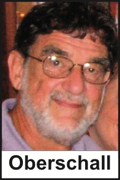
130306OberschallMarch 7, 2013

Anthony Oberschall’s “Why False Beliefs Prevail: the Little Rascals Child Sex Abuse Prosecutions” appeared in “Essays in Honor of Raymond Boudon” (2000).

Most saliently, the UNC sociologist argues that “hysteria” and “moral panic” are inadequate to describe what happened in Edenton. Rather, he sees the town – and the Little Rascals defendants – as victims of the purveyors of “pseudoscience”:

“When child sexual abuse became a national issue, the medical profession, academic psychology and social science were just starting to study it scientifically…. The legal profession lacked experience with trial testimony of pre-schoolers and admission of hearsay testimony by parents and therapists….Meanwhile thousands of child sex abuse allegations had to be dealt with.

“In the absence of proven knowledge, a child sex abuse industry of self-appointed ‘experts’ based on pseudo-science filled the demand for training and informing child protection service workers, social workers, police investigators, prosecutors, therapists and others…. They were convinced they were saving America’s children, even though their methods and knowledge were contrary to science and to common sense. In Edenton, the prosecution and the investigators relentlessly labored to supplant common sense with false beliefs based on pseudo-science, (and) they succeeded….”

Working with UNC journalism student David Loomis on his master’s thesis detailing news coverage of the case, Oberschall “tried to survey Edenton households by mail (picked names at random from a phone book), but got less than a 10 percent return rate. It was obvious people there didn’t want anything to do with an outsider, a scholar.”

Rebuffed, Oberschall drove to Edenton himself and conducted perhaps a dozen interviews, which he made use of both in “Why False Beliefs Prevail” and in this more detailed draft working paper from 2010.

UNC sociologist sought to deflate moral panic

130306OberschallMarch 6, 2013

Anthony “Tony” Oberschall, professor (now emeritus) of sociology at UNC Chapel Hill, wrote extensively – if not prominently – about the insanity of the Little Rascals case. How was Oberschall able to resist the storyline that seduced so many others?

“Before retiring from UNC in 2005,” he recalls, “I taught in universities for 40 years. One of my fields of writing and research concerned collective behavior – collective myths, false beliefs, rumors, how they originate and why they are believed.

“As the Little Rascals prosecution unfolded right before my eyes (actually, as reported in the News & Observer), it became obvious to me that this was but one more instance of moral panic, false beliefs and miscarriage of justice….”

Oberschall likens the prosecution narrative to “the widely believed Iraqi WMD story disseminated by the Bush administration in 2002. Unthinking acceptance of what the authorities are asserting, alas, happens all too often.”

In early 1993, Oberschall sent the N&O both an op-ed column and a response to a Dennis Rogers column, but neither appeared nor drew a response from the paper. (They have now been posted on the Bookshelf of Case Materials on this site.)

“At that point,” he says, “having been stonewalled, I decided to research Little Rascals in depth and wrote several times about it in scholarly publications in subsequent years.”

More about Oberschall’s research in Thursday’s post.

UNC experts failed to bring rationality to case

March 4, 2013

“What did Mark Everson, Dr. (Jean C.) Smith, Dr. (Desmond K.) Runyan, Dr. (Doren D.) Fredrickson… all say about behaviors of children who are sexually abused?”

 – From Nancy Lamb’s closing argument in the trial of Bob Kelly (March 23, 1992)

Although Lamb was understandably pleased with her parade of expert witnesses, their testimony brought only discredit to themselves, to their professions and to the University of North Carolina at Chapel Hill, especially its School of Medicine.

The prosecution called on psychologist Mark “Where there’s smoke….” Everson to explain away the child-witnesses’ wild inconsistencies and on pediatricians Smith, Runyan and Fredrickson to serve as “educators of the jury” about the case’s dubious physical evidence. (As detailed in this article in the Journal of Child Sexual Abuse, the pediatricians overreached but at least testified with less enthusiasm and more caution than Everson.)

One Chapel Hill faculty member, however, wasn’t fooled by the funhouse mirrors. I’ll be writing about sociologist Anthony Oberschall in Wednesday’s post.

Weighing the evidence vs. ‘betraying the children’

March 1, 2013

“Now, you can ask yourself why did the jury believe these things? How could the jury believe that, as in the Amirault (day-care ritual-abuse) case, old Mrs. Amirault, one of the most upright of citizens, had suddenly turned at the age of 67 into a child molester who raped children?

“She was accused and convicted of inserting a stick into the body orifice of a little boy, tied him to a tree stark naked in front of everyone, in front of the house in Massachusetts, and the children all attested to this, the ones that were part of the case. Now, who would believe this?…

“But if you have a prosecutor who tells the jury, ‘Here are all of these brave children. These brave children have come forward to ask that you credit their story because they have endured so much suffering, and if you don’t do this, you’re betraying the children’ — it is not easy to find a jury that is stalwart enough to say, ‘Hey, you know, this really is a pile of nonsense.’”

– From a C-SPAN “Booknotes” interview with Dorothy Rabinowitz, author of “No Crueler Tyrannies: Accusation, False Witness and Other Terrors of Our Times” (May 4, 2003).

‘Make up any old nonsense’ and watch it spread

Feb. 27, 2013

“The difficulties in debunking blatant antireality are legion. You can make up any old nonsense and state it in a few seconds, but it takes much longer to show why it’s wrong and how things really are.

“This is coupled with how sticky bunk can be. Once uttered, it’s out there, bootstrapping its own reality, getting repeated by the usual suspects….”

– From “Debunking the Denial: ‘16 Years of No Global Warming’” by Phil Plait at Slate.com

‘Give child’s testimony same weight’ as adult’s?

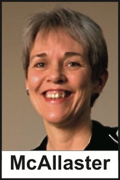
130225McAllasterFeb. 25, 2013

“The 99 guilty verdicts against (Bob) Kelly appear to have set a benchmark for such cases: that youthful witnesses can have enough credibility to win convictions on their word alone.

“‘This validated child witness testimony,’ said Carolyn McAllaster, who teaches a child advocacy clinic at Duke University’s law school and trial practice at the University of North Carolina School of Law.

“‘I think the reason a lot of prosecutors hesitate to take these cases is they fear these children won’t be believed by juries,’ she said. ‘They should give a child’s testimony the same weight they would give an adult’s testimony. I think that children are very believable and that their testimony can be judged on its own merits.’ ”

 From “Rascals verdict affirms children’s credibility” in the Raleigh News & Observer (April 26, 1992)

McAllaster has gone on to become director of the AIDS Legal Project and a clinical professor of law at Duke.

Has she changed her mind about the credibility of child witnesses?

I asked her.

She hasn’t responded.

Double-decker graves, portable crematoriums… and so on

Feb. 22, 2013

“The argument for an organized network of satanists is virtually irrefutable. Ritual abuse survivors’ reports contain many fantastic elements. Rather than regard the implausible  features of these accounts as grounds for skepticism, however, proponents of the satanic conspiracy theory insist that it is precisely these elements than mean the stories must be true. No one, they insist, would or could make up such bizarre, macabre stories.

“Sometimes proponents retreat to the position that satanists commit bizarre activities precisely so that victims will not be believed when they recount their experiences. This latter tack illustrates the problem of infinite regress (a sequence of reasoning or justification that can never come to an end).

“When confronted with the difficulty of concealing so many homicides, proponents explain that satanists dispose of bodies… in double-decker graves. Challenges to this argument lead to assertions that bodies are burned. The observation that bodies cannot be burned in ordinary fires leads to the assertion that they are cremated. The problems of gaining access to crematoriums lead to contentions that satanists use special portable crematoriums. Further protestation may yield the argument that child-witnesses may be mistaken about some deaths because satanists sometimes use life-like dolls rather than live humans to terrorize children into silence.

“The continual retreat from the lack of confirming evidence shifts the burden of proof from those seeking to demonstrate a satanist network to those questioning such assertions.”

– From “The Satanism Scare,” edited by David G. Bromley (1991)

DA Williams to jury: Don’t consider the source

130220OzFeb. 20, 2013

“Don’t focus on the question, focus on the answer.”

– District Attorney H. P. Williams, urging jurors to ignore the leading questions that therapists asked child-witnesses to elicit accusations against Bob Kelly

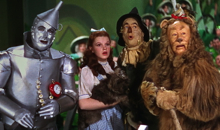
“Pay no attention to that man behind the curtain.”

– The Wizard of Oz