Therapists ‘overzealous… inadequately trained… unethical’

120217ShopperFeb. 17, 2012

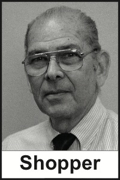
“The named children were sent to predominantly four therapists (Betty Robertson, Judy Abbott, Susan Childers and Michele Zimmerman).

“The therapists were not only overzealous and inadequately trained, but also proceeded in an unethical fashion with the children. Reporting frequently to the district attorney’s office, they provided more names of children and adults and more specific allegations of abuse. These were not spontaneous names and allegations, but data specifically and persistently introduced by the therapists. The personal and familial issues that the children brought into the so-called therapy were ignored….

“From my review of the therapists’ notes of the 17 children who testified, it was clear the therapists were not treating these children psychotherapeutically, but were agents of the prosecution in preparing children to testify falsely with credibility…..

“Significantly, those parents who took their children to therapists in other communities or avoided these four therapists had no allegations of sexual abuse and their children were symptom-free. In contrast, the children who provided stories of sexual abuse became increasingly symptomatic over time, and their behavior became more disturbed.”

– From “What I learned from the Edenton Little Rascals sex abuse trial” by
Moisy Shopper, M.D. (in the peer-reviewed journal Psychoanalytic Inquiry, 2009)

Dr. Shopper testified as an expert witness for the defense.
A last chance at freedom – or the end of the road

120123ChandlerFeb. 15, 2012

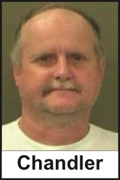
I asked Mark Montgomery for an update on Junior Chandler’s latest appeal of his two life sentences for child sexual abuse:

“There are two prongs to the appeal. First, I am asking the N.C. Supreme Court to simply do the right thing by Junior. The Court said in 2010 that expert testimony like that in Junior’s case is (and was) inadmissible. That being the case, it is fundamentally unfair for Junior to be facing the rest of his life in prison, when many defendants have been freed because this sort of testimony was used against them at trial.

“Second, Junior’s lawyer objected to the testimony but did not raise the issue on appeal. I argued in a motion in Superior Court that the lawyer was ineffective for abandoning the issue. The Superior Court judge denied the motion without a hearing. If the Supreme Court will not itself set aside Junior’s convictions, it should at least require a hearing on trial counsel’s conduct.”

This is how the process works: “Petitions such as Junior’s go to one of the six associate justices. He or she decides what should be done and then presents the case to the court as a whole in a monthly (sort of) closed door meeting. The justices then vote on whether to grant the petition. If the Court grants the petition, it usually requires full briefs from both parties, but may decide the case of the basis of the petition and the State’s response alone.

“If it denies the petition, that’s the end of the road.”

The court could respond as early as April 13, according to this chart of petitions allowed and denied.

UNCG professor showed no tolerance for skepticism

120213HurdFeb. 13, 2012

“It is evident that, although mistakes were made in the handling of the (Little Rascals) case, these children definitely were sexually abused by one or more individuals at the day care center. To suggest otherwise is to revictimize these smallest victims.

“As a professor of social work at UNCG whose specialty is child abuse, I would like the public to be aware that research has shown that 97-99 out of 100 children who report that they have been sexually abused are telling the truth. When a child tells you that an unauthorized adult is ‘playing doctor’ with him/her, it is highly likely that he/she is describing some sort of abuse.

“If you do not believe the child, you become part of the victimization of that child. If you believe that detection and prosecution of child abuse cases are witch hunts, then you protect child molesters and allow them to continue to traumatize children. I cannot imagine that the responsible people of this state want to put themselves on the side of criminals who abuse children.”

Elisabeth Porter Hurd, Greensboro

– From a letter to the editor of the Greensboro News & Record, June 9, 1997

Does Dr. Hurd still believe that the Little Rascals children “definitely were sexually abused”? And that to doubt the prosecution’s case was to “protect child molesters and allow them to continue to traumatize children”?

Last week I asked Dr. Hurd whether she might have changed her mind – so far no response.

An antipodal view: What would Bronte have thought?

120210BronteFeb. 10, 2012

“(The scene of children screaming invective at a prison-bound Bob Kelly) was… the graphic heart of the documentary….

“The car pulled away, and they began to giggle self-consciously. A second or two of awkward silence heightened the artificiality of the moment, the sense of a construct that the girls fully understood. Then an older woman (presumably a mother) moved into the silence, and began to clap and cheer. A few others joined in in desultory fashion. ‘Let’s go get something (to) eat,’ said the mom….

“By chance, I had just finished reading ‘The Professor,’ a minor novel of Charlotte Bronte’s. Like most Bronte novels it was laced with leisurely reflections, and this one struck me powerfully enough to note down: ‘Human beings – human children especially – seldom deny themselves the pleasure of exercising a power which they are conscious of possessing, even though that power consists only in a capacity to make others wretched.’

“As those children shrieked at Bob Kelly through the glass of the police car window, I wondered if there wasn’t more than a whiff of that pleasure in power in the air.

“And then I remembered this town is called Eden, and we’ve known for a long while that the darnedest things happened in Eden.”

– TV critic Ron Cerabona, reviewing “Innocence Lost: The Verdict”
in the Canberra (Australia) Times, Oct. 18, 1998

The long goodbye: ‘See you in a million years’

Feb. 8, 2012

The indignities endured by Little Rascals defendants were unending and sometimes bizarre. A University of Georgia professor enlisted by the defense to conduct a penile plethysmograph reported that Bob Kelly was aroused by videotapes and slides of only normal heterosexual activity. But the prosecution’s expert countered that not every sex offender would be caught by the test.

Fearful of a clear-thinking jury, prosecutors never missed an opportunity for gratuitous vilification. Nancy Lamb histrionically held up gold-framed portraits of 12 children as she denounced Kelly as “an evil, evil man.” H.P. Williams Jr. saw “no reason he should be restored to the community at any time.”

And how’s this for a melodramatic climax, as reported by the Associated Press:

“Some of Mr. Kelly’s victims, clutching dolls and teddy bears, sat in the front row of the spectators’ section as Judge D. Marsh McLelland… passed sentence (of 12 consecutive life terms). Later, as guards escorted Mr. Kelly out of the courtroom to a police car for the trip to a state prison in Raleigh, some of the children yelled at him, ‘I hate you!’… ‘See you in a million years!’ ”

Therapist, prosecutor worked 4-year-old as tag team

Feb. 6, 2012

Michele L. Zimmerman, now associate professor emeritus of psychiatric nursing at Old Dominion University, was one of four therapists who collaborated with prosecutors in interviewing Bob Kelly’s supposed victims.

Their teamwork is obvious in this clumsily coercive set-up by Zimmerman and District Attorney H.P. Williams Jr. (cited by Dr. Moisy Shopper, a St. Louis psychiatrist who reviewed interview tapes for the defense):

Zimmerman to 4-year-old boy: “Mr. Williams needs to know what he (Kelly) did to you to keep him in jail.”

Williams: “I’m in charge of the police. I decide who goes to jail.”

Last week I asked Zimmerman two questions: Do you still believe the Little Rascals defendants were guilty? Were the children actually abused?

Her response:

“Patient confidentiality laws do not permit me to comment on this case, as the therapist-client privilege still exists. It is not my role to comment on the defendants’ guilt or innocence, as that is the charge for the finder of fact.”

In fact, Zimmerman did comment publicly at least once in the aftermath of Kelly’s conviction: “There are people in Edenton who are still mad at one another because Person A did not tell Person B about the abuse.”

A final question, Ms. Zimmerman: What if Person A simply had nothing to tell?

Privott’s allies found way around $1 million bail

120203LancasterFeb. 3, 2012

Glenn Lancaster, a Raleigh pay-phone executive, played a key part in facilitating life-after-incarceration for both Bob Kelly and Scott Privott.

I asked Glenn to recall how he became involved in the Little Rascals case:

“I had lived in Windsor, about 20 miles west of Edenton. I knew some of the Little Rascals parents but none of the Edenton Seven.

“I hadn’t paid that much attention to the case, but the truth seemed pretty clear, especially when the prosecution couldn’t persuade even one of the seven to turn state’s evidence.

“After I moved to Cary, I saw a story about Scott in the News & Observer (in 1993). He had been in (the Chowan County) jail for more than three years with no trial in sight and a $1 million bond.

“I wrote Scott offering to send him magazines and to cover some gas money for his wife to visit, as she had moved to the Outer Banks. He put me in touch with a lady in Edenton, who told me about other supporters.

“I called Scott’s attorney and asked why he hadn’t tried to lower the bail. I told him we could cover $50,000 and I would give Scott a job and a place to live.

“When the attorney asked the judge to reduce the bond to $50,000, he agreed on the spot! Over the next few days, several people came to the Clerk of Courts office in Edenton and posted land and cash. One man from Washington, N.C., brought a $25,000 check. When it was all counted, they were still a few hundred dollars short. I was told the Clerk of Court reached into his own pocket and posted the difference.

“Everyone in the jail knew Scott was innocent, and as he left jail the staff shook his hand. Scott’s wife showed up to tell him she was now living with a UPS driver and he could not come to her home. A supporter loaded up a cardboard box of Scott’s jail property – 6 or 8 paperback books, a radio and the stack of clothes his wife had brought him – and delivered him to a hotel in Cary around 5 p.m. There I met and spoke to Scott for the first time.

“When we returned to the hotel two hours later to take him to dinner, he told me he had spent most of that time standing in the shower. It was the first time in over three  years he could set his own temperature and shower as long as he chose.”

That’s our case, and we’re sticking to it (cont.)

120201ParadiseFeb. 1, 2012

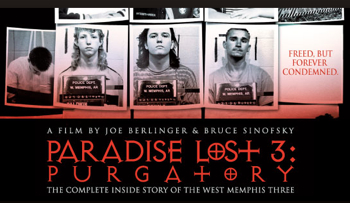
The HBO documentary “Paradise Lost 3: Purgatory”  surely deserves its Oscar nomination, although the only edge it holds over Ofra Bikel’s “Innocence Lost” trilogy of the ’90s is its happy-tears finale: the three defendants walking out of prison.

After much lawyering, the West Memphis Three in August accepted an Alford plea that allowed them to go free,  while protecting the state of Arkansas from a wrongful-imprisonment  suit and the national embarrassment of a retrial.

I had to laugh at this exchange from the ensuing press conference:

Reporter: “Will the state continue to investigate this case if additional information is brought forth, or is the case closed?”

Prosecutor Scott Ellington: “I have no reason to believe there was anyone else involved in the homicides of these three children but the three defendants who pled guilty today.”

Defense attorney Dennis Riordon: “Does anyone believe that if the state had even the slightest continuing conviction they were guilty that it would have let these men go free today?”

If H.P. Williams Jr., Nancy Lamb and Bill Hart were watching – unlikely, given the spotlight shone on unjust prosecution – no doubt they would have admired Ellington’s resolve in the face of reality.

Junior Chandler victimized by overreaching experts

111017MontgomeryJan. 31, 2012

Expert vouching.

That odd little legalism is the crucial issue in Junior Chandler’s latest – and perhaps last – shot at justice. Durham attorney Mark Montgomery has just filed an appeal on Junior’s behalf in the N.C. Supreme Court.

In Junior’s 1987 trial in Buncombe County, the prosecution ran out no fewer than six expert witnesses, including three pediatricians.

Each expert testified that Junior’s alleged victims had in fact been sexually abused “as they described” – but none could cite definitive physical evidence on which they based their validation.

In the years since, higher courts have seen the reversible error of those ways. Expert vouching is now inadmissible in the absence of physical evidence “diagnostic of” – not just “consistent with” – sexual abuse.

The case against Junior was weak and weird on all fronts. No credible eyewitnesses or physical evidence. No storyline that made a lick of sense. (Although prosecutor Bill Hart must have liked the kidnapping-and-boat-ride scenario – he called on it again four years later in the Little Rascals trial.)

Only four children testified against Junior, accounting for less than 2 percent of the 1,407-page trial transcript. Some claimed to have been abused by… Pinocchio. And jurors never heard from those children on Junior’s bus who denied seeing abuse.

Just how important was expert vouching in imposing Junior’s two consecutive life sentences?

On all charges supported by expert vouching the jury found him guilty. On all charges not supported by expert vouching it found him not guilty.

Montaigne and St. Augustine, of course, were never DAs

120127MontaigneJan. 27, 2012

In “The Science of Conjecture: Evidence and Probability Before Pascal” (2002), James Franklin points out that Montaigne opposed witch trials for their lack of evidence.

“I am of St. Augustine’s opinion,” Montaigne wrote, “that ‘ ’tis better to lean towards doubt than assurance, in things hard to prove and dangerous to believe’….

“After all, ’tis setting a man’s conjectures at a very high price, upon them to cause a man to be roasted alive.”