Perdue removes one stain, leaves another

Jan. 2, 2013

What a bittersweet moment, reading Gov. Bev Perdue’s statement announcing her pardon of innocence for the Wilmington 10.
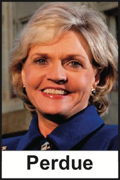
130102PerdueSurely, for the six surviving defendants, the pardon represents far too little justice, far too long delayed. But so many of Perdue’s words apply poignantly to a more recent “dark chapter in North Carolina’s history” – the prosecution of the Edenton Seven:

“I have decided to grant these pardons because the more facts I have learned… the more appalled I have become about the manner in which their convictions were obtained….

“This conduct (of prosecutor Jay Stroud) is disgraceful. It is utterly incompatible with basic notions of fairness and with every ideal that North Carolina holds dear. The legitimacy of our criminal justice system hinges on it operating in a fair and equitable manner…. That did not happen here. Instead, these convictions… represent an ugly stain on North Carolina’s criminal justice system….

“Justice demands that this stain finally be removed. The process in which this case was tried was fundamentally flawed….”

As noted previously, state government has continued to withhold exoneration from the Little Rascals defendants. In addition to these reasons that the Edenton Seven haven’t matched the Wilmington 10 in capturing the public eye, there is this notable difference in the two cases:

No one involved in prosecuting the Wilmington 10 remains in office, and the current Pender County district attorney has accepted Perdue’s decision without complaint. But two decades after prosecuting the Edenton Seven, Bill Hart and Nancy Lamb remain on the job, no doubt ready to beat down any hint of exoneration.
‘A state lost the ability to see clearly’ – again

120813CooperDec. 31, 2012

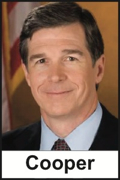
Anticipating Attorney General Roy Cooper’s 2007 statement dismissing charges against the lacrosse defendants, Duke law professor Paul Haagen said,

“The critical thing could be the wording. It could simply say the state can no longer prove its case, which would be a very harmful outcome for the community, (or it) could provide a full accounting of why the case should never have been brought.”

As it turned out, Cooper – elbowed along by the Duke students’ phalanx of top-shelf lawyers – chose the road less traveled by prosecutorial bitter-enders such as H. P. Williams, Nancy Lamb and Bill Hart:

“In the rush to condemn, a community and a state lost the ability to see clearly…. I think a lot of people owe a lot of apologies to a lot of people.”

Cooper’s words were appropriate to end the case of the lacrosse defendants – and they would be just as appropriate to end the case of the Edenton Seven.

In search of ‘clues or indicators’ for ritual abuse

Dec. 28, 2012

Let’s not leave behind “Ritual Abuse: What It Is, Why It Happens, and How to Help” without considering Appendix B, “Similarities in the Lives of Ritual Abuse Survivors.”

Author Margaret Smith “asked survivors to note any clues or indicators in their lives that may have suggested they were ritually abused as a child.” She then “organize(d) these responses into meaningful categories.”

Like the symptom charts of psychologist Catherine Gould, these “meaningful categories” strain to make the wildly anecdotal seem scientific.

“Reactions to Objects That Trigger Memories,” for instance, includes not only “Preference for red meat,” but also “Hated read meat. I have been a vegetarians since I was a child.”

“Indicators from Childhood or Adult Behavior” covers both “Threw up a lot” and “Would never allow myself to vomit.”

And just what manner of abuse might be revealed by “clues” such as – I wish I were kidding – “Addicted to book reading”?

A bit of doubt creeps into claims of child abuse

Dec. 26, 2012

By 1993 the moral panic was at last retreating from therapists’ offices, courtrooms and the media. That timing gives “Ritual Abuse: What It Is, Why It Happens, and How to Help” a peculiar place in its genre.

Although the pseudonymous “Margaret Smith” is a supposed “survivor and researcher of ritual abuse,” her advocacy lacks the blind certitude of a “Nursery Crimes: Sexual Abuse in Day Care” (1988) or a “Don’t Make Me Go Back, Mommy: A Child’s Book about Satanic Ritual Abuse” (1990).

“If there is even a small chance that one ritual abuse claim is true,” Smith begins, “we owe it to all potential victims to explore the problem of ritual abuse in greater depth.” Such unexpected tentativeness!  Is she doubting even her own claim of victimhood? Or did an editor at HarperSanFrancisco awaken just in time to insist on at least a façade of rationality?

Unfortunately, the rest of the book alternates Smith’s first-person accounts of her ritual-abuse-caused “multiple personality disorder” with a predictable rollout of junk statistics. Could anyone be surprised, for instance, that among “adult survivors of ritual abuse,” fully 84 percent reported having witnessed “mutilation or killing of animals/humans”?

‘Attached to their convictions’ – and then some

120523BeaverDec. 24, 2012

“Why prosecutors sometimes fight post-conviction evidence so adamantly depends on each case. Some legitimately believe the new evidence is not exonerating.

“But legal scholars looking at the issue suggest that prosecutors’ concerns about their political future and a culture that values winning over justice also come into play. ‘They are attached to their convictions,’ (says Brandon Garrett, a law professor at the University of Virginia), ‘and they don’t want to see their work called into question.’ ”

– From “The Prosecution’s Case Against DNA” in the New York Times Sunday Magazine (Nov. 25, 2011)

“Attached to their convictions,” indeed. Nancy Lamb was so attached that in 1996, after Bob Kelly’s 99-count conviction was overturned, she rummaged around the office and turned up yet another molestation claim – this one from two years before the Little Rascals arrests.

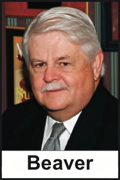
Gerald Beaver, Kelly’s attorney, pointed out that the law requires any report of sexual abuse to be investigated immediately and called police investigator Brenda Toppin, who testified that she had told Lamb about the claim in 1992. Lamb denied any recollection of Toppin’s comment.

“All of this ‘We care about the children’ kind of went down the drain after the conviction,” Beaver said. “It was only when (Kelly) successfully appealed and was no longer pulling 12 consecutive life sentences that the state felt compelled to go out and find this witness.”

As usual, however, time proved no object for prosecutors dedicated to making life miserable for Little Rascals defendants. It would be 1999 before they dropped the final charge against Bob Kelly.

Oh, those consequences of imaginations run amok

Dec. 21, 2012

“In the accusatorial post-McMartin climate, day care providers… took measures to protect themselves from false allegations. They installed video cameras to record all of their activities, opened up private spaces to public view by taking down doors to bathrooms and closets and, fearing the act now could be misinterpreted, stopped hugging and holding their young charges.

“State legislatures… hurriedly mandated the fingerprinting and criminal records check of all current and prospective day care providers; state licensing agencies tightened regulations and by legislative fiat were given more teeth to enforce them. Yet insurance liability premiums soared, forcing many small day care centers out of business and many more, unlicensed and uninsured, to go underground.

“Heralded at the start of the (1980s) as playgrounds for children, day care centers were feared at its end as playthings of the devil.”

– From “The Devil Goes to Day Care: McMartin and the Making of a Moral Panic” by Mary De Young in the Journal of American Culture (April 1, 1997)

Second to none was North Carolina’s overreaction, highlighted by the creation of “interagency task forces.”

Skeptics not welcome where ‘awareness’ rules

Dec. 19, 2012

“Down with skepticism, up with awareness.”

– Button worn at a conference on “multiple personality disorder” (hat tip, religioustolerance.org)

Six words that say it all, from MPD to satanic ritual abuse to recovered memory therapy.

There’s plenty to be said for “awareness,” of course – just not as a euphemism for “gullibility.”

Gun lobby knows that public outrage will subside

– Newtown Bee, Shannon Hicks/AP via Danbury News-Times

Dec. 18, 2012

The hands-off-my-guns community is hunkering down, as it did after Columbine, after Tucson, after Aurora, confidently waiting for the storm of outrage to pass.

Just curious: If 20 dead children aren’t enough to start the change process, how many would it take? 100? 500?

But those questions assume that SOME number, however outrageous, would at last open a tiny crack in the massive resistance of the gun lobby.

In reality, no such number exists.

– Lew Powell

A real head-scratcher: Diagnosis or job description?

121217APADec. 17, 2012

“(They) are arrogant and self-centered, and feel privileged and entitled. They have a grandiose, exaggerated sense of self-importance and they are primarily motivated by self-serving goals. They seek power over others and will manipulate, exploit, deceive, con, or otherwise take advantage of others, in order to inflict harm or to achieve their goals. They are callous and have little empathy for others needs or feelings unless they coincide with their own. They show disregard for the rights, property, or safety of others and experience little or no remorse or guilt if they cause any harm or injury to others. They may act aggressively or sadistically toward others in pursuit of their personal agendas and appear to derive pleasure or satisfaction from humiliating, demeaning, dominating, or hurting others….”

The passage above, from the Diagnostic and Statistical Manual of Mental Disorders best describes

A. Psychopaths

B. Prosecutors of ritual-abuse day-care cases

C. Both A and B

Santa, I know this is an unusual request, but….

121214SantaDec. 14, 2012

“Lamb, Nancy and Bill Hart. ‘Pointers on multi-victim, multi-perpetrator cases.’ American Prosecutors Research Institute 1992. Attorneys who prosecuted Little Rascals case offer advice regarding mass molestation cases.”

 – Description of an 18-page how-to booklet that surely should be filed under “fantasy” or “horror” – if copies existed at all.

Unfortunately, all seem to have vanished from libraries as well as from booksellers. When I requested a copy from the National District Attorneys Association, parent of the research institute, I was told, “We only serve prosecutors, not (even) other lawyers. But… we haven’t been able to find it. So at this point, we could not even provide it to a prosecutor.”