
Exoneration depends on catching eye of media

121003EcholsOct. 3, 2012

“You can have all the evidence in the world, and that’s still only 50 percent of the fight. The other 50 percent is media.

“You have to get the media to pay attention. If not, they’ll sweep it under the rug and keep going.”

– Damien Echols of the West Memphis Three, analyzing (in the New York Times) his continuing struggle for exoneration.

If you’re in the media – reporter, editor, blogger, author, moviemaker, aerial advertising entrepreneur – and ready to pay attention to the Edenton Seven, let me hear from you.
‘Evidence too compelling to dismiss’? Really?

121001SchumacherOct. 1, 2012

“Since 1983, public and professional interest in maltreatment of young children in day care has increased dramatically. It was then that children first began disclosing allegations of sexual and ritual abuse in the McMartin preschool.

“Although accounts of children being terrorized during satanic rituals seemed bizarre and unbelievable, alarmingly similar allegations against child care facilities throughout the United States prompted public officials, educators and parents to more fully examine the phenomenon. The sheer number of reports and amount of information collected (for legal and therapeutic purposes) provided a rich data base for study.

“Children reporting ritual abuse (RA) have described ceremonial animal and human mutilation and sacrifice, live burial, sacrificial participation or witness, ingestion of human blood, feces, urine and semen, and death threats should they disclose the abuse.

“It should be noted that some doubt the existence of RA….  The prevailing literature since the McMartin case, however, demonstrates that researchers find the evidence too compelling to dismiss…. Perhaps the most reasoned yet sensitive approach to validation is neither unquestioned acceptance nor unequivocal denial, but critical judgment….”

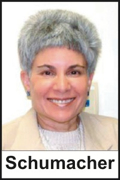
– From “Variables and risk factors associated with child abuse in daycare settings” by Ruth B. Schumacher and Rebecca S. Carlson in Child Abuse & Neglect: The International Journal (September 1999)

Predictably, the references listed by Schumacher and Carlson include an old-school Who’s Who of bad science: e.g., Kathleen Coulborn FallerDavid Finkelhor (misspelled “Finklehor”), and Susan J. Kelley (misspelled “Kelly”).

But the authors also cite skeptics Jeffrey S. Victor (“Satanic Panic”), David Bromley and Lee Coleman.

How can this be? How can Schumacher and Carlson have been exposed to such persuasive debunking, yet conclude that “neither unquestioned acceptance nor unequivocal denial” is called for?

Big Tobacco realized early on that instead of beating back every new attack on smoking’s health risks, it needed only to frame the issue as a continuing “controversy” with “two sides.” But what possible advantage accrues to social scientists who take that approach?

How to demonize ‘quite ordinary women’

Sept. 28, 2012

As mentioned last week, the preponderance of women among the Edenton Seven was one of many curiosities that apparently failed to burden the prosecution with second thoughts.

Mary DeYoung addresses the issue in “The Day Care Ritual Abuse Moral Panic” (2004):

“By the 1980s… research studies consistently found that child sexual abuse by women was a statistical rarity….To accuse (female day-care workers of ritual abuse), child-savers had the daunting challenge of fashioning folk devils out of quite ordinary women engaged in traditional women’s work, and then persuading the public that evil had lurked unnoticed for so long behind such homely facades…..

“The answer was simple: belief trumps gender. Women who are satanists do what no other women even imagine….”

27 million chances to provoke mass hysteria

Sept. 26, 2012

“The (Little Rascals) kids stories have unerringly followed the ritual abuse plot, progressing lately to tales of witnessing babies slaughtered. Perhaps not coincidentally, their most bizarre allegations began surfacing around the time that 27 million viewers watched ‘Do You Know the Muffin Man?’ a (Lifetime TV) movie that rehashed details from several ritual abuse cases, but included the wholly fictional climax of parents discovering day-care teachers worshipping the devil amidst piles of kiddie porn.”

– From “The Ritual Sex Abuse Hoax” by Debbie Nathan (Village Voice, January 12, 1990)

“Muffin Man” aired October 22, 1989 – simultaneous with not only the ongoing arrests of Little Rascals defendants but also the satanic-baby-kidnap rumor sweeping East North Carolina.

“These stories keep cropping up all over the country,” observes the “Muffin Man” prosecutor. “With this many Satan ritual abuse cases, there has got to be something out there.” (In the Little Rascals case, this “Where there’s smoke…” rationale was most notoriously put forth by UNC Chapel Hill psychologist Mark Everson.)

In Bucks County, Pa., however, District Attorney Alan Rubenstein couldn’t help noticing that complaints about ritual abuse at Breezy Point Day School went from a trickle to a torrent the day after “Muffin Man” aired. Unlike so many other prosecutors in Edenton and elsewhere, Rubenstein saw through the claims and crushingly debunked them.

Faller, Everson resist trend toward skepticism

120924JournalSept. 24, 2012

The February 2012 special issue of the Journal of Child Sexual Abuse is devoted entirely to “Contested Issues in the Evaluation of Child Sexual Abuse Allegations.”

Ritual-abuse holdouts Kathleen Coulborn Faller and Mark D. Everson use the issue to vigorously push back against calls for greater diagnostic skepticism.

The object of their displeasure is “The Evaluation of Child Sexual Abuse Allegations: A Comprehensive Guide to Assessment and Testimony” (2009), edited by the late Kathryn Kuehnle and Mary Connell. Contributors to the Kuehnle-Connell volume advocate more reliance on forensic science and less on “unverified methods or conjecture” of the kind that enabled prosecution of the Edenton Seven. By contrast, Everson and Faller can be counted on to stretch the bounds of prosecution-worthy evidence, from finding “clinical usefulness” in anatomical dolls to granting universal credibility to child-witnesses.

From Everson’s response in the journal:

“Many critics of current forensic practice (emphasize) specificity over sensitivity…. Specificity (minimizing inclusion of false cases) and sensitivity (maximizing inclusion of true cases) are counterbalancing indices of decision accuracy. Favoring specificity over sensitivity means that overdiagnosing (child sexual abuse) is considered a more serious concern than failing to substantiate true cases of abuse….”

Yes, I’ll admit it: I consider the perils of overdiagnosis – putting innocent people in prison – much worse than those of underdiagnosis – letting a possible abuser go free, at least temporarily. However much Everson and Faller might wish otherwise, our system of justice does stipulate “reasonable doubt.”

Abuse theory didn’t fit, but what the heck

Sept. 21, 2012

“Los Angeles psychiatrist Roland Summit’s ‘child sexual abuse syndrome,’ a theory about incest… argues that if there is evidence of sex abuse and a child denies it, this is only further proof that it happened and a therapist should use any means necessary to help the child talk…. If they later recant, that means they are under family pressure to protect the father and their turnabout is further proof of the crime.

“So no matter how much coercion was used to get an accusation and no matter if a child later retracted it, once Summit’s incest theory was applied, a charge of abuse became irrefutable. Child protection workers ignored the fact that this logic had little to do with day care. After all, why would children staunchly defend abuse to protect an adult who wasn’t part of the family? And if they had been so brutally attacked at school, why wouldn’t they tell their parents?

“Therapists and investigators came up with all sorts of rationales. One was the teachers threatened them by slaughtering animals and warning that the same thing would happen to their parents if they told….”

– From “The Ritual Sex Abuse Hoax” by Debbie Nathan (Village Voice, January 12, 1990)

The “threatened parents” claim reared its head in this 1995 letter from Little Rascals parents:

“…Many (children are now) old enough to realize that Bob Kelly can’t work his threatened evil to kill their families.”

North Carolina’s bull market in hysteria

Sept. 19, 2012

“The rumor has traveled like a Halloween ghost – from Wilson to Coats to Apex to Raleigh.

“Perplexed law enforcement agencies statewide have been fielding inquiries for weeks about stubborn – but unfounded – rumors of a plan by unidentified Satan worshipers to kidnap and sacrifice children.

“The most common variation is that a satanic cult plans to abduct one or more blond-haired, blue-eyed children between the ages of 2 and 5 for a human sacrifice on Halloween.

“‘All these parents of blond-haired, blue-eyed children are frantic,’ said Detective R.C. Couick of Garner. ‘I’ll bet I’ve received 500 phone calls from mothers saying they were going to dye their children’s hair.’

“Sheriff Freddy W. Narron of Johnston County said rumors seem to have started after a local newspaper printed articles about Satanic cults.”

– From “Rumors of satanists kidnapping children are tough to snuff out” (News & Observer of Raleigh, October 28, 1989)

What fertile ground North Carolina, circa 1989, provided for hysteria about 2- to 5-year-olds. The sheriff of Johnston County seems to have summoned considerably more skepticism about farfetched rumors than the Little Rascals prosecutors. Within three months of the Halloween panic all of the Edenton Seven had been arrested.

What prosecutors didn’t (want to) know

Sept. 17, 2012

I don’t doubt that prosecutors asked themselves many questions during the course of the Little Rascals case. “Think it’s gonna rain tomorrow, Nancy?” Or maybe “You want anchovies on yours, Bill?”

On more relevant issues, however, they seem to have been remarkably incurious. For instance….

■ Why did none of the defendants in the state’s biggest sex-abuse case have any history of sex crimes?

■ When sex-abusers of children are almost always men, why were five of the Edenton Seven women?

■ Why was there a complete absence of physical evidence?

■ Why did none of the frequently cited child-porn photographs ever turn up?

■ At a day care where parents came and went often and unpredictably, why did not one adult ever report anything suspicious?

■ Why was every child seen by prosecution therapists determined to have been abused, but none of those seen by out-of-town therapists?

■ When criminal conspiracies almost always collapse at the first offer of a plea deal, why did none of these defendants agree to point a finger at the others?

■ Could it really be just coincidence that these allegations surfaced so soon after a day-care ritual-abuse seminar attended by the Edenton police officer who would lead the investigation?

For prosecutors to have raised such questions, of course, would risk recognizing their career-making case as a colossal sham. Better to stay blindered and to forge ahead….

Working ‘seven days a week’ in wrong direction

Sept. 14, 2012

“Judith Steltzner Abbott of Camden has become a moving force for the well-being of sexually abused children and their families across the state. Her presentations on child sexual abuse have become a part of nursing programs and hospital emergency room staff training and have been presented to law enforcement agencies, social services systems and members of the judiciary.

“When litigation developed from allegations of child sexual abuse at a day care center in a nearby area, Abbott worked seven days a week to provide counseling, guidance and support for children and parents….”

– From Judy Abbott’s citation as winner of the 1992 Distinguished Women of North Carolina Award, Public Service category, sponsored by the North Carolina Council for Women

Not only did the prosecution’s lead therapist avoid penalty for misdiagnosing 17 Little Rascals children, but also she became “a moving  force…. across the state” in spreading her toxic mythology – and was honored for it!

Does the North Carolina Council for Women have a process for withdrawing its awards?

‘How long, O Lord, will you forget me forever?’

120912TindallSept. 12, 2012

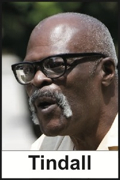
“Connie Tindall wanted to be pardoned before he died. But like Jerry Jacobs, Joe Wright and Ann Shepard before him, Tindall was buried Friday without knowing if the state of North Carolina will ever pardon members of the Wilmington 10.”

– From the Wilmington Star-News (Aug. 10, 2012)

Tindall died at age 62 – younger than Bob Kelly and Scott Privott. Will the Edenton Seven live long enough to see themselves exonerated?