One less platform for ritual-abuse fantasizers

120427RowellApril 27, 2012

Friday news roundup:

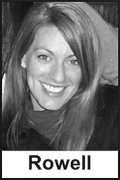
■ Darkness to Light, the Charleston-based nonprofit with the goal “End Child Abuse,” has responded to my request to disassociate itself from one of the last promoters of the ritual-abuse day-care hoax. This is from Erika Rowell, program coordinator for D2L: “After taking a long look at the Survivorship website we have decided to remove it from our resource list.”

■ The North Carolina Supreme Court’s latest release on petitions allowed and denied included no ruling on Junior Chandler’s appeal. Next possible release date: June 14.

■ The New York Times reports a jarring increase in the number of retractions published in scientific journals. The Times focuses on heavyweights such as Science and the New England Journal of Medicine, but I have to wonder whether – OK, hope that – this phenomenon might one day extend to the likes of the Journal of Child Sexual Abuse, the Journal of Psychohistory and Treating Abuse Today, all of which failed to apply professional skepticism to the abuse fantasies of their contributors.

McMartin interviewers showed way for Little Rascals

April 25, 2012

“Many questions were repeated (by interviewers in the McMartin Preschool case) even when the children had previously given unambiguous answers.

“For example, after a child responded that he/she did not remember any pictures of naked bodies, the interviewer repeated the question saying, ‘Can’t remember that part?’

“Even after the child again responded ‘no,’ the interviewer persisted, saying ‘Why don’t you think about that for awhile…. Your memory might come back to you.’ ”

 – From “Tell Me What Happened: Structured Investigative Interviews
of Child Victims and Witnesses” by Michael E. Lamb, et al. (2008)

There is every reason to believe this approach typified interviews in the Little Rascals case, but of course prosecutors ensured almost no record of those interviews survived.

Lamb ‘continues to hold herself out as an expert’

120323WyattApril 23, 2012

In 2007, W. Joseph Wyatt, writing in the professional journal The Behavior Analyst Today, looked back at the Little Rascals case:

“Prosecutors appeared to have little appreciation for the possibility, or likelihood, that they were pursuing innocent people. Prosecutorial fervor for the case evidently persisted long after it had become clear that the case had taken a series of wrong turns.

“Despite the disastrous results, one of the prosecutors continues to hold herself out as an expert. As recently as November, 2006, Nancy Lamb, still working as an assistant district attorney, was co-presenter of a training program for professionals titled ‘The Necessary Components of a Legally Defensible Child Sex Abuse Investigation.’ ”

If for no other reason, the Little Rascals case demands continued public attention as long as Nancy Lamb remains at large, presenting her cruelty and deviousness as a model for future prosecutions.

Update: At a 2010 workshop for the North Carolina Conference of District Attorneys, “Nancy Lamb… presented on how to defend the forensic interview in the courtroom.”

Scholarship minus skepticism = academic sham

120420FinkelhorApril 20, 2012

David Finkelhor’s “Nursery Crimes: Sexual Abuse in Day Care” (1988) helped lay the foundation for the moral panic that would soon engulf Edenton and so many other ill-starred towns.

Finkelhor, a respected and widely published sociologist at the University of New Hampshire, built a Potemkin village of statistical tables – “Victim Characteristics by Type of Perpetrator,” etc. – that concealed the utter worthlessness of his data. He was wrong from the first chapter, accepting unsubstantiated claims of ritual abuse as reality, to the last, recommending that “parents, licensing and law-enforcement officials be educated to view females as potential sex-abusers.”

This is from a recent exchange Finkelhor and I had via email:

Q: In “Nursery Crimes” you accept that ritual sexual abuse did in fact occur at Little Rascals, McMartin, Wee Care, etc., and give little credence to the “backlash” against such prosecutions. Has your position changed?

A: This was a while ago and I have not revisited the case. Our research did not conduct any independent review of the evidence, but simply coded the conclusion of the investigator we interviewed. So I was neither an authority about the validity of claims at the time or at the present.

Q: Yes, I understand that your research and analysis relied entirely on “local investigating agencies (that) had decided that abuse had occurred” (p. 13).

But I’m not finding in “Nursery Crimes” any skepticism about these prosecutorial allegations. In fact, the book seems only to reinforce the belief that satanic ritual abuse was a frequent occurrence in the nation’s day cares. Am I misjudging it?

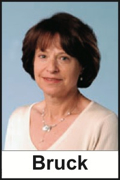
Stephen Ceci and Maggie Bruck are but two of the researchers who have detailed the contaminated interview techniques that supported each of these cases. And of course almost all the defendants eventually went free, either when charges were dropped or their guilty verdicts overturned.

Would you consider returning to this subject and, if you so chose, changing your public position? I know the defendants – innocent citizens who saw their lives crushed by unfounded charges – would appreciate it.

No response yet to my second question. If I receive one, I’ll post it.

Parents saw nothing amiss until rumors took hold

120418BruckApril 18, 2012

“One of the more surprising aspects of this (Little Rascals) case…. was that none of the parents… had observed anything that caused them to suspect their children were being abused or tortured during the period of the alleged abuses; there were no reports of unusual incidents from their children.

“Nor did the parents detect anything unusual when, without notice, they dropped in early to pick up their children from the day care (e.g., to take them to a doctor’s appointment).

“It was only after allegations began to grow that parents also began to remember events or behaviors consistent with their child being abused.”

– From “Jeopardy in the Courtroom: A Scientific Analysis of Children’s
Testimony” by Stephen J. Ceci and Maggie Bruck (1995)

Prosecutor Nancy Lamb gave the Charlotte Observer her response to “Jeopardy in the Courtroom”: “It’s unfortunate that these two people who have a good reputation – or at least Ceci did – have written this. It’s garbage.”

‘Juvenile renderings of grownups’ anxieties’

April 16, 2012

“At the beginning of each ritual-abuse case, the children had been eminently reliable, but what they communicated was that they had not been molested by satanists. Indeed, it was only after an investigation started, after intense and relentless insistence by adults, that youngsters produced criminal charges.

“By then, their utterances had nothing to do with their own feelings or experiences. Rather, what came from the mouths of babes were juvenile renderings of grownups’ anxieties.”

– From “Satan’s Silence: Ritual Abuse and the Making of a  Modern American
Witch Hunt” by Debbie Nathan and Michael Snedeker (1995)

‘Overzealous intervenors’ muddy waters in abuse cases

120413LanningApril 13, 2012

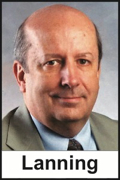
“A decade-long investigation by the FBI has found no evidence linking child abuse with organized satanic cults.

“In a recent report by the agency, Special Agent Kenneth Lanning warns about the influence of ‘overzealous intervenors,’ such as therapists and parents, ‘who may be affected by their zeal to uncover child sexual abuse, satanic activity, conspiracies.’ Their influence can contaminate a case so much that no one will ever determine what, if anything, really happened….”

– From the San Diego Union-Tribune (December 27, 1992)

Ideal child prosecution-witness is 3 or 4 years old

111130GardnerApril 11, 2012

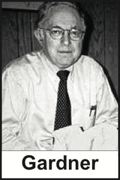
“Almost always you find the kids are three or four years old.

“The two-year-olds are no good because they can’t speak well enough and are totally unreliable in what they do say. The five- and six-year-olds are already old enough to say, ‘He didn’t do that, lady, and nothing you say is going to convince me of it.’

“But threes and fours are perfect. After they’ve been worked over by a parent or zealous validator, they can be counted on because they believe it and will testify accordingly.”

– Dr. Richard A. Gardner, clinical professor of psychiatry at Columbia
University, quoted in Playboy magazine (June 1992)

Who killed the ritual abuse day care panic?

120409ThreeApril 9, 2012

“Where do epidemics go when they die?…. Have all the sadistic pedophiles closed down their day-care centers?”

– From “Mistakes Were Made (But Not by Me)” by Carol Tavris and Elliot Aronson

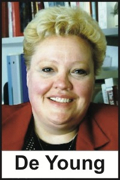
I asked Mary de Young, author of “The Day Care Ritual Abuse Moral Panic,” whether this epidemic might have gasped its last in Edenton as a result of “Innocence Lost.”

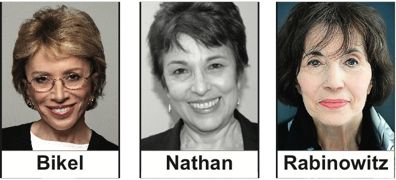
“Ofra Bikel certainly pounded a nail in its coffin,” De Young said. “Her excellent work on the Little Rascals case appeared after the last day care ritual abuse case was prosecuted, but she created a reason to be profoundly skeptical of all the cases that came before.

“I would give a lot of credit to Debbie Nathan (Village Voice) and Dorothy Rabinowitz (Wall Street Journal) for bringing an end to this craziness, but to be honest I think the moral panic really collapsed under its own weight – i.e., it was impossible to sustain these allegations in the absence of evidence, as well as to sustain the suspended disbelief that was required.”

‘Parent-experts’ found meaning where there was none

120406DeYoungApril 6, 2012

“Parent-experts made a specific kind of sense of their children’s behaviors and emotions by retrospectively interpreting them as sequelae of day care ritual abuse rather than as reactions to familial stress, the vicissitudes of growing up or, for that matter, the stress of the investigation and the interrogations. ….

“Parent-experts testified that they never had reason to worry about their children’s behavior until they disclosed ritual abuse. Then, to the parent-experts, the tantrums, fears and sleep disturbances that once had looked like nothing more than normal growing pains were retrospectively interpreted….”

– From “The Day Care Ritual Abuse Moral Panic”  by Mary De Young (2004)

Judge Marsh McLelland’s allowing parents to testify as experts about their children’s behavior was one of the key defects pointed out by the N.C. Court of Appeals in overturning the convictions of Bob Kelly and Dawn Wilson.