Imagining my part of a chat with H.P. Williams Jr.

Dec. 9, 2011

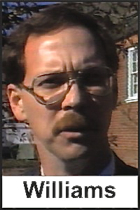
111209WilliamsHad former district attorney H.P. Williams Jr. let our conversation drag on beyond 30 seconds on Wednesday, here are some questions I might have asked:

– In all the day care cases of the ʼ80s and early ʼ90s – Little Rascals, McMartin, Fells Acres, Wee Care, ad nauseam – why was not one instance of sexual abuse ever witnessed by an adult?

– Why was not one piece of physical or medical evidence ever presented?

– Would you still argue at Bob Kellyʼs sentencing hearing that “There is no reason he should be restored to the community at any time”?

– Have you been surprised that, since being freed, not one of the defendants has returned to a life of serial child sexual abuse?

– What would it take for you to admit the Edenton Seven were innocent?

● ● ●

If H.P. Williams Jr. – or any other reader – would like to respond, he is always welcome to do so here.

Ex-D.A. ‘not in a position to talk about it’

Dec. 7, 2011

H. P. Williams Jr. was district attorney during the Little Rascals trial. He now practices criminal defense law in Elizabeth City.

I called to ask whether he had changed his mind about the guilt of the Edenton Seven.

“I’m not in a position to talk about it,” he said.

Why is that? I asked.

“It’s just not a question I choose to answer.”

As I made another stab at continuing the conversation, he ended it: “Have a good day. Goodbye.”

Williams was 39 when the first charges were filed. Today he is in his early 60s. I held out hope that over the years he had reexamined his role in crushing the lives of seven innocent citizens, had suffered a few dark nights of the soul, had harbored an unspoken wish to make amends, had summoned the honesty and courage to break with the prosecutors’ code of silence when faced with the error of their convictions….

I was naive.

Professional child abuse: Creating false memories

Dec. 5, 2011

In this (Nov. 29) New York Times analysis of science’s ever-growing skepticism about eyewitness testimony I noticed a familiar name:

111205Loftus“One of the earliest and more famous experiments to demonstrate that memories are malleable was conducted by Elizabeth Loftus, a psychology professor at the University of California, Irvine, and an early pioneer of witness memory research.
“In a 1974 study published in The Journal of Verbal Learning and Verbal Behavior, (Loftus) asked participants to view films of fender-benders in which no car windows or headlights were broken. Later, the subjects who were asked how fast the cars were going when they ‘smashed’ into each other – as opposed to ‘hit’ – were more likely to report speeding and describe shattered glass they never actually saw.”

While researching a book on the Wenatchee, Washington, ritual sex abuse case (1994-95), Kathryn Lyon asked Loftus about the consequences when professionals contribute to and reinforce false memories in children.

“If you believe real child abuse has long-term deleterious consequences,” Loftus responded, “then what happens when you create a false memory of child abuse? Are you creating a victim who is also likely to have long-term troubles?

“Having a real and a pseudo memory are in many ways the same. If you create the memory, are you not creating child abuse?”

Lyon, a lawyer, spent a year in Wenatchee to write the thorough and chilling “Witch Hunt: A True Story of Social Hysteria and Abused Justice” (1998).

How Bill Hart got better at playing dirty

Dec. 2, 2011

111202Hart“Videotaped interviews made during the early cases (alleging day care ritual sex abuse) show that when children were allowed to speak freely, either they had nothing to say about abuse or they denied it ever happened to them.
“Once it became obvious that these records would prevent guilty verdicts, prosecutors began advising investigators not to keep tapes or detailed notes of their work.”

– From “Satan’s Silence: Ritual Abuse and the Making of a Modern American Witch Hunt” by Debbie Nathan and Michael Snedeker (1995)

Perhaps the most significant difference in the two largest abuse trials was that McMartin defense attorneys were able to expose to jurors the prosecution therapists’ manipulative interview techniques, while Little Rascals attorneys were stymied by the premeditated unavailability of original documentation.

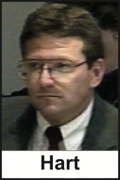
“After Bob Kelly’s indictment,” according to an article in the ABA Journal, “Bill Hart, a North Carolina deputy attorney general assigned to the case, traveled to Los Angeles to consult with McMartin prosecutors.

“He learned that McMartin jurors had criticized videotapes of therapist Kee McFarlane’s interviews with the children. She asked leading questions and rebuked children who did not tell of abuse….”

Hart could have brought back to North Carolina the lesson that interviewers shouldn’t “(ask) leading questions and (rebuke) children who did not tell of abuse.” Instead, he brought back the lesson that interviewers should leave no evidence of having used exactly those fraudulent techniques.

How were defendants so skillful at dressing kids?

Nov. 30, 2011

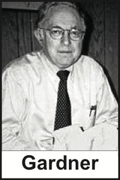
111130Gardner“You have to start with the matter of probability. What every one of these (day care sex abuse) cases has in common is that no adult observer has actually seen a molestation in progress.


“Supposedly, these abuses are going on continually over a period of months. Almost always, they supposedly involve a number of adults and many children, with outsiders constantly walking in and out of these centers. Yet we have no corroborating eyewitnesses. None….

“Throughout it all, these children somehow always come home in the right shoes and socks and underpants. Do you have kids? Do you realize how hard it is to dress two kids in a hurry without some kind of mix-up, let alone 10 or 12 or 20 kids?”

– Dr. Richard A. Gardner, clinical professor of psychiatry at Columbia University, quoted in Playboy magazine (June 1992)

Parents ill-prepared to practice psychology

Nov. 28, 2011

111128Ritual“The Little Rascals case offers a trove of testimony illustrating how immersion into the popular psychology of sexual abuse gave parent-experts the terms and concepts to retrospectively interpret their children’s behaviors and emotions, and to do so with the ring of authority….

“One mother testified that once she had learned the psychology of sexual abuse, she realized her child’s denial that anything untoward had happened at the day care center actually was a sign that he had been sexually abused.”

– From “The Day Care Ritual Abuse Moral Panic” by Mary De Young (2004)

Parents’ gullibility ‘grounded in anxiety’

Nov. 25, 2011

“In the prototypical witch hunts in Europe and in the Massachusetts colony, the accused were often scapegoats for some calamity – disease, bad harvests, the birth of a deformed child.

111125Talbot“In the witch hunts of the ’80s, there was no such injury to be avenged or repaired. There was, however, a psychological need to be fulfilled. Our willingness to believe in ritual abuse was grounded in anxiety about putting children in day care at a time when mothers were entering the work force in unprecedented numbers.
“It was as though there were some dark, self-defeating relief in trading niggling everyday doubts about our children’s care for our absolute worst fears – for a story with monsters, not just human beings who didn’t always treat our kids exactly as we would like; for a fate so horrific and bizarre that no parent, no matter how vigilant, could have ever prevented it.”

– Margaret Talbot, writing in The New York Times Magazine, Jan. 7, 2001

Imprisonment ‘without having to prove a thing’

Nov. 23, 2011

“Finally, after eight years, the Little Rascals case is over. We can consign to history what has to be the most bizarre and disturbing episode in the annals of North Carolina law…..

“Never has the state devoted such resources to wrecking lives with such flimsy evidence and unconscionable delays.

“As a case history of mass hysteria, the Edenton story will enrich textbooks for generations. As a cautionary tale of what can happen when otherwise sensible people come under the spell of self-styled victim advocates, one can only hope the memory of Little Rascals will help others stop the next case before it gets out of hand.

“The state’s most effective weapon… was not evidence, but time. By holding (defendants) behind bars month after month, the state managed to inflict enormous punishment… without having to prove a thing.

“As fiction, the Little Rascals story would have strained the combined imaginations of Charles Dickens and Stephen King. As news, it is a chilling example of a judicial system that was unchecked by common sense or common decency.”

– Editorial in the Greensboro News & Record, May 28, 1997

When Gladstone (or whoever) first posited that “Justice delayed is justice denied,” could he have envisioned such a calculated demonstration?

Chaplain writes memoir about supporting defendants

Nov. 21, 2011

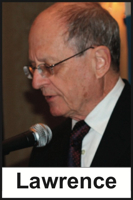
111105LawrenceRaymond Lawrence, the New York City chaplain who founded the Committee for Support of the Edenton Seven, was an attentive and often appalled observer at Bob Kelly’s trial. This passage is excerpted from a memoir now posted in its entirety on the Bookshelf:
“Among the more obscene performances I witnessed by the prosecution was a long argument that Robert Kelly had had vaginal intercourse with a five-year-old girl.

“On a screen about four feet square the prosecutor displayed a color slide the girl’s genitalia, with two adult thumbs shown pulling back the labia to display the hymen and vaginal opening. The hymen appeared fully intact, covering most of the vaginal opening. The prosecutor thus spent what I recall as hours arguing that the stretch marks in the hymen were evidence of adult penile penetration.

“I wondered why the defense attorney did not rise up and ask if this were Alice in Wonderland…. It was as if I had entered an alternate universe.”

Good sense proved no match for gossip

Nov. 18, 2011

111118Gardner“Gossip serves to fill up the vacuum of many people’s lives. It adds spice and excitement ….

“ ʻI would never have imagined it,ʼ say the neighborhood people. ʻIt looked like such a nice, friendly, reputable school, and all the while we didn’t know what terrible things were going on in there. They sure were clever. They really kept it quiet for a long time.

“ ʻWhen those kids came out, I never thought that they had just eaten feces, drunk urine and were beaten with whips.ʼ ”

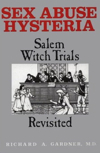
– From “Sex Abuse Hysteria: Salem Witch Trials Revisited” by Richard A. Gardner (1991)