Rascals case in brief
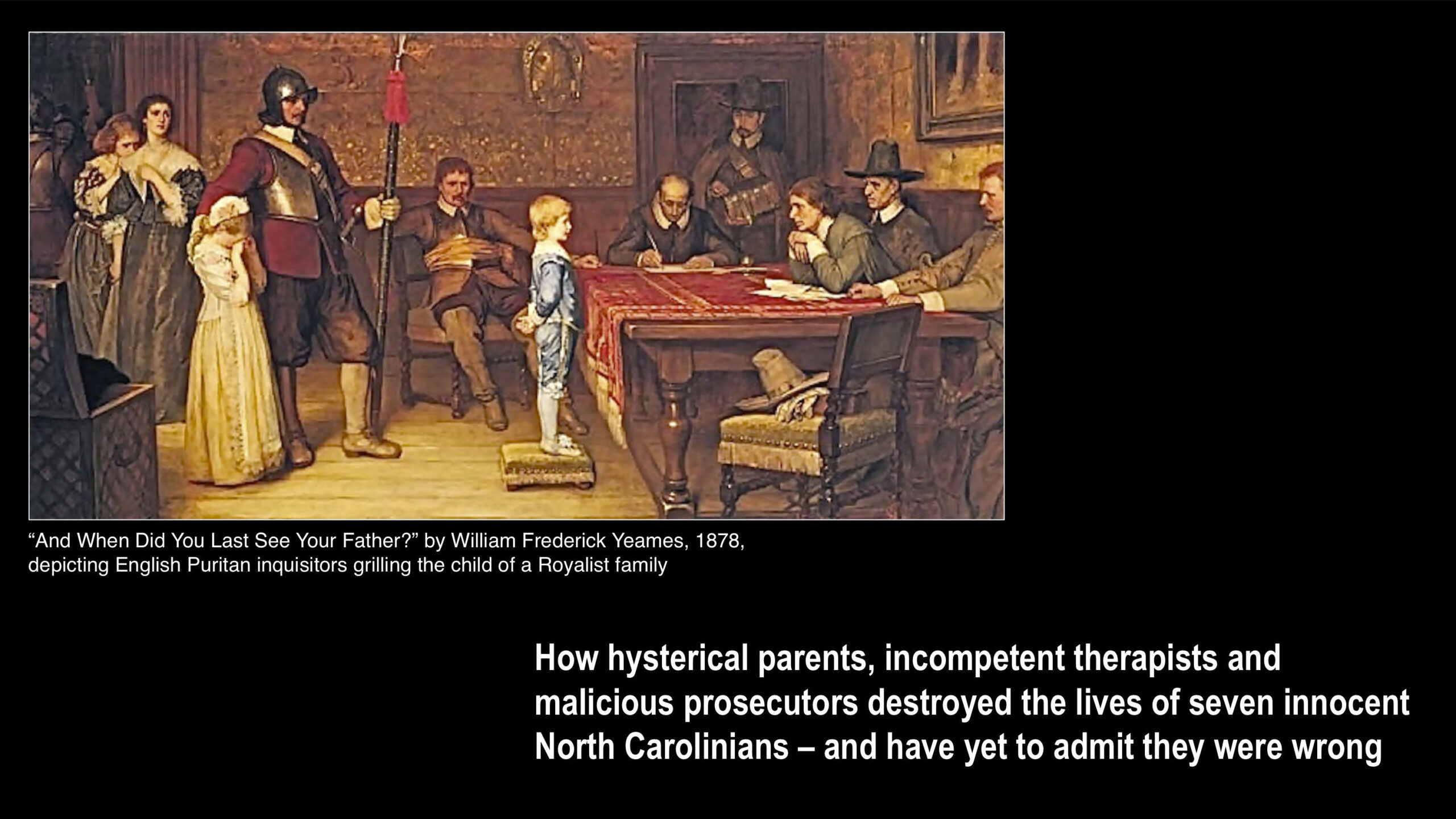
In the beginning, in 1989, more than 90 children at the Little Rascals Day Care Center in Edenton, North Carolina, accused a total of 20 adults with 429 instances of sexual abuse over a three-year period. It may have all begun with one parent’s complaint about punishment given her child.
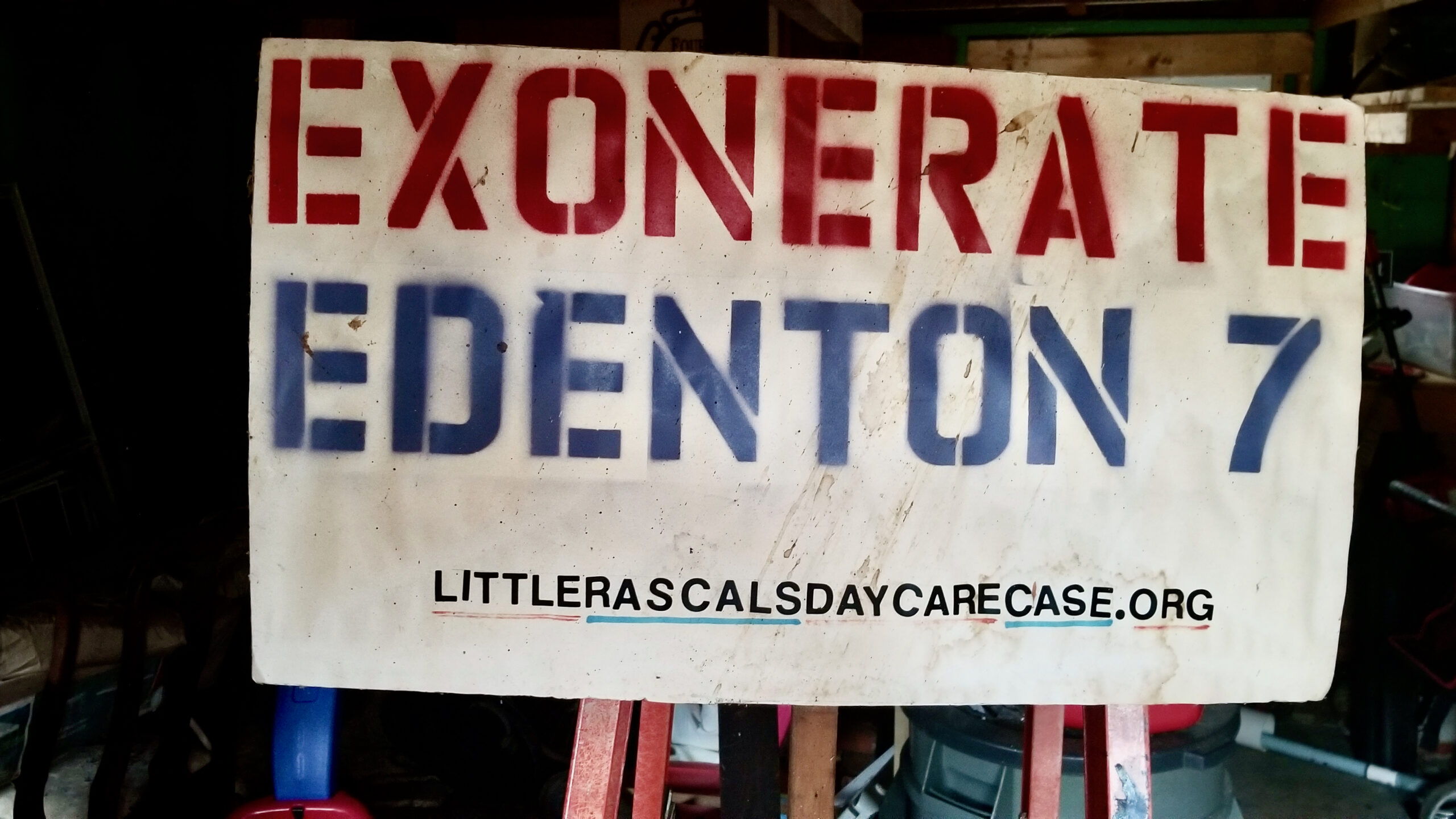
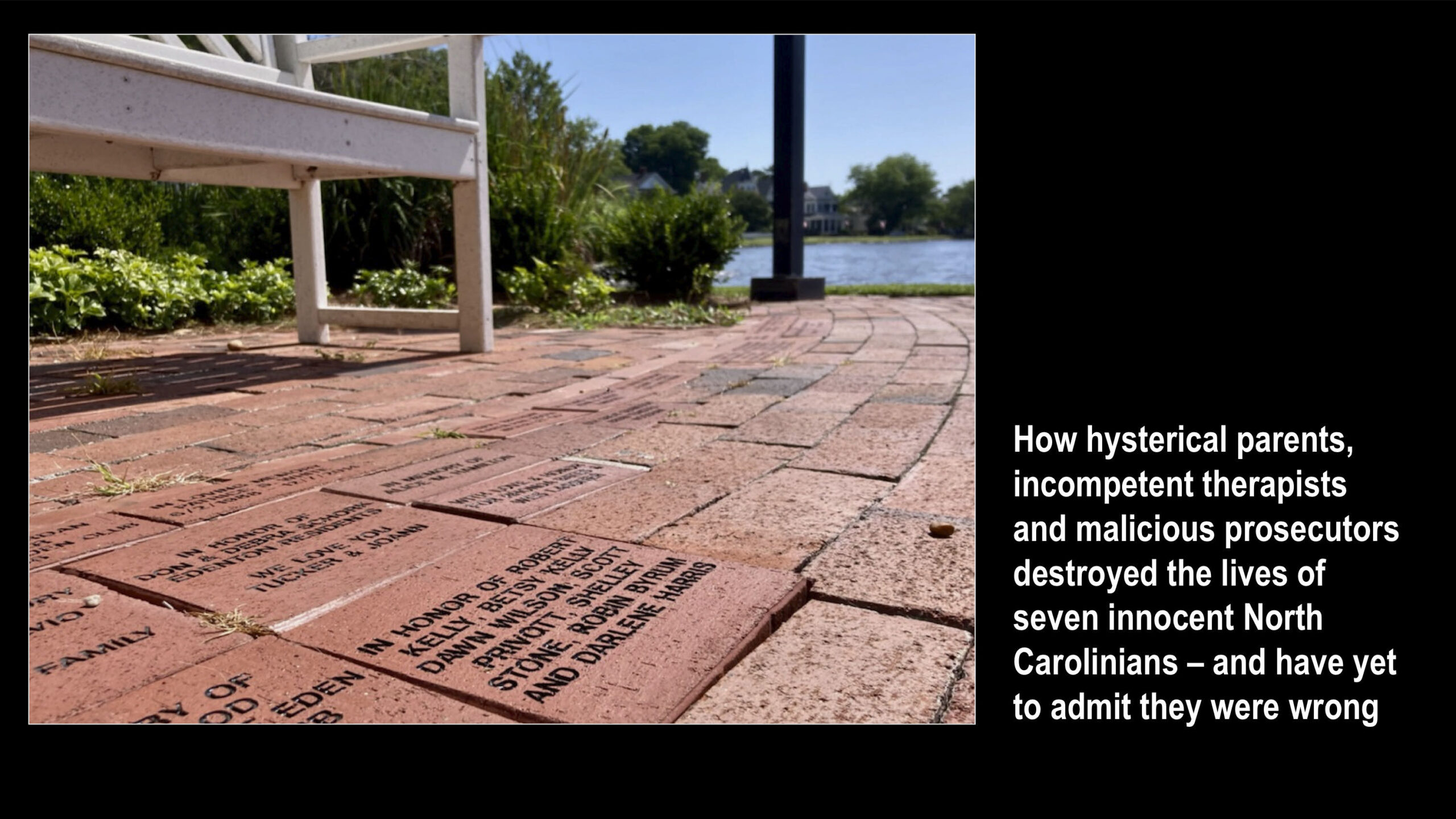
Among the alleged perpetrators: the sheriff and mayor. But prosecutors would charge only Robin Byrum, Darlene Harris, Elizabeth “Betsy” Kelly, Robert “Bob” Kelly, Willard Scott Privott, Shelley Stone and Dawn Wilson – the Edenton 7.
Along with sodomy and beatings, allegations included a baby killed with a handgun, a child being hung upside down from a tree and being set on fire and countless other fantastic incidents involving spaceships, hot air balloons, pirate ships and trained sharks.
By the time prosecutors dropped the last charges in 1997, Little Rascals had become North Carolina’s longest and most costly criminal trial. Prosecutors kept defendants jailed in hopes at least one would turn against their supposed co-conspirators. Remarkably, none did. Another shameful record: Five defendants had to wait longer to face their accusers in court than anyone else in North Carolina history.
Between 1991 and 1997, Ofra Bikel produced three extraordinary episodes on the Little Rascals case for the PBS series “Frontline.” Although “Innocence Lost” did not deter prosecutors, it exposed their tactics and fostered nationwide skepticism and dismay.
With each passing year, the absurdity of the Little Rascals charges has become more obvious. But no admission of error has ever come from prosecutors, police, interviewers or parents. This site is devoted to the issues raised by this case.
On Facebook


Little Rascals Day Care Case
This Facebook page is an offshoot of littlerascalsdaycarecase.org, which addresses the wrongful prosecution of the Edenton Seven and other such victims.

Meanwhile in Edenton....
This content isn't available right now
When this happens, it's usually because the owner only shared it with a small group of people, changed who can see it or it's been deleted.0 CommentsComment on Facebook
Allies for our cause!
This content isn't available right now
When this happens, it's usually because the owner only shared it with a small group of people, changed who can see it or it's been deleted.0 CommentsComment on Facebook
The courts have a long history of capriciously pulling the rug out from under Junior's appeals, but maybe this time....
This content isn't available right now
When this happens, it's usually because the owner only shared it with a small group of people, changed who can see it or it's been deleted.0 CommentsComment on Facebook
Click for earlier Facebook posts archived on this site
Click to go to

Today’s random selection from the Little Rascals Day Care archives….
Could we resolve to better next year?
 Dec. 28, 2013
End-of-year grab bag from the wide world of justice delayed:
● Thanks to Professor P. S. Ruckman Jr. at Pardon Power for posting my comments on Andrew Junior Chandler.
● Two glimmers of light on misrepresented “genital scarring” and other examples of junk science – from Texas of all places!
● In New York a remorseful former judge testifies against his own verdict.
● Recently uploaded onto Vimeo by the Alfred I. duPont Awards: a three-minute, full-screen excerpt from “Innocence Lost”. (The complete series can be viewed from the “Innocence Lost” page of this website in small-screen format.)
● Gov. McCrory proves himself able to dispense clemency to LaMonte Armstrong – can he find it in his heart to be similarly just to the no less innocent Junior Chandler?
Innocence, alas, does not guarantee exoneration
 June 11, 2012
After discovering the National Registry of Exonerations, I was happy to see that it lists Little Rascals defendants Bob Kelly and Dawn Wilson, whose convictions were overturned on appeal.
But what about Betsy Kelly and Scott Privott, who both finally accepted plea deals while maintaining their innocence, and Robin Byrum, Darlene Harris and Shelley Stone, all of whom waited years for prosecutors to drop charges?
The registry, a joint project of the University of Michigan Law School and the Center on Wrongful Convictions at Northwestern University, speaks unequivocally about “a wave of child sex abuse hysteria that swept the country….
“Starting in the early 1980s, some prosecutors, therapists and child welfare workers became
convinced that child sex abuse on a massive scale was rampant in their communities. They
believed that most of the victims were too afraid or embarrassed to discuss the abuse, so they
worked to overcome this fear and reluctance by using highly suggestive, persistent and
unrelenting questioning techniques when interviewing the young children.
“It worked. Some of the children complied and accused parents, day-care workers and adult acquaintances of numerous horrifying and bizarre acts. This led to a series of extraordinary prosecutions, many involving allegations of satanic rituals.”
Unfortunately, this acknowledgment of the moral panic doesn’t earn the remaining “Edenton 5” a listing in the registry. Here’s why, according to research assistant Ted Koehler:
“For a case to count as an exoneration for our purposes, a person convicted of a crime must be declared factually innocent by a government official or organization with authority to make such a declaration.
“If this has not happened, a person can still be exonerated if the person was relieved of all consequences of the criminal conviction by a government official with proper authority, through pardon, acquittal of the charges for which the person was originally convicted, or dismissal of those same charges. In such a case, the pardon, acquittal, dismissal or posthumous exoneration must have been the result, at least in part, of evidence of innocence that either (i) was not presented at the trial at which the person was convicted; or (ii) if the person pled guilty, was not known to the defendant or to the defense attorney and the court at the time the plea was entered.
“The Edenton case was a terrible witch hunt. Regretfully, though, because they do not meet the criteria above, Kelly’s and Privott’s guilty pleas and the dropped charges against Byrum, Stone, and Harris do not fit our definition of an exoneration, and are not listed on the registry for that reason.”
I understand the registry’s need to set the bar so high. But what a curious twist that the defendants’ only hope for exoneration lies with the same state that so unjustly prosecuted them.
‘Keep telling the defendants’ story’
Dec. 26, 2011
 “When I saw ‘Innocence Lost’ on PBS, I was outraged. The defendants received a bad deal from the state of North Carolina….
“Thank you for building and maintaining this site. Someone needs to keep telling the defendants’ story. I’m glad to see Mr. Kelly stayed strong and moved on with his life.”
– From South Carolina reader Clarence Lankford
Thanks for writing, Clarence. “Stayed strong and moved on” is an apt description of Bob Kelly. When I called last week to wish him Merry Christmas, he laughed and said, “For me, it’s always Christmas.”
UNCG professor showed no tolerance for skepticism
 Feb. 13, 2012
“It is evident that, although mistakes were made in the handling of the (Little Rascals) case, these children definitely were sexually abused by one or more individuals at the day care center. To suggest otherwise is to revictimize these smallest victims.
“As a professor of social work at UNCG whose specialty is child abuse, I would like the public to be aware that research has shown that 97-99 out of 100 children who report that they have been sexually abused are telling the truth. When a child tells you that an unauthorized adult is ‘playing doctor’ with him/her, it is highly likely that he/she is describing some sort of abuse.
“If you do not believe the child, you become part of the victimization of that child. If you believe that detection and prosecution of child abuse cases are witch hunts, then you protect child molesters and allow them to continue to traumatize children. I cannot imagine that the responsible people of this state want to put themselves on the side of criminals who abuse children.”
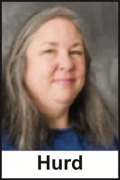
Elisabeth Porter Hurd, Greensboro
– From a letter to the editor of the Greensboro News & Record, June 9, 1997
Does Dr. Hurd still believe that the Little Rascals children “definitely were sexually abused”? And that to doubt the prosecution’s case was to “protect child molesters and allow them to continue to traumatize children”?
Last week I asked Dr. Hurd whether she might have changed her mind – so far no response.