Day-care prosecutors ‘become like a torturer’

Aug. 17, 2012

“I’ve wondered how the prosecutors (in ritual-abuse day-care cases) could live with themselves.

“Says Debbie Nathan (coauthor of “Satan’s Silence: Ritual Abuse and the Making of a Modern American Witch Hunt”): ‘There was a time – and it lasted eight or nine years – when there was an entire body of expert opinion that these things could happen.’ It was a time, she says, when pseudoscience had raced ahead of science, when best-selling books that had yet to be contradicted asserted that the inability to remember a trauma was the strongest proof of it, when doctors trying to be helpful established as a baseline a model virginal hymen so perfectly smooth and shaped that it allowed any actual hymen to be construed as traumatized.

“ ‘Our culture is still really atavistic,’ says Nathan, ‘but there’s an overlay of science on it. Mix the totally primeval stuff with science and you’ve got this mix that can’t be beat.’ Prosecutors, she says, ‘are just as naive as anyone else, but they also know how to sway people. They have all the techniques down pat. “Suffer the little children.” “Innocence defiled.” “Worse than murder.” ‘

“But why, as science and truth become clearer, is it so hard for so many prosecutors to recant?…  ‘Maybe it’s because the whole process of constructing one of these innocent people as a really demonically evil sexual pervert who sadistically violates lots of kids – the whole process of constructing this character on a real person is torture. You have to be very invasive. It’s a very sadistic enterprise. You become like a torturer.’ ”

– From “Why Can’t They Admit They Were Wrong?” by John Conroy
in the Chicago Reader (Aug. 1, 2003)
Court cracks door – can Junior fit through it?

120123ChandlerAug. 15, 2012

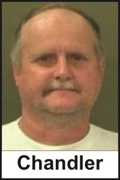
The North Carolina Supreme Court won’t release its next batch of opinions until August 24, but its recent decision on a 2009 child sex abuse case could augur well for Junior Chandler.

On June 14 the court upheld the North Carolina Court of Appeals’ overturning of Patrick Loren Towe’s conviction in Surry County. Here’s the crucial part of the opinion:

“Under the North Carolina Rules of Evidence, a qualified expert may testify as to her opinion in her field of expertise if the testimony will assist the jury in understanding the evidence. An expert may not, however, testify as to the witness’s credibility or state that she believes the defendant is guilty.

“In sexual abuse cases involving child victims, an expert may not testify that sexual abuse has occurred without physical evidence supporting her opinion. An expert may not testify that the child has been ‘sexually abused’ if the testimony is based solely on the interview with the child-victim.”

In Patrick Towe’s case, only one expert witness so testified – in Junior Chandler’s it was six.

Without such a parade of “expert vouching,” Junior surely would have spent the past 25 years back home in Madison County instead of behind bars. How can the North Carolina Supreme Court now fail to acknowledge this?

Mr. Attorney General, here’s chance to do right

120813CooperAug. 13, 2012

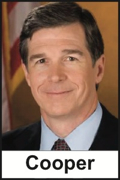
I wrote Mark Davis, general counsel to Gov. Bev Perdue, to ask that she issue a “statement of innocence” on behalf of the Edenton Seven. This is Davis’s response: “Because the Attorney General’s Office handled the appeals in the cases you reference in your letter, I think that office is in the best position to evaluate this issue. I suggest you contact them regarding this matter.”

So noted. This, then, is from a letter I sent last week to Roy Cooper, attorney general of North Carolina:

When the Duke lacrosse case collapsed in 2007, you granted the defendants a “statement of innocence.” Although the statement was not a formal legal document, as I understand it, it clearly demonstrated your commitment to making amends for a wrongful prosecution by the State of North Carolina.

I am requesting that you take similar action on behalf of the defendants in the notorious Little Rascals Day Care case.

For more than a decade, beginning in the 1980s, day care centers across the United States were victimized by a wave of wholly unsubstantiated charges of “ritual sexual abuse.” The testimony of child-witnesses, corrupted by misguided therapists, resulted in dozens of convictions and incarcerations.

In all these cases, charges eventually were dropped, convictions overturned or plea agreements accepted with no admission of guilt.

Today there is no dispute among respected psychiatrists, psychologists and social scientists: The defendants were innocent victims of a “moral panic” that bore striking similarities to the Salem witch hunts 300 years earlier.

One of the most prominent of these prosecutions, of course, was the Little Rascals case in Edenton. Between 1991 and 1997 the PBS series “Frontline” devoted a total of eight hours to the plight of the Edenton Seven, leaving millions of viewers appalled at North Carolina justice.

After the longest and costliest trial in state history, Robert Kelly was convicted of 99 counts of child abuse and sentenced to 12 consecutive life sentences. He served six years before the North Carolina Court of Appeals overturned his conviction.

Dawn Wilson was convicted on five counts of child sex abuse and given a life sentence. She served two years in prison or under house arrest. The Court of Appeals also overturned her conviction.

Betsy Kelly and Scott Privott both agreed to plea deals with no admission of guilt.

Charges against Robin Byrum, Darlene Harris and Shelley Stone were dropped.

After the defendants were released, however, prosecutors continued to insist they were guilty. Exoneration was willfully withheld.

The Little Rascals case not only shattered the lives of the defendants, but also left a deep and ugly stain on the reputation of the State of North Carolina.

In 2001, Massachusetts Governor Jane Swift signed a resolution proclaiming the innocence of the victims of the Salem Witch Trials.

In time, such victims of the ritual-abuse day-care panic as the Edenton Seven will surely receive similar exoneration. Why not now? Why not in North Carolina? This is an opportunity to demonstrate moral leadership on a national scale.

I blog about the case at littlerascalsdaycarecase.org, where you will find an extensive archive and updates. I would be eager to provide additional facts by e-mail or to meet with you in Raleigh at your convenience.

Mr. Cooper, I appreciate very much your attention to reviewing this case and to perhaps mitigating the profound injustice suffered by these seven innocent North Carolinians.

I’ll post his response, of course.

How hard it was to say, ‘Boy, was I wrong’

111019Tavris2Aug. 10, 2012

Carol Tavris:

“After the McMartin trial in 1986, I wrote an article for the Los Angeles Times about research that had been done on how to interview children in sex abuse cases. Evidence at the time suggested that sometimes you have to ask children leading questions or they will not tell you they have been molested.

“For example, if you interviewed a child after a genital examination and you asked her just to tell what the doctor did, almost no child would volunteer that the doctor touched her genitals. But if you asked a leading question, such as, ‘The doctor touched your private parts, didn’t he?’ the children would say ‘yes.’ The L.A. Times headlined this article, ‘Do Children Lie? Not About This.’

“Of course that was preposterous. Of course children lie ‘about this’ and lots of other things. But my essay, although based on research at the time, helped support the child advocates who were on a rampage against child molesters, and who were running around saying ‘children never lie’ and selling bumper stickers that said ‘Believe the Children.’’ I didn’t foresee that prosecutors and therapists would use these same studies to coerce the hell out of kids.

“When I think of my own embarrassment about that little article, and how hard it was to say, ‘Boy, was I wrong about that research,’ I realize how difficult it must be for all those ‘believe the children’ people to acknowledge they were wrong, too. In fact, most of them haven’t. They are more entrenched than ever in their pernicious beliefs.”

– From “The Measure of a Woman: An Interview with Social Scientist Carol Tavris
in 
Skeptic magazine (Feb. 9, 2011)

Blogger writes about Lew Powell’s writing about Little Rascals case

120809PowellHeader

Aug. 9, 2012

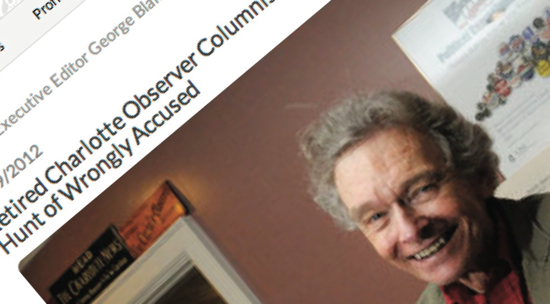
Text of Bill Lucey’s blog item about Lew Powell’s writing on the Little Rascals case.

Retired Charlotte Observer Columnist Lew Powell Pursuing 

State’s Admission of Guilt in Witch Hunt of Wrongly Accused

After being laid-off from the Charlotte Observer after 34 years in 2009, Lew Powell took the news not as the end, but as a new beginning to explore with great vigor a single issue (a colossal miscarriage of justice in his view) that has consumed him since the 1990’s. It has also freed him to spend more time on his real passion: the unique history of the Tar Heel State.

Since leaving the Observer, Powell has contributed more than 700 posts to the North Carolina Miscellany blog, a blog produced, edited, and maintained by the North Carolina Collection at the University of North Carolina at Chapel Hill, which documents the history, literature, and culture of North Carolina. It is reportedly the largest state collection of its kind in the country.

Powell is exceptionally adept at unraveling the origins of symbols and traditions in North Carolina. His 34 years of newspaper experience at the Observer gives the North Carolina Miscellany a reliable voice with over three decades of institutional experience to draw from, as well as become the beneficiaries of a treasure chest of memorabilia. Powell has donated 2,698 North Carolina-related pin-back buttons, badges, ribbons, cloth swatches, promotional cards and stickers, which he collected over the years.

His unique grasp of North Carolina has resulted in books that can’t help but benefit residents of the Tar Heel State starved to discover a treasury of unique and largely unknown facts. Powell is author of the “Ultimate North Carolina Quiz Book’’, “On This Day in North Carolina’’ and “Lew Powell’s Carolina Follies’’ , a collection of 200 of his satirical year-in-review pages from The Charlotte Observer.

Despite his strong interest in North Carolina history, beginning about a year ago, Powell spends the bulk of his time researching and collecting facts on the Little Rascals Day Care Center, a facility located in Edenton, North Carolina, which had been owned by Betsy and Bob Kelly.

At the Center, Kelly was charged along with six others in 1989 with molesting 29 children attending the Little Rascals day care center. He was convicted in 1992 and sentenced to 12 life terms. Kathryn Dawn Wilson, a cook at the Center was found guilty in 1993. Both convictions, however, were overturned when the North Carolina Court of Appeals stated that there were “legal errors’’ by the prosecution. On May 23, 1997, all charges against were dismissed. Elizabeth Kelly and another defendant reached plea bargains in which they agreed to jail time served, according to reporting from The Associated Press.

The case caught the eye of Powell ever since the airing of the PBS special in which “Frontline“ producer Ofra Bikel profiled Edenton, N.C., a town in Chowan County, North Carolina (population 4,966) located in the state’s Inner Banks region. The 1991 report chronicled the way in which this small sleepy town was torn by allegations of child abuse at the Little Rascals Day-Care Center. In 1993, Frontline’s follow-up investigation raised serious questions about the evidence and the fairness of the trials. Between 1991 and 1997, “Frontline’’ devoted eight hours to the plight of the Edenton Seven, leaving many, perhaps millions, shocked at the way North Carolina so recklessly prosecuted the case.

Powell was so outraged by the case in which he insists innocent people were wrongly accused in what was nothing more than a witch hunt, has since started a blog, littlerascalsdaycarecase.org .

Powell said since October, he posts about three times a week, updating it with more information and relevant material. “Retirement has allowed me to reexamine details of the case,’’ Powell said, “to put it in the context of a decade of day-care ritual-abuse panic and to question those who invented and prosecuted the completely groundless charges.

“Most interesting to me has been the refusal of all the theoreticians and therapists behind the “moral panic” to acknowledge that “science and the law have completely discredited the interviewing techniques that led to Little Rascals,’’ Powell explained to me.

In this highly controversial case, which drew the attention of the national media, children testified they were forced to have sex with adults and each other at the day care center and other places. Tales of spaceships and trained sharks were also part of their testimony. The defense long argued the children were “coached’’ into telling manufactured stories that were more in tune with the parents “fears’’ than the reality of what actually happened.

Though the accused had their cases overturned, Powell is mainly irked that the state continues to claim they were guilty and refuses to acknowledge mistakes were made in their unsubstantiated prosecutorial methods.

One of Powell’s goals, however quixotic it may be, is to secure a statement of innocence from the State of North Carolina.

In a letter he wrote to Roy Cooper, North Carolina attorney general, Powell likens the case to the 2006 Duke Lacrosse scandal in which false charges of rape by three members of the team were made and led to the disbarment of lead prosecutor Mike Nifong. In his letter to the North Carolina Attorney General, Powell mentions the state granted the defendants a “statement of innocence.’’ Powell requested the state take similar action with those wrongly accused in the Little Rascal case.

In his letter, Powell writes: “For more than a decade, beginning in the 1980s, day care centers across the United States were victimized by a wave of wholly unsubstantiated charges of ‘ritual sexual abuse.’ The testimony of child-witnesses, corrupted by misguided therapists, resulted in dozens of convictions and incarcerations. The defendants were innocent victims of a ‘moral panic’ that bore striking similarities to the Salem witch hunts 300 years earlier.’’

Powell argues the case not only shattered innocent lives, “but also left a deep and ugly stain on the reputation of the State of North Carolina.’’

With Massachusetts Governor Jane Swift having signed a resolution in 2001, proclaiming the innocence of the victims of the Salem Witch Trials, why not, Powell asks, shouldn’t the same resolution be extended to the Edenton Seven?

“Exoneration for the Edenton Seven seems as distant a prospect as ever,’’ Powell tells me. Still, despite having the former district attorney slamming the phone in his ear, when he asked him if still believed they were guilty, Powell said he continues to pursue more leads, and still has stacked in his garage 11 unopened boxes of trial transcripts.

Before landing at the Observer in 1974 as a feature writer, Powell was a reporter and editor at the Jacksonville (Fla.) Journal, and the Delta Democrat-Times. He has additionally contributed articles to the Nation, Columbia Journalism Review, and The New York Times op-ed page.

It was at the Observer where Powell met his wife, Dannye Romine.

Born in the rural town of Helena, Arkansas, Powell grew up in a farming family in Mississippi, where he graduated from the University of Mississippi with a degree in accounting.

When he retired from the Observer in 2009, Powell was the paper’s Forum editor.

– Bill Lucey
[email protected]
August 9, 2012

Why there’s a littlerascalsdaycarecase.org

120409BikelAug. 8, 2012

Five reasons the Little Rascals Day Care case has never attracted the attention it deserves:

■ Overshadowed by McMartin case.

■ No racial angle.

■ Remote location.

■ No death penalty.

■ No DNA.

One reason the case has attracted as much attention as it has:

■ “Innocence Lost” on “Frontline.” Thanks again, Ofra Bikel.

Bill Hart used day-care moms as dating pool

111202HartAug. 6, 2012

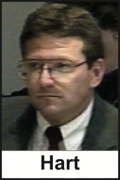
Let’s say you were a special deputy attorney general called in from Raleigh to help prosecute the Little Rascals case. Now imagine: What would be the most inappropriate, the most ethically questionable way you could possibly spend your spare time in Edenton? How about starting to date the mother of one of the alleged victims?

Yes, that’s exactly what Bill Hart chose to do. He and Patricia A. Kephart had been involved for months even before Bob Kelly’s trial began.

Readers of this blog won’t be surprised to learn that Hart denied any impropriety and blamed the defense for trying “to divert attention from the case.”

But Rich Rosen, professor of criminal procedure at the UNC Chapel Hill School of Law, told the News & Observer of Raleigh (Dec. 20, 1991) that “It certainly raises questions in my mind. A prosecutor is not supposed to have any personal involvement or interest in the case.”

One question raised in my own mind: Unlikely, yes, but what if Hart had experienced a pang of doubt about the validity of the prosecution’s case? Would he have been able to admit that to his girlfriend (much less to his fellow prosecutors)?

At the conclusion of the state’s case, prosecutors dropped charges related to Kephart’s daughter. Hart and Kephart later married.

‘If he made such a statement, it was not a threat’ (!)

111209WilliamsAug. 3, 2012

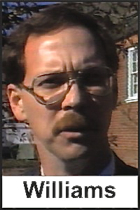
“Betty Ann Phillips, who had worked at the day care center, said (in the first episode of “Innocence Lost’) that she had complained to (District Attorney H.P.) Williams when she found out that indictments had been filed in her child’s name.

“She said Williams had advised her ‘not to go out on the street and say you’re unhappy with what we have done.’

“‘And then in the next sentence he said, “Because you know that all of the children are saying that you were the lookout while this was going on.”’

“In a telephone interview, Williams did not dispute that he had told Mrs. Phillips he had evidence from other children that she had acted as a lookout, but… if he made such a statement to her it was not meant as a threat.”

– The Associated Press, May 9, 1991

Mondale Act set up bonanza for therapists

111105LawrenceAug. 1, 2012

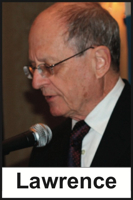
“Congress’s well-intentioned but misguided Mondale Act (the Child Abuse Prevention and Treatment Act, CAPTA), signed into law by Richard Nixon in 1974, provided impetus to prosecute alleged crimes against children.

“First, it provided immunity to reporters of abuse, thereby unleashing an unlimited supply of unsubstantiated charges.

“Second, it provided funds to permit so-called victims to receive state-financed therapy immediately, even prior to any adjudication.

“Thus, the victims in Edenton received extensive counseling, at government expense, for ‘abuse’ that never occurred. Four ‘sex therapists’ got all that business and received many thousands of dollars in reimbursement. They had no motivation to suppose those charges might be bogus.”

– From “Sexual Liberation: The Scandal of Christendom” by Raymond J. Lawrence (2007)

R.I.P., Alexander Cockburn, ritual-abuse skeptic

120730CockburnJuly 30, 2012

Death noted: Radical-left polemicist Alexander Cockburn, who as early as 1990 was raging against claims of satanic ritual abuse.

Cockburn gave particular attention to feminism’s role in the mania:

“In the coalition powering the satanic abuse persecutions,” he recalled in a 1999 column in The Nation, “feminists constituted a powerful component, most conspicuously in the form of Gloria Steinem and Ms. magazine.

“How did feminism, a movement that grew out of the radical passions of the 1960s, navigate itself into this demonic alliance? Charges of perverse abuse of children seemed an inviting line of attack in the larger onslaught on patriarchy, sexual violence and harassment. Social workers and therapists – many of them feminists – became the investigators and effective prosecutors.”

Cockburn oversimplified, as was his way, but it’s no stretch to see how feminism fed into not only ritual abuse, but also the sister hoaxes of recovered memory syndrome and multiple personality disorder.