How to make ‘facts and science ultimately irrelevant’

140426ChandlerMarch 8, 2015

“As public debate rages about issues like immunization, Obamacare, and same-sex marriage, many people try to use science to bolster their arguments. And since it’s becoming easier to test and establish facts – whether in physics, psychology, or policy – many have wondered why bias and polarization have not been defeated. When people are confronted with facts, such as the well-established safety of immunization, why do these facts seem to have so little effect?

“Our new research, recently published in the Journal of Personality and Social Psychology, examined a slippery way by which people get away from facts that contradict their beliefs…. (They) reframe an issue in untestable ways. This makes potential important facts and science ultimately irrelevant to the issue….

“These experiments show that when people’s beliefs are threatened, they often take flight to a land where facts do not matter. In scientific terms, their beliefs become less ‘falsifiable’ because they can no longer be tested scientifically for verification or refutation….”

– From “Why People ‘Fly from Facts’ ” by Troy Campbell and Justin Friesen in Scientific American (March 3)

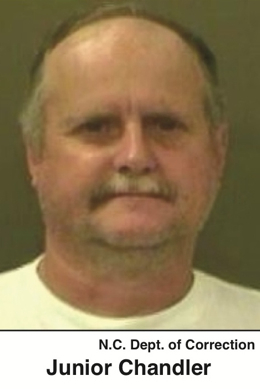
 And what allegations could be more “untestable” than pure fantasy? As Junior Chandler knows too well, “….It’s extremely hard to get help to prove my innocence when there isn’t a crime committed to begin with.”

‘Black helicopters’ over Edenton? Sure, why not?

Feb. 27, 2015

“…. A social worker from North Carolina informed the group (the Society for the Investigation, Treatment and Prevention of Ritual and Cult Abuse) that in the day-care sex-abuse case she was investigating, she thought she remembered the kids talking about black helicopters. She said she would look into it.”

– From “Conspiracy Theories and Paranoia: Notes from a Mind-Control Conference” by Evan Harrington in the Skeptical Inquirer  (September-October 1996)

The “ritual and cult abuse” conference took place in Dallas in March 1995, several years after the trials of Bob Kelly and Dawn Wilson (and just a couple of months before the North Carolina Court of Appeals overturned their convictions). But I wouldn’t be surprised if the social worker chatting with Dr. Harrington was a prosecution therapist still eagerly accumulating and broadcasting claims … this one perhaps.

Can we cope with seeing wrongful convictions?

150220FordFeb. 20, 2015

“Exonerations, which were once exceedingly rare, have become regular features of the American justice system. The National Registry of Exonerations records 1,535 exonerations nationwide (including Bob Kelly and Dawn Wilson) since records began in 1989….

“The 125 wrongful convictions thrown out in 2014… might seem paltry compared to the estimated 1 million felony convictions per year, but the number of wrongful convictions is likely far higher. Many jurisdictions don’t devote the same level of resources towards exonerations that North Carolina does (with its Innocence Inquiry Commission), and even then the process can be achingly slow.

“For a justice system that exalts due process and the presumption of innocence, any wrongful conviction represents a serious breakdown of justice. Even a handful of high-profile wrongful convictions can ripple throughout the public consciousness, undermining confidence in the system. ‘The country is having to psychically cope with conclusive evidence that we make, with some regularity, errors in criminal trial outcomes,’  said (Mary Kelly Tate, director of the University of Richmond law school’s Institute for Actual Innocence).”

– From “Guilty, Then Proven Innocent” by Matt Ford at The Atlantic (Feb. 9)

The shocking ease of installing ‘lost memories’

150213DoctorowFeb. 13, 2015

“Psychologists terminated a study (of 70 students at a Canadian university) that showed the ease of implanting false memories of committing terrible, violent crimes in the recent past – because some subjects couldn’t be convinced that they hadn’t committed the crime after they were told the truth.”

– From “Police interrogation techniques generate false memories of committing crimes” by Cory Doctorow at Boing Boing (Feb. 9)

More on this recent study from Sarah Barmak at the Toronto Star:

“If subjects said they couldn’t remember the false event, questioners reassured them they would be able to retrieve their ‘lost memories’ if they tried hard enough. If they began to ‘remember,’ experimenters asked for more detail. Do you recall any images? How did you feel? Visualize what it might have been like, they said, and the memory will come back to you….”

“Lost memories,” of course, were the fool’s gold mined so relentlessly by the prosecution therapists in the Little Rascals Day Care case. Remarkably, it took only three 40-minute sessions for the Canadian researchers to corrupt the memories of fully 70 percent of their college-age subjects – the Little Rascals children required months of implantation!

Salem to Edenton was a road heavily traveled

150209UnderstandingFeb. 9, 2015

The Little Rascals Day Care case has often been likened to the Salem Witch Trials, but this lengthy list from “Understanding The Crucible: A Student Casebook to Issues, Sources, and Historical Documents” by Claudia Durst Johnson and Vernon Johnson (1998) drives home the point:

  • Both involved children as accusers.
  • Convictions were determined almost solely on the basis of the children’s testimony.
  • Everything escalated rapidly – the number of children involved, the number of the accused, and the different kinds of charges.
  • The minds of the children were in both cases manipulated by adults.
  • Charges were instigated by adults who held grudges against the accused.
  • There was an absence of corroborating evidence.
  • “Fanciful” testimony was regarded seriously. In Salem, it was spectral evidence. In the twentieth-century cases, it included children’s stories of spaceships, sharks, and ritual murder.
  • Community hysteria arose from the feeling that evil – witches and sex abusers – had access to their children.
  • “Poppets” or dolls were involved. In the Salem trials, little dolls were immediately seized upon as poppets used by witches to pierce with pins with the object of inflicting torture. In sexual abuse cases, “anatomically correct” dolls were used by psychologists to coach details from the children.
  • There were charges that satanic rituals were conducted.
  • The prosecution showed a single-minded determination, by threat or bribe, to get the accused to confess.
  • The prosecution showed a single-minded determination, by threat or bribe, to get children to disclose more and more details of misconduct without regard to truth.

McMartin therapy victim: ‘I lived in fabricated fear’

140312HabermanFeb. 5, 2015

“I was involved in this (McMartin Preschool) case. I remember getting dropped off at court-ordered therapy. I don’t remember the sessions, but I have seen the macabre pictures I drew. I have read the accounts the therapist wrote down for me as I detailed the abuse.

“It is my belief, after years of treatment centers and therapy, that nothing physical happened to me…. Mentally, well, that’s a different story. How about paying attention to the kids that were scarred from this therapy? Do you think that just because there was most likely no physical abuse that we didn’t still suffer? Eating disorders, alcoholism, depression, anxiety….

“I lived in fabricated fear. I have a vivid memory of one teacher telling us that she would come to our house in the middle of the night and shoot our parents if we ever told them what happened. This memory, which I now assume was a dream, was the one thing that kept me questioning for years whether or not this happened. So, while I now believe that the memories were unintentionally implanted, I still lived the nightmare through stories and drawings…”

– From “The Trial That Unleashed Hysteria Over Child Abuse” in the New York Times (March 9, 2014)  

Although I linked to Clyde Haberman’s thorough and perceptive piece when it appeared, I’m just now noticing that among the 166 reader comments was this one above from a “therapy…scarred” McMartin child. Unfortunately, it was posted anonymously – so continues the long wait for now-grown child-witnesses (other than Kyle Zirpolo) ready to go public with their recollections.

Are mistaken prosecutors silenced by shame?

150131RussellJan. 31, 2015

“ ‘You need to try to rectify whatever error you made,’ says Santa Clara County, California, Special Assistant District Attorney David Angel. ‘But it needs to really shift from this kind of highly moralistic, punitive view. Maybe it’s a cause for embarrassment, but it’s not a cause for shame.’

“He believes prosecutors have drawn the short straw in language, noting that defense attorneys who err are called ‘ineffective’ and judges are ‘reversed,’ while prosecutorial error alone is labeled ‘misconduct,’ with all the attendant negative connotations.

“Angel believes that most prosecutors are willing to admit to mistakes but that ‘people are very hesitant to admit to something that’s called “misconduct,” because it makes you feel like you did something morally wrong.’ ”

– From “Why can’t law enforcement admit their mistakes?” by Sue Russell at Pacific Standard (via Salon, Oct. 21, 2012)

The concept becomes trickier, however, the longer prosecutors cling to their fallacious and costly narratives. At some point – oh, let’s say 25 years later – might “mistakes” have toxified into “misconduct”?

Did jurors really believe ‘poop in the spaghetti’?

Jan. 25, 2015

Q:  You said that Mr. Bob made spaghetti at the day care…. Now, when did Mr. Bob say that there was poop in the spaghetti?

A:  After we, um, ate it.

Q:  All right. Did – did you ever have to eat poop at the day care?

A:  No.

Q:  Okay. Did anybody try and make you eat poop at the day care?

A:  Yes.

Q: Who?

A:  Mr. Bob.

Q:  Tell me about it.

A:  I don’t remember it.

Q:  You don’t remember it?

A:  No.

Q:  Well, how do you know Mr. Bob tried to do it?

A:  What?

Q:  Did somebody tell you about it?

A:  No.

Q:  Okay. Well, then tell me how Mr. Bob tried to make you eat poop.

A:  Um, he told me, um, to eat it.

Q:  Okay. Where was it?

A:  I forgot.

Q:  You forgot. Well, was it in Ms. Shelly’s room?

A:  No.

Q:  Was it in the kitchen?

A:  Yes.

Q:  Okay. Well, did he make other kids eat poop while you were there?

A:  Yes.

Q:  Okay. Well, um, what happened when they ate it?

A:  I don’t know.

– From defense attorney Jeffrey Miller’s cross-examination of a child witness in the trial of Bob Kelly

This exchange represents only a tiny fraction of the 7-year-old girl’s testimony, which stretched over two days and included similarly incoherent references to Kelly and other defendants having raped her, urinated in her mouth, threatened to kill her parents, sodomized her with pencils and sewing needles, taken her on boat and truck rides, forced her to witness the killing and burial of babies and small animals…..

How funny and trivial such childish imaginings would seem, if only the jury’s gullibility hadn’t sent Kelly to prison for six years. “The children were convincing,” insisted rogue juror Dennis T. Ray.

Day-care cases rooted in ‘sense of powerlessness’?

150117HoweJan. 17, 2015

Q: Do you have a better understanding of why people act the way they do in certain situations?

A:   ….Whenever the safety of children is perceived to be in question, we run the risk of responding with emotion rather than reason. Certainly in Salem (where three of her ancestors were accused witches) that was the case. And look at the so-called “satanic ritual abuse” pre-school phenomenon in the early 1980s, which is now seen to have been a tremendous miscarriage of justice. Calls for moderation are dismissed with the assertion that the children have to come first — which, of course, they should.

“But it’s also tempting to read these experiences as expressive of a deeper anxiety about childrearing in an uncertain world, with no guarantees of a good outcome. I feel that it comes from a sense of powerlessness that can’t be expressed elsewhere….”

– From an interview with Katherine Howe, author of “Conversion,” a novel based on a mysterious 2012 outbreak of tics and seizures among teenage girls in upstate New York, in the Daily News of Batavia, New York (Aug. 23, 2014)

District attorney to reexamine Little Rascals – or not?

150111WombleJan. 11, 2015

Before he turned back a challenge from Little Rascals prosecutor Nancy Lamb, incumbent District Attorney Andrew Womble had given me an inkling of hope he might consider revisiting the case.

This is from a letter I sent him on Sept. 11:

“In your Q&A with the Outer Banks Voice… you recalled ‘a pervasive mindset that the job of the district attorney was to prosecute all cases and to gain convictions. The Duke lacrosse case sort of changed that in my mind; the role of the district attorney is to seek justice.’

“Your thoughtful response leads me to ask how in retrospect you view the prosecution of Bob Kelly, Dawn Wilson and the rest of the Edenton Seven. Is Little Rascals a case  you would have chosen to take to court, much less extend over eight years?

“Johnson Britt, Robeson County DA, recently disavowed the state’s allegations against two defendants cleared by DNA testing. In addition to the North Carolina Court of Appeals’ robust overturning of the verdicts against Kelly and Wilson, a quarter-century of medical and social science research has made ever more clear the innocence of the Edenton Seven….

“As district attorney, would you be willing to voice your own unofficial exoneration of the defendants in the First District’s most notorious prosecution?”

When Womble didn’t respond, I turned to Holly Koerber-Audette, his campaign consultant. Two weeks before the election she offered encouragement: “I am more than happy to talk to him about your request.  I have followed the case and your excellent efforts for a long time now…. You have my word, I will discuss it with him.”

My several follow-up emails have gone unanswered. Whatever the DA’s response, I’d be glad to see it.