Retirement looms for Rubenstein, who detected scam

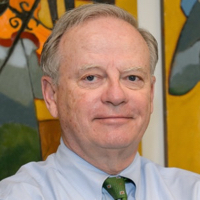
Judge Alan Rubenstein

Feb. 26, 2016

“What a waste it would be to force Bucks County (Pa.) Judge Alan Rubenstein from the bench. At 70, he remains sharp and vibrant, a jurist of impeccable credentials with vast institutional knowledge of Bucks County, not to mention historic accomplishments.

“As district attorney, Rubenstein tried more cases than any prosecutor in county history. And he was the only county DA to be elected four times, a measure of how well he did the job and how much voters trusted and appreciated him. Indeed, they rewarded him with a seat on the county bench, a post Rubenstein continues to relish and is in no hurry to relinquish.

“Yet, Rubenstein and every judge across the state faces mandatory retirement at age 70… unless voters extend the mandatory retirement age (to 75)….”

– From “Sound judgment: Too soon to retire,” editorial in the Bucks County Courier Times (Feb. 23) cached here

“No tribute to Judge Alan Rubenstein is complete without mentioning his wise and courageous decision not to pursue charges in the Breezy Point Day School case in 1990…. Countless other prosecutors across the nation fell hard for the ‘satanic ritual abuse’ moral panic, but Judge Rubenstein kept his head, investigated thoroughly and protected Bucks County from the nightmare that befell towns such as Manhattan Beach, Calif., and Edenton, N.C.”

— From my letter to the editor of the Courier Times (Feb. 26)

Unless Pennsylvania voters approve that referendum on the April 26 ballot, Rubenstein’s valuable service will be limited to fill-in duty.

Some septuagenarian judges, of course, should stay retired.

LRDCC20

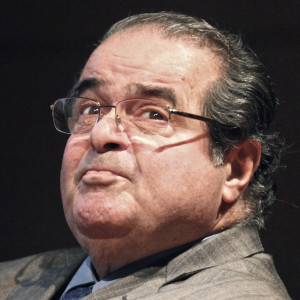
Antonin Scalia no sucker for children’s testimony

Justice Antonin Scalia

Feb. 15, 2016

“(NYU law professor Rachel) Barkow points to Scalia’s (1990) dissent in Maryland v. Craig, where he railed against the court for permitting ‘a child witness to testify via closed circuit television in a sex abuse case,’ instead of requiring the child to testify live in the courtroom where she would be subjected to cross-examination by the defense.

“The Constitution, Scalia wrote, does not authorize judges to ‘conduct a cost-benefit analysis of clear and explicit constitutional guarantees, and then to adjust their meaning to comport with our findings.’ ”

– From “Antonin Scalia’s Other Legacy: He was often a friend of criminal defendants” by Robert Smith at Slate (Feb. 15)

Scalia’s ferocious dissent in Craig in defense of the Sixth Amendment’s “confrontation clause” featured this jugular-seeking missile:

“Because of (the court majority’s) subordination of explicit constitutional text to currently favored public policy, the following scene can be played out in an American courtroom for the first time in two centuries:

“A father whose young daughter has been given over to the exclusive custody of his estranged wife, or a mother whose young son has been taken into custody by the State’s child welfare department, is sentenced to prison for sexual abuse on the basis of testimony by a child the parent has not seen or spoken to for many months, and the guilty verdict is rendered without giving the parent so much as the opportunity to sit in the presence of the child, and to ask, personally or through counsel, ‘It is really not true, is it, that I – your father (or mother) whom you see before you – did these terrible things?’

“Perhaps that is a procedure today’s society desires; perhaps (though I doubt it) it is even a fair procedure; but it is assuredly not a procedure permitted by the Constitution….”

Further on, Scalia cited a 1983 prosecution in Jordan, Minn., that may have been first of the “satanic ritual abuse” wave.

“As children continued to be interviewed,” he wrote, “the list of accused citizens grew….There is no doubt that some sexual abuse took place in Jordan, but there is no reason to believe it was as widespread as charged….”

LRDCC20

‘A good day for justice’ in Texas – why not in NC?

Charles Sebesta
Charles Sebesta

Feb. 13, 2016

“The disciplinary board of the Texas State Bar on Monday affirmed the agency’s decision to disbar Charles Sebesta, the former prosecutor who oversaw the wrongful death sentence of Anthony Graves.

“Graves, who spent 18 years in prison, including 12 on death row, for a fiery multiple murder he did not commit… had asked the Bar to hold Sebesta accountable for withholding critical evidence of his innocence.

“ ‘The bar stepped in to say that’s not the way our criminal justice system should work,’ Graves said. ‘This is a good day for justice.’ ”

– From “State Bar board affirms disbarment of prosecutor who sent innocent man to death row” by Brandi Grissom in the Dallas Morning News (Feb. 8)

Legal scholar Jonathan Turley notes that “Sebesta’s conduct was shocking but remains a relatively rare example of prosecutors being held accountable in such cases of prosecutorial abuse.”

Although the Texas Bar displayed little eagerness to bring a prosecutor to justice – and disbarment is a petty consequence indeed for the enormity of Sebesta’s malfeasance – its response seems darn near heroic compared with the shameful vindictiveness we have come to expect from the North Carolina Bar.

LRDCC20

NC GOP’s one weird trick for justice reform

160604McCollumFeb. 11, 2016

“Significant criminal justice reforms (are needed) to minimize the chances of wrongful prosecution in the future.

“Some might dismiss such goals as a liberal utopian ideal, but criminal justice reform is being embraced nationwide by tea party conservatives. Why? Because few things exemplify the overreach of an all-too-powerful government (better) than one that yanks away an individual’s freedom without legal justification….

“Conservatives in the heavily Republican Texas legislature have embraced some of the most far-reaching criminal justice reforms in the country….”

– From “Shame and joy behind 149 exonerations” in the St. Louis Post-Dispatch (Feb. 7 editorial)

And how is North Carolina’s own heavily Republican legislature taking up the cause of criminal justice reform? With the piously labeled Restoring Proper Justice Act, (text cache), which both conceals information on the drugs used for capital punishment and repeals a law requiring a physician be present.  Sponsoring Rep. Leo Daughtry railed against “roadblocks in front of the death penalty (that) have stopped us from using the punishment” for the past decade.

Had Daughtry had his way, death row inmates Henry McCollum and Leon Brown would long since have been executed – instead of exonerated and then pardoned by the same governor who blithely signed the Restoring Proper Justice Act into law.

LRDCC20

Former justice calls for investigation of state bar

Robert F. Orr
Robert F. Orr

Feb. 8, 2016

“Bob Orr, a former North Carolina Supreme Court justice, says it’s time for a comprehensive outside review of the state agency that oversees lawyers.

“Orr… is part of a committee looking at legal professionalism as part of Chief Justice Mark Martin’s recently launched review of the state justice system….

“The call for evaluation comes amid questions about the bar’s aggressive prosecution of three defense attorneys who have worked on Racial Justice Act (text cache) and innocence inquiry cases….”

– From “Former NC Supreme Court justice calls for review of state bar” by Anne Blythe in the News & Observer (Feb. 6)  (text cache)

Right on, Justice Orr. And thanks to the N&O for its continuing attention to the flagrant self-dealing of the Prosecutors Club, most recently this account (text cache) by Joseph Neff contrasting the bar’s two sets of ethical standards:

“For most of 2015, the North Carolina State Bar vigorously and publicly pressed ethics charges against two anti-death penalty lawyers for what were eventually judged to be unimportant inaccuracies in two sworn affidavits.

“During the same time, the bar privately dismissed complaints that three prominent prosecutors – one running for attorney general, another now a Superior Court judge – used a false affidavit in a racially divisive case that has roiled Winston-Salem for more than a decade….”

I’ve even seen it suggested that the situation demands a separate panel specializing in prosecutorial misconduct (text cache).

LRDCC20

Is Finkelhor now less panicked by day cares?

David Finkelhor
David Finkelhor

Feb. 3, 2016

“A new survey finds that adults at school, day care and organizations such as churches and scouting groups are less likely than relatives to abuse or mistreat children.

“In general, organizations that serve young people ‘do not look like particularly risky environments,’ said study co-author David Finkelhor, director of the University of New Hampshire’s Crimes Against Children Research Center. This contradicts perceptions by some people who ‘think these are magnets for molesters,’ he said.”

– From “Child Abuse at Daycare, Youth Groups Rarer Than Thought: Survey” by Randy Dotinga in the Northwest Indiana Times (Feb. 2)

Surprising to see Dr. Finkelhor dismiss the notion of day cares as “magnets for molesters,” given that his own overwrought “Nursery Crimes: Sexual Abuse in Day Care” (1988) was an influential text in spreading the moral panic.

How did he determine back then whether sexual abuse had actually occurred? “If at least one of the local investigating agencies had decided that abuse had occurred and that it had happened while the child was at a day-care facility….then we considered the case substantiated.” In other words, one supposed “red flag” sighting from Brenda Toppin was certification enough.

As recently as 2012, when I queried Dr. Finkelhor about his beliefs past and present,  he denied being “an authority on the validity of claims” that he had laid out with such credulity in “Nursery Crimes.”

LRDCC20

The truth about justice – as seen on TV!

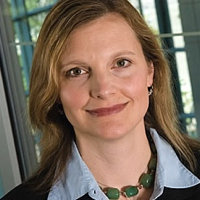
Lisa Kern Griffin
Lisa Kern Griffin

Jan. 29, 2016

“The release last month of ‘Making a Murderer’ capped a year in which popular culture’s portrayal of the criminal justice system seems to have shifted. Out with the old tropes about truth-seeking investigators and tidy resolutions; in with the disquieting, dysfunctional reality of many courtrooms and police stations….

“Yes, post-conviction DNA testing and the work of Innocence Projects around the country have exonerated more than 1,700 defendants. Those cases heighten awareness of potential errors and demonstrate that wrongful convictions happen. But Americans shouldn’t expect certainty about innocence. Sometimes the focus on finding new evidence to exonerate distracts from the question of whether the old evidence proved guilt….

Read more here. Cached here.

“Fewer than 70,000 federal felonies are prosecuted each year, while roughly 2.5 million felonies proceed through the state courts. Many state cases involve near-simultaneous investigation and prosecution. One rarely finds out ‘what really happened.’

“The prosecutor in Avery’s trial argued in his closing statement that ‘reasonable doubts are for innocent people.’ They are not. And procedural protections like access to defense counsel and freedom from coerced interrogations extend to both the innocent and the guilty. The real contribution of these documentaries is not to ask ‘whodunit’ but to reveal what was done to defendants….

“The United States criminal justice system needs fewer guilt-assuming interrogation tactics, more disclosure of potentially exculpatory information to the defense, expanded oversight units within prosecutors’ offices to investigate potential miscarriages of justice and fuller appellate scrutiny of convictions.

“The moment is ripe for reform, culturally and politically….”

– From by “ ‘Making a Murderer’ Is About Justice, Not Truth” by Lisa Kern Griffin, Duke Law professor and former federal prosecutor, in the New York Times (Jan. 12)

Will this heightened skepticism about the nation’s justice system ever trickle down to exonerate the Edenton Seven and free Junior Chandler?

LRDCC20

Separate disciplinary panel needed for prosecutorial excesses

Online version of editorial.

Jan. 20, 2016

“The Jan. 15 editorial ‘The limits of zeal’ contrasted the penalty given Christine Mumma with the absence of rebuke to prosecutors for the ‘massive failure’ that kept her client wrongfully imprisoned for more than 36 years.

“It is not enough simply to point out this shameful disparity. The public embarrassment resulting from the hearing should move the North Carolina State Bar to empower a separate disciplinary panel to deal only with prosecutorial excesses. Such a panel would not lack for business.”

– From “A Panel for Prosecutors,” my letter to the editor of the News & Observer  (Jan. 19) (text cache)

LRDCC20

Mumma victimized by prosecutor’s perverse priorities

Joseph Sledge
Joseph Sledge

Jan. 16, 2016

Joseph Sledge spent 37 years in prison for a crime he didn’t commit. At his trial, the state paid a lying snitch to testify against him. While he was in prison, (Jon David, the latest Bladen County district attorney) opposed the DNA testing that would eventually prove Sledge’s innocence. And when the long-delayed tests showed Sledge wasn’t the culprit, the state waited another two years to release him from prison.

“Now that Sledge is finally free, the only person being punished is the lawyer who fought to prove his innocence, Chris Mumma. On Thursday, the State Bar found that Mumma violated professional ethics by testing a water bottle for DNA without permission from its owner – all in an attempt to gain an innocent man his freedom against long odds. (The test of the water bottle was inconclusive and had no impact on the final outcome.)….

“In all the cases where Mumma has freed innocent people, no prosecutor has ever faced charges….Instead, the State Bar sent a message that lawyers who expose the system’s misdeeds could be subject to retribution….”

– From “Let’s punish lawyers who put innocent people in prison, instead of those who free them” by Kristin Collins at NC Coalition for Alternatives to the Death Penalty (Jan. 15)

Three years ago I took DA David at his word when he promised:

“I really see us as sharing the goal of making sure (Sledge’s) conviction rests on credible and substantial evidence. I’m going to go where the truth leads in this matter.”

I was naïve. As it turned out, David’s true passion wasn’t for exonerating an innocent man but for punishing his lawyer.

LRDCC20

Will Edenton, too, ever be ‘honest about what took place’?

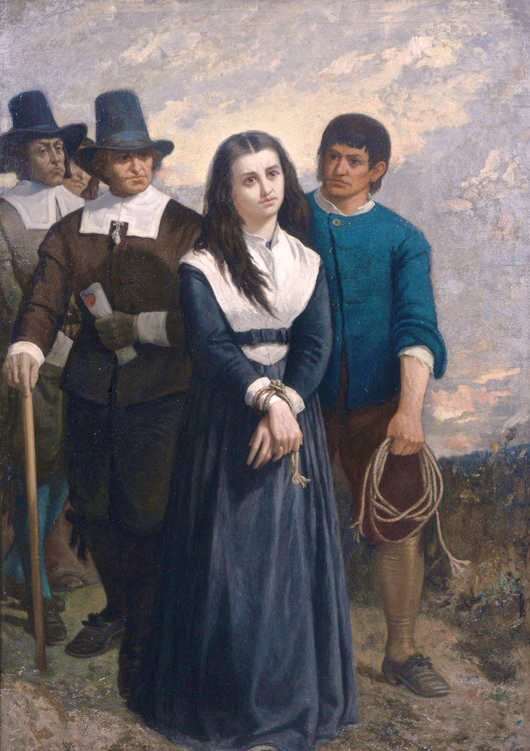
“Witch Hill: The Salem Martyr,” oil on canvas, by Thomas Satterwhite Noble, painted in 1869. Notes from the gallery label: “The young woman who posed as the condemned witch was a librarian in the Cincinnati library, and was a lineal descendant of a woman who was actually hanged as a witch in 17th century Salem. Painted in Cincinnati.”

Jan. 14, 2016

“Researchers announced this week they have confirmed the plot (in Salem, Mass.) where 19 people accused of witchcraft were hanged in a wave of hysteria that swept this seaside city in 1692.

“Salem plans to mark the ignominious spot, Mayor Kimberley Driscoll said: ‘This is part of our history, and this is an opportunity for us to be honest about what took place.’

“Neither of two previous plans for a memorial there (in 1892 and 1936) went anywhere. Emerson ‘Tad’ Baker, a Salem State University professor who helped pinpoint the location, said the desire by some to forget the witch trials was probably to blame.

– From “Researchers pinpoint site of Salem witch hangings” by Laura Crimaldi in the Boston Globe (Jan. 13)

In Edenton, the “desire by some to forget” still dominates, but should it ever weaken…..

LRDCC20