‘Tremendous … discretion’ has changed little since 1940

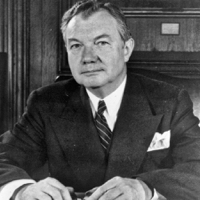
Robert H. Jackson
Robert H. Jackson

July 19, 2016

“The prosecutor has more control over life, liberty, and reputation than any other person in America. His discretion is tremendous. He can have citizens investigated and, if he is that kind of person, he can have this done to the tune of public statements and veiled or unveiled intimations.

“Or the prosecutor may choose a more subtle course and simply have a citizen’s friends interviewed. The prosecutor can order arrests, present cases to the grand jury in secret session, and on the basis of his one-sided presentation of the facts, can cause the citizen to be indicted and held for trial. He may dismiss the case before trial, in which case the defense never has a chance to be heard.

“Or he may go on with a public trial. If he obtains a conviction, the prosecutor can still make recommendations as to sentence, as to whether the prisoner should get probation or a suspended sentence, and after he is put away, as to whether he is a fit subject for parole.

“While the prosecutor at his best is one of the most beneficent forces in our society, when he acts from malice or other base motives, he is one of the worst….”

– From an address  by Attorney General Robert H. Jackson to the Conference of United States Attorneys, Washington, D.C., April 1, 1940

Although Jackson’s cautionary words were directed toward federal prosecutors, they could hardly be more applicable to the State of North Carolina’s prosecution of the Edenton Seven.  H.P. Williams Jr., Bill Hart and Nancy Lamb surely missed no chance to put forth “veiled or unveiled intimations,” to make a “one-sided presentation” or to otherwise act “from malice or other base motives.”

LRDCC20

Why we want to forget the panic ever happened….

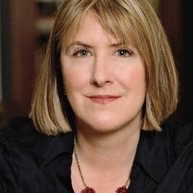
Margaret Talbot
Margaret Talbot

July 15, 2016

“When you once believed something that now strikes you as absurd, even unhinged, it can be almost impossible to summon that feeling of credulity again. Maybe that is why it is easier for most of us to forget, rather than to try and explain, the Satanic-abuse scare that gripped this country in the early ’80s – the myth that Devil-worshipers had set up shop in our day-care centers, where their clever adepts were raping and sodomizing children, practicing ritual sacrifice, shedding their clothes, drinking blood and eating feces, all unnoticed by parents, neighbors and the authorities….”

– From “The Devil in The Nursery” by Margaret Talbot in The New York Times (Jan. 7, 2001)

LRDCC20

The chilling body count of ‘personality-driven’ prosecutors

Kristin Collins
Kristin Collins

July 11, 2016

“This week Harvard Law School’s Fair Punishment Project issued a report detailing the legacies of five of the nation’s deadliest prosecutors, and (Joe Freeman) Britt was among them. The report highlights what it calls ‘personality-driven capital sentencing,’ which leads overzealous prosecutors with a flair for courtroom theatrics and a desire for personal fame to pursue death sentences at disproportionate rates….

“This personality-driven system means that a death sentence often says less about the severity of the defendant’s crime, than it does about the prosecutor’s enthusiasm and courtroom skills. Personality-driven prosecutions can also lead to wrongful convictions, when prosecutors making winning cases a higher priority than seeking justice….

“Britt often cut corners to win. Appellate courts found that Britt committed misconduct in 14 of his capital cases, the new report shows. His offenses included hiding evidence that might have proven defendants innocent and making inflammatory and improper statements to jurors….

“When they were exonerated by incontrovertible DNA evidence, Britt did not even have the heart to admit his mistake. Instead, he continued to loudly proclaim their guilt….”

– From “NC ‘deadliest prosecutor’ valued winning over justice, new report shows” by Kristin Collins at NC Coalition for Alternatives to the Death Penalty (June 30)

I shudder to speculate what might have happened in Edenton had North Carolina sanctioned capital punishment for child sex abuse. The Little Rascals prosecutors, most strikingly Nancy Lamb,  bore many of the “personality-driven” characteristics seen in a Joe Freeman Britt:

LRDCC20


A lack of reporters ‘sufficiently passionate to get at this story’?  

Frank Daniels III
Frank Daniels III

July 8, 2016

“As for an ‘investigative’ piece about the Kelly case that would get to the ‘truth,’ we will have to see if we have any staff members who are sufficiently passionate to get at this story….”

– From News & Observer executive editor Frank Daniels III’s reply (June 10, 1992) to a plea for coverage from Jane W. Duffield of the Committee to Support the Edenton Seven

Daniels’ predecessor, Claude Sitton, lamented later that “my greatest mistake (was) my failure as editor… to make sure we had a top-notch investigative reporter on the Little Rascals case.”

I’ve asked Daniels to share his own recollections of the paper’s coverage, but haven’t heard back.

LRDCC20

Ever so slowly, progress made toward DAs’ accountability

160701StateBar
From N.C. State Bar’s website

July 1, 2016

“Prosecutors should have to disclose evidence of innocence obtained after a person is convicted, a North Carolina State Bar panel agreed Wednesday.

“The ethics subcommittee voted 3-2 at a meeting in Greensboro to support the general principle that a prosecutor’s duty to disclose innocence evidence continues after a defendant is sentenced, although the members didn’t settle on specific language. A federal prosecutor and a former district attorney opposed the motion, while three attorneys in private practice supported it….

“The North Carolina Conference of District Attorneys had said in a letter to the State Bar that prosecutors say that the rule is unnecessary….

“The panel is just the first step in a lengthy process that – if the rule is approved at each step – involves the full ethics committee, public comment, the full State Bar Council and finally, the state Supreme Court.”

– From “NC panel: Innocence evidence right continues after sentence” by Martha Waggoner of the Associated Press (June 29)

Read more here.


LRDCC20

Exoneree sees through prosecutors’ excuses: ‘I call BS’

Martha Waggoner
Martha Waggoner

June 30, 2016

“North Carolina’s district attorneys say a proposed rule that would require them to turn over evidence of innocence after a person is convicted is….”

Anyone familiar with the worst practices of  DAs won’t be surprised at the rest of Martha Waggoner’s sentence:

“….unnecessary because prosecutors already believe it should be turned over at any point, including post-conviction.”

Chris Mumma of the N.C. Center on Actual Innocence, herself punished for exposing wrongful prosecutions, wondered why DAs would object to putting their high standard in writing: “If all the rule does is raise confidence in the process, then it’s beneficial.”

A more visceral response appeared on reporter Waggoner’s Facebook page – from exoneree Dwayne Dail:

“If it is unnecessary and they already believe that there is a rule that holds them to that standard, then why haven’t they been doing it?! Why have they argued that they had no obligation to do this? Why wasn’t I told that there was an alternative suspect in MY case, who just so happened to be the true perp? Why did I only find out after years of investigation during my civil suits, after my exoneration, that the actual perp’s name was in their files but was never investigated? I call BS.”

Dail was convicted of raping a 12-year-old Goldsboro girl in 1987. DNA evidence cleared him in 2007.

LRDCC20

Immunity of office allows zeal, recklessness to go unchecked  

Ariel Levy
Ariel Levy

June 29, 2016

“Compensation is intended in part as a deterrent: a municipality that has to pay heavily for police or prosecutorial misconduct ought to be less likely to allow it to happen again. But it is taxpayers, not police or prosecutors, who bear the costs of litigation and compensation. Prosecutors enjoy almost total immunity in cases of misconduct, even if they deliberately withhold exculpatory evidence from a jury. A 2011 Supreme Court ruling also made it virtually impossible to sue a prosecutor’s office for such violations….”

– From “The Price of a Life: What’s the right way to compensate someone for decades of lost freedom?” by Ariel Levy in the New Yorker (April 13, 2015)

To “deliberately withhold exculpatory evidence” seems all too neatly illustrated in Bob Kelly’s trial. Here’s how the North Carolina Court of Appeals described the prosecution’s actions:

“Judge L. Bradford Tillery, a pretrial Judge, directed the State to file and present for in camera review identifying information, medical and psychotherapeutic files and DSS files with respect to the ‘indictment children’….

“In apparent compliance with Judge Tillery’s order… the State turned over a box of files to the trial court, Judge (Marsh) McLelland presiding. The box contained, inter alia, complete medical notes and therapy notes on the 29 indictment children, 12 of whom testified at defendant’s trial and 17 of whom did not….

“After trial, defendant’s appellate counsel went to the Office of the Clerk of Court for Pitt County to view the exhibits. He opened several boxes containing trial exhibits, none of which were sealed. One of the boxes contained 29 files labeled with the names of the indictment children…. Defendant argues that the files contained undisclosed information that would have been material to the defense.”

To wit, the withheld files were bulging with exculpation – conflicting claims, evidence of hysteria, eyewitness testimony that nothing happened.

Prosecutors H.P. Williams Jr., Bill Hart and Nancy Lamb walked away rebuked by the Appeals Court but otherwise unpenalized. How differently might the Little Rascals case have unfolded had they known their recklessness wouldn’t be shielded by prosecutorial immunity?

LRDCC20


Three jurors blamed stresses for verdict they regretted

Roswell Streeter
Roswell Streeter

June 24, 2016

“I was a juror on the Edenton Little Rascals sex abuse case, and I heard all the facts.

“During eight months of testimony I heard no evidence to prove that Bob Kelly was guilty of any charge. I did hear children, parents and grandparents say that they believe sex abuse took place at the day care. I heard children talk about bizarre things that were supposed to have happened at the day care and other places (often being reminded by the prosecution). I heard parents say they believe sex abuse took place at the day care.

“I also heard the same parents talk about their child’s normal behavior and how they noticed no abnormalities and that their children were fine and that they didn’t believe the allegations. I also heard how children asked parents why the day care closed and stated how they liked Mr. Bob and Mrs. Betsy.

“I feel it’s very important that readers know what was going on in Edenton at the time of the allegations. We know what was said in court 2 1/2 years later. Do you ever wonder what the evidence would have been if the case went to trial six months after allegations? Well, I don’t have to wonder. Other than the evidence lost or destroyed, I heard it all, and I’ll say this to the last day of my life, that the evidence that came through the courtroom did not prove that Bob Kelly committed any kind of sex abuse.

“To the grandmother who feels jurors made fools of themselves for appearing on ‘Frontline’ to try and tell the world the truth about the Little Rascals sex abuse case, then so be it.”

Roswell Streeter
Greenville

– From “Court evidence did not prove Kelly guilty,” letter to the editor of the Greenville (N.C.) Daily Reflector (Sept. 3, 1993)

Forty-five days earlier, Streeter and four other jurors had appeared on “Innocence Lost: The Verdict,” revealing to Ofra Bikel how they came to vote guilty.

From the “Frontline” web page: “Of the five jurors interviewed, only two were fully comfortable with the verdict they had issued. In both cases, it was the children’s testimony that had convinced them. The other three jurors were troubled and said they regretted their verdict and had serious doubts about Bob Kelly’s guilt. Two jurors, Mary Nichols and Marvin Shackelford, said that worries about their personal health (Shackelford had had two heart attacks, and Mary Nichols was very ill with leukemia) had driven them to vote guilty just to resolve the endless deliberations and go home. Roswell Streeter, who at 28 was the youngest member of the jury, said he felt intimidated and confused, and finally lost all sense of perspective.”

One of the two jurors who acknowledged no doubts about Kelly’s guilt was Dennis T. Ray, who wound up in court defending (not very persuasively) his own behavior.

LRDCC20

What is ‘appropriate indemnity’ for wrongful prosecution?

Edwin Borchard
Edwin Borchard

June 21, 2016

“One of the earliest arguments for financial compensation for the wrongly incarcerated came in 1932, from the Yale law professor Edwin Borchard. In an influential book called ‘Convicting the Innocent: Sixty-five Actual Errors of Criminal Justice,’ Borchard wrote, ‘When it is discovered after conviction that the wrong man was condemned, the least the State can do to right this essentially irreparable injury is to reimburse the innocent victim, by an appropriate indemnity for the loss and damage suffered.’ He noted, ‘European countries have long recognized that such indemnity is a public obligation.’ But it would be many years before the United States began puzzling through what constituted an ‘appropriate indemnity.’ It wasn’t until the first DNA exoneration, in 1989, that most states began to seriously consider compensation.

“There is still no consensus about the value of lost time. Missouri gives exonerees $50 a day for time served, California twice that much. Massachusetts caps total compensation at $500,000. In Maine, the limit is $300,000; in Florida, it’s $2 million. The variation is largely arbitrary. ‘If there’s a logic to it, I haven’t seen it,’ Robert J. Norris, a researcher at SUNY Albany who has studied compensation statutes, told me…. Twenty states have no compensation statutes at all.”

– From “The Price of a Life: What’s the right way to compensate someone for decades of lost freedom?” by Ariel Levy in the New Yorker (April 13, 2015)

North Carolina exonerees are entitled to $50,000 for each year spent in prison, plus job training and college tuition, up to a maximum of $750,000. However, those statutes apply only to persons “granted a pardon of innocence by the Governor upon the grounds that the crime with which the person was charged either was not committed at all or was not committed by that person.”

As excruciatingly demonstrated in the case of Henry McCollum and Leon Brown, not every governor is in a hurry to enable that compensation.

LRDCC20

He’s still ‘helping survivors’ of imaginary trauma

160616WonketteJune 16, 2016


“We thought “satanic ritual abuse” was a wholly debunked artifact of the 1980s, but apparently there are still a few ‘therapists’ out there dedicated to ‘helping survivors’….

“According to the Satanic Temple (who aren’t really “Satanists” so much as anti-theocracy advocates), the ‘therapists’ seem to be the ones who are desperately in need of help. And perhaps having their licensure revoked….

“The Satanic Temple’s ‘Grey Faction’ – ‘dedicated to combating pseudoscience and witch-hunting conspiracism with rational inquiry’ — has posted a petition at Change.org asking the Massachusetts Office of Consumer Affairs and Business Regulation to investigate counselor Neil Brick….

“Brick, head of something called ‘Survivorship,’ runs conferences where some seriously weird advice is given. For instance, you shouldn’t trust your spouse, since they may actually be an agent of the mind-control conspiracy. The petition asks Massachusetts authorities to investigate a number of ‘potentially dangerous’ and ‘radically paranoid, unsubstantiated, delusional beliefs’  pushed by Brick:

Neil Brick claims to believe that he was brainwashed to be an assassin for the Illuminati/Freemasons.

Neil Brick claims that, as part of his brainwashing by the Illuminati/Masonic conspiracy, he was programmed to rape and kill “without feeling.”

Neil Brick claims that he once murdered a man in an unreported incident in Europe.

Neil Brick holds regular conferences wherein his delusional beliefs are propagated to mental health consumers by him and his co-conspiracists.

At a very recent conference (May 2016), Neil Brick expressed concern that attendees could “trigger” mind-control programming by touching their faces. Neil Brick imposed a prohibition against face-touching and asked that people sit on their hands. (Keep in mind, this is a man who claims that his own mind-control programming impels him to rape and kill. The implication is clear.)

Neil Brick continues to propagate debunked and disregarded narratives of concealed occult crimes from the height of the “Satanic Panic.”

Neil Brick demonstrates a complete lack of understanding regarding cognitive/behavioral development, claiming to believe that Masons and/or Satanic cults torture fetuses so as to begin mind-controlling them at the earliest possible stage.

– From “Mental Health Professional Thinks Someone Programmed Him To Murder. Could It Be … Satan? at Wonkette (June 14)

It took several requests, but in 2012 the Charleston-based nonprofit Darkness to Light withdrew its approval of Brick’s Survivorship site.

LRDCC20